
WarFronts Weekly: 1.13.2026.
🟨 WarFronts Weekly | Iranian Protests Reach Critical Mass & More
Evan Moloney • January 13, 2026
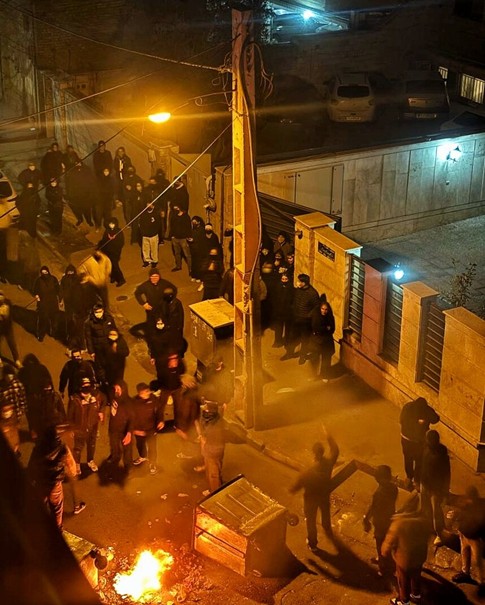
“Unverified reports indicate that at least several hundreds, and according to some sources, more than 2,000 people may have been killed.”
– Iran Human Rights, Norway-based nonprofit.
Iranian Protests Reach Critical Mass:
Iran’s nationwide protests appeared to cross a critical threshold over the weekend, evolving from a widespread expression of popular discontent, to an attempt at full-scale revolution . Reports trickling out of the country, however, suggest mass casualties in numbers equal to, or greater than, the months-long Mahsa Amini protests of 2022 and 2023—suggesting that if Iran’s protesters are going to overthrow the regime , it’s got to happen quickly.
Iran’s protests shifted on Friday, January 9, laying the foundation for an exceptionally violent weekend across the nation. On that day, Supreme Leader Ayatollah Khamenei gave a public address on the situation, blaming the United States and calling for more intense action against protesters. Iran’s telephone and internet access had been cut, nationwide, for the first time on the previous night.
Reports emerging from across the weekend suggest immense violence leveraged by regime forces. On Friday night, one Iranian doctor suggested that two hundred people had been killed, just in Tehran, just that night; on Saturday, The Guardian compiled multiple reports suggesting that security forces had massacred protesters . The protests grew even larger from Saturday into Sunday, and were met with even greater reprisals, as Iranian soldiers took to the streets to support internal security forces.
Over the course of the weekend, global perceptions of the protests began to shift rapidly. On Friday, Axios reported that senior US intelligence officials were now of the belief that the protests stood a chance at bringing down the Iranian regime; according to insider reports from Israel, Jerusalem similarly believes that the protests present a unique opportunity to bring about the regime’s collapse. By Sunday night, protests had been reported in every Iranian province , in almost every large and mid-size city across the country.
The continued growth of the protests through the weekend, despite blackouts and widespread retributive killings, is a major positive sign for the movement, with some indication that Iranians may believe they’ve crossed past a point of no return . Tehran, however, has shown that it is unwilling to give up power; for the first time, state media has begun to show the killings of protesters on television, in what can only be construed as a direct threat to protest participants. This morning, an Iranian official anon ymously confirmed a death toll above two thousand.
As of now, the question lingering over Iran is that of foreign intervention , from either Israel, the United States, or both. US officials are reportedly weighing several potential responses, and Israel expects that US intervention may be forthcoming very soon. Iran has threatened retribution against American military bases, and against Israel, if the US launches an attack, although the deterrent effect of that threat is questionable.
In Iran’s case, foreign intervention may be the deciding factor between a successful revolution, and a collapse of the resistance movement. With some reports suggesting many thousands of people killed , and over 10,000 people acknowledged as detained, participation has become a mortal decision for ordinary Iranians—but foreign assistance, if it comes, may be the deciding factor to raise morale and keep protesters in the streets until critical fractures in Iran’s regime start to show.
Image Credit: “Iran protests 8 January 2026” by Standardwhale is licensed under CC0 1.0 Universal .
This Week on WarFronts:
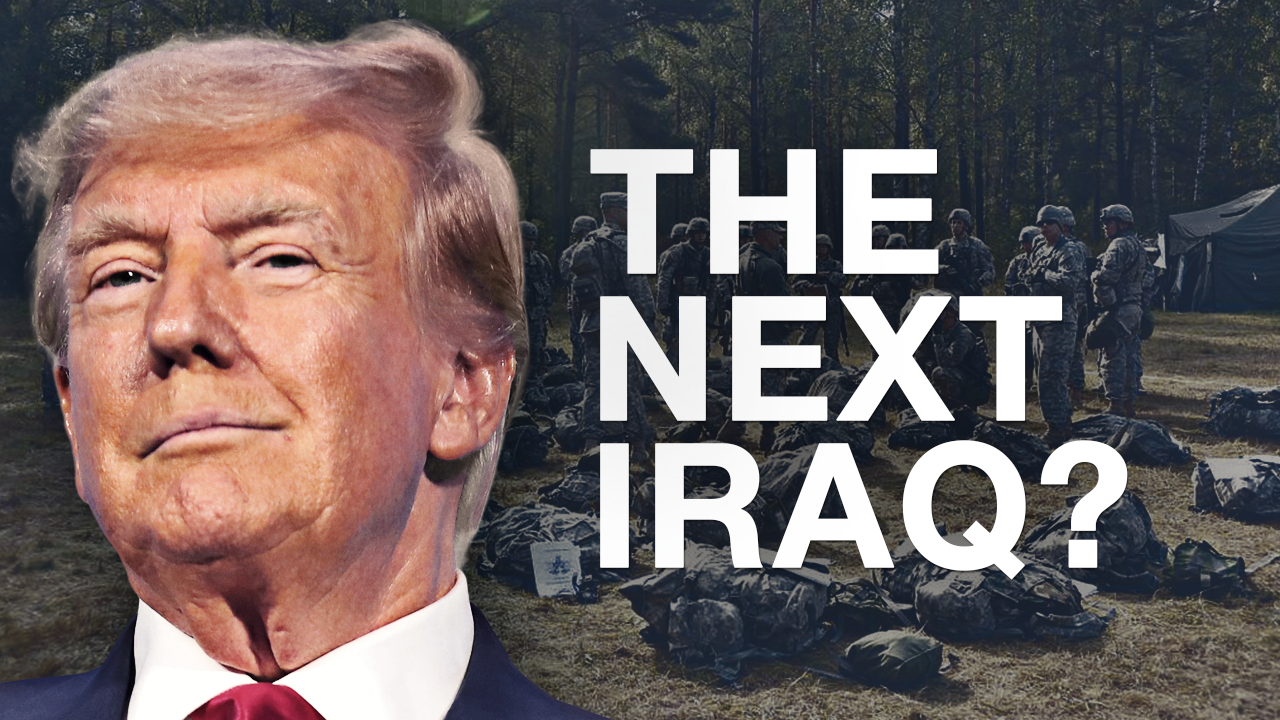
This week, WarFronts explored the prospect of an eventual US troop deployment to Venezuela—not because the United States would seek a deployment proactively, but because Venezuela’s multidimensional array of asymmetric anti-US threats may each seek to draw the US into a prolonged, Middle East-style military quagmire.
Since that episode was released, Trump has only made the prospect of an eventual troop deployment more likely, promising American oil executives “ total safety ” if they decide to invest into Venezuela’s oil industry. Those are promises that Trump will struggle to keep without a ground deployment, as Venezuelan paramilitaries , internal factional rivalries , and organized criminal elements each threaten chaos in the near future.
Kurdish Forces Withdraw from Aleppo Under Fire:
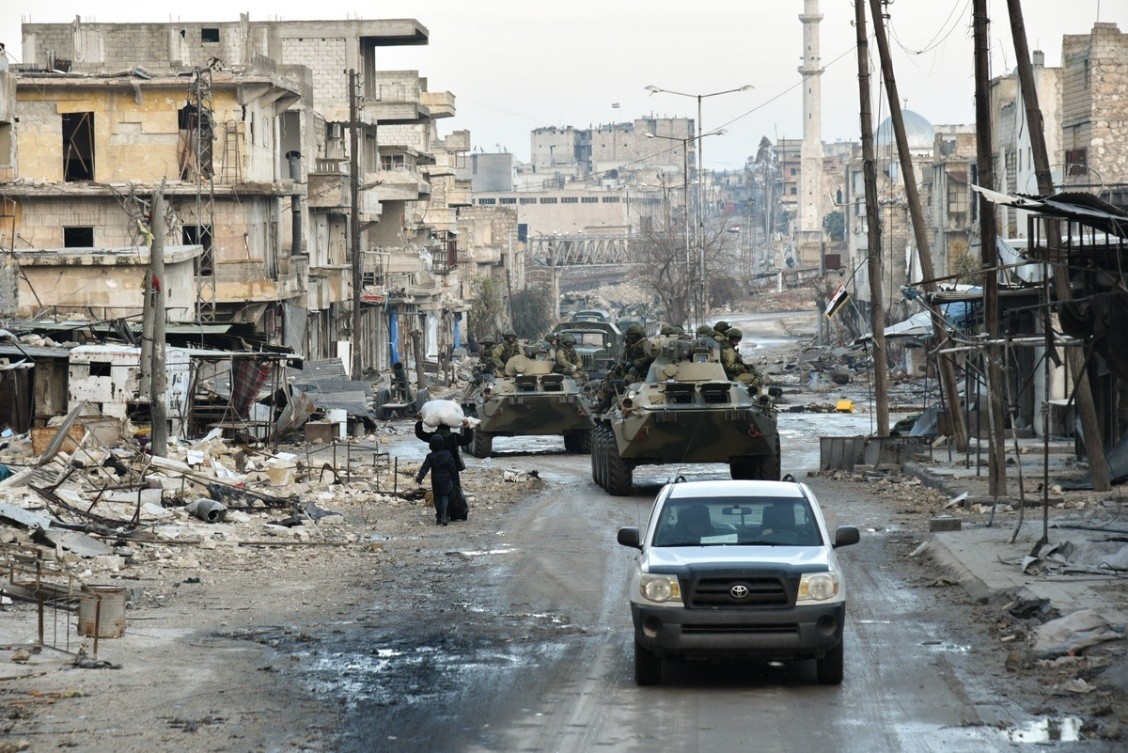
The Syrian city of Aleppo was the site of intense fighting over the weekend, after five days of battle left dozens dead and thousands displaced . The clashes , fought between the Kurdish-led Syrian Democratic Forces (SDF) and troops loyal to the Syrian government , resulted in a conclusive victory for Damascus.
The battle was the product of mounting tensions between Damascus and the Kurdish-led autonomous Rojava region, and was preceded by skirmishes and shelling for weeks. The fighting centered on three neighborhoods in Aleppo : Bani Zeid, Sheikh Maqsoud, and Achrafieh, where a local Kurdish majority lives among the Sunni Arab population that makes up most of Aleppo. Kurdish forces have held those neighborhoods since the start of Syria’s civil war.
The fighting was characterized by heavy shelling and frequent uses of kamikaze drones , as surrounding government forces fired into Kurdish neighborhoods to force an evacuation. At least several dozen civilians were killed in the fighting, along with dozens of troops loyal to both sides; many of the dead were killed by the shelling of fragile buildings, while fighters largely died in skirmishes closer to the front lines.
Ultimately, the situation was resolved through a partial ceasefire , with SDF forces pressured into accepting conditions for a civilian withdrawal from the zone, and then being allowed to leave their encircled positions afterward. An SDF attempt to break the siege was ultimately never initiated as planned, after Damascus was able to position sufficient blocking forces that SDF reinforcements would have struggled to break through.
With Kurdish civilians and troops forced to depart , Damascus has now consolidated its control across Aleppo, with the fleeing SDF soldiers traveling to the bulk of Rojava territory in Syria’s northeast. Luckily, and in contrast to the fears of domestic and foreign Syria experts, the city avoided the wholesale slaughter of Kurds , as was seen in massacres of Alawites and Druze in 2025.
But although the clashes were a mortal threat to those living in the crossfire, they’re also part of a much larger dynamic: Damascus, with forceful backing from Turkey , trying to force the SDF and Rojava to integrate their civil and military infrastructure with the broader Syrian state.
Because these neighborhoods in Aleppo were among the SDF strongholds furthest from the heart of Rojava, and because Kurdish forces were essentially surrounded by Damascus-held territory, these neighborhoods were a particularly easy place for the Syrian government to target. Thus, Damascus’ recent campaign was essentially a pressure tactic, meant to shift the thinking of the SDF’s and Rojava’s leaders in order to gain compliance.
As of now, Rojava does not appear likely to surrender, but nor does Damascus appear likely to back down. Recent SDF reports indicate that Syrian and partner forces have turned their attention to Kurdish positions around the critical Tishrin Dam , a longtime flashpoint where, per the SDF’s social media, Turkish warplanes are monitoring the zone while Kurdish forces are subject to heavy bombardment and attack by kamikaze drones. On Tuesday, the Syrian Army designated another area, north of Aleppo, as a “ closed military zone ” ahead of potential further action against built-up SDF forces.
Image Credit: “International Mine Action Center in Syria (Aleppo) 05” by Dmitry_Golovko is licensed under CC BY 4.0 .
What We're Reading:
As the United States increases pressure on Greenland following its Venezuela operation, European NATO leaders are working to dissuade Trump from engaging in military action to establish control of the island territory.
This recent Foreign Policy analysis outlines the larger set of issues that come with direct action in Greenland, and particularly, the way that a Greenland invasion would lead to a major and immediate complication of not just Europe and Canada’s strategic situation, but America’s, too. Our team also covered the possibility of Greenland operations, here .
Around the World:
The United States carried out its latest round of airstrikes in Syria on Saturday, targeting Islamic State fighters, weapons caches, supply lines, and other terror targets across the country. The operation involved roughly twenty American and Jordanian planes, firing over ninety munitions against at least thirty-five individual targets. The strikes are the latest in a campaign to punish the Islamic State for a December attack in Palmyra that left three US citizens, including two soldiers, dead.
Speculation is growing around the fate of Chechen warlord Ramzan Kadyrov , as rumors spread that Kadyrov has suffered kidney failure and is close to death. While Russian or Chechen sources have sought to avoid validating the rumors, insider reports suggest that talks on succession are underway; Kadyrov’s 20-year-old son was recently appointed as Acting Deputy Prime Minister, with Kadyrov known to be intent on securing his family’s role in the Chechen regime after his death.
The Sudanese Armed Forces bombed a suspected Emirati supply convoy near the Ethiopian border in Sudan’s Blue Nile State, as it ferried weapons and, allegedly, hundreds of mercenaries toward Rapid Support Forces-held territory. The strike comes as Emirati assets are increasingly under fire across the Middle East, as regional powers align in a stronger posture against UAE proxy organizations.
Also in Sudan, the Rapid Support Forces have increased pressure on the cities of Dilling and Kadugli, severing supply lines between the cities in late December and then advancing to capture nearby villages. The two cities remain under constant bombardment, and fears are rising that they may be the next targets to face the horrific fate of El-Fasher.
The jihadist insurgency JNIM has shifted its Sahel operations to align increasingly closely with JAS, a far-extremist Boko Haram-linked militant terror group that has engaged in regular killings and abductions of civilians. The two groups operate in Nigeria’s Niger and Kwara State, particularly in and around the Kainji National Park, where they appear to be collaborating in a growing law enforcement vacuum.
A roadside bomb in Pakistan’s Khyber Pakhtunkhwa Province left seven police officers dead near the Afghan border, likely as a result of action by the Pakistani Taliban. The attack killed a local police chief, and is believed to have targeted the specific patrol that was struck, as the Pakistani Taliban continues its asymmetric cross-border insurgency.
Anti-Hamas militias in Gaza have become more active in recent days, particularly with the recent killing of Mahmoud al-Astal, the head of Hamas’ criminal police unit in the city of Khan Younis. Days prior, Israel’s Popular Forces unit claimed to have killed two Hamas members during operations in Rafah, arresting a third.
Nicaragua signaled that it’s feeling the pressure of the United States in Latin America this week, when it released dozens of political prisoners just a day after Washington lodged the request. The decision is highly unusual for Nicaragua, where a highly repressive government routinely resists pressure to protect the human rights of political detainees.
Rwandan-backed M23 rebels have yet to leave the town of Uvira , in the Congo’s South Kivu Province, despite claims that they would withdraw from the area following pressure by the United States. M23’s decision to ignore its own withdrawal order was anticipated by regional experts, with M23 aware that the US has little will to enforce its wishes in the DRC.
Videos recorded by Venezuelans on the ground suggest that the United States employed Shahed-style kamikaze drones against Caracas during its January 3 operation to capture Nicolas Maduro. If true, this would be the first instance of US-made LUCAS drones (essentially Shahed drones) being put to use in combat.
France launched a new voluntary military service campaign this week, in which French citizens age 18-25 will have the option to serve ten-month military terms as part of France’s effort to prepare for future European conflicts. The program will enlist 3,000 young people annually, starting in September, with the intent to enlist 10,000 per year by 2030.
Israel is on the verge of privatizing two of its largest defense companies, according to Reuters , with plans set to take effect as early as the second quarter of 2026. Jerusalem will seek to take Israel Aerospace Industries ( IAI; missile defense, unmanned systems ) and Rafael Advanced Defense Systems ( Iron Dome, Iron Beam, offensive weapons and sensor packages ) private after years of strong wartime returns.