
WarFronts Weekly: 1.6.2025.
🟨 WarFronts Weekly | US Troop Movements Suggest Pending Action in Iran & More.
Evan Moloney • January 6, 2026
“If they start killing people like they have in the past, I think they're going to get hit very hard by the United States.”
-US President Donald Trump, on Iran.
US Troop Movements Suggest Pending Action in Iran:
Days after the United States’ sudden capture of Nicolas Maduro in Caracas, the world is still coming to terms with the immediate aftermath, and the larger implications, of Washington’s actions. But according to early indicators from the open-source intelligence world, the US may already be pivoting toward another imminent military operation —this time, in Iran.
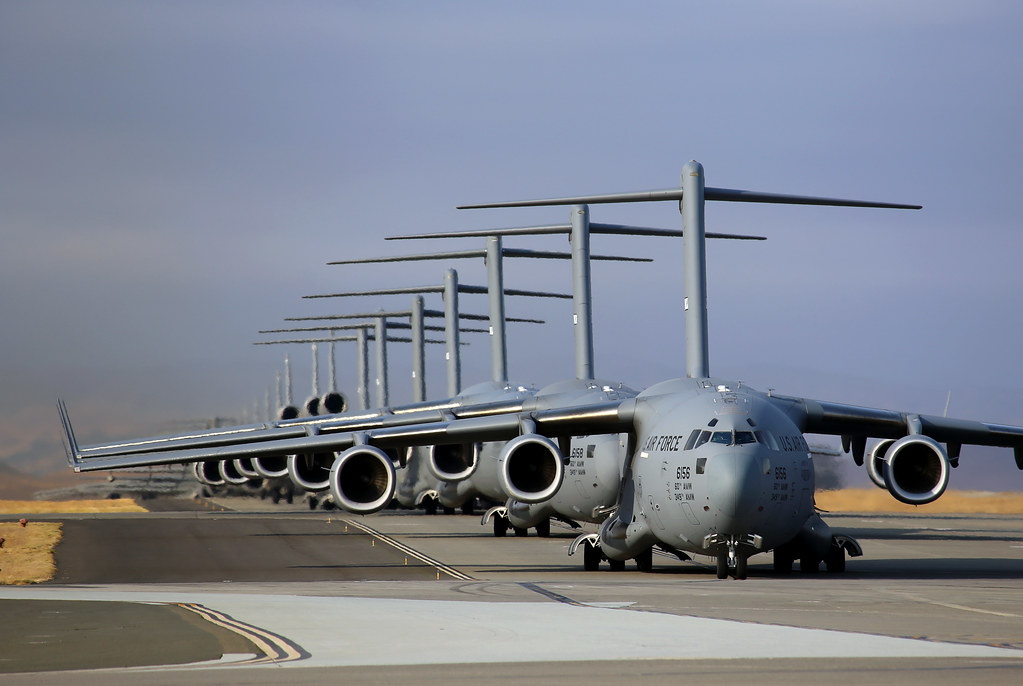
The first indicators of the potential troop movement came on Saturday evening, when, less than twenty-four hours after Maduro’s capture, roughly ten American strategic airlifters began a journey across the Atlantic , toward the UK. Those airlifters were accompanied by two copies of America’s rare AC-130J Ghostrider , a gunship used to provide air support in complex ground operations.
According to the UK Defence Journal , some of the US aircraft were transporting helicopters, sent from locations consistent with America’s Night Stalkers , the elite helicopter pilots who played a pivotal role in the capture of Maduro . According to reports from the ground, C-17s landing at the RAF Fairford airbase carried at least five modified Black Hawk helicopters and at least one modified Chinook —both Night Stalker assets.
Some reports suggest that American Delta Force units were also moved to Europe, or could be soon; Delta Force were the tip-of-the-spear special operators who apprehended Maduro , assisted by FBI hostage-rescue personnel. Other reports on the ground, collected by the UK’s Forces News , indicate the presence of several tiltrotor Osprey aircraft, in use primarily with the US Marine Corps.
The aircraft didn’t remain in Britain for long; several have already taken off toward Germany , and flight-tracking data suggests that other US airlifters are moving eastward, as far as Kuwait. Some sources indicate that US jamming may have even been responsible for mystery airspace blackouts in Greece, which inexplicably started and ended of their own accord throughout the day.
While early speculation suggested anything from upcoming military exercises to movements toward Greenland, the repositioning of Night Stalker and Delta units this quickly would indicate a far more serious, high-priority objective . Right now, the obvious target for these units is Iran .
In the immediate aftermath of US action in Venezuela, Iranian leaders have signaled acute concern about the threat of US action targeting their regime. Iran is, at present, in the midst of major protests that have left over thirty-five people dead —and recently, Trump has vowed that the US would take action to protect Iranian protesters, if the regime escalated its crackdown to the point that protesters were killed.
Obviously, those statements all seem a bit more serious to Tehran, after what just happened in Caracas. US and UK intelligence sources told The Times that Ayatollah Khamenei is already plotting an exit strategy , preparing to flee to Iran with up to twenty aides and family members if protests continue to spiral out of control. Those sources suggest that the 2024 flight of Bashar al-Assad from Syria has become a blueprint for Iranian officials.
Israel was already signaling potential, renewed strikes against Iran over the last several weeks, and had briefed the US on its plans for a future attack. Now, with the US moving assets eastward, and the Ayatollah clearly in a state of immense vulnerability, those strikes may be imminent—and they may be more comprehensive than Iran’s regime initially suspected.
By the way, our team has been tracking the risk of renewed war between Iran and Israel for months now; here’s a primer we published in early October, explaining the situation.
"130911-F-KZ812-158" by Robert Couse-Baker is licensed under CC BY 2.0 .
This Week on WarFronts:
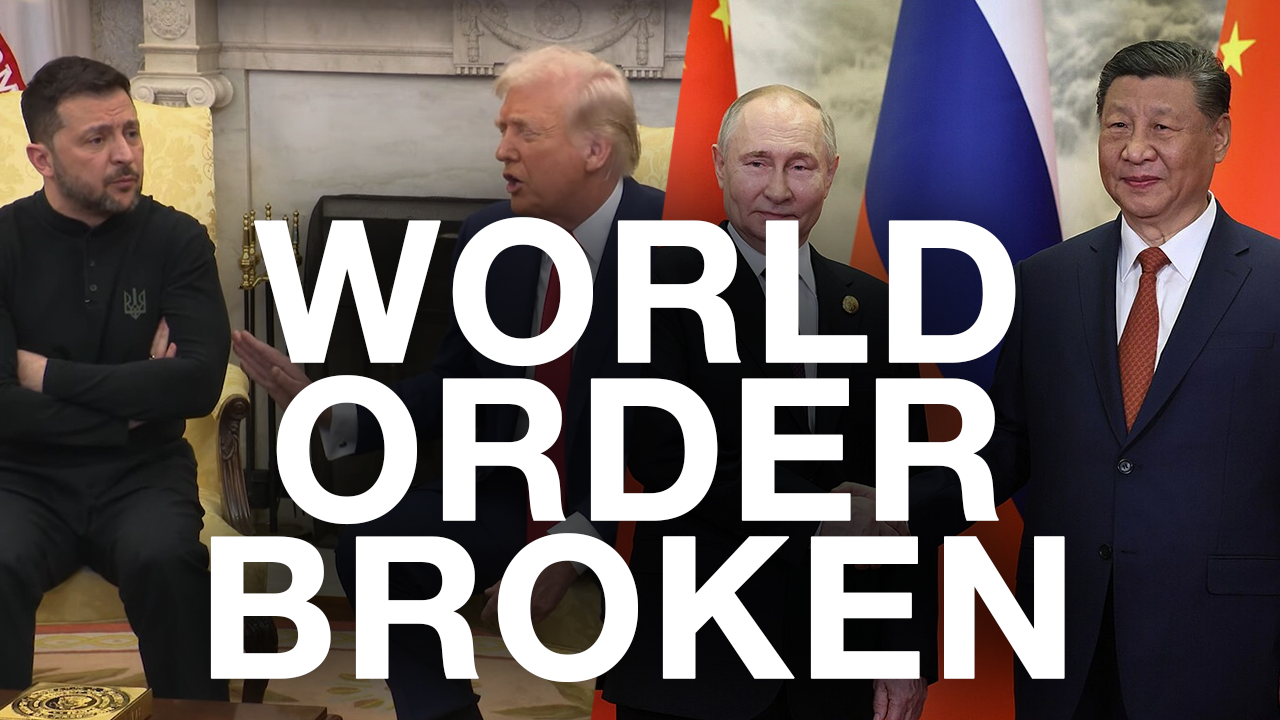
Just a few days ago, we at WarFronts released our 2025 Recap , where we detailed the ways that the world shifted decisively away from the US-led, rules-based order of the post-Cold War years, and toward a new era of global multipolarity . Days later, the United States engaged in a brazen and highly effective smash-and-grab in Caracas, leveraging overwhelming military force to capture dictator Nicolas Maduro.
But although the United States’ actions were a clear demonstration of US military power, they were also the latest confirmation of the world’s rising multipolarity . The United States conducted unilateral military action against an unfriendly nation, with unfriendly allies, positioned squarely within the sphere of influence that America’s current administration has claimed as its own. In the aftermath, the US has demonstrated no interest in nation-building projects or elevating the Venezuelan opposition to power, but instead, has focused on asserting its will , establishing control over oil and other resources , and threatening further use of force if its Venezuela objectives are compromised.
These are precisely the sorts of military actions that become more likely in a multipolar world: Powerful militaries using force frequently, in areas within their own sphere of influence, where they can concentrate overwhelming force and dictate terms to less-powerful targets while deterring international rivals from attempting to intervene. The mere fact that the United States was behind this particular action, does not refute this move to multipolarity—but confirms it.
UK, France Conduct Strikes in Syria:

Britain and France carried out a joint airstrike in Syria on Saturday night, in a rare operation that saw the two nations coordinate without any obvious involvement from the United States. The strikes, which targeted an underground facility used by ISIS to store weapons, reportedly involved zero civilian casualties and a successful destruction of the target.
The strikes were announced by Britain’s Ministry of Defense, attesting that the operation was carried out by British Typhoon jets and a Voyager refueling tanker, with the support of unspecified French aircraft. Footage released by France’s Joint Staff showed Rafale fighter jets participating in the attack. The strike hit a zone close to the ancient city of Palmyra , where ISIS operatives are known to be active in small numbers, despite being mostly cleared out of the zone in 2019.
While joint Franco-British operations against ISIS are not unheard-of, these strikes may come with greater geopolitical relevance—and with a different intended audience —than usual. As the United States under Donald Trump works to shift the burden of self-defense onto European members of NATO, American leadership has derided the military unpreparedness of European nations to engage in military action.
With Germany and Poland still in the process of rearmament, France and Britain are, for now, NATO’s most powerful European members —not to mention, the bloc’s two European nuclear powers. While their practical impact will be limited to the fallout from a single strike, London and Paris’ willingness to take on strikes of their own—particularly while working jointly—may be an attempt to both signal strength to America , and signal united self-sufficiency to the rest of Europe . While the US does often provide intelligence support to its allies for these sorts of strikes, neither France nor Britain has acknowledged any intelligence support here.
Just as relevant, is the location that France and Britain chose to strike. Palmyra was the site of a shooting by a lone Islamic State gunman in December, which killed two US soldiers and an American civilian working as a translator. By continuing to degrade ISIS assets in the area, France and Britain are participating in a retaliatory US-led campaign that has included a barrage of recent strikes.
Image Credit: “The Eiffel Tower lit in blue white red – Fluctuat nec Mergitur” by Yann Caradec is licensed under CC BY 2.0 .
What We're Reading:
Among the lessons learned from the United States’ recent Venezuela invasion, was the absolute shellacking delivered to Venezuela’s Russian-made air-defense systems. As unilateral interventions like America’s become more likely, global air defenses are on track to be tested relentlessly, with Russia’s systems especially vulnerable.
This recent analysis by the think tank RUSI lays out a series of recommendations to undermine Russian air defenses before military action even takes place, by targeting production lines, sustainment infrastructure, and digital vulnerabilities. While the analysis is oriented toward actions that Ukraine could take against Russia, it includes lessons that many world nations could put to use.
Around the World:
The push and pull of battles in Yemen continued this week , as Saudi-backed forces, with Saudi air support, took the vast majority of Yemen’s eastern interior and coastline back from the rebel Southern Transitional Council. The rapid exchange of territorial holdings reflects Yemen’s relatively unique method of warfighting, where all sides avoid costly urban battles in favor of limited skirmishes and frequent retreats in the face of overwhelming force—causing the rapid, but often temporary, transfer of territory.
A major assault in Nigeria’s Niger State left at least thirty people dead at a market, with several others abducted from the scene. The attack was perpetrated by local bandit groups, according to a police spokesman, while witnesses described a rapid and overwhelming motorcycle attack by multiple gunmen. Bandits have conducted other recent raids in the surrounding countryside. Also in Nigeria, an ambush on Monday left at least nine soldiers killed in Borno State, not far from Islamic State-West Africa Province territory.
Counterterrorism police in Pakistan seized no less than two tons of explosive materials in the port city of Karachi, in a series of raids targeting militant hideouts across the city. According to a senior Pakistani official, the explosives had been transferred to Karachi by the separatist Baloch Liberation Army (BLA), and were being assembled for imminent use, with one vehicle bomb already constructed. Islamabad reiterated its claim that India supports the BLA directly.
An attack in the Democratic Republic of the Congo left at least fifteen people dead across three villages in North Kivu province, after an Islamic State-linked rebel group, the Allied Democratic Forces, stormed the villages on Thursday night. Thirteen of the fifteen people killed were civilians, killed mostly with bladed weapons—a hallmark of ADF attacks.
Cuban authorities attested to the deaths of thirty-two Cuban citizens during the United States’ raid on Venezuela, in which Nicolas Maduro was captured. Havana clarified that all the Cuban dead were part of either Cuba’s military or its intelligence organizations. Cuban advisors and soldiers have acted as both protectors and handlers for Maduro for years.
The US Department of Justice stated that it thwarted an Islamic State-inspired attack by a North Carolina man, who had intended to carry out an act of terror using knives and hammers on New Year’s Eve. The man in question, 18-year-old Christian Sturdivant, reportedly planned to target a grocery store and fast food restaurant.
Several oil tankers attempted a coordinated breakout from Venezuelan waters over the last three days, turning transponders off and leaving in different directions to maximize their chances of running the United States’ ongoing Caribbean-Pacific blockade. The success of the effort is not yet known; the participating tankers are mostly Russian- or Chinese-owned.
According to a Norwegian brigade commander, Russian operatives have been posing as fishermen and tourists while slowly infiltrating the northern city of Kirkenes near the Russian border. Per the commander, the Russian spies were primarily engaged in espionage and information-gathering work; the number of operatives was unspecified.
The President of the Central African Republic, Faustin-Archange Touadéra, won a third term in office according to official tallies after a December 28 vote. Touadéra won with roughly seventy-six percent of the vote, in an opposition-boycotted election criticized as neither free nor fair; Touadéra’s victory comes with major implications for the last holdouts of Russia’s Wagner Group, who have lived in the CAR for several years now.
Donald Trump expressed frustration with Vladimir Putin over the weekend, telling reporters at a press conference that Putin is “ killing too many people ”, days after a telephone conversation that followed false Russian claims of a Ukrainian attack on Putin’s residence. Trump stated that he no longer believes the attack occurred.
The head of Ukraine’s security service, the SBU, will be replaced , according to Volodymyr Zelenskyy. The current head of the organization, Vasyl Maliuk, has overseen numerous high-profile operations including Operation Spider’s Web and various targeted assassinations within Russia; Zelenskyy has directed him to shift his work into asymmetric combat operations, suggesting that Maliuk remains important to Ukraine’s war effort.
Integration efforts between Syria’s transitional leadership and the Kurdish-led Syrian Democratic Forces continued to stall this week, after Sunday talks failed to generate any meaningful progress. The SDF’s main point of contention remains its ability to preserve its status as a cohesive unit; pressure from Turkey, to integrate or else, has only continued.
A fire in southwest Berlin left tens of thousands of households without heat or electricity, in what German authorities described as an act of sabotage . A local news outlet received what Germany has identified as an authentic letter, taking credit for the incident on behalf of the far-left Volcano Group, which opposes the use of fossil fuels. The Volcano Group attacked a Tesla gigafactory in 2024, and is believed to have carried out an attack like this one against Berlin’s power infrastructure in September 2025.
Latvian authorities boarded a ship in the Baltic Sea on Friday, after that ship was suspected to have damaged an undersea telecommunications cable off the Latvian coast. The incident took place just days after another vessel damaged five cables running from Finland to Estonia, and matches a broader pattern of suspected Russian sabotage.
China has allowed images to leak of a multi-configuration, refitted cargo ship in port, first fitted with a loadout of containerized vertical missile launchers, and then fitted with a modular catapult-driven drone launch system, rapidly turning it into a dedicated drone carrier. The highly versatile design, and the rapid refitting of a vessel passing as a cargo ship into multiple war-ready configurations, indicate major leaps for Chinese capability.