
WarFronts Weekly 11.18.2025.
🟨 WarFronts Weekly | Security Council Approves Gaza Security Force & More.
Evan Moloney • November 18, 2025
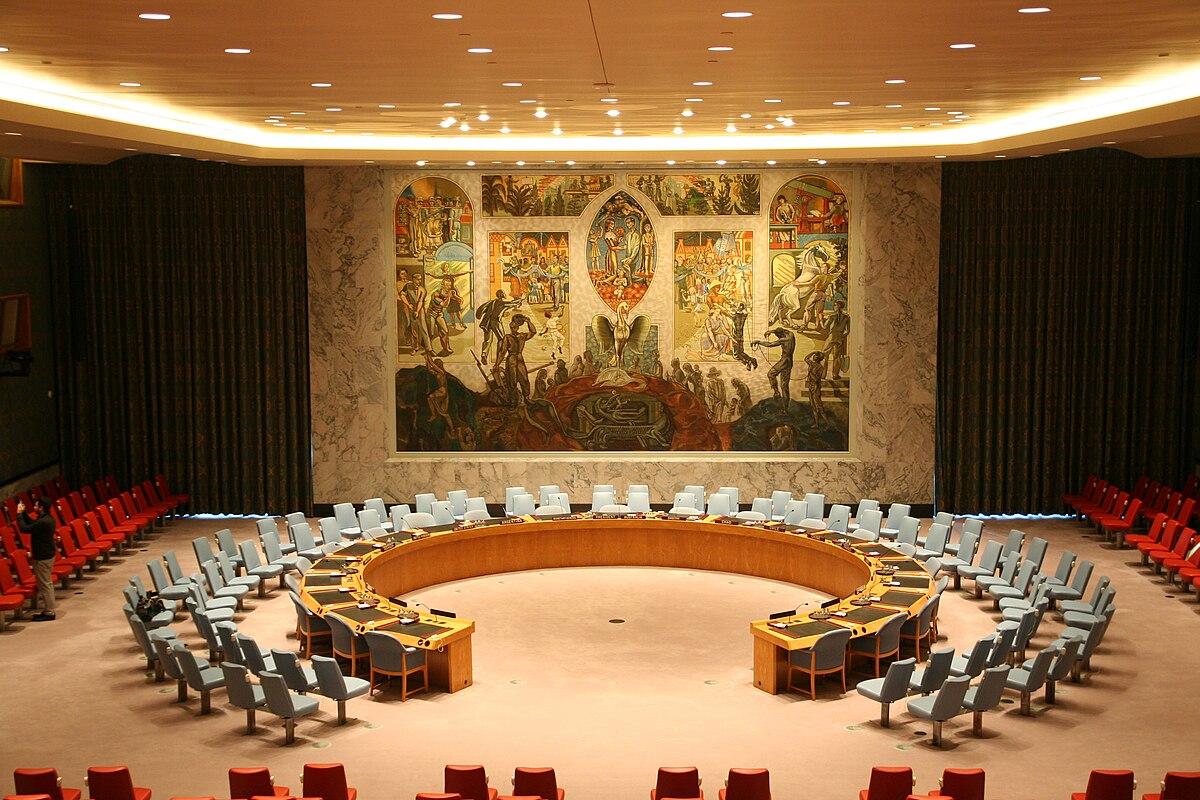
“This will go down as one of the biggest approvals in the History of the United Nations, will lead to further Peace all over the World, and is a moment of true Historic proportion!”
-US President Donald Trump, via social media.
Security Council Approves Gaza Security Force:
A post-war governance blueprint for the Gaza Strip gained resounding approval from the United Nations Security Council on Monday, paving the way for work to begin on an international stabilization force . The proposal, offered up by the United States, sought authorization for that force through the end of 2027 ; that permission has been granted.
The proposal passed with no resistance , despite initial fears that Moscow would exercise its veto in an attempt to push its own rival resolution. Ultimately, Russia and China both abstained , after the Palestinian Authority in the West Bank threw its support behind the measure.
For nations across the Muslim world, and especially in the Middle East, UN approval for any Gaza intervention has long been regarded as a necessity . Although Hamas publicly opposed the measure, support from the UN and the Palestinian Authority provides more than enough cover for Arab nations to proceed anyhow.
In essence, the measure approves the United States’ 20-point peace proposal, with the most important items in that proposal being a transitional authority to lead Gaza, and the aforementioned international stabilization force .
The transitional authority that the plan proposes, the so-called Board of Peace , will be headed by US President Donald Trump. Its members have yet to be named, although those announcements are expected in the coming weeks.
The international stabilization force is more complex, as it will be charged with the demilitarization of the Gaza Strip, and the collection and decommissioning of weapons in the hands of all non-state armed groups. Stabilization troops will be charged with securing Gaza’s borders , training and vetting a new Palestinian police force, and coordinate the flow of humanitarian aid, while overseeing a progressive Israeli withdrawal from the territory.
The plan does not provide any timeline or explicit guarantee of Palestinian statehood , which it frames as an item of discussion that should be saved until reconstruction is at least partially complete, and the Palestinian Authority has undergone reform. In discussing the agreement, Arab and European nations endorsed the decision to suspend demands for a clearer set of stipulations around Palestinian statehood, as a compromise to ensure that the current truce in Gaza can be extended.
Nor does the plan name the nations expected to contribute troops to the stabilization force. The US has indicated that it will not assign troops to the mission, and Israel is obviously expected not to take part. In a joint statement last week, the US joined forces with Egypt, Saudi Arabia, Jordan, Turkey, Pakistan, Qatar, Indonesia, and the Emirates to call for the plan to be adopted; all eight nations may be considering troop deployments . Turkey, in particular, has made clear its interest in filling a role with the stabilization force, as part of its growing rivalry with Israel.
Image Credit: “United Nations Security Council in New York City 2” by MusikAnimal is licensed under CC BY-SA 4.0 .
This Week on WarFronts:

This week, we published this episode on Ecuador’s flagging efforts to address its internal armed conflict, against nationwide organized criminal actors that are continually gaining in strength.
On Sunday, Ecuadorean President Daniel Noboa received another blow to his counter-crime efforts, when citizens of Ecuador rejected a proposal to allow foreign military bases on Ecuadorean soil in a nationwide referendum.
The decision affirms the nation’s current stance on foreign bases, legally banned since 2009, and rebukes efforts from Noboa to secure a US military base as part of America’s ongoing action against alleged narcotraffickers in the eastern Pacific.
Sheikh Hasina Sentenced to Death:
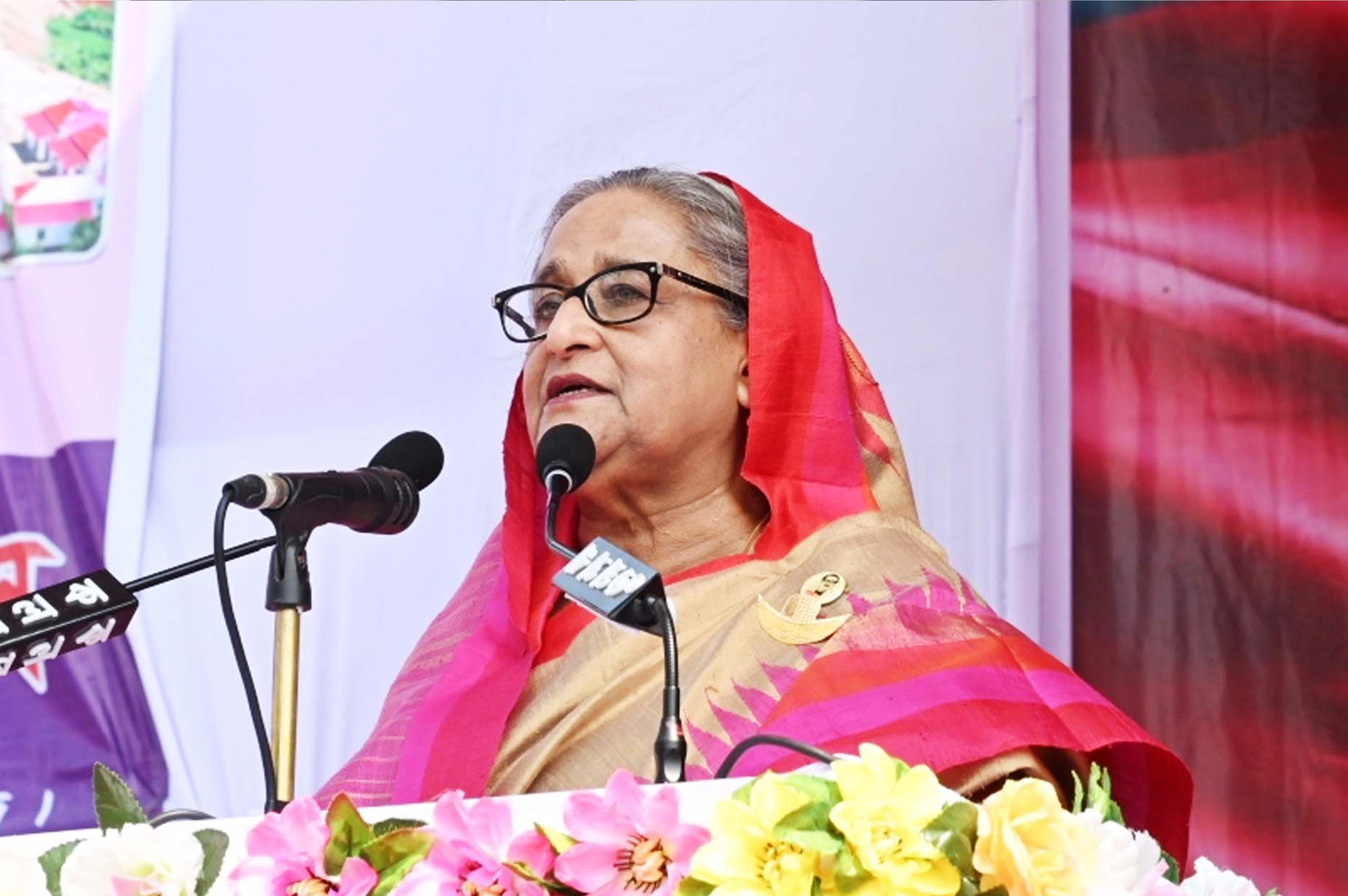
Barely one year after she fled the nation during a student-led uprising, the former Prime Minister of Bangladesh, Sheikh Hasina, has been sentenced to death by the nation’s international crimes tribunal. According to the court’s verdict, Hasina is guilty of ordering the nation’s government to kill citizens, failing to act to prevent atrocities, and inciting violence and repression against anti-government protesters.
Hasina no longer resides in Bangladesh, and has instead been sentenced to death in absentia , as she looks on from India. Hasina and her remaining supporters have denounced the trial , as a politically motivated exercise, while international rights groups condemned the death sentence as an overreach , in what was otherwise an important act of justice.
The nation’s courts, however, clearly disagreed ; reading the verdict, one justice explained that Hasina “ committed crimes against humanity by her order to use drones, helicopters and lethal weapons ”. Hasina’s crackdowns , in advance of her eventual downfall, led to the deaths of over a thousand people.
An extradition from India remains highly unlikely, as Hasina spent many years building India-Bangladesh ties, and essentially lives under the Indian government’s protection . India has, to this point, ignored all requests to extradite her. Hasina was tried alongside her former police chief, who has served as a witness in the trial and has been granted leniency.
Speaking from abroad, Hasina criticized the verdict as unfair and illegitimate , claiming that it was “ made by a rigged tribunal established and presided over by an unelected government with no democratic mandate ”. Hasina continues to maintain her innocence; “ We lost control of the situation, but to characterize what happened as a premeditated assault on citizens is simply to misread the facts ”.
Nor has Hasina’s political apparatus taken the verdict lightly. In the days leading to the verdict, Hasina’s son had warned of nationwide violence unless a ban against Hasina’s political party, the Awami League, was lifted. After the verdict, he vowed that his mother and the Awami League will “ fight back by whatever means necessary ”.
That charged rhetoric comes at a difficult time for Bangladesh, as the nation’s new leaders have been slow to make progress , and political bans against the Awami League have ostracized a portion of society still loyal to Hasina. Over the last week, dozens of crude or improvised explosives were set off across the capital city of Dhaka, prompting a heavy police presence in advance of the Hasina verdict. Riots broke out around the courthouse as the verdict against Hasina was read out.
Image Credit: "Sheikh Hasina Gopalganj in 2023" by DelwarHossain is licensed under CC BY-SA 4.0 .
What We're Reading:
As the Congolese government moves toward a peace framework with the rebel group M23, there is a high potential for political repercussions all across the Congo.
In this recent report by Critical Threats, experts Yale Ford and Liam Karr explain recent efforts by Congolese President Felix Tshisekedi to coup-proof and otherwise strengthen his grip on power. The extensive report highlights both the turmoil within Tshisekedi’s inner circle, and his likely views on opposition leaders as they move rapidly toward building a rival coalition.
Around the World:
The JNIM fuel blockades in Mali appear to be lessening, as several successive fuel convoys have reached the capital city Bamako. JNIM appears to be shifting its operational center westward, in order to choke off a limited number of fuel import routes, but the shift has brought temporary reprieve to the capital, nonetheless.
This weekend, Pakistan threatened the creation of a “buffer zone” on Afghan territory, in order to prevent future attacks by the Pakistani Taliban on Pakistan’s soil. While Afghanistan is unlikely to agree to such an arrangement, Pakistani officials have threatened to impose the buffer zone unilaterally. While Pakistan is unlikely to succeed in locking down the entire border zone, it could impose direct control over individual hot spots. Also in Pakistan, security forces executed a pair of raids on Pakistani Taliban hideouts near the Afghan border, in which a cumulative fifteen members of the group were killed.
Colombia’s human rights ombudswoman reported on Saturday that an airstrike earlier in the week had left seven children dead, in a rural part of the country where those children had been forcibly recruited and used as human shields by a FARC splinter group. These rural strikes have been a dividing line in Colombia for years, partially due to past government cover-ups of child fatalities.
An explosion in India-controlled Kashmir left at least nine people dead and over 30 injured, after a pile of confiscated explosives detonated while being examined at a police station. The explosion was not a result of militant activity, but does come at a time of heightened tensions in India after a recent bombing.
Gunmen in Nigeria’s Kebbi State attacked a boarding school on Monday, killing the vice principal and abducting twenty-give girls in the town of Maga. One of the girls later escaped captivity. Police and soldiers have been deployed to the zone, and a perpetrating organization has not yet been named, although past Boko Haram attacks have used similar tactics and have seen girls disappear for months, years, or even permanently.
Also in Nigeria, the Islamic State – West Africa Province announced the capture and execution of Brigadier-General M. Uba, who had been traveling via convoy in Borno state. The Nigerian Army denied that the general was killed in the attack, which was confirmed to have killed four Nigerian troops.
Islamic State affiliates also carried out a ruinous attack in the eastern DRC province of North Kivu, where the Allied Democratic Forces, or ADF, killed at least seventeen people in an attack on a hospital. The attackers reportedly targeted breastfeeding women, and, as is standard for ADF attacks, carried out the slaughter largely via machete and knives.
An explosion on a Polish railway track was labeled an “ unprecedented act of sabotage ” by Polish Prime Minister Donald Tusk, after the Sunday blast hit a portion of rail that travels from Warsaw into Ukraine. The suspected attack is the latest in a wave of sabotage and arson incidents across Europe, believed to be coordinated by Russia.
China and Japan are engaged in a spat over the Senkaku Islands, after Japanese Prime Minister Sanae Takaichi told the nation’s parliament that Japan could respond militarily to a Chinese attack on Taiwan. Beijing has demanded a retraction from Takaichi, and sailed a formation of four armed coast guard vessels through the island chain in response.
Thousands took to the streets in Mexico City on Saturday, in massive, organized demonstrations against complicity and corruption by the Mexican government. While the protests broke out under the auspices of the global Gen-Z movement, its energy was quickly harnessed by established opposition parties, and became a much larger demonstration against Mexico’s leading Morena party.
In a Tashkent meeting of Central Asian leaders, Uzbek President Shavkat Mirziyoyev proposed the formation of a regional cooperation bloc between Uzbekistan, Tajikistan, Turkmenistan, Kyrgyzstan, and Kazakhstan. Notably, Mirziyoyev excluded Russia from the hypothetical bloc, but included Azerbaijan, a nation not typically counted as part of Central Asia and regarded as a growing geopolitical rival to Moscow.
Ukrainian President Volodymyr Zelenskyy announced that Kyiv and Paris had signed a deal to procure 100 copies of France’s advanced Rafale warplane, for service in Ukraine’s post-war air force. The deal is the single largest Rafale order ever, and has raised questions around Ukraine’s prior commitment to purchase 150 Swedish Gripen fighters, although there is some chance that an early batch of Rafales could be shipped to Ukraine quickly—a current impossibility for the Gripen.