
WarFronts Weekly: 12.16.2025.
Warfronts Weekly: December 16, 2025. Context and analysis on conflicts across the world. Two emails each week: Warfronts Weekly on Tuesdays, Friday Blitz on Fridays.
Evan Moloney • December 16, 2025
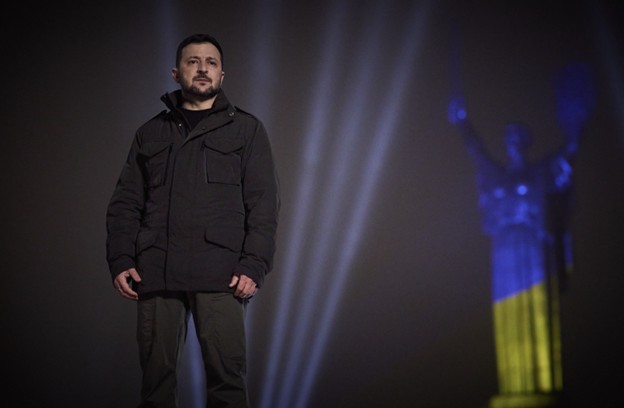
“From the very beginning, Ukraine's desire was to join NATO, these are real security guarantees. Some partners from the U.S. and Europe did not support this direction.”
-Ukrainian President Volodymyr Zelenskyy, speaking to reporters via WhatsApp.
Ukraine Drops NATO Ambitions:
Ukrainian President Volodymyr Zelenskyy made a major gamble this weekend, when, on Sunday, Zelenskyy offered to drop Ukraine’s bid to join the NATO alliance . The offer came during an ongoing round of peace negotiations in Berlin , in conversation with US envoy Steve Witkoff and Jared Kushner, son-in-law of Donald Trump.
Ukraine has sought NATO membership since 2014, and the goal has been enshrined in Ukraine’s constitution since 2018. Zelenskyy, however, explained to global press that the United States and some European nations have indicated that they will not support the bid . NATO membership would require unanimity from all member nations, a threshold that Ukraine is unlikely to meet even with full US support.
Instead of membership in the bloc, Zelenskyy now states that Ukraine will seek functionally equivalent, “ Article 5-like guarantees ” from the United States, as well as security guarantees from European nations and other international partners, including Canada and Japan . Per Zelenskyy, those agreements with the US and other non-European nations would be bilateral —and thus, presumed to be negotiated individually—although Ukraine may negotiate with Europe as a bloc.
By pursuing a legally binding series of agreements on security, Ukraine hopes to skirt the obstacles presented by formal NATO membership, while offering Russia an offramp in negotiations. Russia has consistently demanded that Ukraine renounce any intent to join NATO, and that Western powers would pledge not to enlarge NATO in an eastward direction—criteria that would be satisfied through Ukraine’s current proposal , but that would not actually prohibit Ukraine from securing other bilateral guarantees.
Ukraine, however, risks overplaying its hand as negotiations continue. With Washington seeming to align ever more frequently with Russian negotiating positions, it’s unlikely that Ukraine will be able to recover a NATO bid at any point in the near future. In fact, merely by suggesting that NATO membership could be taken off the table, Ukraine has set the conditions for Russia and the US to treat it as a settled non-issue.
If Russia responds as Ukraine likely hopes, and accepts the ‘victory’ of blocking NATO expansion while tacitly allowing Ukraine to enter into other security partnerships, then the gambit will have succeeded. There is, however, another set of outcomes to consider: that either Russia may see Ukraine’s willingness to make concessions, and press for more , or that bilateral security agreements will fall far short of what Ukraine is hoping for—or could even fail completely to materialize.
In a potential positive sign, Russia indicated on Monday that it may be willing to accept Ukrainian membership in the European Union , according to representatives from the United States. EU membership for Ukraine would ensure a degree of security cooperation per the rules of the bloc, and would help to create a more economically interdependent Ukraine that Europe may be compelled to defend in the future.
Broader negotiations on the Ukraine conflict continued through Tuesday , with NATO’s Mark Rutte , the EU Commission’s Ursula von der Leyen, Germany’s Friedrich Merz , Finland’s Alexander Stubb, and other European leaders descending on Berlin to support Ukraine. Major sticking points remain , including Ukraine’s refusal to withdraw from parts of the Donbas region that Russia has not yet captured.
On Monday, the US told Ukraine that a withdrawal from Donetsk Oblast is a precondition to end the war. If Ukraine were to cede the rest of Donetsk, it would voluntarily relinquish control of the final line of fortress installations between itself and Russia, clearing the way for a much quicker Russian re-invasion within years or even months of a ceasefire.
Meanwhile, recent public polling across Ukraine suggests that Zelenskyy may struggle to gain Ukrainians’ approval, even for this compromise on NATO. According to that poll, by the Kyiv International Institute of Sociology, three of four Ukrainians polled agreed that any territorial concessions or limitations on the size of Ukraine’s army would be “ completely unacceptable ” without clear security guarantees . Just 21% of polled Ukrainians expressed trust in Washington—barely half the support Washington drew last year.
"New Year's Greetings from President of Ukraine Volodymyr Zelenskyy” by President of Ukraine is licensed under CC0 1.0 Universal .
This Week on WarFronts:
On Saturday, WarFronts published this episode on the prospect of a nuclear-armed Japan , an increasingly likely possibility as global alliances shift and new Prime Minister Sanae Takaichi works to further a hardline defense agenda. The episode explores Japan’s status as a nuclear-latent nation, the country’s historical commitment to nuclear nonproliferation, and the evolving security challenges that may push Japan to change its approach.
Since the time that this episode was written, however, the United States has issued its National Security Strategy (NSS), in which Washington indicates that it will make a sweeping series of changes to its global strategic orientation.
The NSS comes with major implications for Japan, as it calls for the US to re-orient itself toward the Western Hemisphere at the expense of both Europe, and its allies in the Indo-Pacific. America’s nuclear umbrella—stationed away from Japanese soil—has been critical to Japan’s thinking for decades, and has allowed Japan to justify its aversion to a nuclear weapons program of its own, despite the threat of a rapidly nuclearizing China.
Now, though, the new NSS is likely to motivate once-hesitant Japanese politicians to take the leap, and give serious thought to a Japanese nuclear weapons program. With US commitment to the Indo-Pacific seeming to decline, Japan may be able to gain American approval to build its own nuclear program , if it can portray itself as a competent East Asian security guarantor to fill the gaps Washington will leave behind.
Saudi-Emirati Delegation Descends on Yemen:
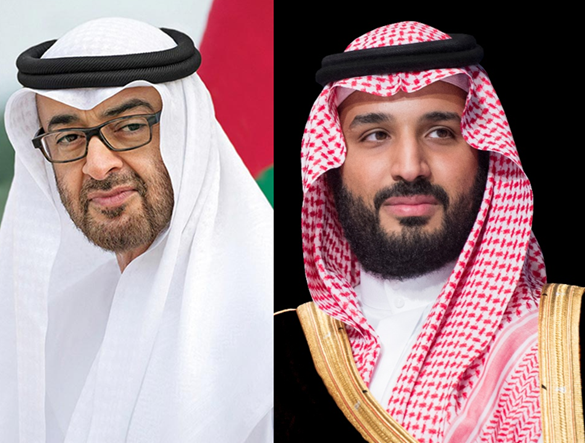
It’s only been a few days since the separatist, Emirates-backed Southern Transitional Council (STC) surged into action across Yemen, capturing major swathes of territory and laying claim to all of the land that formerly made up the Cold War state of South Yemen . Already, though, it appears that the UAE and Saudi Arabia are ready to push past their regional rivalry—at least temporarily—and set the STC’s gains in stone .
At present, after the main thrust of its offensive appears to have concluded, the STC has consolidated its hold over the vast majority of Yemen’s non-Houthi-controlled territory. The eastern governorates of Hadhramaut and Mahra are now entirely under STC control , as is the port city and de-facto capital of Aden , where Saudi-supported representatives of Yemen’s internationally recognized government were recently kicked out. STC operations are ongoing in southern Abyan Governorate.
In the short term, the joint Saudi-Emirati delegation in Aden will focus on working out mutually agreeable arrangements for the STC and a range of Saudi-backed tribal militias across the country, which largely ceded territory to the STC rather than intervening. The talks will also help to resettle non-STC-aligned political and fighting forces, which have settled in and around Aden since the 2014 capture of Sana’a by the Houthi rebels.
In essence, those efforts by Riyadh and Abu Dhabi will constitute a handover of Aden and the surrounding, more densely populated west to the STC, even after the STC has taken control of the massive, sparsely populated Yemeni east. Saudi Arabia’s apparent acceptance of the situation marks a major reversal, and a quiet defeat for Riyadh , which had preferred to prop up Yemen’s internationally recognized government to compete with the STC and the Iran-backed Houthis.
In the longer term, the STC pivoted immediately from territorial capture to an appeal to largely Western audiences, in an attempt to sell itself as a reliable, powerful counter to the Houthi organization. After a US-led maritime intervention against the Houthis was shown to be ineffective, Israeli air campaigns were shown to be incomplete, and Saudi Arabia proved unwilling to risk repeating the major mistakes of its late-2010s anti-Houthi operations, Western powers have lacked any real means to challenge the group on Yemen’s soil.
The STC, however , have proven their ability to capture and hold land, and they’ve demonstrated the value of their tip-of-the-spear fighting forces . They bring a track record of competent management in the regions they’ve governed for years, and they have the clear backing of the UAE , a nation that its Western partners appear unable or unwilling to rein in on the global stage. The STC controls most of Yemen’s oil , its entire southern coastline until the Bab al-Mandeb Strait, and it boasts a recent history that’s relatively free of atrocities , in contrast to the UAE-backed Rapid Support Forces in Sudan.
While the STC isn’t necessarily capable of challenging the Houthis outright, they offer a better counterweight in Yemen than the internationally backed government ever has—and the STC seems to know it. As the STC’s leader recently promised, “ our next goal must be Sanaa, peacefully or through war, until justice returns to its people and aggression is defeated ”.
Image Credit: “Sheikh Mohamed bin Zayed Al […]” by Kalashae is licensed under CC BY 4.0 . “The official portrait of His Royal Highness […]” by Saudi Press Agency is licensed under CC BY 4.0 . Composite by WarFronts.
What We're Reading:
In all of modern geopolitics, there are few bilateral relationships so ironclad as the bond between the United States and Israel—which is why this article from The Guardian is so stunning. According to the report, which draws on conversations with American and European sources, Israel has been “ conducting widespread surveillance of US forces and allies ” at a new US base in the south of Israel.
The base, known as the Civil-Military Coordination Center or CMCC, hosts the effort to monitor the ongoing Israel-Hamas ceasefire and work toward later-stage implementation of a peace plan for the Gaza Strip. Israel is allegedly engaged in the far-reaching recording and surveillance of conversations at the base, to the extent that the base commander has directed Israeli officials to stop the surveillance, and that some people on the base have been instructed to avoid the discussion of sensitive information on the premises.
Around the World:
Russia has begun a series of strikes against Turkish oil tankers, in an apparent act of retaliation following Ukraine’s strikes on Russia-linked oil tankers in the Black Sea. Russia’s strikes target a NATO member, and open the possibility of an invocation of NATO’s Article 5, although Turkey is unlikely to pursue that course of action. The strikes also serve as a likely Russian rebuke after Turkey’s public condemnations of Ukrainian tanker attacks failed to prompt any meaningful change in Ukraine’s approach.
An Israeli airstrike in Gaza killed Hamas senior leader Raed Saad, who Jerusalem described as “ one of the architects ” of the October 7, 2023 attacks. The strike killed four other people and wounded about two dozen; Saad is the highest-profile member of Hamas to be killed since the establishment of the ceasefire currently governing the Gaza Strip.
A suspected Islamic State gunman killed two US Army soldiers and an American civilian interpreter in Syria, in what appeared to be an insider attack . The gunman was a member of Syria’s security forces , and had been screened for extremism just days prior. The shooting was one of several ISIS ambushes in Syria over the last few days.
Intense fighting continues across the Thailand-Cambodia border, several days after US President Donald Trump claimed to have brokered a ceasefire. On Monday, Thailand stopped shipping fuel to Laos, citing fear that the fuel was making its way to Cambodia. In combination, the two nations claim that over 650,000 people have been displaced thus far.
In other US-brokered ceasefire news, US Ambassador to the UN Mike Waltz made a rare accusation toward Rwanda on Friday, claiming that the nation was fueling war in the Congo despite Rwanda, the DRC, and the US being party to a peace deal that supposedly resolved the conflict. In reality, Rwanda-backed M23 rebels consolidated their hold in and around the city of Uvira over the weekend, following the culmination of their Uvira offensive.
A drone strike on a United Nations base in Sudan left six Bangladeshi peacekeeping troops dead and at least eight others wounded, in a zone disputed by Sudan and South Sudan. According to Bangladesh, the attack was perpetrated by “ separatist armed groups ”; the Sudanese military blamed the paramilitary Rapid Support Forces.
Also in Sudan, the South Sudanese military has deployed to the Heglig Oilfield and the surrounding area, to lock down the zone as a neutral third party after it was captured by the RSF. The move comes with the approval of both the RSF and the Sudanese Armed Forces, and will ensure South Sudanese control over a refinery that handles its oil exports. While South Sudan technically maintains a neutral stance in the war, it generally operates in alignment with the RSF.
A mass shooting at Sydney’s Bondi Beach was perpetrated by a father-and-son team who were inspired by the Islamic State , according to the Australian government. Sixteen people, including one of the shooters, were killed in the attack, which targeted a Hanukkah celebration. The gunmen reportedly traveled to the Philippines last month, a known Islamic State hotbed in South Asia.
Guatemala declared a state of emergency in two municipalities on Monday, after a group of armed men killed at least five people in coordinated attacks on a military outpost and a police station. According to Guatemalan President Bernardo Arevalo, the country is dealing with quasi-insurgent attacks by organized criminal groups, attempting to take control of the region of Sololá.
Public protests in Tunisia continued to escalate this week, as civil society comes together in a growing push to oust dictator Kais Saied. While Saied has been consistently tightening his government’s control on Tunisian media, politics, and other institutions, his regime has been unable to prevent the nation’s few remaining opposition groups from coordinating their actions with growing efficiency.
Images and video circulating on the Chinese internet shows that a large drone called the Jiutian , believed to be a mothership-style carrier for smaller aerial drones, has completed its first flight. The Jiutian is intended as a highly versatile design, also capable of airstrike and air-to-air missions, but appears to be optimized for use as a long-range mothership.
Belarus announced the release of 123 political prisoners over the weekend, including Nobel Peace laureate Ales Bialiatski and opposition leader Maria Kalesnikava. Their release was tied to a deal with Washington, in which the US will lift sanctions against Belarusian exports of the fertilizer component potash.