
WarFronts Weekly: 12.2.2025.
Warfronts Weekly: December 2, 2025. Context and analysis on conflicts across the world. Two emails each week: Warfronts Weekly on Tuesdays, Friday Blitz on Fridays.
Evan Moloney • December 2, 2025
“Obviously if that occurred, that would be very serious, and I agree that that would be an illegal act.”
-US Republican Representative Mike Turner, discussing allegations of a second strike to kill survivors of a US airstrike against an alleged Caribbean drug boat.
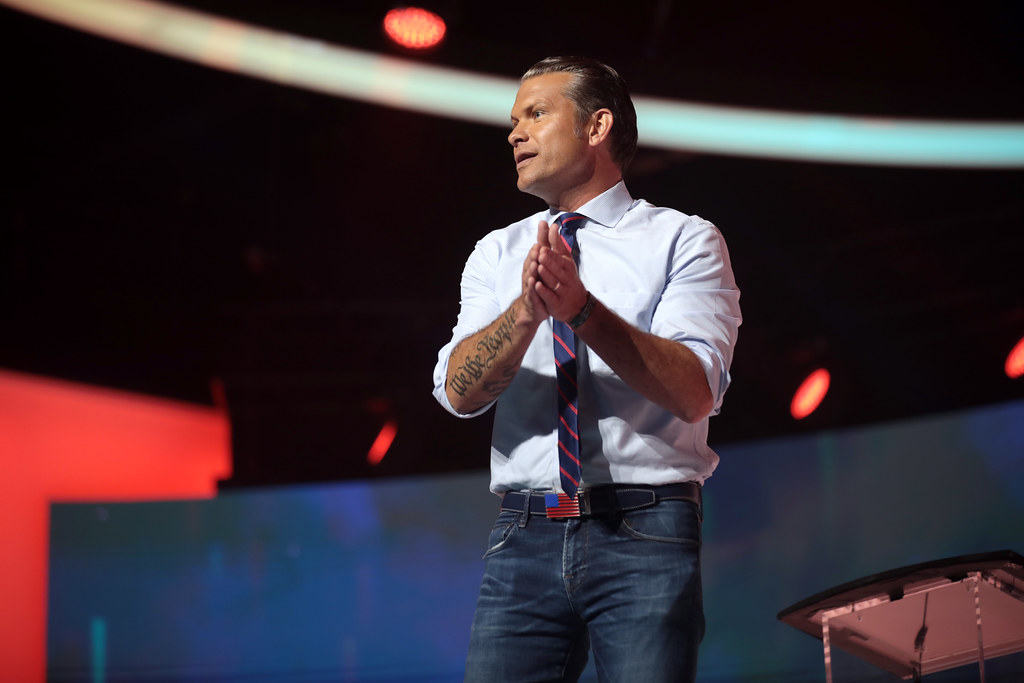
Hegseth, US Admiral Accused of Potential War Crime:
Last week, the Washington Post published a bombshell report on the United States’ Caribbean and Pacific operations against alleged Latin American narcotraffickers. According to that report, after America’s first airstrike on an alleged drug boat on September 2 left multiple occupants alive, US Secretary of Defense Pete Hegseth ordered second-strike operations to kill all survivors . That order was allegedly carried out by Navy SEAL Team Six, by way of a follow-up missile strike.
The report drew intense and immediate condemnation from both sides of the US political aisle, with bipartisan inquiries launched in both the US Senate and House of Representatives within just days. Hegseth denied the allegations out of hand, calling them “ fabricated, inflammatory and derogatory ”, but unlike most scandals involving the second Trump administration, congressional Republicans have been quick to take action .
Strikes like these, deliberately targeting stranded survivors of a prior strike when those survivors do not pose any credible threat, are widely recognized by legal experts and US legislators as an illegal act . A double-tap strike of this kind would be regarded as an extrajudicial killing ; as The Intercept describes , “ the military is not permitted to deliberately target civilians — even suspected criminals — who do not pose an imminent threat of violence ”.
The allegations come amidst clear and growing troubles with the US’ operations in Latin America. Weeks ago, reports circulated indicating that military personnel have begun to seek outside legal counsel about the legality of their orders, while a group of Democrat lawmakers prompted Republican outrage by releasing a recent video that emphasized troops’ legal obligation to refuse unlawful orders .
And although Hegseth initially denied the allegations, the White House confirmed on Monday that Hegseth did authorize the double-tap attack . According to the Trump administration, it was actually the operational commander, Admiral Frank Bradley , who decided to engage in a second-strike attack, but it was Hegseth who ultimately signed off.
That said, the White House has rejected the premise that its actions, or Hegseth’s, could be construed as a war crime. According to Washington, its double-tap strikes are justified because the targeted individuals are alleged to be part of designated narco-terrorist groups, although those links have not been proven on a case-by-case basis. Writing on social media, Hegseth himself doubled down on his support for Adm. Bradley’s purported actions, while Donald Trump defended Hegseth personally ; “ I’m going to find out about it, but Pete said he did not order the death of those two men. ”
Those denials, no matter their source, have not yet managed to gain the respect of legal or military experts in the United States. In the aftermath of the Washington Post report, a group of former military lawyers publicly condemned Hegseth’s orders as “ war crimes, murder, or both ”, while other experts have emphasized the compounding nature of these strikes, as part of an airstrike campaign that was already of questionable legality .
Notably, the allegations against Hegseth and Bradley closely mirror the World War II war crimes trial after Nazi Germany’s sinking of a Greek ship, the Peleus . In that instance, three Nazi naval officers were ultimately executed , after attacking survivors of a U-boat attack with gunfire and explosives. The case forms a post-war precedent, for the international handling of extrajudicial killings of this sort, although US officials are highly unlikely to ever face trial in international courts.
Image Credit: "Pete Hegseth" by Gage Skidmore is licensed under CC BY-SA 2.0 .
This Week on WarFronts:
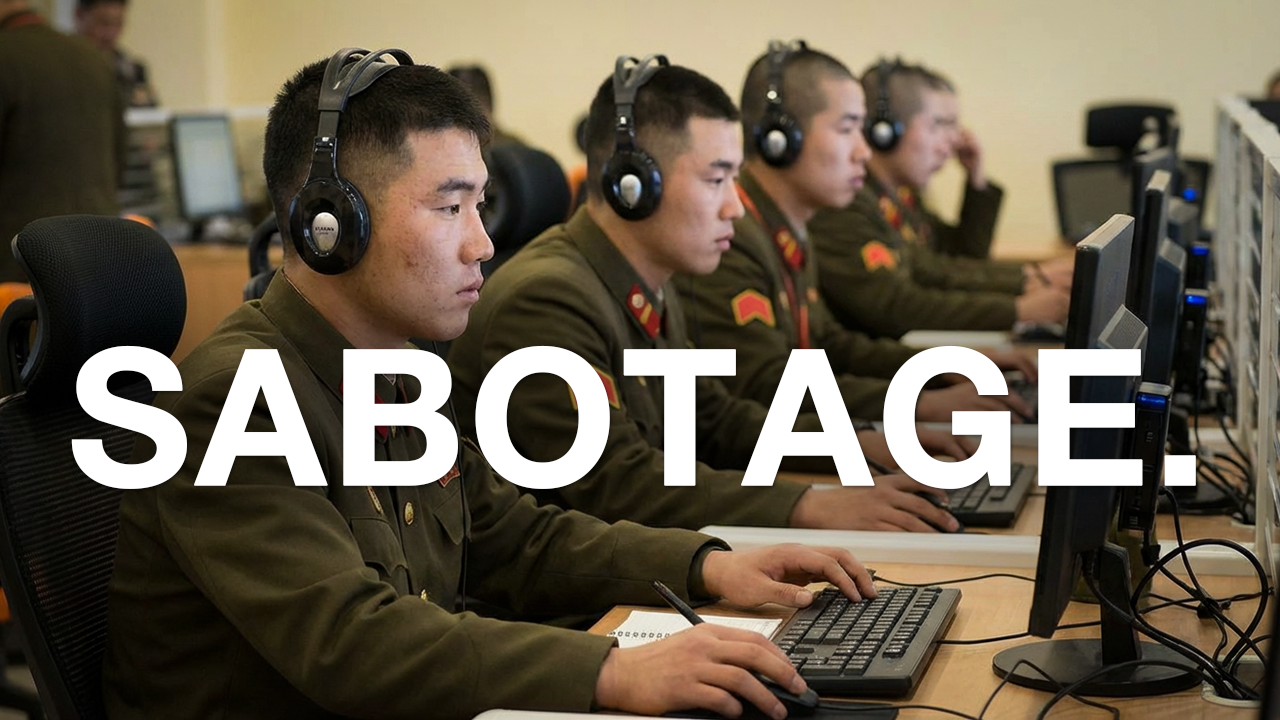
This week, we published this episode on North Korea’s extensive infiltration of the US tech sector, and explained the highly adaptive nature of North Korea’s cyber-operations.
Just before the episode was published, South Korea levied a new set of cyber-espionage allegations against North Korean hackers, and particularly the Lazarus Group , a collective known to be affiliated with North Korean intelligence. In this instance, the Lazarus Group allegedly stole the equivalent of over $30 million in cryptocurrencies, by hacking South Korea’s largest crypto exchange, Upbit.
Ukraine Negotiations: Kirill Budanov In Charge.
As Ukraine continues to endure the fallout of its massive energy-corruption scandal, it’s sustained the loss of policymakers who were once thought to be critical to Kyiv. As those leaders disappear, however, new vacancies have opened up—especially on the team tasked with negotiating a more favorable version of the US peace proposal with Russia.
The most important resignation of the last week, by far, is President Volodymyr Zelenskyy’s now-former chief of staff, Andriy Yermak , a formidable figure who had drawn the growing distrust of Ukrainian civil leaders because of his immense power as an unelected official. Yermak resigned his post on Friday, shortly after his home was searched by anti-corruption officials.
After his resignation, Yermak vowed to travel to Ukraine’s front lines, where he’s since appeared, in what seems to be a dramatic attempt to prove his loyalty to the nation. Said Yermak via a text statement, “ I’m going to the front and am prepared for any reprisals. I am an honest and decent person. ”
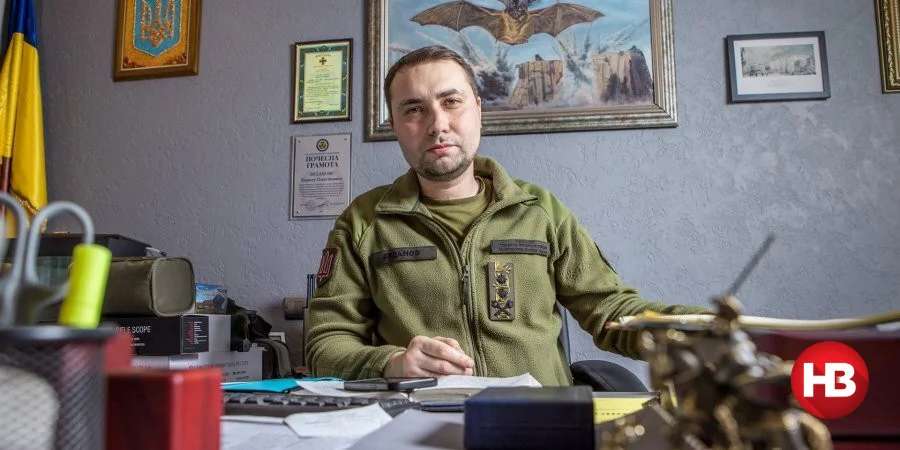
In Yermak’s absence, Ukraine’s delegation to the United States will formally be led by Rustem Umerov , the secretary of Ukraine’s security council. The real power player, however, appears to be Ukraine’s head of military intelligence, Kirill Budanov —and if those assessments are true, then the tenor of negotiations may be about to shift dramatically.
A longtime adversary of Yermak’s inside Kyiv, Budanov brings a stellar reputation among the global intelligence community, and draws far greater respect from the Ukrainian public than Yermak did in recent years. He served as part of Ukraine’s elite Unit 2245 during the low-grade fighting in the Donbas, and was reportedly renowned for his feats in enemy territory, sustaining several serious combat injuries in the process. He’s both a known target of Kremlin assassination attempts, and an object of serious concern within Moscow, where he’s regarded as one of Ukraine’s most dangerously competent leaders.
If Budanov can make good on his reputation and negotiating prowess in Washington, he may prove critical in averting a worst-case scenario for Ukraine. Kyiv and Washington have been revising Washington’s peace proposal , and have significantly amended the initial, apparently Russia-crafted version, but there’s considerable work left to be done. In its current form, the deal would offer concessions to Russia that Ukraine, and its European allies, are unlikely to be able to stomach.
Image Credit: “Kyrylo Budanov in his office” by Головне управління розвідки Міністерства оборони України is licensed under CC BY 4.0 .
What We're Reading:
In Europe’s push for rearmament, there is perhaps no nation more critical than Germany. Not only does Berlin command one of the world’s most powerful economies , but it will be forced to serve as a territorial bulwark in a war against Russia, providing a vital staging ground for a war that will likely be fought on Polish and Baltic soil .
To that end, the Wall Street Journal gained access to Berlin’s classified Operation Plan Germany, a 1,200-page document that outlines the major logistical overhauls required to support and sustain a continental conflict. The plan will guide German defense decisions for the next several years, and will serve as a guiding example to other European nations trying to put similar plans into effect.
Around the World:
Ukraine appears to have declared open season on Russia’s shadow fleet of tanker and cargo ships, with four naval drone attacks within the last week. Of those attacks, three came in the Black Sea , prompting condemnation from Turkey; the other came off the coast of Senegal , roughly 8,700 kilometers from the Ukrainian port of Odessa.
On the opposite side of the Ukraine war, Russia has doubled down on its claim that it has captured the city of Pokrovsk in full, as well as the city of Vovchansk. Ukraine claims that it still holds the northern part of the city, although it concedes that the city’s south has now been lost.
Haiti’s gangs launched a large-scale offensive over the weekend, bringing roughly fifty percent of the nation’s Artibonite region under their control and capturing multiple large towns in the process. The attack is the latest indicator that the gangs intend to expand their reach well beyond Port-au-Prince, and that Haitian and Kenyan security forces lack the means to respond.
Myanmar’s military regime has run into growing trouble on the ground, as resistance forces stalled its attempt to capture the city of Mogok, blunted an offensive into northern Chin State, and captured the important border town of Mawdaung. The resistance victories counter what had seemed to be growing momentum for the military regime.
The United States conducted airstrikes in joint operations with Syrian forces over the last week, striking and destroying fifteen weapons caches created by the Islamic State. The strikes come as Syrian authorities step up their own anti-Islamic State operations, carrying out raids and arrests nationwide.
A Russian convoy of roughly forty trucks set out from a state-seized mine in Niger last week, loaded with over 1,000 tons of yellowcake uranium . The convoy moved through a long, non-secure transit corridor as it passed through the country, posing a clear risk of the uranium’s capture in areas where JNIM and IS-WAP insurgents remain a potent force.
Chinese nationals are under threat in Tajikistan , with China’s Tajik embassy reporting that five of its citizens have been killed, and five others injured, in cross-border attacks from Afghanistan over the last week. One attack involved drones dropping grenades, killing three Chinese citizens in the process. Chinese nationals are a prominent, albeit risky, target for local militants, who strike at Chinese assets and citizens as a way to target Chinese investments in the region by proxy.
Militants conducted multiple attacks in Pakistan over the last several days, in territory known to be frequented by the Pakistani Taliban. On Monday, a suicide bombing killed a senior police officer, and on Tuesday, an ambush by gunmen killed a government administrator, two bodyguards, and a civilian, with both attacks coming in Pakistan’s northwest.
Israeli Prime Minister Benjamin Netanyahu formally requested a pardon from the nation’s president, Isaac Herzog, in an attempt to end an ongoing corruption and fraud investigation. Netanyahu has been on trial since 2020, and has been under investigation since 2016; this is the first time that he has publicly requested presidential intervention.
Allegations are mounting against now-former Guinea-Bissau President Umaro Sissoco Embalo , as Senegal’s prime minister, Nigeria’s former president, and other African leaders raise alarms around the purported “ ceremonial coup ” that the nation’s military staged last week. While Embalo is currently in exile in the Republic of Congo, the coup was staged by his close allies, likely to avoid releasing unfavorable electoral results, while the military’s treatment of Embalo has been suspiciously generous.
Also in coup news, law enforcement in Azerbaijan searched the home of opposition leader Ali Karimli on Saturday, in the latest escalation of a probe into a suspected coup attempt against the nation’s president, Ilham Aliyev. Karimli is thought to be loyal to Ramiz Mehdiyev, a former ally of Aliyev’s father and the supposed architect of the coup attempt.
Cameroonian opposition leader Anicet Ekane died in state custody on Monday, in the latest blow to the nation after President Paul Biya was re-elected to yet another term, under highly questionable circumstances. Ekane led the Manidem political party, and was a supporter of opposition candidate Issa Tchiroma Bakary; he died after 38 days in detention.