
WarFronts Weekly 12.23.2025.
🟨 WarFronts Weekly | Ukraine and Russia Escalate Asymmetric Campaigns & More
Evan Moloney • December 23, 2025
“We've never planned to [attack Europe], but if they want to hear it from us, well, let's do it, we'll put it in writing.”
-Russian President Vladimir Putin, November 2025.
A Note to our Subscribers:
Please be advised that this week’s Friday Blitz will not be delivered as usual, on December 26, as our team takes a few days of R&R. We will release our next installment on Tuesday, December 30, and resume our usual schedule from there.
Thank you, as always, for your continued support of WarFronts Weekly.
Ukraine and Russia Escalate Asymmetric Campaigns:
It’s been a very busy week for Ukrainian intelligence, between car-bomb assassinations, long-range drone attacks , and more. Not to be outdone, Russia has launched attacks of its own, far from the front lines —although it’s not just Kyiv, but Brussels, that seems to be in Russia’s crosshairs.
For both Russia and Ukraine, the urgency of the present moment is clear. Peace negotiations aren’t quite at a stalemate, and each side is demonstrating its continued intent to engage, but each side is working furiously to degrade the other’s negotiating position , and show the world that they’ve got the upper hand.
For Ukraine, the week’s crowning achievement may have been the death of Lieutenant General Fanil Sarvarov , commander of the Operational Training Directorate of the Russian Armed Forces. Sarvarov was killed in an apparent car bombing on Monday morning, just southeast of Moscow, and while Ukraine has not yet claimed credit for the assassination, it is, by far, the most likely culprit. Sarvarov’s death came close to the one-year anniversary of Ukraine’s killing of Russia’s then-WMD chief.
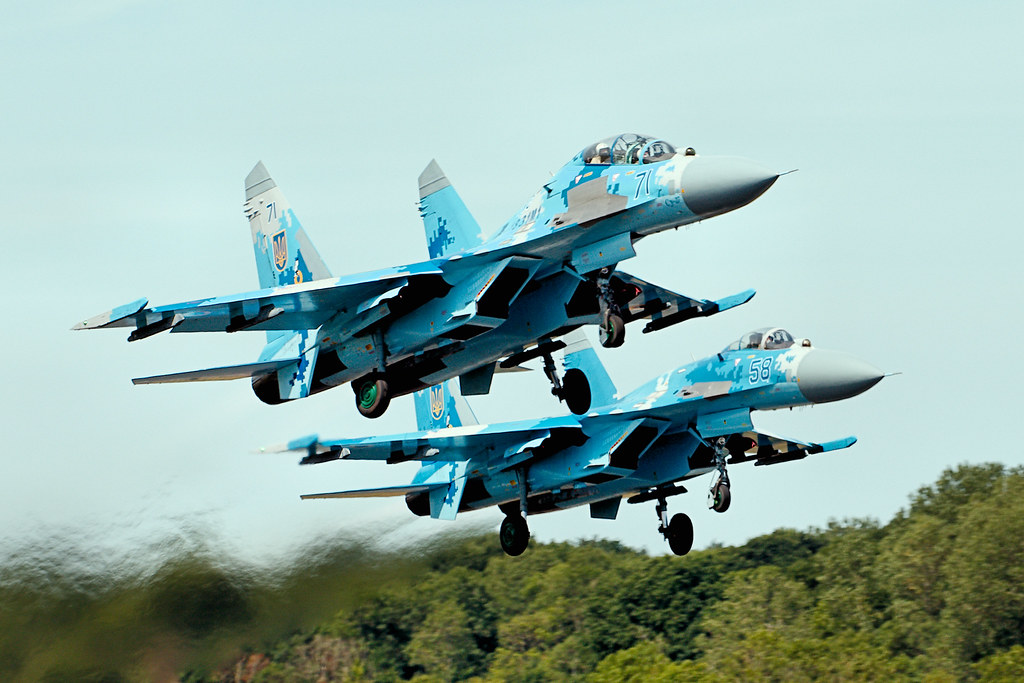
Meanwhile in Crimea, Ukraine carried out a successful long-range drone attack against two Su-27 fighter jets , each worth approximately $60 million—and each of which, Ukraine now claims to have destroyed. Days later, Ukraine reported that it damaged another Su-27 and a Su-30 , both in Lipetsk in western Russia, in a parallel attack on the same night . Those hits came just days after Ukraine hit a MiG-31 fighter and an air defense system , at the same base in Crimea where Su-27s were hit just days later.
Finally, Ukraine announced on Monday that it struck an important oil terminal in Russia’s Krasnodar region, but achieved more than just damage to the terminal itself. During the strike, Ukraine not only struck the terminal , but damaged a pipeline , destroyed two ships , and also destroyed the accompanying piers —all confirmed by local officials. On the following day, Ukraine added to the damage, with a direct hit that left a Stavropol chemical plant consumed in flames.
Credit for the week’s strangest incident, however, goes to Russia, which orchestrated the kidnapping of approximately fifty people, mostly elderly , in a cross-border raid in the northeast region of Sumy. According to the Ukrainian military, Russian forces rounded up those civilians in an overnight attack on the border village of Hrabovske; they have now disappeared into Russia , along with thirteen captured Ukrainian troops. Ukraine is now evacuating other civilians who had previously refused to leave border towns.
Over the last week, Russian aerial attacks have concentrated their fire on Ukraine’s southern coastline, particularly the energy facilities and ports that serve the region of Odesa. According to Ukrainian President Volodymyr Zelenskyy, Russia’s objective appears to be cutting off Ukraine’s access to the Black Sea , and “ to sow chaos, to exert moral pressure during winter... so that there is no fuel, no food supplies, so that there are problems with medical supplies ”.
Finally, Russian Deputy Foreign Minister Sergei Ryabkov claimed on Monday that Russia is ready to confirm in a legal agreement that it has no intent to attack the European Union or NATO . Those statements were reported in Russian state media, though they are unconfirmed.
That would, of course, be a welcome surprise from Russia—although it is undercut by the recent discovery of crashed Russian drones in NATO member Turkey , and in NATO member Romania , as well as the recent findings of new US intelligence reports . Those reports indicate that Putin continues to pursue the full capture of Ukraine, and then conquer parts of Europe that formerly belonged to the Soviet Union.
Image Credit: "SU-27 Flankers - RIAT 2017" by Airwolfhound is licensed under CC BY-SA 2.0 .
This Week on WarFronts:
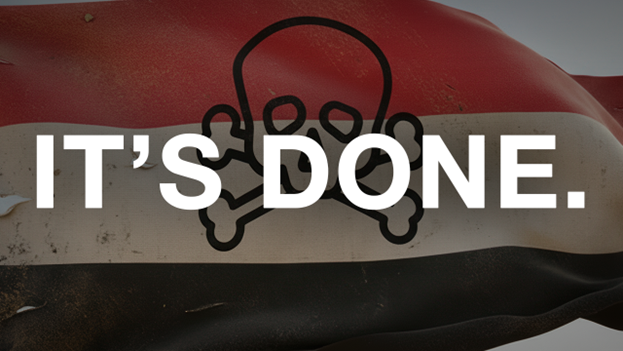
This week, we published this episode on Yemen’s Southern Transitional Council , a major fighting faction that’s recently taken over large swathes of territory and furthered a bid for sovereignty. Now, however, it appears that Yemen may see further violence in the coming weeks.
Saudi-backed paramilitary and tribal forces are massing for a counteroffensive in Yemen, after the UAE-backed Southern Transitional Council captured a majority of Yemen’s territory from the Saudi-backed Republic of Yemen government earlier this month. Local sources report that Saudi Arabia has massed around 20,000 loyal fighters on its own soil, with the possible intent to reclaim lost lands in the coming days.
If battles do commence as expected, they could become the largest showdown between Saudi-backed and Emirati-backed forces to date, in their growing regional rivalry . It’s important to note, however, that Saudi Arabia may instead intend to carve out a more limited buffer zone , or provide a permanent home for allied tribal groups on its own soil.
Also in Yemen, the nation’s internationally recognized government has indicated that the country’s Houthi forces are escalating their offensives against what remains of the Republic of Yemen’s territory. This week, the Houthis launched large attacks outside the city of Mar’ib, and smaller efforts near the city of Ta’iz, with heavy fighting reported in other areas.
Flare-up in Aleppo Raises Fears of Escalation:
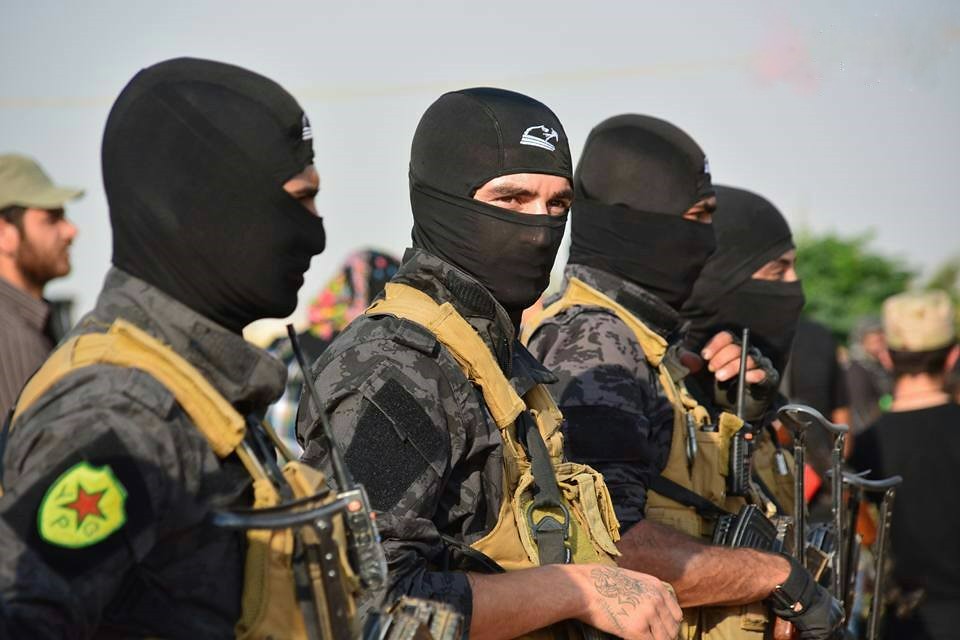
Syria is just days away from a critical deadline , as the Kurdish-led Syrian Democratic Forces ( SDF ) and the autonomous government they protect, the northeastern government of Rojava , are under pressure to integrate into state forces by the year’s end.
So, when SDF troops started to clash openly with fighters loyal to Syria’s transitional government in Aleppo on Monday, the deeper implications of the fighting were obvious.
The prelude to Monday’s violence has been building for weeks, as Syrian forces shift into position for a potential northeasterly offensive, and Turkish military convoys enter the nation to support. Earlier on Monday, however, it was Turkey’s Foreign Minister, Hakan Fidan , whose statements set the region on a knife-edge.
According to Fidan , speaking to reporters in Damascus after a meeting with Syrian transitional leader Ahmed al-Sharaa, the SDF “ has no intention to make too much of an advance ” toward integration with the Syrian government, and is “ running some of its operations in coordination with Israel ”—which Fidan described as a “ major obstacle to ongoing negotiations with Damascus ”.
Fidan’s position represented a meaningful shift in Turkey’s posture, from the guarded optimism that it had been voicing hardly a week ago, to a clear case to take decisive action against Rojava and the SDF. For Syria’s Kurdish-led forces, the threat of Turkish military aggression is hardly abstract; Turkey has kept a hard line on Kurdish reintegration since the fall of Assad, and launched major military offensives against the SDF in the late 2010s.
Shortly after the meeting in Damascus, a wave of confrontations erupted in the city of Aleppo, where forces loyal to Damascus maintain a strong presence, but where the SDF is also active to protect Kurds in majority-minority neighborhoods. Each side accused the other of starting the fighting , with the SDF alleging that Syrian loyalist militias used tanks and artillery against residential neighborhoods, while Syrian state media claimed that the SDF had attacked state security forces within the city.
Luckily for all sides, the fighting had wrapped up by Monday evening , when Damascus and the SDF agreed to mutually de-escalate the situation. By that time, at least two civilians were dead and over a dozen were reported wounded; casualty figures among the fighting factions have not yet been announced.
Nonetheless, the incident is a bitter reminder of the tensions felt across Syria right now, as the Turkish-imposed December 31 deadline draws closer. With few indications that Damascus and Rojava will reach a deal in time, and with Turkey claiming a clear connection between the SDF and Turkey’s growing regional rival Israel, Syria now appears to be headed for a far larger confrontation.
Image Credit: “Kurdish YPG Fighters” by Kurdishstruggle is licensed under CC BY 2.0 .
What We're Reading:
With Syria on the brink of large-scale violence again, it’s a timely, if unfortunate, opportunity to evaluate the work of the Syrian transitional government, under the control of Ahmed al-Sharaa and other former Hay’at Tahrir al-Sham (HTS) rebel leaders.
This recent report by Dr. Aaron Y. Zelin , via the Washington Institute for Near East Policy, explains the way that the Syrian transitional government regards its own priorities in reconstruction and reconsolidation of the state. The report also highlights the role of Syria’s “ shadow state ”, a powerful political organ under the nation’s Foreign Ministry that is responsible for an outsize share of political decision-making across Damascus.
Around the World:
The United States launched a series of large-scale strikes against dozens of Islamic State targets on Friday, in a clearly stated retaliation for the deaths of two US soldiers and a civilian interpreter in an Islamic State attack last week. US Defense Secretary Pete Hegseth stated that the strikes hit “ ISIS fighters, infrastructure, and weapons sites ”. The nation of Jordan confirmed that it lent its own fighter jets to the operation.
Israel is planning a new set of strikes against the nation of Iran, and will brief the United States on its plan of action in the coming days. According to an NBC News report, Israel suspects that Iran is rebuilding nuclear enrichment sites that the United States bombed in June. For more information on a potential return to fighting, we published this recent episode on WarFronts.
Pakistan endured its latest in a long series of attacks from insurgent groups this week, when on Friday, an ambush in North Waziristan left four soldiers killed and at least fifteen civilians wounded. The attack targeted a military outpost, and was perpetrated by a suicide car-bomber and three other gunmen, all of whom were killed at the scene. On Tuesday, a subsequent ambush of a police van left five officers dead in Khyber Pakhtunkhwa province, in a district where attacks are uncommon.
A gangland shooting in South Africa left nine people dead near Johannesburg early Sunday morning, in the latest instance of mass violence fueled by the nation’s worsening organized-crime crisis. According to authorities, around twelve suspects in two vehicles opened fire on patrons at a licensed tavern before fleeing.
Tensions are high in Somalia this week, as a series of local elections on December 25 set the stage for a larger nationwide vote in early 2026. While the vote itself is highly contentious, with opposition parties calling for a boycott, the larger problem is the potential for al-Shabaab action, coinciding with the election. Just days ago, al-Shabaab captured a strategic town and cut off a supply line to Mogadishu, where several al-Shabaab plots have recently been discovered.
The United States intercepted another dark-fleet oil tanker leaving Venezuela this week, and is chasing down a third , as it leads the US Coast Guard in a pursuit through international waters. The US describes its efforts as a mission to disrupt Venezuela’s use of oil money to fund drug production and trafficking; Venezuela has condemned the seizures as “ piracy ” by Washington.
Bangladesh is facing mob violence against journalists and media outlets, according to a group of the nation’s top media editors. The nation’s news offices have been under attack since last week, when the assassination of a prominent youth leader and election candidate prompted outrage at outlets said to be loyal to India and former leader Sheikh Hasina.
The nation of Albania faces growing mass protests , after Deputy Prime Minister Belinda Balluku was indicted on corruption charges. Monday’s protests saw Molotov cocktails thrown at the Prime Minister’s office, without much resistance from law enforcement. If protests continue, Albania may become the latest European nation, after Bulgaria, to feel the presence of a growing, global youth-led anti-corruption movement.
Thailand and Cambodia will hold direct bilateral meetings on Wednesday, after pressure from the ASEAN regional bloc, with the intent of reaching terms to return to a ceasefire. The meetings represent a Cambodian concession to Thailand, which has insisted that the two nations negotiate directly, without external mediation, if the violence is to end.
The United States has been conducting surveillance flights over Nigeria since late November of this year, according to a Reuters report drawing on interviews with current and past US officials. The flights indicate growing security cooperation between the US and Nigeria; on the ground, Nigerian forces have made recent strides against insurgent groups.
A draft report from the US Pentagon indicates that China most likely loaded over 100 intercontinental ballistic missiles into its latest three silo fields, in a recent expansion of its nuclear launch infrastructure. China is in possession of the world’s fastest-growing, fastest-modernizing nuclear arsenal, set to gain parity with the US and Russia in just a few years.
France will build a new aircraft carrier to replace its Charles de Gaulle vessel in active service, according to Emmanuel Macron. The new carrier is slated to cost roughly $12 billion, and will be larger and more modernized than its predecessor; it will be operational by 2038, with France expected to place a final order before its 2025 budget expires.
The United States has announced plans for its own new vessel, a line of naval frigates that will replace the cancelled Constellation class of warships. The vessel will be based on the US Coast Guard’s Legend -class cutter, a frigate-sized vessel capable of blue-water naval operations, but the Legend may require a substantial redesign to serve in a dedicated warfighting role.
Pakistan struck a deal to sell over $4 billion of military equipment to the Libyan National Army, the rival Libyan government under the control of warlord Khalifa Haftar, despite a standing UN arms embargo against the LNA. The deal is among Pakistan’s largest-ever arms sales, and may include sixteen JF-17 fighter jets, jointly developed with China.
The US recalled dozens of career diplomats from global ambassadorial and embassy postings, in what Washington described as a culling of officials that did not fully support Trump’s “ America First agenda ”. The move will pull officials from twenty-nine countries, including several that host active combat zones or are otherwise geopolitically sensitive: Niger, the Philippines, Egypt, Algeria, Vietnam, Madagascar, Rwanda, Somalia, Cameroon, Uganda, and Nepal.