
How Risk, Not Violence, Closed the Strait of Hormuz.
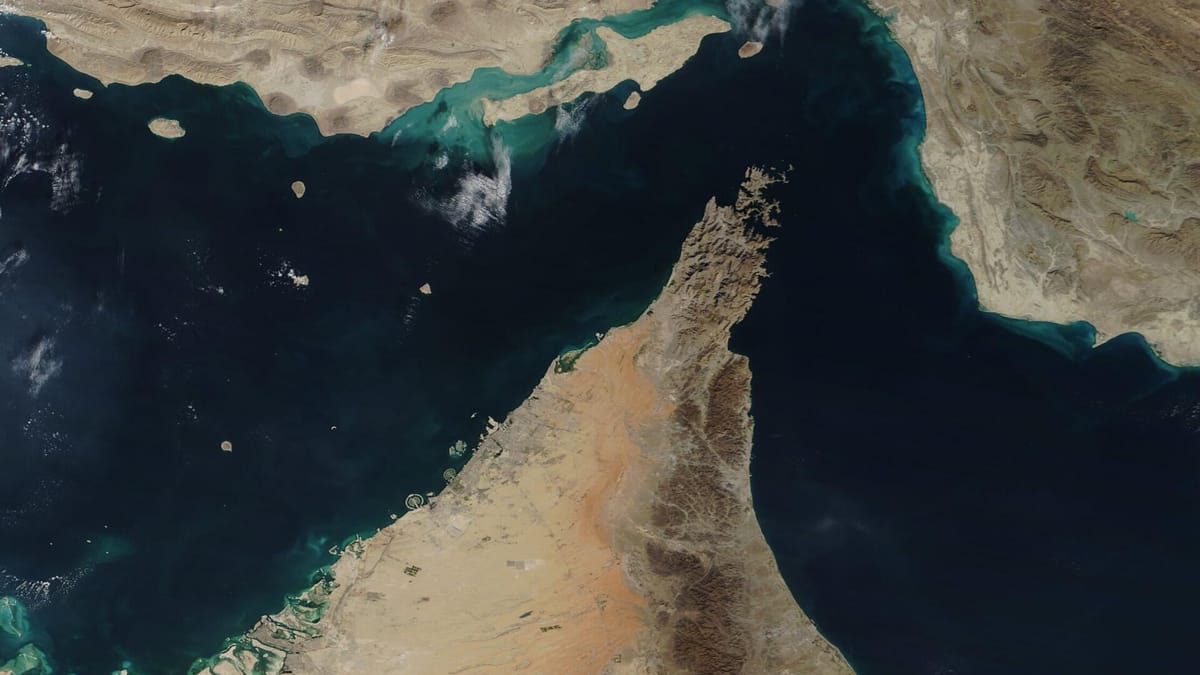
Iran's blockade of the Strait of Hormuz is a strategic move that leverages risk perception to maintain control of the waterway, rather than relying on military force.
Evan Moloney • March 17, 2026
Up next

Yemen's Crisis Has the Potential to Get Much Worse
Paweł Wójcik · September 10, 2026 · 10 min read
The US Has One Last Option in Iran (Opinion)
Kyle Moran · August 5, 2026 · 16 min read
Israel is the Iran War's Biggest Loser
Netanyahu sold Trump a quick regime-change campaign; instead Israel got a hardened Tehran, a US-Iran deal that guts its nuclear case, and Washington pressing it to quit Lebanon.
Kyle Moran · June 17, 2026 · 17 min read
After less than three weeks of continuous conflict with the United States and Israel, Iran has demonstrated its ability to close the Strait of Hormuz for the foreseeable future. As the United States works unsuccessfully to rally its international partners, Iran is cementing its control of the strategic waterway—despite expending only a small handful of munitions in the process.
Without the threat of military force, and the occasional demonstration of Iran’s military potency, its attempt to blockade the strait would certainly fail. The strength of Iran’s blockade, however, does not rest on its proven ability to destroy vessels in transit.
Instead, Iran’s blockade is contingent on its ability to manipulate perceptions of risk. In periodically attacking the strait, and the ships that attempt to move through it, Iran creates a credible enough threat to maritime traffic that shipping companies—and especially their insurers—cannot risk moving vessels through such a hotly contested zone.
Iran has neither the naval power, nor the economic resources, to battle for control of the Strait of Hormuz directly against a Western fleet. On its current course, however, Iran can leverage risk perception to maintain its blockade for weeks, or even months, without firing a single shot beyond what it’s already expended.
The Maritime Merchant’s Dilemma.
Iran chose to blockade the Strait of Hormuz as a response to foreign military action, when the United States and Israel initiated the Middle East’s ongoing conflict against Tehran’s Islamic Republic regime. At its core, the blockade is an attempt to exert economic leverage against the US, Israel, and other nations across the globe, to impose such steep costs of war that continued aggression against Iran becomes untenable.
But Iran’s blockade does not directly target military assets, and it is not an attempt to damage or degrade the military capabilities of any nation. Instead, Iran’s targets are the vessels that enable global trade: the oil and chemical tankers, the container ships, and the bulk carriers that crisscross the globe on a daily basis.
Approximately 20% of all global petroleum products, and a roughly equivalent proportion of all liquefied natural gas, passes through the Strait of Hormuz on its journey from the Persian Gulf to global customers, primarily in Asia. The strait also accounts for roughly one-third of the seaborne trade in fertilizers, and about one-half of all urea exports, making the waterway critical for global agriculture. Under ordinary conditions, 120 to 150 ships pass through the strait each day. Now, the figure is close to zero.
Iran’s blockade threatens expensive ship hulls and invaluable human lives, but it primarily targets the goods aboard maritime trade vessels. Those vessels attempt to transit the Strait of Hormuz, Iran attempts to strike those vessels during their crossing, and if Iran succeeds, then the ship’s cargo may be lost at the bottom of the sea.
This is the fundamental challenge of Iran’s blockade: For maritime trade ships, is the risk of transit across the Strait of Hormuz worth the market value, as well as the time-sensitive criticality, of the cargo on board?
Iran’s blockade, and others like it, force shipping companies and their partners to decide between two painful costs: The cost of delay, or the cost of destruction. An LNG carrier, filling up in Qatar, carries essential energy resources, with major downstream impact across the globe if its cargo is not delivered in a timely manner. Delay brings a cost—and failing to transit the Strait of Hormuz, blockade or no, imposes a delay that has already lasted weeks.
Less-essential cargo, or cargo traveling to nations or companies that can draw on supply reserves to mitigate short-term delays, may face less pressure to travel in a timely manner. Even they, however, will face greater pressure as delays drag on—and in cases of industry-wide disruption, like the current closure of the Strait of Hormuz, demand for less-essential cargo can rise quickly and unpredictably.
With cargo as important as oil, LNG, or fertilizer, delay is immensely costly, especially when those costs are compounded by industry-wide disruption. Those costs create pressure, for shipping companies and their clients to accept greater risk of transit. Iran, however, has reason to be confident that it does not need to fear blockade runners or other disruptors acting with any real frequency.
When trade delays are imposed by an armed actor, and that actor maintains a blockade through threat of force, the cost of delay must be measured against the cost of destruction. Unlike delay, where short-term economic pain can be mitigated, minimized, or passed to clients and consumers, destruction is permanent; it represents the irrevocable loss of value of both the goods in transit, and the work required to obtain, refine, and ship those goods abroad.
When compared with the prospective costs of destruction, Iranian leaders understand that in most cases, maritime traders and their global partners will find ways to manage the pain of delays. Even still, in specific cases, the pressures of a global shipping crisis will force companies and clients to adjust their risk acceptance thresholds, such that they may judge the potential benefits of a successful blockade run to be worth the economic or political risks of cargo and vessel destruction.
Shipping companies, however, work with an external partner built to offset the potential costs of destruction: Maritime insurers. The majority of global trade vessels sail under insurance, with most exceptions being vessels that belong to sanctioned shadow fleets. Roughly forty percent of global shipping traffic lacks proper insurance, although a much smaller share will sail completely without insurance coverage.
Under normal conditions, maritime trade insurers evaluate the risks of scheduled travel, based on operating areas, ship type and cargo, crew quality and record, and other factors, and price insurance accordingly. Those insurers may cover anything from minor damage or loss claims to catastrophic events, sometimes imposing losses well above $100 million.
Under the current conditions in the Strait of Hormuz, however, the risk of destruction is simply too great. Within days of the start of the current conflict, marine insurers had cancelled war risk coverage for vessels and spiked insurance rates anywhere from 100% to above 300%. Since then, insurers have pulled back even further, after the crisis failed to resolve quickly and the world proved willing to take mitigating action, like the emergency release of global energy stockpiles by the International Energy Agency last week.
Even with insurance coverage practically gone, shipping companies are not completely opposed to attempting a transit of the strait. As Lloyd’s List reported on March 2, “A small minority of shipowners have already indicated to charterers that they would risk transiting the Strait of Hormuz despite the escalating conflict”. Those ships would shut off transponders and attempt a crossing in the dead of night. As of the time of writing, however, very few ships have attempted a crossing. On Saturday, March 14, strait transits fell to zero for the first time.
Bang for Buck.
The impact of Iran’s maritime shipping blockade is underscored by the operational reality of Iran’s approach to the strait. Despite the fact that Tehran has placed a near-complete stranglehold on the shipping lane, less than three weeks into the war, the Iranian military has achieved that outcome by expending only a handful of munitions.
As of Monday, March 16, Iran is known to have targeted fewer than twenty trade vessels in total—only around one vessel per day, and well under twenty percent of the traffic that would transit the strait on an ordinary day. Roughly seven hundred ships, including about four hundred oil tankers carrying a cumulative 200 million barrels of oil, are at anchor in either the Persian Gulf or the nearby Indian Ocean, and as many as three thousand ships across the globe are believed to have been impacted in some way by the strait’s closure.
To strike the ships that Iran has threatened, the nation has deployed a combination of unmanned weapons. Its airborne kamikaze drones are small enough to hide on the Iranian mainland until they’re launched, and they fly with a long enough range that they can be launched from anywhere across the country. Tehran’s sea drones are small, sit low in the water, and can rip holes through a ship’s hull at the water line. It can place sea mines using small, coastal fast boats, laying static traps for ships to stumble onto.
But Iran has only had to expend a handful of aerial and sea drones so far, and last week, the Institute for the Study of War estimated that Iran may have laid as few as ten sea mines in the strait. That is an exceptionally low demand of resources, to impose a blockade that has likely cost the world tens or even hundreds of billions of dollars already.
For Iran, that makes the blockade a resounding success, as it attempts to force a US and Israeli withdrawal despite having far lesser means to fight and win a conventional war. For global onlookers, however, Iran’s success should raise a difficult question: If Iran has expended so little, and attacked so few ships, then why have trade vessels shown Iran such deference?
Does Iran even have the ability to destroy vessels as promised, if the hundreds of ships trapped in the strait were to run the blockade en masse? And, if the United States, Israel, or other nations were to send a small handful of ships or aircraft to guard the area, wouldn’t those ships escape the strait, scot-free?
Again, Iran’s success rests on its ability to manipulate risk, and to challenge marine shipping companies based on those companies’ perceptions of risk. Even with a surge of warships or air power to protect a blockade run, transiting the strait is not so simple as opening a cargo ship’s throttles and hoping to avoid incoming fire.
In a purely probabilistic sense, every warship or aircraft would lower the risk that a commercial vessel would face, when trying to cross the strait. A drone, a sea mine, or an Iranian fast boat is less likely to successfully impact its target when there is one coalition warship on-site, rather than zero. Two warships, operating in tandem, lower the risk to merchant shipping further; three, even further, and so on. Increase the number of trade vessels running the blockade at once, and the odds improve further. Perhaps a vessel will be hit, or even sunk, but individual vessels are relatively unlikely to be the unlucky ship of the bunch.
Merchant vessels, however, do not employ the same risk calculus as a military force. Not only is their risk tolerance lower, but risk itself is understood in terms of individual survival, not collective survival. Merchant shipping does not accommodate casualties, and insurers do not insure journeys that carry the expectation of attrition, as a military operation might expect a certain level of personnel or equipment loss. Moreover, merchant ship insurance, and the decisions of ship captains and crews, are strictly concerned with the fates of individual vessels. If a ship intends to transit the strait as part of a convoy of ten during wartime conditions, the operators of a given vessel are not reassured that their ship has a one-in-ten chance of being targeted by an incoming drone. Instead, they are sailing a strait crossing with a fundamentally unacceptable risk that their ship could be targeted by an incoming drone at all.
War risk, in marine trade insurance, is mostly an abstraction; it accounts for the very low risk of an outbreak of war, an attack on a port, an act of terrorism, piracy, vandalism, or sabotage at sea, an impact with long-forgotten sea mines or torpedoes, and other very-low-probability concerns.
The risk that ships would face, by attempting to transit the Strait of Hormuz in even the best of circumstances, far exceed the threshold of risk that typical “war insurance” is designed to cover. Marine war insurance is not designed to allow for ship crossings under these circumstances; in fact, these circumstances are expected to make ship crossings impossible.
So, without insurance designed to accommodate risk on this scale, shipping companies and their clients are forced back to the same dilemma: Accept the costs of delay, or risk the costs of complete destruction? But as the United States and its allies begin to raise the prospect of protected ship transits, the dilemma becomes even more difficult to address, in the short term.
If a naval intervention is truly successful, then marine trade may be able to transit the Strait of Hormuz while facing relatively normal risk—but the prospect of lower-risk passage in the near future, disincentivizes companies from risking destruction now. That decision to remain at anchor will keep ships, their cargo, and their crews safe, but it also extends delays and deepens global shortages even further.
This, in turn, presents Iran with another opportunity. As the prospect of naval intervention becomes more likely, ships will be less willing to take the risk of a crossing before the Strait of Hormuz is made fully safe—so, Iran can extend its blockade even further, by continually demonstrating that the strait is not safe, even with a coalition naval presence in the area.
If the US and its allies deploy ten warships around the strait, and Iran still manages to score hits on trade vessels, then those vessels may wait to transit until twenty warships arrive. If twenty warships arrive, and Iran can still score even a single hit, then trade vessels may choose to wait until even more warships arrive, or until US or coalition troops can secure the Iranian coast directly.
The success or failure of Iran’s plan rests on the core assumption that marine shipping companies, and their insurers, will approach risk on a vessel-by-vessel basis, rather than sacrificing individual vessels and their cargo to achieve a collective breakthrough. As of now, Iran’s assumption has been borne out, by companies, clients, and insurers alike.
Addressing the Blockade.
With Iran in position to maintain control over the Strait of Hormuz under the current circumstances, the pressure is now on global governments to force a change of the situation. At present, world leaders are pursuing change along three parallel tracks: collaboration with
Tehran, preparation to stabilize a post-war strait, and direct military intervention. Of the three, nations that have chosen to collaborate with Iran are the only ones that have realized early success. On Saturday, Iran’s ambassador to India announced that Tehran had allowed multiple Indian vessels to transit the strait, as confirmed by New Delhi hours later.
On Sunday, a Pakistani tanker sailed through the strait with Iranian approval, while China is known to be working to secure safe passage for its own vessels.
Chinese influence is especially important here, since Iranian tankers appear to be the largest exception to Tehran’s blockade—despite the threat that the United States or Israel could attempt to strike, interdict, or blockade those ships. On Monday March 9, maritime trade expert
Samir Madani told CNBC that Iran had sent nearly twelve million barrels of crude oil through the strait since February 28, all bound for China. Even some European nations have opted to collaborate with Iran, rather than trying to secure the strait by themselves or in partnership with Washington. France and Italy have each opened negotiations with Iran on the subject, according to the Financial Times. Other European leaders have refused any talk of a naval intervention, including Germany and Greece. Australia has taken a similar position.
Simultaneously, some European nations have explored the possibility that they could form a naval coalition for a future stabilization mission. Those nations are led by France, where Emmanuel Macron has indicated plans to dispatch around a dozen warships, including the nation’s sole carrier strike group, to the region in the near future.
Those European nations, however, have continually emphasized that any stabilization mission will not involve participation in the US-Israeli offensive against Iran. In fact, stabilization forces are likely to avoid the Strait of Hormuz, and other surrounding areas that are directly and continually impacted by the conflict, until that conflict concludes.
European Union leaders have expressed interest in expanding the bloc’s Red Sea shipping-protection mission, Operation Aspides, into the Persian Gulf. Alternately, nations may form a “coalition of the willing”, in which French and British vessels may play a leading role. The UK has expressed its staunch refusal to participate in Washington’s war effort, although PM Kier Starmer has expressed openness to dispatching mine-hunting drones to identify threats in the region.
Europe’s positions are in stark contrast to the demands made by US President Donald Trump, who has insisted that European allies, as well as Japan, South Korea, and geopolitical rival China, send warships to assist in American efforts to lock down the strait. Along with overtures on social media, Trump has directly tied European participation, or lack thereof, to the future of the NATO alliance.
But whether in Europe or the Indo-Pacific, the reticence of America’s allies extends beyond their concerns around the legality and the geo-strategic sense of the ongoing Iran war. A naval intervention, on the scale that the United States is proposing, would be immensely difficult to achieve.
Using naval and air power alone, the United States and any coalition allies would have to dispatch dozens of warships to secure the area. Many of those warships would have to serve in perimeter-defense, air-defense, sea-interdiction, and minesweeping roles. Others, however, would need to escort convoys.
Speaking to the Wall Street Journal, experts suggested that a coalition may require up to two warships per tanker, or a dozen warships to escort a single convoy of no more than ten tankers, to move ships through the strait. With one group of warships at work, it could take months to clear out the ships already trapped in the Persian Gulf, without accounting for any new vessels that would have to be escorted in.
The coalition’s airborne component, meanwhile, would be tasked with hunting down and destroying Iranian drones and mine stockpiles before they can pose a threat. Those Iranian munitions, however, are very easy to hide, and are operable with small units trained to reveal them just moments before launch or deployment. Because of the very short distances involved in strikes from the Iranian coast to Strait of
Hormuz targets, the US and its coalition allies would face immense barriers in intercepting threats quickly enough. Even with allied support, the United States would struggle to muster a sufficient volume of warships to lock down the strait and facilitate crossings. In the air, meanwhile, the costs of a constant surveillance – interception – strike mission would balloon rapidly, on top of the costs of the US and Israel’s ongoing air campaign.
Washington’s alternative is simple in theory: Boots on the ground, across the Iranian coastline, to hunt down munitions, establish a buffer zone, and defend against drones launched from deeper inside Iran. A ground deployment, however, comes with known and unacceptable costs for the United States, a nation that is highly skeptical of Middle Eastern ground interventions after the War on Terror.
Nor does it appear that Washington will overcome its concerns anytime soon. While the US has dispatched a Marine Expeditionary Unit from the Pacific to the Middle East, that unit comprises only roughly 2,500 troops—nowhere near the force that would be required to seize and hold a long stretch of the Iranian coast. As of the time of writing, the US has not indicated any other movement of ground forces to the region.
If the US is unwilling to place boots on the ground, then it signals its own limitations to its allies, as the leader of a coalition that will have to accomplish a very difficult task. Iran’s approach, in manipulating maritime risk, means that not a single drone or sea mine can get through; otherwise, the coalition’s security guarantees will not be enough to justify strait crossings by most ships.
And if the United States does attempt to lock down the strait, but fails to satisfy the security needs of maritime trade vessels, then the US will have inadvertently validated Iran’s entire wartime strategy. Should the Iranian regime survive this conflict—as it appears likely to do—then in all future periods of crisis, Tehran will be able to leverage the Strait of Hormuz and impose massive economic damage upon the rest of the world.
References
- 1moodys.com/web/en/us/capabilities/catastrophe-modeling/marine-cargo-specie.html
- 2iumi.com/newsletter-september-2025/evolving-risk-assessment-in-marine-insurance
- 3als-int.com/insights/posts/international-cargo-insurance-risk-assessment-claims-guide
- 4britanniapandi.com/2024/08/understanding-effective-risk-assessment
- 5athenains.com/a-comprehensive-exploration-of-marine-insurance-and-risk-mitigation
- 6iims.org.uk/understanding-effective-risk-assesments
- 7sdcexec.com/safety-security/risk-compliance/article/22883285/breeze-transforming-maritime-insurance-through…
- 8swedishclub.com/insurance/marine/war
- 9greco.services/the-myths-of-marine-war-insurance
- 10investopedia.com/terms/w/war-risk-insurance.asp
- 11commercial.allianz.com/news-and-insights/expert-risk-articles/war-insurance.html
- 12argusmedia.com/en/news-and-insights/latest-market-news/2795769-explainer-war-risk-insurance-and-awrp
- 13cbsnews.com/live-updates/iran-war-oil-prices-strait-of-hormuz-trump-threat-kharg-island
- 14reuters.com/world/cargo-ship-hit-by-projectile-strait-hormuz-crew-evacuates-2026-03-11
- 15bloomberg.com/news/articles/2026-03-16/pakistan-oil-tanker-transits-hormuz-after-hugging-iran-s-coast
- 16nbcnews.com/world/iran/strait-of-hormuz-closure-shipping-oil-strikes-rcna262898
- 17navalnews.com/naval-news/2026/03/u-s-eliminates-iranian-minelayers-as-strait-of-hormuz-mine-threat-looms
- 18theguardian.com/world/2026/mar/13/what-is-strait-hormuz-can-us-stop-iran-blocking-it
- 19cnbc.com/2026/03/11/iran-ships-oil-china-strait-hormuz-closure-.html
- 20apnews.com/article/eu-iran-shipping-hormuz-brussels-6360165465e302cbe05d2f27eafff145
- 21navalnews.com/naval-news/2026/03/indian-warships-escort-indian-lpg-tankers-in-gulf-of-oman
- 22csis.org/analysis/no-one-not-even-beijing-getting-through-strait-hormuz
- 23wsj.com/world/middle-east/trump-wants-to-secure-hormuz-heres-what-it-would-take-ce55720d?gaa_at=eafs&ga…
- 24nytimes.com/interactive/2026/03/13/world/middleeast/iran-mines-strait-hormuz.html
- 25wsj.com/world/middle-east/iran-sea-mines-strait-of-hormuz-85e623b7?gaa_at=eafs&gaa_n=AWEtsqfRttklUE0Lzu…
- 26the-independent.com/news/world/middle-east/iran-mines-strait-of-hormuz-how-they-work-b2937295.html
- 27lloydslist.com/LL1156491/Shipowners-weigh-up-risk-of-dark-Hormuz-transits
- 28investinglive.com/commodities/strait-of-hormuz-ship-traffic-collapses-to-zero-amid-conflict-energy-corridor…
- 29morningstar.com/news/marketwatch/20260306255/only-about-8-ships-a-day-are-passing-through-the-strait-of-hor…
- 30wsj.com/world/middle-east/iran-strait-of-hormuz-control-1e7614ef?gaa_at=eafs&gaa_n=AWEtsqcs_-ncfxmcTQj-…
- 31gasoutlook.com/analysis/cancelled-shipping-insurance-leaves-strait-of-hormuz-blocked
- 32cnbc.com/2026/03/09/one-big-reason-ships-and-insurers-are-unwilling-to-risk-strait-of-hormuz.html
- 33maritime-executive.com/article/lloyd-s-stands-ready-to-work-with-u-s-on-insurance-for-hormuz-transits
- 34foreignpolicy.com/2026/03/09/hormuz-strait-insurance-seafarers
- 35aljazeera.com/economy/2026/3/16/strait-of-hormuz-which-countriess-ships-has-iran-allowed-safe-passage-to
- 36speedcommerce.com/insights/how-much-of-the-worlds-shipping-goes-through-the-strait-of-hormuz
- 37bbc.com/news/articles/ckg2m8zp2n3o
- 38politico.com/news/2026/03/14/hormuz-inflation-helium-fertilizer-00828680
- 39reuters.com/world/middle-east/maritime-insurance-premiums-surge-iran-conflict-widens-2026-03-06
- 40wsj.com/finance/u-s-plan-to-unblock-strait-of-hormuz-collides-with-realities-of-global-insurance-feec54c6?g…
Written by
Evan Moloney is Head Writer at WarFronts and HomeFronts, and contributes analysis regularly to Fronts. Evan leads ongoing coverage of global conflicts and other rapidly evolving stories. Evan also authors the twice-weekly email newsletter WarFronts Weekly
Related articles
Yemen's Crisis Has the Potential to Get Much Worse
Paweł Wójcik · September 10, 2026 · 10 min read
The US Has One Last Option in Iran (Opinion)
Kyle Moran · August 5, 2026 · 16 min read
Israel is the Iran War's Biggest Loser
Netanyahu sold Trump a quick regime-change campaign; instead Israel got a hardened Tehran, a US-Iran deal that guts its nuclear case, and Washington pressing it to quit Lebanon.
Kyle Moran · June 17, 2026 · 17 min read
Continue in
Become a Member
Members get full access to premium reporting, in-depth briefings, and subscriber-only analysis.
Insiders Receive
- Full access to all premium articles and briefings
- Exclusive subscriber-only analysis and dispatches
- Support independent conflict journalism
Signed in or already a member, but still locked? Fix an access problem
From $5/month — cancel anytime