The Deep Overview
How did we get here?
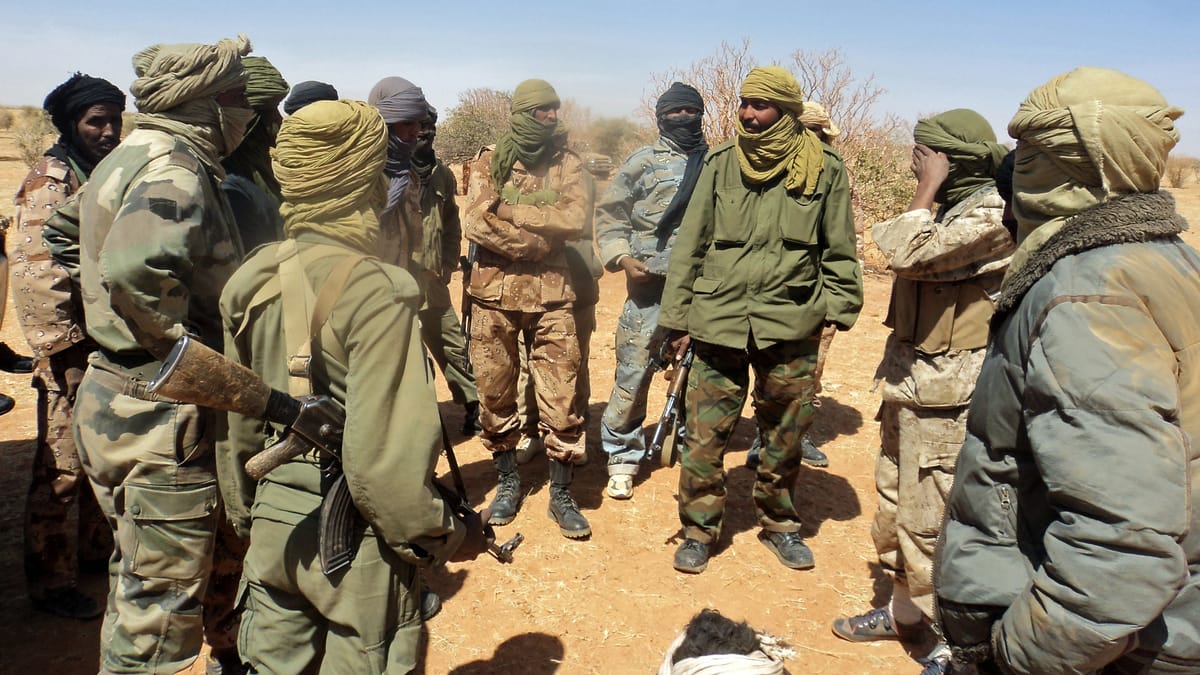
In January 2012, Tuareg rebels under the banner of the MNLA (National Movement for the Liberation of Azawad) launched an uprising against the Malian state. It was not their first rebellion, but it was by far their deadliest and most successful. Predominantly ethnic Tuareg, and emboldened by fighters and weapons returning from the collapse of Gaddafi's Libya, the MNLA declared a sovereign state of "Azawad" across the entire north. Within months, the major northern cities, such as Kidal and Timbuktu, had fallen.
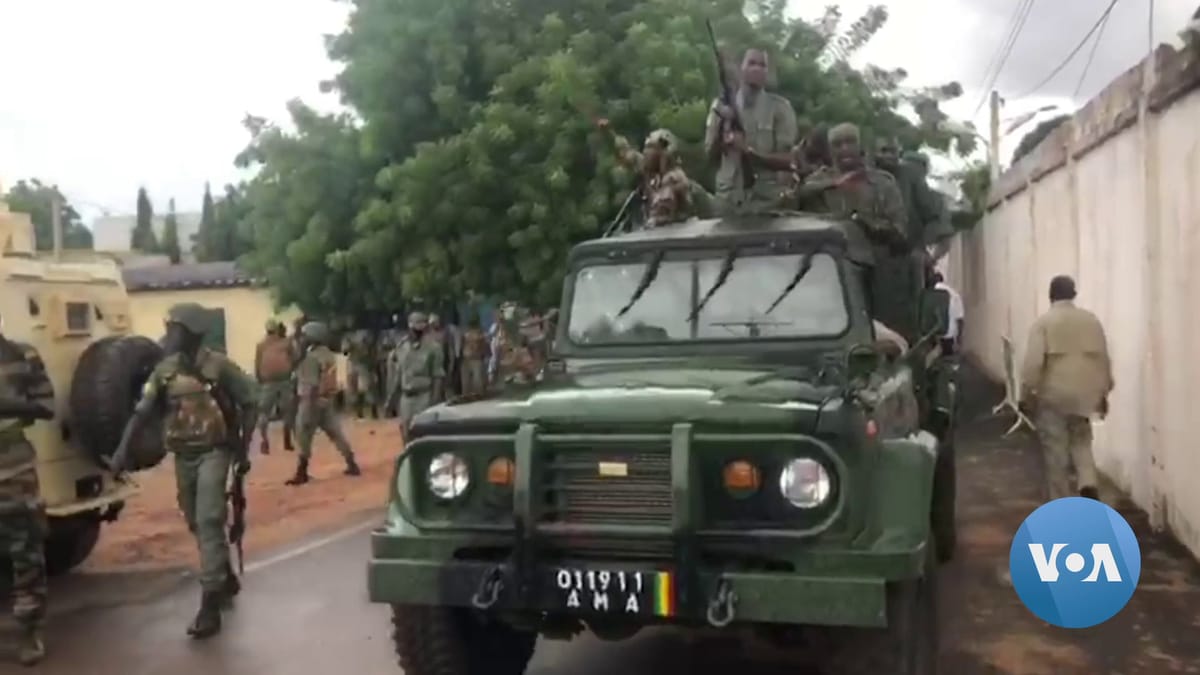
The MNLA did not fight alone. Islamist groups, mainly Ansar Dine, led by Iyad Ag Ghali, alongside Al-Qaeda in the Islamic Maghreb (AQIM) and the Movement for Oneness and Jihad in West Africa (MUJAO), fought alongside the secular Tuareg rebels in the opening phase despite their ideological differences, often providing the better-equipped and more experienced fighters. The chaos triggered a coup in the capital in March 2012, when soldiers under Captain Amadou Sanogo overthrew the president, blaming him for the army's failures in the north.
The rebel alliance did not survive victory. Once the Malian army had been driven out, the secular MNLA and the Islamists, who wanted not an independent Azawad but Sharia rule, turned on one another. The better-armed jihadists swiftly overran their former allies, and by mid-2012 the MNLA had lost control of nearly all the northern cities it had helped capture. This rupture between Tuareg separatists and jihadists would define the conflict for over a decade.
Alarmed by the jihadists' consolidation of the north and their push toward central Mali, the government requested French military intervention. In January 2013, France launched Operation Serval, and within weeks its forces, backed by African and Malian troops, had retaken the cities held by the Islamists, sparing the extreme northern cities of Kidal, Aguelhok and others under the control of Tuareg rebels. This began nearly a decade of Western military presence, which later expanded into Niger and Burkina Faso as the insurgency spread across the region. That presence ensured no major urban center fell to jihadists again, while Tuareg forces retained a grip on Kidal and parts of the far north.
Over the following years, the jihadist landscape reorganized. In 2015, a faction pledged allegiance to the Islamic State, forming the group that would become ISSP, while in 2017 the main al-Qaeda-aligned factions, including Ansar Dine's networks, merged into JNIM. As the war ground on without resolution, frustration with the French-led effort deepened. The juntas that later formed the AES accused France of perpetuating an endless war without delivering durable security, and of being too willing to tolerate or even shield armed Tuareg groups. That resentment helped drive the coup wave, beginning in Mali in 2020 and 2021, followed by Burkina Faso in 2022 and Niger in 2023, each of which expelled Western forces and turned instead to Russia, China and Türkiye, with mixed results.
Who's fighting, and who's backing them?
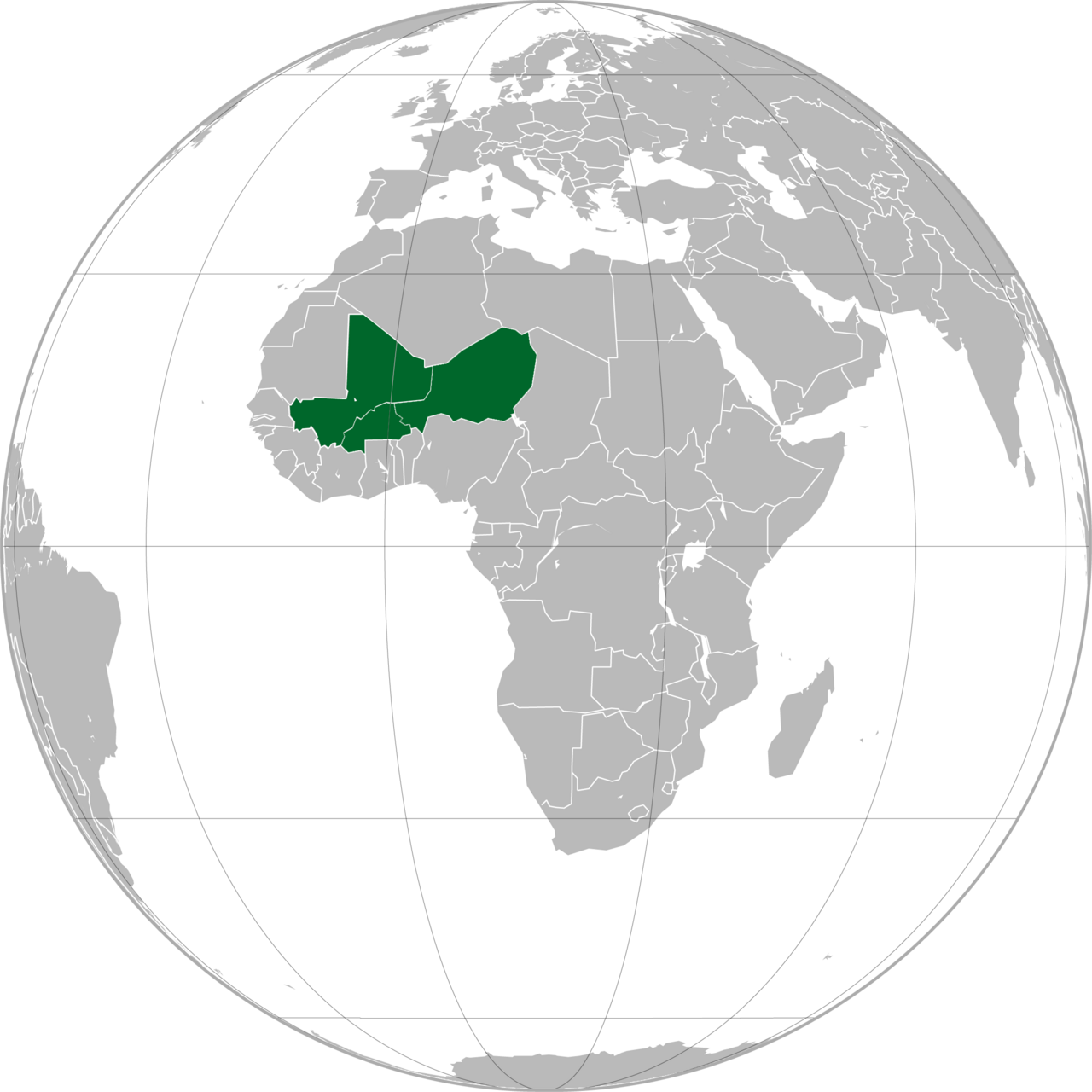
On one side stand the three AES juntas, which rely above all on their political and military alliance with Russia. Moscow has supplied all three states with mercenaries, previously Wagner and now Africa Corps. Mali fields thousands of Russian personnel across the country, while Niger and Burkina Faso host smaller contingents tasked with guarding key figures and sites and training specialised units.
Other backers of the AES include China and Türkiye. Türkiye has unofficially supplied Syrian mercenaries to Niger while selling its Bayraktar drones to all three states. These drones now form the backbone of their air forces following the withdrawal of American and French air assets. China, meanwhile, supplies armoured vehicles, light weapons, ammunition and other materiel at prices well below those of its Western competitors.
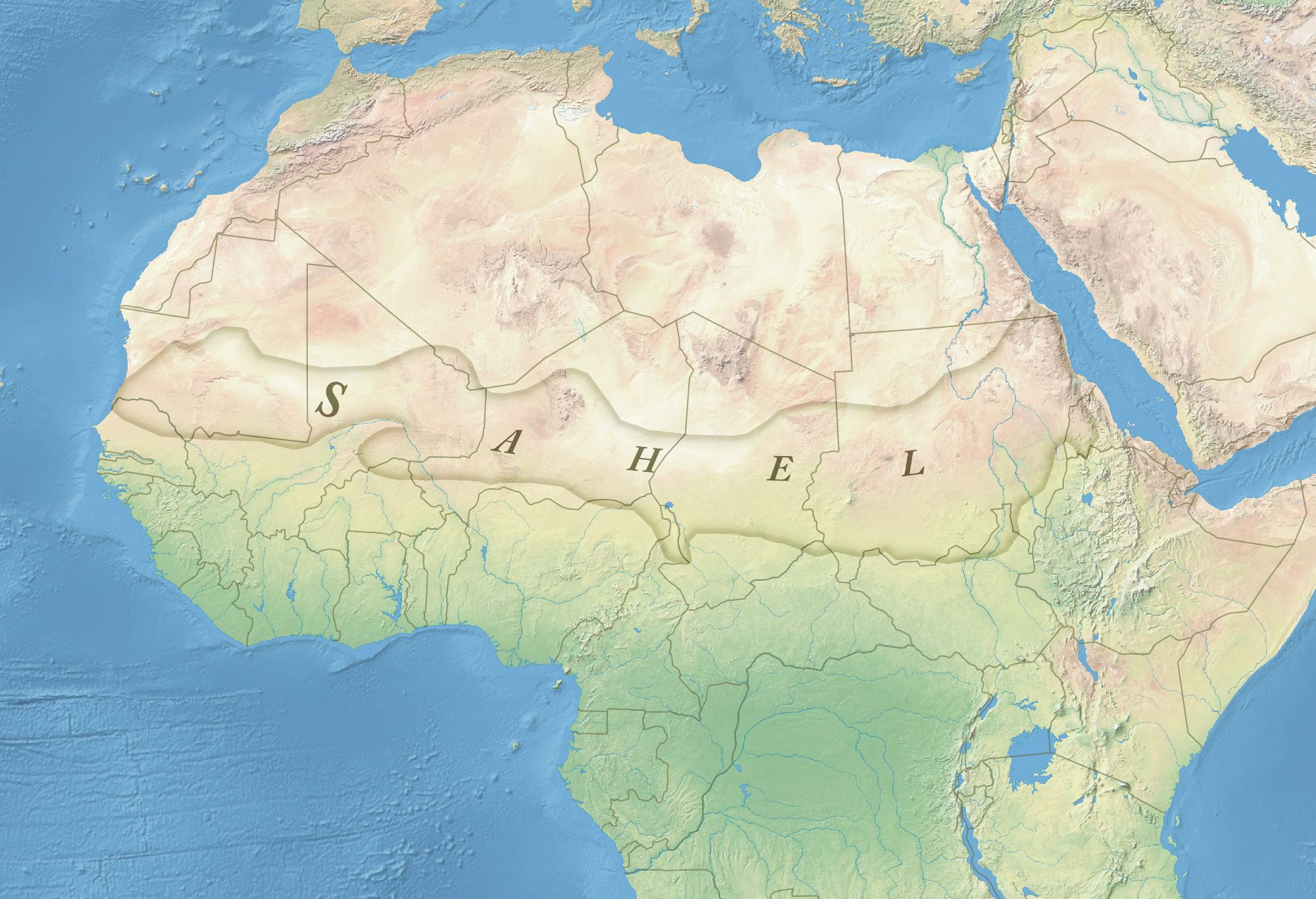
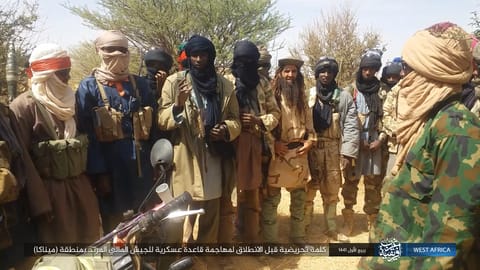
Arrayed against them are three main non-state actors. The first and most powerful is JNIM (Jama'at Nusrat al-Islam wal-Muslimin, the Group for the Support of Islam and Muslims). The al-Qaeda affiliate is by far the dominant jihadist force in the region, active across Mali, Burkina Faso, Niger and the northern fringes of the coastal states.
The second is the FLA, a coalition of mostly Tuareg rebel factions active only in northern Mali, which formed an alliance with JNIM in 2025 after years as its rival. The FLA draws direct and indirect support from states including Ukraine and Algeria, chiefly through intelligence, logistics and political alignment.
The third is the Islamic State Sahel Province (ISSP), the regional franchise of the Islamic State. Although its predecessor was initially on peaceful terms with the jihadist factions that later merged into JNIM, ISSP has spent close to a decade at war with effectively every other party in the conflict, without exception. Its closest ally is the Islamic State West Africa Province (ISWAP), which operates primarily in Nigeria but maintains a foothold in southeastern Niger. ISWAP supplies ISSP with instructors, expertise, fighters, and material support including weapons and fuel.
What are they fighting for?
As the original spark of the conflict, the FLA (formerly the MNLA) fights for an independent or autonomous state of Azawad across northern Mali. Its case rests on the cultural and linguistic distance between north and south and on decades of perceived neglect by Bamako, a grievance that predates the junta and reaches back to independence in 1960. The MNLA and its FLA successor were historically secular and nationalist, which is precisely what set them against the jihadists and fueled nearly a decade of mutual bloodshed. That gap narrowed only when JNIM moderated its governance, abandoning the harshest applications of Sharia such as stoning and amputation in favor of a softer, "customary" version administered through local judges, and persuaded the FLA that statehood was unattainable but Islamic self-rule was tolerable.
The two still diverge on the endgame: the FLA wants Azawad, while JNIM wants Sharia rule over Mali as a whole, and possibly beyond. How a JNIM-governed Mali would square ruling one country while waging insurgency in five neighbors remains unanswered. The closest model is the Afghan Taliban's relationship with the Pakistani Taliban, where quiet support for cross-border militancy invites retaliation in the form of sporadic airstrikes, a precedent that bodes poorly for regional stability.
The Islamic State, for its part, has a very simple stated goal: a borderless, worldwide caliphate. ISSP is merely one node in the global Islamic State network of provinces, fighting to control territory in the Mali, Niger and Burkina Faso tri-border area as its contribution to that larger project. Unlike JNIM and the FLA, the group never allies with other factions, never accepts state support, and never compromises, even in the face of a common enemy.
ISSP is equally unwavering in applying strict Islamic law in the territories it controls, and unlike JNIM or the FLA, were it to seize Mali, Niger or any other Sahelian state, it would not hesitate to keep expanding rather than cultivate good relations with its neighbors.
The AES juntas state their goals as restoring national sovereignty and security, which is also their core justification for seizing power: fixing what civilian governments allegedly could not. The record, however, shows the opposite. The security situation has deteriorated markedly since the coups.
Russia, Türkiye and China see a gold mine of opportunity in the Sahel: customers for mercenaries, a proving ground for drones, and a market for armored vehicles sold well below Western prices, with Moscow most interested in the political dividend and Beijing least. Ukraine's involvement is no coincidence either, appearing swiftly after the Russian mercenaries arrived and taking the form of FPV drone training for the Tuareg rebels.
How has the war unfolded?
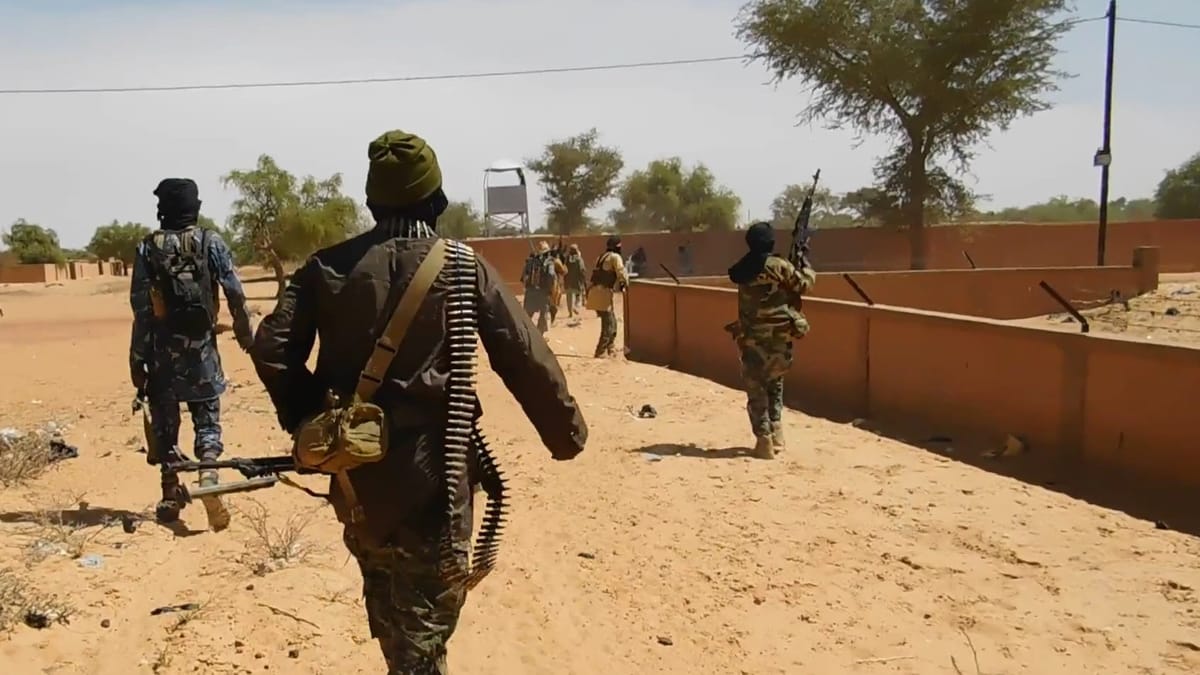
In the opening phase, across 2012 and 2013, the fighting was largely conventional, with urban battles for control of cities and relatively defined front lines. Following the French intervention and the recapture of the northern cities, the war shifted decisively into insurgency, marked by IED attacks, ambushes and periodic complex assaults on military bases across the north and center.
For most of the next decade the insurgency spread outward rather than upward, expanding from northern Mali into the center, then across the borders into Burkina Faso and Niger, without seizing and holding major towns.
The Western departure reshaped the battlefield. As France wound down Operation Barkhane and the UN mission withdrew through 2022 and 2023, the juntas leaned on Russian mercenaries to go back on the offensive. In November 2023, the Malian army and Wagner retook Kidal, the Tuareg stronghold that had eluded Bamako for over a decade, fueling junta narratives of a nation reclaiming its strength. The momentum did not last. In late July 2024, at Tinzaouaten near the Algerian border, Tuareg rebels and JNIM ambushed a Malian-Wagner column and inflicted what was likely Wagner's deadliest single defeat in Africa, with reported losses ranging from dozens to over eighty. Days later, Ukraine's military intelligence publicly hinted it had aided the rebels, prompting Mali to sever diplomatic ties with Kyiv and revealing how far the war had drawn in outside powers.
The status quo truly began to change in 2025. That May, JNIM overran the Burkinabe provincial capitals of Djibo and Diapaga, holding Diapaga for roughly ten days, the longest it had ever held a major town there. This was less of a return to conventional warfare than JNIM testing a new capability: taking and briefly holding urban centers it had previously only blockaded.
The April 2026 offensive in Mali pushed that shift further. The FLA's capture and continued hold of Kidal and Tessalit looked like conventional warfare: urban battles followed by sustained occupation, even as JNIM's simultaneous strikes around Bamako remained classic asymmetric raids. The renewed offensive in July was a continuation and consolidation of this new pattern: where April relied on speed and negotiations, the battle for Anéfis turned into a grinding, multi-day fight for a single fortified position, something the region's insurgents had almost never attempted given the air superiority of government forces, and for which they have paid a dear price in human and material losses. The war now runs on both registers at once, conventional where the insurgents feel strong enough to hold ground, and increasingly willing to pay for it, asymmetric everywhere else.
What are the defining dynamics?
The Sahelian conflict is unusual in several ways. The first is that it is inherently transnational, which makes it far more fluid in scale than comparable wars such as Syria or Afghanistan. By fluidity, I mean that a group's center of gravity can shift hundreds or thousands of kilometers from one front to another. This was visible during JNIM's May 2025 offensive in northern and eastern Burkina Faso, when the group's activity in Mali quieted as it surged next door. The same logic appeared during the autumn 2025 fuel blockade, when fighters drawn from Burkina Faso reinforced the effort to choke Mali's southern supply routes, and on a smaller scale whenever Burkinabe fighters strike into Benin or toward Nigeria, far from their core areas.
The second defining feature is that the war is conventional in some places and asymmetric in others, depending on terrain and circumstance. In the open north, where cover is scarce, the fighting is more conventional and towns are more likely to fall and be held, as happened with Kidal and Tessalit in April 2026. Across the rest of the Sahel, where insurgents exploit forest, hills and a dense scatter of villages, the dominant method is the siege: fighters establish themselves in the surrounding terrain and slowly strangle a town for months, sometimes years, until residents accept their terms, such as mandatory headscarves for women, peaceful withdrawal of the military garrison, and letting the insurgents resupply in the markets. Numerous central Malian villages, and larger towns, have struck such deals to have sieges lifted.
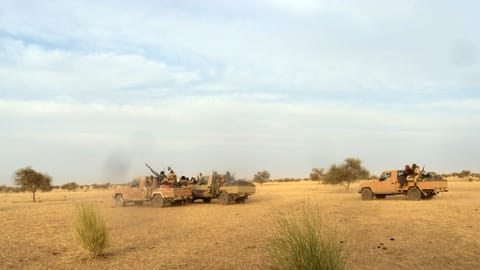
JNIM scaled this model dramatically in late 2025, extending it from isolated towns to Mali's economic lifelines, the fuel convoys supplying Bamako and the regional capitals. Because Mali is landlocked and imports nearly all its fuel by road from coastal neighbors, attacking the tankers attacks the state itself. Crucially, JNIM does not actually hold these roads; it uses very small squads of less than a dozen men to set up checkpoints and IEDs, and organizes larger ambushes when the opportunity arises. The army and air force cannot secure hundreds of kilometers of highway and dense bush without being spread thin and ambushed, so the state falls back on large escort convoys, screened from the air by drones and helicopters and on the ground by armored vehicles and Malian and Russian troops on technicals and motorcycles. This works in the short term, but it is costly and slow, and a system in which citizens must wait for a military convoy to travel between cities cannot be sustained indefinitely.
Such tactics are not specific to JNIM, as ISSP also engages in siege warfare, though for different ends. Rather than striking deals, ISSP aims to starve and grind down the military garrisons in a town until the moment is ripe to take it. Menaka, capital of the region of the same name in Mali, has been under ISSP siege for over three years, and any military formation attempting to reach the city faces IEDs and ambushes. The same template plays out against smaller towns across neighboring Niger and Burkina Faso.
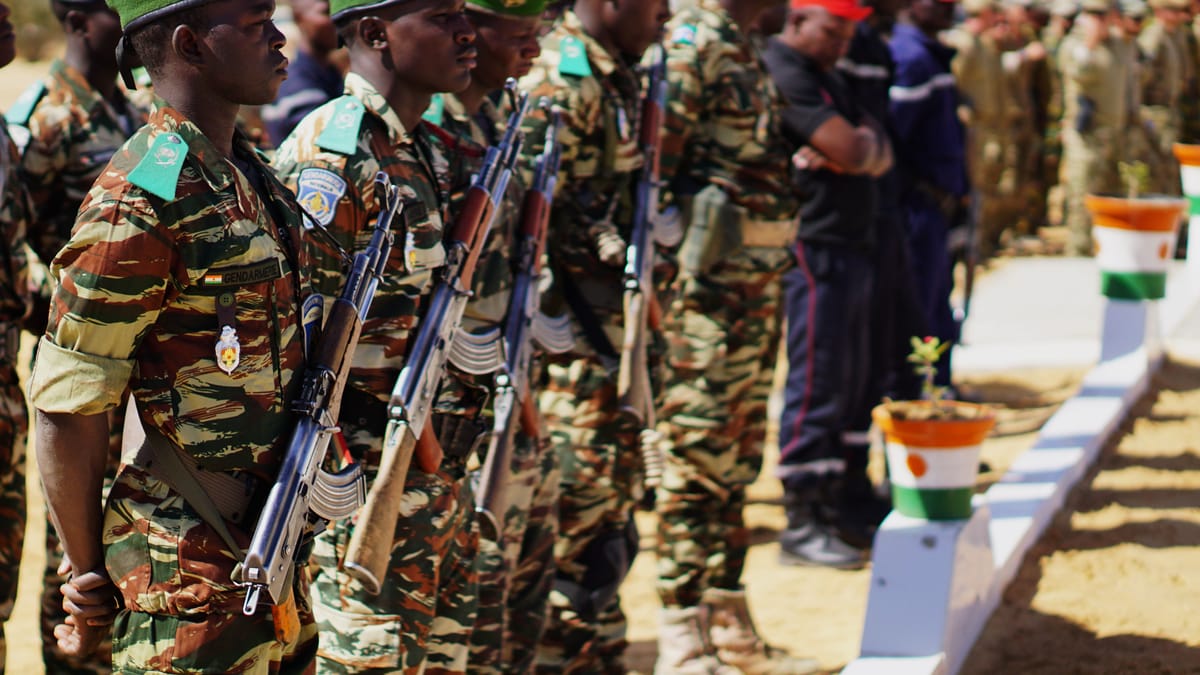
Each of the three junta states also relies on auxiliary militias recruited from local villages, usually in the jihadists' zones of influence. In Mali these are the traditional Dozo hunter militias; in Burkina Faso, where the system is most widespread and formalized, reportedly fielding tens of thousands of fighters, it is the VDP (Volontaires pour la Défense de la Patrie); in Niger, a similar VDP-style force is much newer but operates along the same lines.
Used well, these militias can be effective, but history shows they often prove counterproductive. In Burkina Faso the VDP have a record of abusing their power and displaying poor discipline, and ethnic and religious hatred has driven them to commit numerous massacres against Fulani and other Muslim communities under the pretext of harboring terrorists. Scores of civilians, by some accounts well over a hundred, were killed in the deadliest recent case, at Solenzo in March 2025. Gruesome footage showed children, the elderly, women, and infants being killed by armed men in VDP uniforms. This played directly into JNIM's hands: one of its most senior leaders in Burkina Faso, Ousmane Dicko, soon released a speech vowing revenge.
Comparable atrocities have been committed on a smaller scale in Mali and Niger by these auxiliary forces, and by the Russian mercenaries hired by the Malian junta, who killed hundreds of civilians during their advance north toward Kidal in November 2023, a pattern that continues in central Mali today. In Niger, the new VDP-style militias wasted no time after being formalized in late 2025, quickly carrying out massacres in villages accused of harboring the Islamic State, killing dozens, which ISSP has cast as attacks on vulnerable Muslims it has vowed to protect against "apostates."
These massacres usually serve the jihadists, handing them fresh recruits and a veneer of legitimacy, yet the insurgents are no less willing to slaughter villages that defy them. In central Mali in May 2026, when villages near Bandiagara rearmed and formed self-defense units to throw off JNIM rule, the response was swift, and dozens of militiamen and civilian men were killed. ISSP did the same in Niger's Tillabéri region after learning of a planned uprising, though it typically acts only after several days of explicit warnings that it knows what the villagers are planning and will come to punish them.
As noted earlier, Turkish drones form the backbone of the AES air forces following the Western withdrawal, and especially the closure of the US drone base in Niger. These drones have become central to the national militaries' advantage. Well placed, they can strike large columns of militants on motorcycles and kill dozens, and when paired with local intelligence and early warning, they can break up major assaults on military bases as they unfold or just before.
The jihadists have grasped this, and lacking any real air defense, they have placed their bets on hitting the air bases directly. In September 2024, JNIM carried out its first assault on the Bamako air base, overrunning part of the airport and setting the presidential Boeing 737 alight. JNIM claimed to have destroyed six military aircraft including a drone, a figure the junta never confirmed but which Reuters partly verified through satellite imagery.
ISSP carried out a similar but far better planned and executed assault on Air Base 101 in Niamey, the Nigerien capital, on 29 January 2026, when several dozen IS fighters broke through the gates and destroyed helicopters, jets and other air assets. By IS's own account, backed by video the group released, it was their most complex and successful operation since the province's inception, though Nigerien authorities sought to downplay the losses and inflate the attackers' casualties. A few months later, ISSP launched a comparable assault on the Tahoua air base in central Niger, where the TB2 drones are stationed. That attack achieved less, with no credible reports of air assets destroyed, but it set a dangerous precedent, proving that IS could now strike almost anywhere and confirming that these drones are the juntas' single most valuable, and most targeted, asset.
What Happens Next?
No one can predict with certainty how the coming months will unfold, but some scenarios are more probable than others. The lull of early June, as anticipated, did not survive the approach of the rainy season, but the July offensive ended in failure: Anéfis and Aguelhok held, and the state's presence in the Kidal region survives. The question now is whether the coalition absorbs the losses and tries again, shifts its weight back to the asymmetric campaign in the center and south, or waits out the rains before its next move.
Neither side has the power to destroy the other in a single blow. A lightning rebel sweep of the kind that toppled Damascus in 2024 is therefore unlikely in Mali. Given the country's size, the scale of forces deployed, the mutual unwillingness to negotiate a handover and the polarization of Malian society, any shift is far more likely to be gradual, though as the north shows, gradual can still mean the loss of entire regions, one garrison at a time.
Were JNIM and the FLA somehow to take Mali, a recognizable model of governance might follow: a new constitution drawn up, a parliament, and the inclusion of tolerated opposition figures such as the exiled Malian cleric Imam Mahmoud Dicko and his movement. That assumes the FLA sets aside its dream of independence and accepts a central JNIM authority in Bamako while retaining some autonomy in the north. There is no guarantee it would hold; the two could suffer another falling-out and turn on each other again, as they have before.
ISSP would likely try to exploit any such chaos, seizing abandoned bases and entrenching itself in Menaka, but it would struggle to hold those gains against a combined JNIM, FLA and Malian push, and would probably fall back toward Niger.
The other two states present a paradox: militarily weaker than Mali, yet less existentially threatened, Burkina Faso's junta remains entrenched and in control of every regional and provincial capital. Ouagadougou is the only AES capital whose air base has not been attacked, and the army stays largely on the offensive, fighting JNIM and ISSP across multiple fronts. The war there could intensify or stall depending on events in Mali, above all whether JNIM pulls its Burkinabe fighters north for the next phase.
Niger is different again. It appears calmer than Burkina Faso, where JNIM claims attacks almost daily, but that is partly because ISSP, the dominant group there, operates more secretively. Local sources report steady fighting between ISSP and pro-government militias and a slow, village-by-village expansion across western, central and southern Niger, where the group imposes its taxes, rules, and recruitment, a process likely to continue for months or years until ISSP judges the moment right to move against urban centers. The August mutiny adds a second variable, since Niger's is the most fragile of the three regimes: neither Mali nor Burkina Faso has seen dissent escalate into open fighting in its capital, and Niger has lost ground and men faster than either, while absorbing attacks on both its main air bases. The junta is held in place by the presidential guard, which is far better equipped than the regular army, and by the Africa Corps, whose intervention decided the battle for the airport against the mutineers. With a purge of the officer corps already underway, the question now is whether it will lead to an even greater crumbling of the front line.
No immediate collapse or sudden reversal in the Sahelian states is expected, and the likeliest path is neither outright victory nor defeat for either side, but a deepening of the present trajectory. That alone is dangerous enough. A region that produces more than half the world's terrorism deaths, where insurgents now strangle capitals and the state survives convoy to convoy, will struggle to keep the fighting contained within its own borders. The coastal states to the south (such as Benin, Togo and Nigeria), the migration routes to the north, and the wider jihadist movement that watches the Sahel as a model are all invested in how this ends. The Sahel is no longer the periphery of anyone's security. It has become the center of its own.