
Sudan’s Dagalo Markets are Destabilizing Africa
In the midst of Sudan's civil war, informal markets known as Dagalo Markets have emerged selling looted goods at bargain prices, destabilizing economies across Africa.
Phillip Carroll • January 26, 2026
Up next
Moscow is Struggling to Drum Up Interest in its Africa Summit. Here's What that Means
Casus Belli · September 8, 2026 · 14 min read
Niger's Rebellion Shows the Sahel Crisis is Growing Out of Control
Saturday's failed coup in Niamey was staged by soldiers from Niger's jihadist-plagued frontlines — and only Russia's Africa Corps saved the junta that sent them there.
Paweł Wójcik · September 3, 2026 · 10 min read
Sudan’s Paramilitaries are the Best-Funded Insurgents on Earth. They’re also Losing the War.
Sudan’s Rapid Support Forces are arguably the most well-funded and armed insurgency in decades. With billions of dollars in funding and near-daily weapon deliveries from the UAE, winning the civil war should in theory have been easy. But the opposite is true. The RSF is losing.
Thomas van Linge · August 31, 2026 · 11 min read
In 2023, reporters from the Sudan Times visited a market in the Sudanese village of El Masseid, about 60 kilometres south of the capital, Khartoum.
There, they made a surprising discovery. A television set, typically costing in the region of 230,000 Sudanese pounds or about 380 dollars, was to be bought for the bargain-basement price of only 50,000 pounds, equivalent to about 50 US dollars.
It wasn’t the only bargain ware on offer. A vendor cheerfully offered the journalists a fridge for the equivalent of 250 dollars, instead of – according to him – around 750 in stores. Whether or not this estimate was accurate, something was clear: a random street market in the Sudanese wilderness – not far from the frontline of an ongoing, bloody war, no less – was offering desirable goods for far less that market prices: prices which would typically only be higher amidst the shortages of a war.
There was just one rule attached: do /not/ ask where these appliances came from.
The journalists found this out quite concisely when a saleswoman responded to their questions with the words: “Are you here to shop or to chat?”
There was a reason the vendors responded to questions with such opprobrium: these were – /obviously/ – looted goods. And so, a would-be customer may secure a television for a steal, but they’d have to close their eyes to the fact that it had almost certainly been taken from one of Sudan’s war-ravaged regions, and its previous owner was now probably either a refugee, in custody…or dead.
These types of markets have a name. You may have heard about Mohamed Hamdan Dagalo, alias Hemedti, the brutal warlord who has waged a war against the central government of Sudan since 2023. His UAE-backed paramilitary, the Rapid Support Forces, have been known for plundering various assets from Darfur for years – most notably gold, but also the sorts of televisions and fridges on retail in El Masseid. The markets in which they wind up, in tribute to their facilitator, are known as ‘Dagalo markets’.
And Sudan is not the only country in which they are to be found.
Wartime Markets and the Sudanese War
Now, unfortunately, wartime black markets aren’t really anything new.
Owing to the scarcity of everyday items, such markets became a routine fact of life during the second world war in Europe, where the need to survive eclipsed moralising about the origin, price and quality of the items received.
Concurrently, wartime looting is nothing unusual either. Jewish business and properties were routinely dispossessed from their owners and plundered by the Nazis – with items such as paintings, jewellery, and personal heirlooms finding their way into homes and state institutions in Germany. Prominent Nazi Hermann Goring reportedly had a private art collection, about 50% of which was property confiscated from the so-called enemies of the Reich.
Less common – though not unheard of – was that such spoils would find their way straight into open resale. If they did, it was often under very specific circumstances and for highly-valued items. Switzerland – notoriously – became a magnet for valued assets, and a Swiss auctioneer named Theodor Fischer sold looted artwork on behalf of the Nazis throughout the war. Other select episodes occurred during later conflicts. In 2003, amidst the US invasion of Iraq, staff at the national museum evacuated, allowing a one-week window before the arrival of US troops during which roughly 15,000 cultural artefacts were looted and taken or sold to countries near and far.
But generally, war spoils and black markets rarely unite in such a way as to offer the open purchase of everyday items and possessions.
But that, unfortunately, is exactly what seems to have been the case in Sudan, amidst the chaos of the country’s yet-ongoing civil war.
The Marketeers
War came to Sudan suddenly and viciously in April 2023.
The genesis of the ongoing conflict is a rivalry between two warring factions: the Rapid Support Forces (or RSF) under the aforementioned Hemedti, and the Sudanese Army or SAF, led by General Abdul Fattah Al-Burhan.
The conflict is linked directly to the 30-year reign of Sudan’s notorious dictator Omar Al-Bashir, brought to an end by a military coup in 2019 following months of popular protests. Al-Bashir had long held Dagalo in high esteem, and it was he who gave the paramilitary leader his alias ‘Hemedti’, meaning ‘my protector’. But what Dagalo’s ‘protection’ entailed was nothing close to noble.
For much of the 2000s, Hemedti had led Al-Bashir’s brutal suppression and exploitation of predominantly Black Africans in the impoverished western Sudanese region of Darfur. When the Darfuris rose against the government in 2003, Al-Bashir armed local Arab militias to suppress them, giving them free reign to wipe out the uprising through any means they saw fit. The Arab militiamen became known as the ‘Janjaweed’, or ‘the Devils on Horseback’, and became notorious for a barbaric campaign of violence, one of the worst the world has seen in the 21st century.
But what the U.S State Department described in 2004 as a ‘genocide’ in Darfur went unpunished, despite the deaths of up to 300,000 people (according to the UN). The conflict subsided without outside intervention after 2008, mostly because Al-Bashir and Hemedti’s brutality had succeeded in suppressing the Darfuri rebels. All of this would lay the ground for more depravity when the Sudanese civil war would break out many years later.
In the meantime, the Janjaweed were repackaged as the RSF, effectively becoming Hemedti’s personal army. And between 2008 and 2023, they helped Hemedti plunder the resources of the now-defenceless region of Darfur. They exploited its gold reserves, often reselling the resource to the United Arab Emirates – with the assistance of allies in Libya – in exchange for hard cash (for Hemedti) and weapons for the RSF. This emboldened Hemedti, who became one of the richest and most powerful men in Sudan, despite evidence of his having directed some of the worst violence in Darfur. It also put him in an opportune position when Al-Bashir was deposed and imprisoned in 2019.
And when that finally happened, Hemedti turned on his erstwhile master without a moment’s hesitation. Initially, the RSF (under Hemedti’s command) worked with the military (under Al-Burhan) to suppress insurrections occurring on the streets of Sudan. They did so by simply transposing the unspeakable tactics from Darfur to wherever was needed in the rest of the country. The June 2019 Khartoum massacre saw hundreds killed and raped – overseen by collective power of Hemedti and Al-Burhan together. But it wasn’t long before the two strongmen came into conflict with one another, over disagreements regarding the integration of the RSF into the army proper. With that, Sudan fell into civil war in April 2023.
And by then, a disturbing new subcurrent of the conflict had emerged, which would allow the rise of the infamous Dagalo Markets.
Looting had been a practice long-pursued by Hemedti’s men, given the unfettered access they’d had for years to parts of Sudan. The same practice now extended to other parts of the country under RSF control.
And gold was now, by far, not the only thing stripped from and resold from rightful hands.
The Markets
For much of the 2010s, the RSF spent its time steering the illicit trade of various items: often the spoils of war from conflicts in neighbouring countries.
Cars were a prominent such ware, often looted by Muslim Seleka militias in the Central African Republic or by warring factions in Libya before passing through Sudan’s arid north and RSF-controlled Darfur for sale in Sudan or nearby Chad. These unlicensed vehicles were nicknamed ‘Boko cars’ – and Sudanese newspaper Al Taghyeer estimated there were around 300,000 of them in circulation in Khartoum alone in 2021. That year, Sudan’s transitional government attempted to suppress the trade by forcing unlicensed car owners to register their vehicles or risk having them impounded. But the trade exploded once again when the civil war broke out.
Soon, general household wares would follow.
As mentioned, gold had been the most coveted resource for Hemedti’s men. And gold – in addition to its real value – held a particular cultural value in Sudan, especially among women, those who could afford it. Families had taken to hiding any gold-filled heirlooms they possessed in televisions and household appliances amidst the looting rampages of the RSF and SAF in the course of the war. But the militia simply took to stealing the baby and the bathwater – combing through the lifted items to find gold, and being left with common appliances for which they had little use.
Hence, the rise of the Dagalo markets.
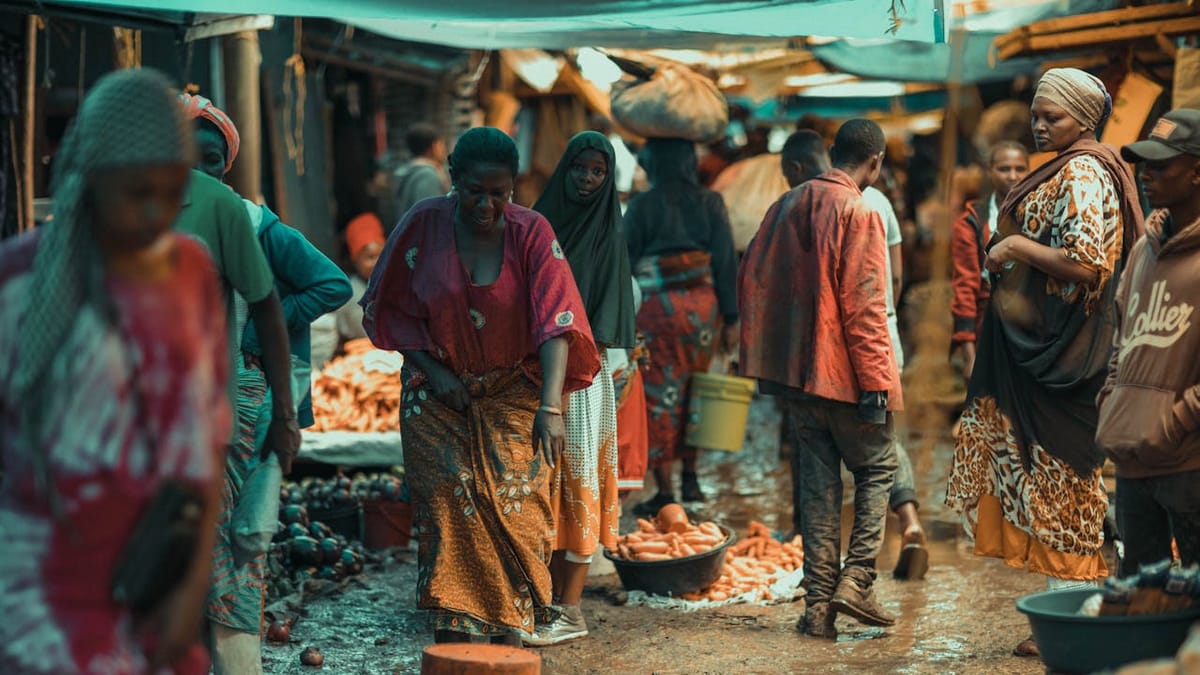
The markets soon sprang up across Sudan and Chad, where – according to the Tahrir Institute, a TV could cost as little as 20 dollars, a laptop from 5 to 7, and everyday goods like barrels of drinking water could be found on the cheap too. From the outset of the war, plundering has expanded across Sudan – not least Khartoum and Omdurman – where locals have reported having items such as air conditioners, cars, even passports seized and resold. On some occasions, the owners of such items have been able to retrieve their items by way of the RSF, for a hefty price. More commonly, they wound up in the hands of the highest bidder at any one of the informal markets.
The tragic irony of such spoils of war is that the Dagalo markets crop up in places that are not – or never even have been – under the control of the RSF. El Massied – the village visited by Sudan Times reporters – lay, at the time of the article, roughly 12km from the frontline, within government territory. Other looted items from Sudan have made their way further afield to markets across the Sahel region, probably brought back by militants who fought alongside Hemedti and the RSF.
The SAF – Sudan’s recognised government under Al-Burhan, which had temporarily relocated to Port Sudan on the Red Sea – responded. According to SPARC, the proliferation of Dagalo markets was the reason for which the government imposed an embargo on the movement of goods outside Darfur and Kordofan (a mineral-rich region in the center of the country). However, the SAF has limited means to enforce this embargo – and practically none in the areas outside its control. Looted goods – in addition to Darfur’s pilfered gold – are still able to travel freely to Chad (to Darfur’s West, which shares a long border with RSF-controlled territories), as well as to Libya and onwards to Egypt by way of the same warlord connections used by Hemedti to trade with the UAE. The movement of looted goods dovetails with the instability of several such regions, as well as with the general poverty rates in large parts of the Sahara and Sahel, allowing for such markets to appear spontaneously and without restriction.
The illegal and unregulated nature of the Dagalo trade has also allowed for the proliferation of items not legally available in Sudan under normal circumstances. SPARC described how RSF fighters have been suspected of trafficking alcohol (which is illegal in Sudan for Muslim citizens) as well as hashish from Chad for retail in Sudan and elsewhere.
In Darfur, now fully under the control of the RSF since the fall of El-Fasher last autumn, everyday trade has been completely taken over by Hemedti’s vendors. It is estimated that more than 90% of traders in Al Geneina (a city in West Darfur) are reported to be from the RSF or are RSF-aligned, rising to almost 100% in the gold and fuel-trading sectors. The shift in wholesale trading has allowed the RSF nearly complete control of the local economy, at the expense of any local, independent traders.
And all this, no doubt, also does its part in helping the RSF sustain its brutal ongoing conflict, by now approaching its fourth year of existence.
References
https://thesudantimes.com/sudan/second-hand-goods-flood-dagalo-markets-in-sudan-cities/ The Sudan Times
https://www.bbc.com/news/av/world-africa-48956133 BBC News
https://timep.org/2024/02/28/in-the-shadow-of-conflict-the-black-markets-of-sudans-war/ Tahrir Institute
Written by
Fronts Staff delivers reporting and analysis across defense, security, and global affairs.
Related articles
Moscow is Struggling to Drum Up Interest in its Africa Summit. Here's What that Means
Casus Belli · September 8, 2026 · 14 min read
Niger's Rebellion Shows the Sahel Crisis is Growing Out of Control
Saturday's failed coup in Niamey was staged by soldiers from Niger's jihadist-plagued frontlines — and only Russia's Africa Corps saved the junta that sent them there.
Paweł Wójcik · September 3, 2026 · 10 min read
Sudan’s Paramilitaries are the Best-Funded Insurgents on Earth. They’re also Losing the War.
Sudan’s Rapid Support Forces are arguably the most well-funded and armed insurgency in decades. With billions of dollars in funding and near-daily weapon deliveries from the UAE, winning the civil war should in theory have been easy. But the opposite is true. The RSF is losing.
Thomas van Linge · August 31, 2026 · 11 min read
Continue in
Become a Member
Members get full access to premium reporting, in-depth briefings, and subscriber-only analysis.
Insiders Receive
- Full access to all premium articles and briefings
- Exclusive subscriber-only analysis and dispatches
- Support independent conflict journalism
Signed in or already a member, but still locked? Fix an access problem
From $5/month — cancel anytime