
Briefing Room 09.05.2026: Growing Chaos in Mali, Iranian Attacks in Britain, Alleged Meddling in Sudan.
The Briefing Room brings together the concerning global headlines you should know. Today, we'll discuss the growing chaos in Mali, Iranian attacks in Britain, a
Simon Whistler • May 9, 2026
Members only
Note: this transcript was generated by AI and may contain errors or inconsistencies.
Welcome back to The Briefing Room, the weekly Fronts.co situation report that brings together all the concerning global headlines you should be able to quote if you want to absolutely fucking ruin the vibe at your next dinner party.
Today, we'll be back and forth to check up on Africa, first in the Sahel and then in the African Horn, with a brief intermission to discuss Iranian attempts to orchestrate a sabotage campaign on British soil. As always, if you're watching this, thank you so much for supporting Fronts.co.
After all, we may be doing all of this for the love of the game, but it's your support that helps us keep doing it. And with no further ado, let us dive in.
Mali reeling after Janim Taureg Offensive It's been about two weeks since the nation of Mali was thrown into crisis in a joint attack by the Al-Qaeda linked to jihadist insurgency Janim and the nation's northern Taureg separatist movement, the FLA.
But instead of an opportunity for Mali's leaders to regain control, the last two weeks have been a slow, painful descent into a new reality. By all outward indicators, the recent gains of Janim and the FLA are not going to be undone because Mali and its Russian backers are simply incapable of reversing the damage.
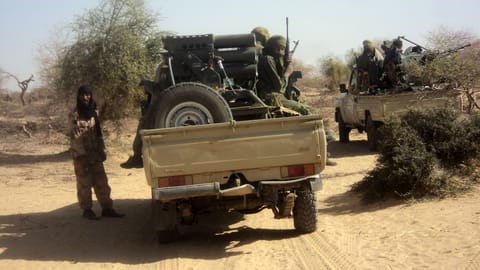
We'll start with the Insurgent Alliance, where in the north, Janim and Taureg forces have consolidated their control over an expanding swath of territory.
Over a week after they chose to withdraw from the northern city of Kudal, the key strategic target that the Tauregs have been focused on for years, Russia's paramilitary Afrika Korps agreed to back out of another area called Tesalit.
As they left, they essentially gave up an expensive stronghold without a fight, in a process they've quietly repeated elsewhere, including this week at the base at Aja Lok. Every time the Afrika Korps withdraws, the Russians force Mali and soldiers to withdraw too.
And because Mali and its Russian allies tend to hold bases and population centers, instead of spreading through the landscape, each withdrawal seeds dozens of smaller communities to insurgent control. Meanwhile, outside the capital city of Bamako, Janim has begun setting up roadblocks and checkpoints.
Over the last several days, suspected Janim militants have attacked dozens of trucks and fuel tankers, including an ambush on a large convoy of Moroccan fruit shipments.
The fate of those truck drivers still being unknown. In the central part of the country, they've taken over towns and claimed to have moved into a military base after the Afrika Korps purportedly abandoned it.
Even more important, Janim's rhetoric has started to change in a way that suggests it both understands the opportunity it's created and has started re-evaluating its own goals because of that opportunity.
Last week, Janim called upon the people of Mali to rise up against the nation's ruling military hunter, the group's first serious overture of that kind ever.
Before its successes in late April, Janim had constrained itself to the goal of destabilizing Mali's hunter, taking over communities, and setting up alternative local governments without making any serious claim that it could and should take over the entire country.
Perhaps Janim's leadership was already planning to change its tune, but it's equally feasible that Janim and their Tower Egg allies may have even surprised themselves with their recent military success.
Either way, Mali's civil political opposition seems to be coming around to the reality that Janim is here to stay.
This week, opposition leaders suggested that it's time to start working with Janim and opening a dialogue given the organization's serious insurgent power and the peaceful opposition's inability to gain a foothold in their own contest against the military junta.
Those overtures came soon after Mali's government suggested that opposition figures, as well as military officers, had sought to conspire with Janim and the Tower Eggs to overthrow the regime during the events of late April.
Mali's leaders have begun a series of internal crackdowns, including the arrest of regime critic and former minister Muntaga Tal, who was abducted from his home by masked gunmen last Saturday night.
Police officers, junior military leaders, and even lawyers are being taken into custody, often with no information provided on their whereabouts or the charges that they face. Mali's military is known to be especially coup-prone.
Even the nation's current military leadership took power in May of 2021 from another military government that had staged its own coup in August of 2020.
Mali's junior officers are known to have been disillusioned, low on morale, and frustrated by the hands-off approach of Russia's Afrika Korps paramilitaries compared to their Wagner Group predecessors, even before the events of late April. Now, after Mali's regime has been handed the ass-kicking of the decade, those sentiments are only expected to get worse.
Meanwhile, in Bamako, the shake-up has made other government changes more likely, especially after the death of Defense Minister Sadio Kamara in the insurgent attacks. Kamara was a close ally of Mali's leader, Asimi Goiter, before he was killed outside his residence by a truck bomb alongside his family.
But he was also a close ally of Russia and the Afrika Korps, and he was a forceful advocate in favor of Mali's continued partnership with them.
After his death, Asimi Goiter himself took the role of Defense Minister, and for Russia, that might spell trouble. Goiter is partial to Mali's Turkish paramilitary partners.
He's believed to be personally protected by bodyguards from Turkey's mercenary company, Sadat, or a similar unit, and he's welcomed growing Turkish influence at a time when Turkey would very much like to push Russian forces out and take over their operations.
It's not guaranteed the Goiter will choose to push the Russians out in favor of the Turks, but it's a strong possibility at this stage, especially after the Afrika Korps' embarrassing series of withdrawals from contested areas.
Finally, there's one other insurgent factor to consider in all of this, the Islamic State Sahel, which has chosen this moment as an opportunity to build its own mandate across Mali.
While the group has only managed to seize and hold a relatively small pocket of new territory in the chaos, it's seized on Janim's alliance with the Taregs and its relatively moderate strain of jihadist ideology, emphasis on relatively moderate there, to argue that the Islamic State should be the ones drawing support.
According to the Islamic State, Janim is getting soft, it's growing secular, embracing infidels, legitimizing politics, and failing to institute the fundamentalist Islamic law that both groups lay claim to.
In terms of their relative fighting ability, Janim and the Tawaregs currently outmatch the Islamic State in this part of the world, and both groups are intent on fighting the Islamic State wherever possible, especially after the Islamic State has conducted massacres of Tawareg civilians.
But if the Islamic State can seize on this moment to draw greater numbers of ultra-extreme recruits, including Janim fighters, who may feel that their group is straying away from its central mission, then inter-insurgent battles may become a more important part of this conflict.
And for our next story, let's turn our attention to Iran, which, according to recent reports, has been targeting a close US ally. And I know at this point you're probably thinking to yourself, Simon, do you have the slightest idea how little that narrows it down?
But while Iran has attacked multiple American allies in the Middle East with its vast arsenal of drones and missiles, two factors make this different from any of the attacks that we've previously reported.
One, the target isn't in the Middle East. In fact, it's thousands of kilometers away. And two, no military-grade weapons have been fired so far.
British outlet The Times reported that in March, a new group emerged in the UK, calling itself the Islamic Movement of the People of the Right Hand, also known by the handy Arabic acronym HAI, and it has been wreaking havoc across the country. On the 23rd of March, four ambulances belonging to the Jewish charity Hatzola were burned in North London.
About three weeks later, on the 15th of April, there was an attempted firebombing at the Finchley Reform Synagogue, followed by a failed arson attack at the offices of an Iranian news outlet in West London.
HAI also claimed responsibility for an April 18th attack, in which a synagogue in northwest London was set on fire. And in the most heinous attack yet, a man stabbed two Jewish men in a daylight rampage across the streets of Golderskreen. These are just a smattering of the attacks that HAI has claimed responsibility for since its emergence.
According to the International Center for Counterterrorism, HAI has claimed responsibility for more than 15 attacks, including in the Belgian cities of Liege and Antwerp, and also in the Netherlands.
Now, even a single one of these attacks would be devastating, but the fact that multiple attacks happened in rapid succession revealed just how big a threat HAI has become, despite only emerging barely two months ago. And that raises an interesting question.
Where did HAI come from, and how has it managed to become such a big threat in such a short time? Well, according to the Times, the group's insignia references that of the Quds Force, the arm of Iran's Islamic Revolutionary Guard Corps, which manages overseas operations and proxy networks.
This supports an assertion by Kastra Arabi, director of IRGC research at the United Against Nuclear Iran think tank, that the group is a front for the Quds Force.
And Arabi isn't the only one making this claim. After the Iran war began, most observers expected Tehran to activate its network of long-embedded sleeper cells abroad. Instead, according to Adrian Stuni, a fellow at the International Center for Counterterrorism, they shifted to a leaner, more disposable hybrid operational model with HAI at its core.
In a piece for the Washington Institute for Near East Policy, Stuni wrote that this new model relies on recruiting local residents without ideological ties to the IRGC, often young people with criminal records through gig economy channels on platforms like Telegram and Snapchat.
These recruits are then offered money to carry out acts of violence and intimidation against symbolic targets in Europe. By using disposable operatives who have no ties to the IRGC, Tehran gets plausible deniability and doesn't have to think about the logistics of the operations.
Instead, the recruits are urged to use whatever is locally available in their attacks. Despite these advantages, the model has obvious limitations. Since the recruits are not ideologically motivated, their loyalty is only as strong as their last paycheck.
Additionally, the lack of training and coordination means attacks are often crude and inconsistent. And while some can have devastating consequences like the stabbing in gold as green, most will end up having, at best, only some symbolic significance. Given these limitations, we have to ask, why is Iran pursuing this strategy in the first place?
Why is it attacking the UK and other countries in Europe? And the truth is, while the strategy underpinning HAI's attack is new, Iranian aggression towards the UK and Europe more broadly is not. Iran has been targeting the UK since shortly after the 1979 revolution.
In October 2025, the Director General of MI5 said that the security services had tracked 20 Iran-linked terror plots in Britain in the last 12 months and had intervened in hundreds of developing ones.
He also announced that Iran was behind a string of anti-Semitic attacks in Australia, as well as a failed assassination attempt in the Netherlands and in Spain. These attacks are meant to send a message to London that supporting Israel and hosting Iran's critics has a cost, one that Tehran is increasingly willing to impose.
Speaker to Parliament, the UK Security Minister Dan Jarvis described it as a conscious strategy to stifle criticism through fear and intimidation. For its part, the UK hasn't just been drinking tea and having scones while waiting for the next attack.
As we've already mentioned, police have made multiple arrests, and MI5 is actively tracking and stopping Iranian terror plots.
Additionally, according to the BBC, Keir Starmer's government is planning to introduce new anti-terror powers that would enable them to ban threats, such as Iran's Islamic Revolutionary Guard Corps, the IRGC, in the next parliamentary session.
The legal change is expected to create new criminal offenses for people who support or promote groups formerly listed as state-supported threats. But this might not be enough.
Whether the government bans it or not, the IRGC, through its proxy networks, will continue to carry out terror attacks in the UK. And as we've seen with the emergence of Haiyi, these attacks will continue to evolve as Tehran refines its strategies to find more ways to exploit the vulnerabilities that exist in Western democratic societies.
London and the entire Western world needs to evolve just as fast or they might be looking at a future where Tehran can run roughshod over the West, all without firing a single missile.
And finally, we turn to the ongoing civil war in Sudan, where a recent drone strike targeting Khartoum International Airport has put the nation's capital on edge.
Even though the paramilitary rapid support forces were responsible for the attack, Sudan's internationally recognized military regime is pointing the finger at two more powerful nations, Ethiopia just across the border and the United Arab Emirates in the Persian Gulf.
The attack on Khartoum International took place on Monday, just a week after the airport started to allow flights again.
Part of a larger drone wave, the attack happened concurrently with strikes against military targets in nearby areas. Khartoum International was struck by five kamikaze drones during the attack, Chinese-made designs that can fly silently and carry and launch at least four missiles before using themselves as a final projectile.
The sixth drone was intercepted and crashed into a house.
On its face, the attack was notable because it struck Khartoum after a period of relative quiet there following the Sudanese Armed Forces or SAF's recapture of the city a couple of months ago.
But at a press conference later that night, Sudan's foreign minister and military spokesman made a far broader series of allegations against the RSF's international allies.
According to the SAF spokesman, Sudan had collected, quote, strong and hard evidence proving the involvement of Ethiopia and UAE in this aggression against Sudan, end quote, coordinating and facilitating the strikes on Khartoum, even though it was the RSF that actually carried it out.
Sudan insisted that the drones had launched from Ethiopian soil with Emirati support, and that this was far from the only time Abu Dhabi or Addis Ababa had done something like this.
Instead, Sudan's spokesman listed several prior incidents as cases of foreign involvement, strikes on the 1st of March against four Sudanese states using drones flown out of Ethiopia, and a strike on the 17th of March that was also launched from Ethiopia. The list only expanded from there across multiple months and over half a dozen Sudanese states.
Sudan's foreign minister vowed to file international charges against the two nations, quickly drawing support from regional allies like Egypt and Saudi Arabia. Naturally, both the Emirates and Ethiopia rejected Sudan's allegations out of hand.
The Emirates called them, quote, part of a calculated pattern of deflection, shifting blame to others to evade responsibility for their own actions.
Ethiopia went a step further, insisting that its own government had, quote, exercised restraint and refrained from publicizing the grave violations of Ethiopia's territorial integrity and national security committed by some belligerence in the Sudanese civil war, end quote, implying, and then outright saying, shortly afterward, that the Sudanese regime had
Armed, supported, and worked with Ethiopian rebel factions.
Now, for viewers who followed the Sudan war, however, it's probably not a particularly shocking claim claim that Ethiopia and the Emirates were would facilitate the strikes on Kar-2. Nor is it a surprise that the Emirates in Ethiopia would be closely working with the RSF in the first place, even to coordinate specific attacks.
The Emirates have financed and supported the RSF's operations for years, even as the RSF carried out acts of genocide and other wartime atrocities, and Abu Dhabi has gone to great lengths to continue that support, even during the wider war in the Middle East.
The Emirates supply the RSF with most of their Chinese-made fighting equipment, including the drones used in the strike against Khartoum International. Ethiopia covertly provides the RSF with support and allows the group to operate out of a base on Ethiopian soil.
Earlier this year, the RSF launched a surprise southern offensive from across the Ethiopian border.
Just as both nations are involved with the RSF, they're also deeply involved in each other's affairs, with the Emirates and Ethiopia aligned with Israel, Morocco, and other countries in a growing regional axis, opposing a rival axis that brings together Saudi Arabia, Qatar, Pakistan, Egypt, and others.
Finally, both Ethiopia and the Emirates have a bone to pick with the Sudanese military.
Ethiopia accuses Sudan of supporting insurgent groups on its soil, and the two nations bicker over an endless series of geopolitical pressure points. Meanwhile, the Emirates is deeply skeptical of Sudan's military leadership and fundamentally opposed to political Islam in Sudan and elsewhere.
In response to the Khartoum attack and the other strikes, Sudan has promised to shift its troops southward toward Ethiopia to stand on guard against a possible Ethiopian attack in the near future.
We should emphasize, however, that it's not likely that this dispute would prompt a wider conflict, or at least not immediately. Sudan doesn't have the forces to spare to open a second front in any location, and nor does it have the international backing that would allow it to go toe-to-toe with Ethiopia.
Meanwhile, Ethiopia has bigger problems to deal with, including its own breakaway rivals in the Tigray region, plus the acute need to conserve fuel due to the war in Iran.
If there's a case for optimism here, it's the fact that for all parties involved, this fight can be postponed for another day. But like any dispute in this part of the world, we can expect that the attack on Khartoum International won't be easily forgotten, and nor will the accusations that Sudan levied at its enemies in response.
Unlock premium video briefings
Members get full access to premium reporting, in-depth briefings, and subscriber-only analysis.
Insiders Receive
- Full access to all premium articles and briefings
- Exclusive subscriber-only analysis and dispatches
- Support independent conflict journalism
From $5/month — cancel anytime