
Briefing Room 13.06.26
Simon Whistler • June 13, 2026
Members only
Note: this transcript was generated by AI and may contain errors or inconsistencies.
Welcome back to The Briefing Room, the weekly front-exclusive show where we discuss the conflict and event stories that only the real nerds can be trusted to handle. And that's you, by the way.
This week we're digging into an all-time failure in the European defence world, the collapse of the joint FCAS fighter programme between Germany, France, and to a much lesser extent Spain.
Then we're going to take a look at the nation of Mali, where instead of discussing battles between the Al-Qaeda-linked insurgency Janim, the Taureg separatist rebels, and the ruling military government, we'll instead be covering a confrontation between Janim and a new regional adversary.
And finally, we'll take a look at Myanmar's Iraqi army, where mandatory conscripts are flooding the rebel group's ranks at a moment when the Iraqi don't have much time to consolidate their gains. So sit back, relax, hold onto your hat, that rhymes, and let's get into it.
Does it rhyme? I think it rhymes. After years of anguish and bickering between two European defence giants, the German and French joint programme to build a sixth generation fighter jet has officially collapsed.
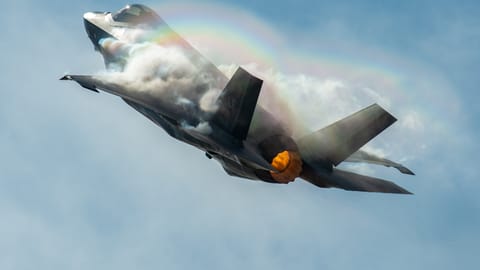
Known as the Future Combat Air System and developed over the last several years in a programme that also involved Spain, the programme was supposed to result in the creation of an aircraft called the NGF, or New Generation Fighter.
Instead, after an incredibly bitter breakdown between the French Defence Major Dassault and the Airbus Corporation representing Germany, the leaders of the two nations have decided that it is time to pull the plug. Now look, before we get into the implications of the FCAS breakdown, we've got to be clear that the programme isn't totally dead.
While the main selling point on FCAS was its eventual sixth generation fighter, the programme also included side initiatives to work on loyal wingmen drones, new weapon systems, and a digital combat cloud, among other priorities.
Some of those side programmes may still survive, although as of the time of writing it's not clear which of them can continue in their current form. As for the eventual fighter aircraft, though, that is all the way dead.
The breakdown of the FCAS programme has been one of the more frustrating stories across the European defence world at a time when Europe has mostly been doing an OK job at re-militarisation. Now, the specific quibbles between Dassault and Airbus are too many and often too petty to summarise it. But look, if we could indulge in a little bit of editorialising.
Basically, Dassault thought that it had all the better ideas and all the critical expertise, so, well, it should be the one to just build the best fighter possible.
Airbus and the German and Spanish defence sectors more broadly wanted the programme to abide by work-sharing expectations so that Germany and Spain could gain all the relevant experience from working on a sixth-gen fighter.
Dassault didn't want to share some of its trade secrets, Airbus didn't love being insulted or sidelined, and eventually it just became clear that these two companies just would not be working together.
So, that's the result.
So, that's the result. really interesting question however is what's going to happen next already there are a number of rumors swirling around on both the french and german sides of this breakdown and it's still early enough that most of those rumors do appear to be ideas in active consideration we'll start with france because it is a much shorter story
France and the desoe corporation have a long history of designing high quality indigenous fighter aircraft including in programs that have come after france refused to work with european partners behind the scenes to so has been making it quite clear that the company believes it possesses the technical knowledge the design expertise and the other
Capabilities required to build a pretty badass sixth generation fighter and that airbus would be wise to shut up and let the french do their thing now it's time for to so to put its money where its mouth is in what will probably become a french solo project in the very near future at some point paris will have to figure out how to fund the initiative at a
Time when france is rolling towards an economic crisis and a key political showdown with the far-right national rally but at least for now paris's path forward seems clear germany's situation is a little bit tougher to address partly because it does seem that airbus had become the junior partner within the fcas relationship nevertheless germany has
Substantial aerospace manufacturing expertise and the country is on track to become a european leader on defense within the next few years especially if chancellor friedrich merz can keep his seat for a while longer the foundation of germany's path forward seems to be an emerging coalition called team gen 6 an alliance between ebus the european missile
Company mbda and six high-profile german defense majors including the prominent companies hensault and deal defense as the head of the airbus defense division michael schalhorn told reporters on wednesday at the international aerospace exhibition quote we have the expertise the technologies the capacity and the clear determination end quote this part charles
Lemurs expressed optimism about germany's sixth gen future referring to the fcast program as quote a long-standing obstacle but schalhorn has also made clear that germany doesn't plan to isolate itself and build a sixth gen fighter without european collaboration spain appears to be along for the ride probably for anything germany decides as the spanish
Defense sector doesn't really have the expertise to be a major player in a sixth gen program but germany's corporate alliance seems to be considering entry into europe's other sixth generation initiative the gcap conducted jointly between britain and italy along with a third critical partner in japan the gcap program appears to be coming along nicely the
Trouble however is that the gcap nations have already made clear that there's not really much more room on the technical side the program recently welcomed canada as an observer and australia portugal india and saudi arabia are all known to be interested while the head of the italian aerospace firm leonardo has expressed that germany would be welcome but as
The leonardo ceo explained this week germany or any other late entry into the program, would put the GCAP nations in a tough spot.
Either they'd have to delay the program entirely, find things for Germany or another participant to do, and compromise their development process in the name of work-sharing, or Germany would have to accept a role where it's funding the program and perhaps manufacturing aircraft, but not playing a significant role in the design process.
And that's going to be a problem for Berlin, given that it's those same work-sharing priorities that help to bring down the FCAS. There is, however, an alternative collaborator that Germany seems to be considering quite strongly.
That would be Sweden, where similar to France and to so, the Saab Corporation has a long and storied history of developing independent advanced fighter aircraft.
Saab's most recent design, the E&F variant of its Gripen fighter, is in high demand globally, and the company is understood to be working on a secretive sixth-generation design of its own.
According to sources speaking with Reuters this week, Airbus has been engaged in exploratory discussions with Saab over the last six months on the assumption that the FCAS was likely to break down.
Notably, Sweden had initially appeared to be interested in the GCAP program between Britain, Japan, and Italy, but then chose to go it alone, suggesting that there may be some lingering appetite for collaboration in Stockholm.
In the meantime, Germany may also consider the purchase of additional American F-35 fighter jets on top of the 35 copies currently on order for Berlin. Now for our next story, we turn our attention to Mali, to a crisis that is as remarkable for the scale of its violence as it is for its ability to remain stubbornly out of the headlines.
In May, Jemaat Nusrat Al-Islam Oal-Muslimin, or Jinnim, an Al-Qa'id-linked jihadist group, and the Azawad Liberation Front, or Efele, a Taureg ethno-nationalist militia, launched a coordinated wave of attacks against the Malian state.
Analysts described these attacks as the most severe blow ever suffered by any Malian regime, and with good reason. The nation's defense minister was killed, the regime's Russian allies were forced to abandon their posts in multiple locations, and at one point, it looked like the entire nation would fall into the hands of the insurgents.
So far, the junta and its president, Asimi Goita, have survived, but that's more because of luck than any particular military brilliance.
Jinnim has placed a blockade around the capital city of Bamako, burning dozens of vehicles, including fuel tankers, in a bid to weaken the government's position and spur the civilian population to overthrow them from within.
In response, the government has issued a $3.5 million bounty for any information that will lead to either the arrest or the killing of Iyag Agh Ghali, the head of Jinnim. But some experts, including Ibrahim Yahya, the deputy director of the Sahel Project at the International Crisis Group, believe that even this won't be enough.
In an interview with the New York Times, he argued that the government may be forced to negotiate with the insurgents before they could be defeated. Jinnim, by the way, has similarly offered a bounty of $2.3 million for information leading to the capture or killing of regime leader Asimi Goisa.
But all of that's played out in Mali's capital, where, for now, the junta still has a level of control.
In the Hinserlands, Jinnim has been fighting a wholly different enemy, the Dozo Mali. Militia According to Henina Saibia from the conflict monitoring group Akled, the Dozo are a fragmented and diverse group of militias that share a common identity rooted in hunter fraternities.
They initially emerged as a grassroots response to insecurity, but have since become entrenched in the cycle of violence across the Sahel.
They have been implicated in massacres, including in 2019, when they killed 160 civilians in central Mali. Some of the Dozo have ties to the ruling regime, while others operate independently. Janim and the Dozo have been at odds for a long time, as they often operate in the same areas with vastly different goals.
In February, Dozo groups affiliated with the government claimed that they were under siege from Janim and were unable to return to their villages. The most recent round of clashes appears to have begun after the coordinated attacks that we mentioned at the start of this chapter.
After those attacks, several villagers signed non-aggression deals with Janim in an attempt to stave off the worst of the violence.
But now, those villagers appear to be Mali's latest flashpoint. Sahel terrorism tracker Hasrat Khagin reported on X that the Dozo were against the agreements the villagers made, as they prevented the Dozo from fighting Janim, even when Janim attacked villagers that refused to sign the peace agreement.
After Janim struck several villagers in Bandiagara, one Dozo leader reportedly announced that the militia would start targeting villagers that had taken Janim's bargain.
On 1 June, the Dozo struck, killing two village officials who were involved in local agreements with the jihadists, Janim responded to this in the exact way that you would imagine a band of al-Qaeda-like jihadists would. They launched a massive wave of killings targeting the Dozo and villagers that were affiliated with them.
They captured Dozo positions in a variety of areas before embarking on a disarmament campaign that saw several villagers sign peace agreements with the Dozo and hand over their weapons to Janim.
However, this doesn't mean the fighting has stopped. As recently as the 7th of June, Janim was still announcing that it had killed Dozo fighters. Janim has also kept up for pressure on their adversaries outside of Mali.
In May, they attacked soldiers in southwestern Niger, killing twelve and taking seven hostage. The group also launched a coordinated attack on military positions in Kualu, a border town in an area disputed by Benin and Burkina Faso, killing several soldiers and civilians and seizing large quantities of weapons and ammunition.
All of this, taken together, paints a very concerning picture.
Janim not only has the manpower and equipment to implement a blockade on the capital, but it can also fight, and most importantly, win against local militias and the soldiers of other countries. If nothing else, this should have warning bells ringing in every Sahelian capital. And we should see a meaningful joint response to address this threat soon.
Because if we don't, then Mali risks becoming the first country to fall completely into the hands of the jihadists. And if that happens, it's not going to be the last, is it?
In this latest chapter of the Civil War in Myanmar, the nation's military dictatorship and its recently re-skinned civilian leaders appear to have the upper hand as various rebel groups lose territory, agree to ceasefires, or show signs of internal discord.
But along Myanmar's western coastline, and… the border with Bangladesh, the powerful Arakan army is laying the foundation for future conflict with no sign that the ethnic rebel group plans to give up its territory anytime soon.
The Arakan army are among Myanmar's most successful rebel groups, having seized nearly all of Rakhine State and besieged the city of Sitway.
Thought to comprise up to 50,000 fighters or more, the Arakan have made a name for themselves through a combination of innovative battlefield tactics and their willingness to align themselves with other ethnic militia groups to coordinate pressure against the junta.
They've also gained a parallel, much darker reputation for their recent history of war crimes against Rakhine State's Rohingya Muslim minority. The Arakan have become a transnational, destabilizing force in Bangladesh and parts of eastern India, where they rely on well-hidden smuggling routes and sell weapons to insurgent groups on foreign soil.
Back in 2025, the Arakan made international headlines when they announced a policy of mandatory conscription for adult residents.
The conscription applies to men between the ages of 18 and 45, and to women between the ages of 18 and 35, each of whom must serve a full two years in the Arakan militia. This week, however, Arakan leadership revealed that they're stepping up conscription efforts by imposing travel restrictions on fighting-age men and women across the region of Marbon.
There, men and women have been ordered to register with the fighting force immediately.
The draft order underscores the recent trouble that the Arakan army has had to deal with as the group struggles to stretch its supply lines across Rakhine State's substantial land area. The militia is currently engaged in multiple simultaneous offensives, and it has achieved impressive recent results.
Just this week, the Arakan overran a series of outposts around one of the regime's final holdouts, a naval base where some 500 troops are believed to be present.
Meanwhile, the group has kept up the pressure on the state capital, closing in and using a growing FPV drone arsenal to harass and disrupt government forces. The group's logistics, however, are in desperate need of improvement, largely due to manpower issues that the Arakan hope to solve through this newest conscription wave.
Just as important, it's not clear that the militia has the requisite forces to begin a final offensive toward the capital without recapturing other military holdout points like that naval base first.
Of course, the Arakan could simply keep pressure on the sit-way and wait for the regime to break in other areas before repositioning forces for a final showdown. The trouble, however, is that the Arakan are in a race against time, while the military regime works to wrap up other offensives that could allow it to relocate some of its strength.
Most recently, the regime has been advancing on the strategic town of Middat, not far from Rakhine State, where the ethnic Chin are trying to hold out against a two-pronged assault by thousands of soldiers.
According to Chin resistance officials, government forces have been taking significant casualties but have managed to tip the scales through their use of concentrated air power.
As more and more rebel groups either establish temporary ceasefires or wind down their military operations after capturing their own ancestral homelands, Myanmar's air force has been able to focus on a smaller subset of targets in areas where militias are still trying to hold out.
Right now, it's the Chin resistance that's dealing with the worst of the problem.
But if the regime's offensive against Middat eventually succeeds, then it's the Arakan who risk coming under fire. are next. As the group tries to keep the pressure on Sitway, it's hard to constrain its forces to the territory that surrounds the city, meaning that now those troops are in fixed positions and vulnerable to airstrikes.
Nor are the Iraqi army's problems constrained to logistics and manpower.
Over the last several weeks, they've been under increased diplomatic pressure from neighboring Bangladesh, and for good reason. Iraqi operations have resulted in numerous Bangladeshi deaths across the border zone, some as collateral damage from nearby military operations, and some because of alleged direct attacks and abductions of Bangladeshi citizens.
The Arakan have been accused of summary executions of Bangladeshis, who it believes are helping Myanmar's regime, and media across Bangladesh have started amplifying those concerns more frequently.
Those changes coincide with a growing campaign against the Arakan in foreign capitals, especially in the UK, where parliamentarians face growing pressure to sanction the group directly.
According to Rohingya news outlets, the British government has launched an internal effort to explore the scope of sanctions that could apply against the Arakan, in a move that could inspire similar action from other governments if Britain were to move ahead.
All the while, the Arakan continued to face well-deserved scrutiny over their treatment of the Rohingya population, the same group that was targeted in a genocidal campaign by Myanmar's pre-2021 civilian government during the late 2010s and early 2020s.
After purges and attacks on Rohingya settlements, especially in the village of Hoyasiri, where up to 500 villagers are believed to have been slaughtered in 2024, the Arakan still maintained control over displacement camps where Rohingya civilians try to survive.
Quoting a recent report by Human Rights Watch on the subject, "...because of ongoing abuses by both the Myanmar Hunter and the Arakan army, conditions do not currently exist for the safe, sustainable, and dignified return of Rohingya refugees to the state." And that's where the briefing remains today.
Thank you for watching, thank you for subscribing, and I'll see you next time.
Unlock premium video briefings
Members get full access to premium reporting, in-depth briefings, and subscriber-only analysis.
Insiders Receive
- Full access to all premium articles and briefings
- Exclusive subscriber-only analysis and dispatches
- Support independent conflict journalism
From $5/month — cancel anytime