
Can Somaliland Stand Alone?
Can Somaliland Stand Alone? — a Fronts video briefing on Africa.
Simon Whistler • October 21, 2025
Members only
Note: this transcript was generated by AI and may contain errors or inconsistencies.
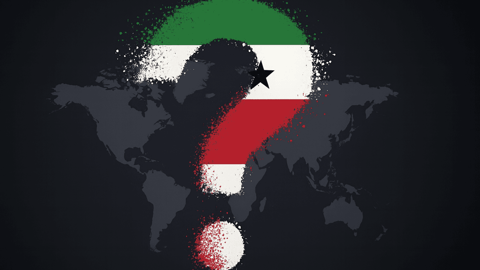
The Republic of Somaliland is a nation, but it's not a sovereign state. Nestled into the horn of Africa, near the mouth of the critical Red Sea, Somaliland is one of the few functioning regions within the nation of Somalia, and ever since it declared its independence in 1991, it's been the largest unrecognized nation in the whole world.
It's relatively stable, it's relatively free, and compared to the rest of Somalia, it is practically a utopia.
But for decades, Somaliland and its potential have been ignored on the international stage. Until now. In 2025, Somaliland has a golden opportunity to seize the future it's craved for so long.
A new administration in Washington is taking a special interest in Somaliland's potential, and the entire world is hungry for a new stabilizing force to rise in this part of the world. The barriers between Somaliland and global recognition of its sovereignty are still formidable, but right now, there's a real chance that those barriers could be overcome.
Whether an independent Somaliland is the right choice for the region, the world and Somaliland itself is a harder question to answer.
But if Somaliland can capitalize on this opportunity than the world, maybe they ought to welcome a brand new nation. Zoom in on the Horn of Africa, on the coastal regions just south of the Gulf of Aden, and you'll find the Republic of Somaliland, on lands that are internationally recognized as Somalia's northeast.
Those lands curve into a hook around Ethiopia and stare across the water at parts of Yemen that are controlled by the Houthi rebel organization very close to the mouth of the Red Sea.
Claiming territory that spans about 176,000 square kilometers or 68,000 square miles around the same land area as Uruguay or Cambodia and significantly larger than Greece or Bangladesh, Somaliland is home to an estimated 6.2 million people.
The sprawling capital city of Hageysa hosts around 1.2, while much of Somaliland's outlying territory is comprised of sparsely populated badlands. There, people can raise sheep, camels and other livestock, and sustain sorghum and cornfields using little more than rainwater and basic irrigation.
While the Somali-speaking population isn't entirely homogenous, around 80% of all Somalilanders are part of a major Somali clan known as the Asakh, who have laid claim to this part of Africa for many centuries. Of all the stateless or unrecognized nations in the world, Somaliland's claim to sovereignty is among the strongest of the bunch.
There's a historical precedent to the idea of Somaliland as an entirely separate thing from Somalia, including in the form of the Isakh Sultanate, which ruled the area in the 18th and 19th centuries, and the region's colonial status as British Somaliland after a series of conquests that concluded in 1920.
After decades of resistance, Britain allowed the region to form the officially recognized independent state of Somaliland in 1960, where it lasted a total of five days before unifying with the previously Italian-held Trust Territory of Somalia. Together, the two former colonial holdings formed modern Somalia.
But for all practical purposes, Somaliland was a different place, settled by a different people with a starkly different history.
It took barely a year. a year before the Somali population had ratified a new constitution that was strongly opposed in former British Somaliland. Ever since that time, Somalilanders in general have been quite bitterly opposed to and marginalized by the Somali federal government.
During Somaliland's decades under Mogadishu's rule, Somaliland was on the receiving end of what many scholars call the Asaq Genocide or the Hageza Holocaust, a years-long campaign by military dictator Mohammad Saeed Bar to subjugate and wipe out the Asaq clan.
Somaliland's capital city, Hageza, and the major city of Burau were nearly completely destroyed. Many hundreds of thousands were displaced, and estimates of the death toll ranged from 50,000 Issaq on the low end to over 200,000 civilians alone, according to local numbers.
Fast forward to the 21st century, after Somaliland declared its independence and became a globally unrecognized state, and the region has existed in sharp contrast to the chaos and confusion of modern Somalia.
Despite the death and destruction they had experienced under the Bar regime, Somalilanders have been able to build themselves back over time. Their government is a democratic, representative, multi-party system, one that absolutely has its problems, but is far more free and far more fair than almost any other government in the whole Horn of Africa.
Its legal system and judiciary are well-structured, while its internal security forces have been able to keep the peace and deny Somaliland's territory to militant groups like Al-Shabaab, which today run amok across much of Somalia's federally administered territory.
It has its own currency, its own telecoms infrastructure, two international airports, a relatively stable internal economy, and even the potential to start harvesting substantial volumes of oil. And all that is even more impressive, because Somaliland has had to stay afloat without the international support that most developing nations can rely on.
Support for Somaliland is very tricky as a legal issue for both governments and NGOs because formal cooperation has to be routed through the Somali federal government.
Otherwise, nations or groups working directly with Somaliland would cause an international incident with a Somali federal government that takes supreme offense to the idea of Somaliland's legitimacy. Instead, Somalilanders are largely reliant on foreign remittances, financial contributions sent from the Somali diaspora across the globe.
Those remittances are enough to help Somaliland and its people avoid complete collapse, but that's about as far as they get, and the international humanitarian community is basically unable to help.
For that reason, Somaliland is in a unique and difficult position. It's surviving on its own, and is quite obviously safer and more stable than most of Somalia, but it's also doing really badly. Illiteracy rates are still very high, especially among women and girls.
Healthcare access is starkly limited, and the educational system is terribly under-resourced. Access to clean water and sanitation systems are nowhere close to what Somaliland would like to achieve. The economy can hardly develop and lacks the infrastructure to do so, and unemployment across the country. region is very, very high.
Even today in Somaliland, one in ten children will die before their first birthday. At first, in the immediate aftermath of genocide and the declaration of its independence, Somaliland could soldier through that situation in hopes that things would eventually improve.
But as of today, it's been almost three and a half decades with very few positive changes, and even worse, very little potential for positive change in the future.
The threat of instability has grown, and Somaliland's many over gestures of democratic good faith have been ignored by potential international partners.
Civil leaders have started to indulge in the forms of repression, restriction of civil liberties, and ostracization of non-ISA clans that they'd typically stayed away from in order to win themselves friends abroad.
Not only that, but Somaliland has been engaged in the ongoing Lassenod conflict for nearly three years, fighting against pro-Mogadishu forces who were part of another major Somali clan, and Somaliland has not been winning.
During the course of that conflict, hundreds of thousands have been displaced, and Somaliland's international image has been tarnished, while a large chunk of territory formerly held by Somaliland is now incorporated into the newly formed Northeastern state, a formally recognized member state of the Somali federal government.
As Somaliland retreated, it was accused of indiscriminately shelling civilian neighborhoods, schools, hospitals, and mosques, drawing international condemnation from groups like Amnesty International that claim Somaliland is now guilty of war crimes.
Even now, the forces of Somaliland and their pro-Mogadishu adversaries stare at each other across a frozen front line, while other minority parts of Somaliland have made rumblings about an uprising of their own.
But over the last couple of years, there have been growing signs that Somaliland's situation could change for the better. On 1 January 2024, Somaliland gained a groundbreaking deal with Ethiopia to provide Ethiopian leader Abiy Ahmed with sea access via Somaliland's port city of Berbera.
That, of course, set off an international incident with the Somali federal government, but for Somaliland it was a majorly positive sign.
Then, the United Arab Emirates demonstrated its desire to step up operations with Somaliland dramatically. Since 2016, Emirati logistics company DP World has operated the port of Berbera, which it expanded in 2021, and the UAE renovated Berbera's international airport in 2019.
But in 2024 and 2025, the Emirates have poured far greater investment into Somaliland.
DP World has even been calling for its international recognition, while the Emirates uses Somaliland as the heart of a free trade zone and uses its airports to sustain its logistical and military support operations all across Africa. And then, most important of all, Donald Trump returned to power in America in early 2025.
Trump himself appears to have only a passing familiarity with Somaliland, but his policy advisers, and particularly the Heritage Foundation responsible for the infamous Project 2025 platform, are massive believers in Somaliland's geopolitical potential.
According to Heritage, Somaliland is a critical potential partner, both in stabilizing Somalia and the African horn, and battling the influence of China across Africa.
Quoting one former Heritage Foundation advisor in an interview the organization published, there is no other place in the region, or even in Africa as a whole, where the U.S. can as easily score such significant victories as are possible in an independent Somaliland.
As writer Michael Rubin put it in 2025, arguing against the recognition of Palestine via the conservative Washington Examiner, quote, If Canberra, Ottawa, and London, the axis of pandering, wish to promote a Palestinian state, Washington should lead by moral clarity.
It should recognize Somaliland. There's even been talk of Somaliland accepting a displaced Palestinian population, involuntarily relocated from the Gaza Strip as part of some settlement proposals with Israel. Where Somaliland is concerned, the writing on the wall is clear.
Despite its recent democratic backsliding, despite its erosion of political and civil freedoms, powerful regional and global forces have decided that now is the moment to support Hargeysa.
According to Donald Trump, the U.S. is actively looking into the prospect of recognizing Somaliland's statehood, a comment he made just a week after Bloomberg reported that Somaliland offered American land for a military base and a suite of lucrative mineral deals.
According to the Worldview Project for Stratfor, formal recognition could come as soon as 2026, and there's already a bill proposed in the U.S. House of Representatives to accomplish precisely that.
With U.S. support, the Emirates and Ethiopia would both probably be willing to join in, and if they agree, then nations like Qatar, Kenya, and Turkey are likely to join the club.
Get those nations on board, and Somaliland could very quickly be on the receiving end of a snowball effect, as diplomatic momentum toward a recognition of Somaliland becomes impossible to deny. But if that happens, then Somaliland is going to need to ask a really important question.
Can the territory actually stand alone? So, in the event that the United States or the Emirates were to formally recognize Somaliland's sovereignty, a range of internal issues could quickly begin to be addressed.
Somaliland could receive a rapid surge of humanitarian aid, linking development groups with the pre-existing establishments within Somaliland that have been ready and waiting to coordinate with them.
Immediate problems like clean water availability and sanitation could begin to be addressed within months. Networks of clinics and foreign-sponsored schools could open up within just a short couple of years.
Modern internet connectivity services could bring Somaliland online quickly, opening the door to a wave of private investment and partnership, and a subsequent dramatic expansion of economic opportunity.
But Somaliland would also have to address a number of immediate problems, starting with the not-insignificant threat of violence, either from the pro-Mogadishu militias on Somaliland's doorstep, or from a larger force attacking from elsewhere across the nation.
The Somali federal government stands to lose massively if Somaliland gains full recognition independence, both because it'll delegitimize the embattled government in Mogadishu and because it'll open the door to other internationally imposed changes to the Somali state.
Mogadishu is in horrible shape right now, unable to prosecute a successful counterinsurgency against al-Shabaab, and it's barely managing to extend the patience of its international backers even today.
Although Somalia and its clan allies would be foolish to attack Somaliland after it gains full international backing, it could foment a return to conflict with Somaliland once change seems to be on the horizon, pulling Somaliland down into a situation where it could be seen as too unstable or too vulnerable to be recognized as planned.
So too could al-Shabaab or other jihadist insurgencies take advantage of the opportunity to destabilize Somaliland, either launching attacks on Somaliland's territory or using the regional upheaval to gain an advantage elsewhere.
Then there's the chance that by recognizing Somaliland, the US, the Emirates, Ethiopia, and other partners might not prompt Hagesa to return to the relative democracy of years past, but instead entrench the more authoritarian version of the Somali government that exists today.
Corruption is already working its way deeper and deeper into Somaliland's leadership, and its rulers are learning firsthand about how convenient it can be to engage in political repression.
And despite any public statements they might make, it's become clear that neither Abu Dhabi nor Ankara nor Addis Ababa nor Washington under Donald Trump have very many qualms about allowing a group of authoritarian political elites to seize power in the long term.
Without real incentives to return to a more democratized state, Somaliland is unlikely to do so, just like any other nation's leaders are unlikely to engage in corruption and abuse of power unless they've got real incentives not to.
And right now, the nations that are endorsing an independent Somaliland don't seem very likely to treat democratization as a priority. The impact on the people of Somaliland, as in many similar cases around the world, could be really difficult to bear.
And independence for Somaliland is likely to face fierce opposition from most of the African continent, not just from Somalia, but from the vast majority of the African Union.
For decades, the African Union staunchly opposed the recognition of secessionist regions, independent breakaway states, insurgent movements, and any other group trying to break up Africa's current borders, regardless of the independence movements in question or the legitimacy of their sovereignty claim. The reason is quite simple.
Because of the absolute mess of converting colonial borders to independent African states, there are an abundance of potential breakaway regions all across the continent, all very hungry for independence, and all guaranteed to notice if Somaliland's claim is recognized, while everybody else's claims are ignored.
Although South Sudan and Eritrea both gained independence in the last few decades, both nations secured the consent of the states they were breaking away from, something that Somalia absolutely won't provide.
Making matters worse, Somaliland may be home to members of Somaliland, other Somali clans, but in essence it's a single clan state, dominated both in population and in government by the Asakh.
Recognize Somaliland's claim to independence, and the African Union will face blowback from quite literally thousands of individual clans and tribes that would rather manage their own sovereign affairs.
Recognize Somaliland and other African nations, or for that matter, any global nation with a separatist movement of its own, will have to justify and explain why Somaliland can be independent but their own people cannot.
Finally, at a moment when regional and global advances are shifting rapidly, African concerns over Somaliland could very quickly turn into a geopolitical fault line.
China has significant incentives to oppose the recognition of Somaliland, both because in its current form, recognition would place Somaliland firmly into an American orbit, and because naval ports in Somaliland could increase competition to control the strategically critical Red Sea.
That's not to mention what it would mean for China to recognize Somaliland, while still laying claim to Taiwan.
The European Union and Britain could, in a moment of strained ties with the United States, choose to hold their ground on Somaliland and insist that they're going to respect the concerns of the African Union while refusing to legitimize a government that's sliding into authoritarianism.
Egypt would likely oppose recognizing Somaliland because Ethiopia is in favor.
Saudi Arabia would likely oppose recognition because the Emirates are in favor. Israel, America's exceptionally close ally, could even refuse to recognize Somaliland because of what Somaliland would likely imply about Palestine, and because Turkey, with which Israel shares a growing rivalry, would probably support the idea.
Despite the fact that most people have hardly ever heard of Somaliland, the small breakaway nation could very quickly become a diplomatic fulcrum around which the entire world order is forced to bend.
Of course, even though there are legitimate reasons to be concerned about the implications of an independent Somaliland, it's impossible to ignore the fact that this really could happen, and potentially sooner rather than later. So, if Somaliland were to become independent, then what would happen next?
What would Somaliland become on the international stage, and what would its role be in modern geopolitics?
Now, in terms of Somaliland's allies, those are the same nations we've referenced continuously. The US, Ethiopia, the United Arab Emirates, Turkey, Kenya, and a handful of other regional and global players that would stand to benefit from seeing Somaliland set free.
They would probably also gain the support of Somalia's other autonomous region, Puntland, both because Puntland wants to keep its own favorable relationship with the United States, and because a sovereign Somaliland today might mean a sovereign Puntland tomorrow.
Its adversaries are similarly easy to identify, a resentful and outraged Somalia, the terrorist insurgents of Al-Shabaab, the Houthi rebels of Yemen, fearing interruption to their smuggling networks and their alliance with Somali pirates, and quite possibly nations like Egypt and Eritrea, that would view Somaliland as an Ethiopian satellite state. instead of
A truly independent actor.
Nations like China could probably be convinced to accept Somaliland, especially if it were to recognize China's claim over Taiwan as a prerequisite before opening diplomatic relations.
The European Union and the African Union could similarly be cajoled into at least tolerating it if they assess that an independent Argesa isn't worth straining their relationship with America and several powerful states in the Middle East.
Geopolitically, Somaliland's greatest significance would almost certainly be rooted in its location as a stable, independent bastion near the vulnerable Red Sea.
While the US, France, Italy, Japan, and China all stationed military bases in Djibouti on the Red Sea proper, bases in Somaliland would allow foreign powers to exert far greater authority in the Gulf of Aden, where the Red Sea can be accessed through a narrow strait called the Barb al-Mandeb.
Nations that can be permanently entrenched in the Gulf of Aden would have the power to monitor entry and exit from the Red Sea to the Indian Ocean, better fight back against piracy, better deter attacks from Yemen's Uthi rebels, and ensure that global shipping routes aren't in danger even if the rest of Somalia really falls apart.
Of the nations that would want to establish a naval base in Somaliland, Ethiopia is the most obvious participant given Abiy Ahmed's ravenous hunger to establish a seaport to serve his landlocked nation.
The Emirates would likely follow suit, expanding their existing investments at the port of Berbera, which were technically approved to convert into a military base all the way back in 2017. The Emirates are known to still be routing military supplies and personnel through the port at high volumes.
The United States would probably be interested, Turkey has tried to develop ports in Sudan and Somalia before, and Russia has been interested in a port on the Red Sea for quite a while now.
Under the current American administration, Somaliland would probably also have the option to enter into lucrative resource extraction deals, where foreign businesses would descend on Somaliland's oil reserves and its mineral deposits, and set up drilling and mining operations.
While these resources would go to other nations, Somaliland would receive a cut of the profits, and could, if it wished, try and negotiate an arrangement where it also keeps some of the resources to sell for itself.
Considering the incredible underdevelopment of Somaliland's current economy, and the fact that its economy has managed to keep an equilibrium for decades despite its tiny GDP, these sorts of deals could be an absolute game changer for the country, and ideally also for its ordinary people.
At the same time, those deals would come with very important security implications for Somaliland as a nation state. Countries that heavily invest money into a country like Somalia have a vested interest in making sure that those smaller countries remain a sovereign, stable nation.
They might even station military assets there beyond just a naval board, stationing troops of a nation like Turkey, or the Emirates, or even America, that rivals like Somalia or Yemen's Houthis would be very foolish to endanger.
Somaliland's military will take years to establish any real strength, but with powerful backers like those, military expansion can afford to be a bit delayed.
Despite the- Despite the- fact that global fortunes seem to be shifting in Somaliland's favor, there are a lot of things that can go wrong between now and the moment that a group of powerful nations could recognize Somaliland on the global stage, even after that happens.
If it happens at all. There are clear risks of regional upheaval, international destabilization, global controversy, and even geopolitical realignment. But now more than ever, it seems as if the unrecognized nation of Somaliland finally has a chance to secure the recognition and the legitimacy that it's been dreaming of for decades.
Whether Somaliland and its prospective allies will honor that dream of freedom and stability once it's been achieved, that's an open question. But there's something to be said for Somaliland, for at least getting its chance to try.
Unlock premium video briefings
Members get full access to premium reporting, in-depth briefings, and subscriber-only analysis.
Insiders Receive
- Full access to all premium articles and briefings
- Exclusive subscriber-only analysis and dispatches
- Support independent conflict journalism
From $5/month — cancel anytime