
Inside Israel's New Forever War
Simon Whistler • August 11, 2026
Members only
Note: this transcript was generated by AI and may contain errors or inconsistencies.
Have you ever felt that Israel's been a bit quiet lately? That despite the conflict in Iran, it has been Washington, Tehran, and the Gulf states in the news, rather than Jerusalem? Well, that might be about to change.
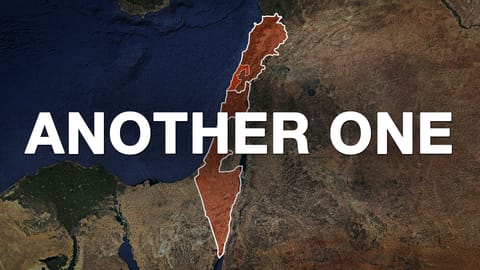
Throughout the Iran war, Israel has been occupying roughly one-fifth of the country of Lebanon. Fighting had previously come largely to a halt, with a historic deal in place between Jerusalem and Beirut that was set to hand over control of this territory back to the Lebanese government, which would then take over the job of dismantling Hezbollah.
Lately, though, it's starting to seem like Israel's gotten itself stuck.
The withdrawal process has been moving at a glacial pace, and there are still over a million Lebanese displaced from their homes. And Hezbollah has recently restarted its attacks on the IDF. Just last week, Israel expanded its evacuation orders for the first time since June, a clear sign that they're realizing they might even have to expand their operation.
But the IDF has been struggling against Hezbollah, given the group's affinity for drones. And given that their last occupation of Lebanon ended up lasting 18 years, Israel might once again be embarking on a forever war. For several months, Lebanon was the country in the Middle East that nobody could stop talking about.
The little state Israel's north was in the thoroughly unenviable position of being a bargaining chip in somebody else's fight. Hezbollah, a group loyal to Tehran, had dragged the country into a war with Israel on Iran's behalf.
When the Americans and the Islamic Republic finally put a memorandum of understanding together, one of the things Tehran got out of it was a promise that Israel would stop shooting inside Lebanon.
Recent history spoiler alert, that memorandum wasn't exactly long lived, and Lebanon's government was determined to avoid allowing Iran to present itself as a protector against Israel.
They began direct negotiations with Jerusalem for the first time in over four decades, and it ultimately resulted in a deal after a long, and when we say long we mean long, negotiating period. That deal was a milestone in and of itself.
It was the first of its kind between the two countries, which have no diplomatic relations and are still technically at war. But despite the champagne bottles popping in Washington for having agreed on something, it was always clear that this was just the start of a process that might take months or even years to conclude.
The deal was supposed to provide a one-piece-at-a-time approach to the Lebanese South, where Hezbollah has long maintained a strong presence, and from where it has often launched rockets into Israel.
If things went according to plan, so-called pilot zones would roll out gradually. Where the IDF would withdraw its forces, the Lebanese armed forces would roll in and finish the work of disarming Hezbollah, while civilians would be allowed to return to their homes.
Once verified to be complete in that area, the process would repeat elsewhere until Israel had fully pulled out of the country, and ideally Hezbollah was gone from the South.
That said, the deal was not universally well-received inside Lebanon. It had supporters, for sure. Many backed it in the hope that they'd finally be able to stop Hezbollah sucking the country into various wars.
But it had opponents, too. Some of the pushback came from the usual suspects, as well. Hezbollah itself, you'll be shocked to hear, was not particularly pleased.
A bigger loss for the Lebanese government, though, was Speaker of Parliament, Nabeer Beri, leader of the Amal Movement, the other Shi'i party, which is often allied with Hezbollah, but also has differences with the group, especially when it comes to, you know, destroying the country for Iran.
He, along with Hezbollah, raised several concerns about any deal before it was even finalized back in June, pointing out that there was no timetable for this process, nor were there any definitions on how big these pilot zones were going to be.
Lebanon is a small country, but even in a nation smaller than Connecticut, a town-by-town withdrawal, plus disarmament, plus inspection, would take roughly a bazillion years.
He also was concerned that Israel could simply choose areas that were within the so-called Yellow Zone, where Jerusalem claimed to have the right to occupy for its own security, but didn't actually occupy.
If they went that route, the LAF would essentially be expected to deploy to areas it already controlled and get to work disarming Hezbollah there, while Israel wouldn't have to lift a finger or withdraw from a single inch. Opposition aside, though, the deal was agreed to, and only time would tell if it's going to work out.
For Jerusalem, the prospect of occupying Lebanon always risks a forever war, given the long history of various campaigns into the land of the Cedars.
Israel has variously invaded or carried out air campaigns against its neighbor to the north more than half a dozen times, including an occupation that began in 1982 as what they thought would be a short-term plan to smash the Palestine Liberation Organization. Eighteen years later, they were still there.
While the original mass occupation force has been cut down over the years to just a few thousand soldiers, the effort wasn't particularly successful. Hezbollah replaced the PLO as Israel's primary persona non grata in the 1980s, and 40 years later, they are still there. So why would this time be any different?
While implementation of the deal did proceed, it was at an absolutely glacial pace. The first pilot zone was announced by the State Department in conjunction with Jerusalem and Beirut on July 20th, and was set to include three villagers in the Lebanese south, Fron, Shrifa, and Zotar al-Garbeah.
The selection wasn't fantastic for either side, as it contained two villagers that the IDF was not present in, along with one that Israel was occupying.
Nevertheless, progress is progress, and the LAF deployed to all three within 24 hours and got to work on securing the area. Prime Minister Nawaf Salam himself had a bit of an Iwo Jima moment when he was able to plant the Lebanese flag inside Zotar al-Garbeah once the IDF had withdrawn.
Over the next few days, civilians who had been displaced were allowed to return.
Altogether, we're looking at no more than 10,000 people across the three villages combined. It's a start, but given that one million were forced to flee their homes, it's barely a drop in a very, very big bucket. And that's more or less where things stand today, more than two weeks later.
The LAF has... turned up a few hezbollah caches in the area but other than that it's been radio silence that is until july 29th you didn't think we were gonna leave you with peace here on war fronts did you it's called war fronts after all on july the 29th hezbollah decided that they'd had enough and put their drones back in business one of them was able to
Strike an israeli d9 armored vehicle working alongside the ali taher ridge that vehicle was unmanned so nobody was killed or even hurt but an attack is an attack and israel didn't plan to let it go unanswered idf chief of staff lieutenant general eyal zamir speaking from inside lebanon announced that his forces were considering pushing deeper into the
Country including retaking the one village they had withdrawn from the following day israeli officials told channel 12 that there would be no further withdrawals from the area that the idf currently holds it was frozen outright with no clear mechanism to even get the limited deal in its pilot zones back up and running now at the time of recording israel
Hasn't actually pressed on ahead further into lebanon and a brand new round of negotiations is taking place this time in rome on wednesday the talks were briefly suspended with both sides blaming the other israel blames lebanon for leaking details of the discussion while lebanon blames israel for worsening the security situation in the south of the country
Jerusalem then followed this up with airstrikes on tibnin where a drone hit the roof of a prayer hall at the town cemetery killing one man and wounding 12 others the more substantial hits came about 25 kilometers to the west at the town of al-mansuri there four israeli strikes hit buildings and villas in the gazella neighborhoods on the town's outskirts ella
Wawaya the idf's arabic language spokesperson then ordered every resident to clear out to at least a kilometer north of the village with more strikes following in under 30 minutes now from one perspective this is just another name to add to the more than 100 towns and villages the idf has so far forced evacuations from in lebanon this one is special though
Because it's the first one since the deal with beirut was reached the whole point of which was to allow lebanese civilians to be able to return to their homes importantly al-mansuri also sits partially north of the yellow line so not only is it not an area that israel had previously intended to occupy it's not even in the area that israel envisioned itself
Laying claim to so yeah none of this is really looking too promising in terms of israel pulling out at any time soon but that's due to one basic factor the idf is having a much harder time in lebanon than anyone expected when it comes to military prowess the idf is usually ranked at the top of global militaries and for good reason they are consistently able
To punch well above their weight the occupation of lebanon so far though has been unusually challenging for jerusalem there were around 1200 separate attacks by hezbollah on idf positions between the time they rolled into the country in march and the start of july so the overall number is even higher now of those attacks just about half of them have taken
The form of fiber optic fpv drones most of which are the same iranian inspired design that have been wreaking havoc across the wide middle east so jerusalem isn't exactly alone in this struggle but they are uniquely exposed in the sense they've actually signed up to be in the line of fire and they are uniquely old school when it comes to the response to
Drones for the better part of four months now the israeli defense forces have been relying on shotguns and netting to intercept hezbollah's drone strikes these are tried and tested ways to take out drones but they're also very primitive and the sheer scale of israel's reliance on them seems to indicate that they have nothing better or more high-tech up their
Sleeves likely because they never even realized drones would be a problem just how flat-footed this court jerusalem is best captured by a single document from the defense ministry's research directorate which published an open call for solutions to the fpv drone situation essentially asking anyone in israel with an idea to please come forward now in fairness
Allowing for innovation on the battlefield is not a bad thing especially from soldiers who are on the front lines and inherently have skin in the game militaries that don't listen to that sort of stuff can face stagnation issues all their own but what this does show is that the idf really just didn't know what they were getting into when it came to invading
Lebanon given just how close hezbollah is to iran it should have been obvious that they might have picked up some advice on drones yet even without the tehran connection it's been blindingly obvious that drones are becoming a serious issue in wars across the planet i mean when jihadist groups in the sahel are utilizing drones it doesn't take a genius to
Figure out that one of the best funded non-state groups in the world might also be able to get their hands on them israel will in all likelihood catch up and get something rolling out but the best that netanyahu has been able to offer the vague assurances of the project being well underway but that it will take time check back in another day that sort of
Thing and waiting for those anti-drone systems comes at a price one increasingly being paid for in lives lost an israeli military official laid out exactly how this can end up being a vicious spiral in a piece for foreign policy at the end of june there is still no answer to the drones he wrote quote because of drones launched against us we have to move the
Yellow line referencing the border marking where jerusalem claims the authority to operate and we've seen that play out time and again hezbollah attacks israel usually with a drone and because the idf has been struggling to intercept them their way of hitting back is to punch deeper into the lebanese interior all of which bodes ill for anyone hoping for a
Quick war now we open today's episode discussing the conspicuous absence of lebanon and israel from international headlines all of a sudden and it has been a sharp pivot for the first few weeks that the memorandum of understanding was still standing between iran and the united states tehran was in a maximalist position to do something that would have seemed
Impossible just a few years ago drive a wedge between the us and israel during the mou tehran was consistently able to dangle oh you want hummus open do you in front of washington and say yeah we'd be happy to open it just get israel to behave it was remarkably effective for a while we were seeing nearly weekly spicy phone calls between trump and netanyahu
Including the now infamous you're crazy everybody hates you everybody hates israel over this quote jerusalem ruled out a complete withdrawal from lebanon no matter what washington was willing to throw or scream at it but the calls did have some effect after the worst of them netanyahu dialed back the israeli air force's strikes in lebanon especially in the
Capital of beirut trump also claimed to have succeeded in turning around an israeli ground strike force on beirut itself a sharply escalatory move that would have risked collapsing the peace negotiations outright by pivoting to take such a maximalist position on humus though essentially a tolls above all else approach tehran has blown that ability netanyahu
Recently visited the white house and he and president trump seemed to have made up on the surface at least this has bought jerusalem breathing room to continue their campaign in lebanon for as long as they'd like and if the speed of withdrawals that we've seen are any indication they are going to be occupying the country for quite some time to come there's a
Second reason netanyahu also has no interest in leaving though one that goes beyond merely dealing with hezbollah israelis are slated to go to the polls on october the 27th in the first national election since the october 7th attacks the knesset dissolved itself on july the 17th after netanyahu's ruling coalition fell apart meaning this will truly be the
First time ordinary israelis are able to express where they want the country to go since all of these wars have broken out and signs are that the campaign is not going well for netanyahu a midgang poll published on august 4th had liquid at 23 seats tied with gadi eisenkot's yashar party while channel 12 put yashar a seat ahead in late july given the enormous
Number of parties in the knesset coalitions are baked into the equation but that's where the maths is starting to look even worse for the israeli pm the opposition bloc is polling at 69 against his coalition's 51 out of a total of 120. things start to look even worse when you look at eisenkot's resume he previously ran the idf which means that this election
Is going to come down to security security security pulling soldiers out of southern lebanon in september under a deal that leaves hezbollah's weapons exactly where they are would get read at home as a concession rather than as implementing an agreement netanyahu signed the pm has similarly been under fire from both yair lapid who is effectively to his right
And naftali bennett to his left much of which centers on security matters as well the two have actually formed a new bloc party called together with the explicit intention of making sure the country's next pm is not netanyahu regardless of how the election goes though nothing short of a full disarmament of hezbollah is going to be acceptable to israeli
Voters meaning that all those idf soldiers in southern lebanon should probably prepare for a long stay only time is going to tell if it breaks the previous record of 18 years thank you for watching
Unlock premium video briefings
Members get full access to premium reporting, in-depth briefings, and subscriber-only analysis.
Insiders Receive
- Full access to all premium articles and briefings
- Exclusive subscriber-only analysis and dispatches
- Support independent conflict journalism
From $5/month — cancel anytime