
Myanmar's Rebels: Freedom Fighters or Crime Lords?
Myanmar's Rebels: Freedom Fighters or Crime Lords? — a Fronts video briefing on China & Indo-Pacific.
Simon Whistler • September 30, 2025
Members only
Note: this transcript was generated by AI and may contain errors or inconsistencies.
Oh, last few years, Myanmar's Rebel Alliance has achieved some pretty incredible things. As recently, at the start of the 2020s, the nation's many ethnic militias were disorganized, disinterested in working together, and armed with little more than grit, determination, and single-shot hunting rifles.
But ever since the nation's democratically elected government was overthrown in a military coup on February 1st, 2021, Myanmar's rebels have learned to band together, ally themselves with delusion freedom fighters, and take the fight to the ruling regime in a way that's never been seen before in the nation's history.
Right now, Myanmar's rebels have pushed the ruling regime from massive portions of the country, surrounded them in others, and constrained the regime's true power base to just a handful of cities and southern districts.
But Myanmar's rebels have a dark side, a bitter series of secrets that lie not at the heart of their resistance, but at the foundations of their very survival. Not all, not most, but many among Myanmar's patchwork of rebel militias are deeply involved in organized crime.
Whether it's drug cultivation, bombs, and human trafficking, or providing safe haven for their nation's notorious scam centers, Myanmar's crime lords are inseparable from their rebel leaders, and at times, while those people are one and the same.
Okay, so in order to understand what's going on under the fog of Myanmar's civil war, we first have to understand the rebels themselves, a sprawling network of freedom fighters, ethnic militias, well-armed and self-interested paramilitaries, and more. We can start, however, with a fairly clear delineation.
Groups collectively known as the People's Defense Force, and then everybody else. The People's Defense Force, or PDF, are the armed wing of Myanmar's shadow government in exile, the National Unity Government.
For their part, the National Unity Government are exactly what their name would suggest, a group of elected and civilian lawmakers and activists who were booted out of their place in Myanmar's civil society after the military overthrew the elected leadership in 2021.
The People's Defense Force was organized to rally a grassroots armed opposition to the military regime, the Tatmadaw, bringing together relatively affluent city kids, impoverished rural communities, pro-democracy activists, and all sorts of people with an axe to grind against the new regime.
Together, they took up arms, left the cities, disappeared into the countryside, and began an organized campaign of guerrilla warfare. Out in the countryside, they formed a wide range of formal and informal partnerships with the other major group that we'll be discussing today, Myanmar's ethnic militias.
Now, we've said it before in our previous coverage of this conflict, but it is worth reiterating that Myanmar has never truly known peace ever since it gained independence all the way back in 1948. Myanmar is among the most ethnically diverse places in the world.
It's largely rural, thickly forested, and so hard to navigate that many of those ethnic groups spend most of their time basically just undisturbed.
But many of them also have a very long history of organizing, arming themselves, and resisting government attempts to assert control, meaning that by the time the People's Defense Force scattered into the jungles, the militias were ready to receive, train, and collaborate with them.
In practice, the line between the PDF and the ethnic militias... can be real blurry, and at times, it doesn't really make sense to distinguish between the two.
But they are discrete groups, and while the PDF certainly is not immune from accusations of involvement with organized crime, it's the scattered militias that bear a higher share of the responsibility.
And the reason for that's a practical one? Many of these ethnic groups scattered through Myanmar have been involved with criminal enterprise, and especially the drug trade, long before the Tatmador staged its recent coup. Often, that was by necessity.
While rural Myanmar is largely impoverished, its fertile soils are perfect for growing opium and other narco crops, while the seclusion of these areas was ideal to keep illicit enterprise hidden from prying eyes.
In many cases, that's the primary motivator for these ethnic militias to have organized and armed themselves at all to defend their most important revenue sources from the law and the competition alike.
The local economy in these areas, and especially in a portion of Myanmar's east that's part of the Golden Triangle region, has been dependent on illegal enterprise for generations, partly because it's lucrative and partly because there are precious few alternatives for anyone to make a living beyond subsistence.
The slow crawl of the internet into such isolated areas is starting to change that, but only very slowly, meaning that all this illicit infrastructure was largely intact when the PDF came looking for allies.
As for the specific ethnic militias that we're talking about, well, there are as many of those in Myanmar as there are minutes in the day, but a select few stand out, and we'll be coming back to them over the course of this episode.
In Myanmar's west, bordering India and Bangladesh, there's the Arakan, who've organized one of the most formidable fighting forces in all of Myanmar.
Today, they control much of the country's western coast. To their north, a border zone with India is controlled largely by the ethnic Chin population, split into a few different ruling authorities, and sharing territory with insurgent groups from India who've taken refuge on safer grounds.
In the north, there are the Kachin, who control key transshipment routes to and from China, as well as some of the largest geographical zones of any of the rebels nationwide.
The east is divided among a number of ethnic militias, predominantly the Shan, the Taang, and the Korkang, and the Kareni, as well as the Hua, who run an autonomous government as basically a Chinese proxy state. Rebel zones in the south are largely under the control of the ethnic Karan, as well as the Mon, and a couple of other smaller minority groups.
Altogether, those militias and the PDF are estimated to control well over half of Myanmar's territory, and for the most part, the Tatmadaw lacks the power or organization to push them out.
Or put another way, the Tatmadaw lacks the means to substantively interfere with criminal enterprise going on across the nation, although in fairness, it's not clear the Tatmadaw would have much interest in stopping it when they could instead be cashing in.
In 2025, the prominence of organized crime elements in Myanmar is far from a secret among the communities of analysts who stay attuned to this sort of thing.
In fact, as of now, Myanmar ranks in first place worldwide. on the Global Organized Crime Index, beating out Colombia, Mexico, Nigeria, Afghanistan, Syria, and a variety of other nations where criminal syndicates thrive.
But it's one thing to simply levy an accusation that some of Myanmar's rebel groups are engaged in organized crime, and quite another to actually get into the specifics. Which groups are engaged in criminal enterprise? What are they doing?
And how do they fit into Myanmar's larger resistance? Well, to answer that question, we have the benefit of a range of international journalists who've made it their mission to find out, sometimes from 30,000 feet, and sometimes right there on the ground.
Take a New York Times report from December of 2024 from an area of eastern Shan State that's peak poppy-growing territory.
Together with a small stretch of land in neighboring Laos, these fewer than 500 square kilometers in Myanmar are enough to fuel most of the world's entire heroin trade and contribute to other opiate-based enterprise all up and down the black market.
There, in this small corner of a nation, the article describes as, quote, a playground for warlords, arms dealers, human traffickers, poachers, drug syndicates, and generals wanted by the international courts. End quote.
Ordinary farmers fuel a drug industry for a population of billions in Asia alone before we even discuss Myanmar's reach to the outside world. In these areas, farmers live under the protection of ethnic Shan militias, some of whom have notched major military victories against Tatmador fighters.
On the militia's watch, farmers have been able to turn major profits, with prices increasing threefold since the conflict began.
Local communities grow the poppies, they convert the flowers into opium resin, local smugglers get it to interested middlemen, and from there, it disappears, swallowed into the maw of the worldwide narcotics trade.
In return, the earnings sustain those communities, allow their militias to finance their operations, and even help to support both an ever-growing population of PDF freedom fighters and displaced people who have had to flee the regime.
Not all rebel groups in the opium farming areas take part in the drug trade, and some have sworn it off completely to protect their legitimacy on the domestic and international stage.
But the people caught in the middle of the war, they've got few other options except to grow poppies, harvest opium, and let somebody else, somewhere else, worry about the rest. But heroin is far from the only drug that can trace its origins back to Myanmar.
The nation's also become a hive for methamphetamine production, in well-hidden jungle enclaves where local chemists can do their best Walter White impression with little fear of the consequences.
In the past, crystal meth has been a trade that the Tatmador directly facilitated, and to an extent it still does, but synthetic drug manufacture is far from the exclusive domain of the government and its allies. Nor are they only making their sweet, sweet baby blue.
Instead, methamphetamine is paired with caffeine and pressed into a pill called Yaba, a cheap favorite for partiers and addicts across Asia.
Marmar's jungle is a good one. Marmar's jungle is a good one. aren't just a factory either. They're a hub for innovation with ecstasy, ketamine, cocaine, fentanyl, and just about any other illicit substance you could imagine finding their way into inventive new products and cocktails that are sold off as quickly as they can be produced.
The drug trade relies on rebel groups far from the Golden Triangle too. The Iraqi army in the West has been repeatedly accused of smuggling drugs into Bangladesh, and the Chin and Kachin into India.
Then there are Myanmar's countless scam centers, typically located in border regions and widely recognized as some of the very worst places to find yourself all across the globe, short of a full-on battlefield.
These scam centers rely on organized crime on multiple levels. Their labor force has largely been kidnapped from Myanmar or other nations all across the globe, and trafficked into functionally autonomous scam cities to staff call centers in conditions that amount to modern slavery.
Then they get on the phone with unsuspecting people around the world, working overtime to separate them from their cash and from whatever else they can be convinced to give up.
Sometimes the scams are quick and uncomplicated. Sometimes they're convoluted long cons, swindling and exploiting emotional connections with the vulnerable, and preying on the trust of the gullible.
In 2023, the UN estimated that well over 100,000 foreigners had been trafficked into these scam centers, building multi-linguistic hubs that can be turned against any and every nation within range.
Over time, these scam centers have become destination cities for prostitution, illegal gambling, and more, allowing China in particular to offload the illicit enterprise that would otherwise take root in its own urban centers. And finally, there's the resource trade, where Myanmar is a place of the utmost global importance.
Right now, all across the globe, powerful nations vie for access to rare earth elements, critical metals, prize gemstones, and more.
Myanmar is one of just a few places worldwide, like the Congo, Siberia, and small territories like New Caldonia that are home to a wildly outsized share of resources, and where those materials are located, exploitation, and conflict typically follows.
In Myanmar, there are plenty of resources to be gathered, world-class jade and ruby, rare earth elements that are vital for the transition to renewable energies, highly lucrative varieties of timber, and a whole lot more.
And when those resources are found on lands controlled by rebel militias, at least one of a few sorts of enterprise will probably be active.
Ethnic militias might protect artisanal mines, unregulated and technically prohibited. They might oversee the safe transfer of those illegally harvested materials to neighbor nations, especially China, with its near monopoly on rare earths. And they might engage in all sorts of violent action in order to preserve their hold on those resources.
While these groups lack the means to refine what they harvest, there are more than enough buyers willing to take the raw materials off their hands. And because these locally autonomous groups aren't willing to engage with the national government, they lack the means to build legitimate mining and extracting relationships with international corporations.
Instead, they're left to deal with the unsavory actors who are willing to do things the shady way, sometimes on behalf of world nations, and sometimes as interdependent independent criminal syndicates that rely on Myanmar's rebel groups to keep the resources coming.
The Kachin Independence Army plays an especially important role in these operations, although they're far from the only ones. To be clear, none of these enterprises are the exclusive domain of Myanmar's rebel groups.
The ruling military regime is deeply engaged in these same sorts of actions, and so are a range of ethnic militias that have chosen to support the regime instead of fighting it, with many of these militias representing the same ethnic groups that the rebel organizations also represent.
But the fact that the Tatmador and its allies are engaged in these sorts of operations does not negate the role of these rebel groups, many of whom have little choice but to engage fully with organized crime, or else lose out on their ability to finance their operations and fight the regime at all. Nor is this an exhaustive list.
Other rebel groups have been implicated in arms trafficking, smuggling of migrants, illegal phishing, and much more.
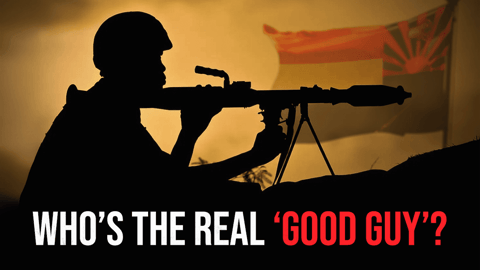
Furthermore, it is a messy situation, best understood without trying to identify a good guy. And it gets all the messier when we consider the idea that the rebels could actually achieve their highest objective. So what does it mean for Myanmar and the rest of the world if these rebel groups really do topple the Tatmador?
And it's here that we reach something of an impasse, both for Myanmar's rebels and for onlookers all across the globe who would like to see democracy restored and a military regime overthrown. Simply installing a new government at the end of a civil war, that's never easy. I mean, just take a look at the last several months in Syria.
But in a place like Myanmar, the challenge is just as profound. Should Myanmar's ethnic militias be regarded as organized criminals? Should the PDF freedom fighters who live and fight beside them on their territory be seen as complicit?
And what about the national unity government, who are expected to be at least nominal leaders of Myanmar if the Tatmador could be overthrown? Should the international community disassociate their hypothetical victory and their subsequent rule of Myanmar from the illicit enterprise that got them there?
On the question of whether Myanmar's rebel groups should be regarded as criminal syndicates, well, some of them certainly should.
There is simply no way to read a situation in which these militias are guarding over areas where illicit enterprise is a critical revenue source and taking the earnings in order to sustain the fight, other than to assume there's a level of complicity there. When they speak with international reporters, some rebel leaders openly admit to as much.
So while it's important to delineate a separation between the groups deeply enmeshed in the trade and those that have tried to avoid it's impossible to ignore the reality that Myanmar's resistance and its organized crime are interdependent.
And if the rebels did take over, then it would be entirely fair for the international community to wonder whether the new civilian government might just slide of a near of legitimacy over your organized crime and either allow it to continue or directly facilitate it.
At the same time, we can't discount the underlying factors that have created this difficult situation. Myanmar is not a place of very much opportunity.
There are no means to sightseeing, the celeb company that has had leftims, news for It's conglomerate and the Você Ethiopia as raised, if it were totally decide now heis thereby obeying an wrench that will be able to identifyicial Smokeobile.
Definitely, here is, my father is the new skillset as he's attracting Quick利 to We are a비eteer and I think but even want to see his internal technology. not outside its major cities, and when we've said throughout this episode that many areas are mostly or fully dependent on criminal enterprise, we were not exaggerating.
It's really worth asking, what are these scattered ethnic minorities to do?
They feel the need to organize and resist the Tatmadaw regime. They obviously can't do business with it, but if they don't, then there's no other way to keep their communities afloat than by hosting scam centers, farming poppies, or sending their people to the artisanal mines.
Whether things would change if a responsible civilian government could provide better opportunities, it's an open question.
And it's a question worth asking before we write off these groups in their entirety. For whatever it's worth, it doesn't appear that the world will have to address this quandary any time soon.
The momentum of the rebels has stalled in most places, as China puts its finger on the scale to protect its infrastructural and mining interests, and with China standing in the way, it's unlikely that the rebels could take the three major cities that form the core of the Tatmadaw's power base.
But there's another mitigating factor to be considered, one that's arguably even more important than China.
Many of these rebel groups, especially the ethnic militias, have limited to zero interest in leaving their lands, hauling ass, and trying to bring down the Tatmadaw at its power base, while the criminal syndicates appear to have learned that they can do much more in a state of active conflict.
These syndicates and the militia groups and communities that protect them don't necessarily want to be part of a democratic government.
They're skeptical of the value of state legitimacy, because they know that scrutiny comes with it. For groups like these, the fog of war isn't an inconvenience, it's an asset, and with the Tatmadaw now too beaten down to challenge them, and the rest of the world too fearful of a war zone to come sniffing around, these syndicates are in an ideal position.
Sure, there's a bit of tangential risk, but there's more than enough operational freedom for those risks to be a price worth paying.
So, is Myanmar's rebel alliance made up of freedom fighters, or is it made up of drug lords? If we can answer a question with a question, why must those two things be mutually exclusive, either on the scale of the entire insurgency, or from individual group to individual group?
Myanmar's civil war is nothing if not complicated, and so are the rebel groups that take part in the fighting.
It's in the complexity, not the distillation, that the truth can be found, and that's just as true here, as anywhere else.
Unlock premium video briefings
Members get full access to premium reporting, in-depth briefings, and subscriber-only analysis.
Insiders Receive
- Full access to all premium articles and briefings
- Exclusive subscriber-only analysis and dispatches
- Support independent conflict journalism
From $5/month — cancel anytime