
The Hormuz Toll Could Break the World Economy
Stalled in Ukraine and starved of victories, Putin may seek a quick show of force against Armenia or Georgia — small, weakly defended neighbours he could overrun in days to prove Russia still commands fear.
Simon Whistler • May 26, 2026
Members only
Note: this transcript was generated by AI and may contain errors or inconsistencies.
For decades now, the question that has dominated West and thinking about Iran has been whether or not it will build a nuclear weapon. It's come to define a large swath of American policy across bipartisan administrations and has ostensibly been the driving force in both of the air campaigns President Trump launched against the Islamic Republic.
Comparatively, little attention has been paid to the part that may matter more, though.
Iran has revived a long-standing claim of sovereignty over the Strait of Hormuz and begun insisting on tolls that every vessel would have to pay for the right to pass through. This has become a critical component of the regime's calculus.
A senior advisor to the Supreme Leader told Iranian media that the regime's position in Hormuz is worth about as much as a nuclear weapon.
That comparison deserves more attention than it's getting, because from Beijing to Jakarta, governments straddling the world's busiest waterways are watching Tehran monetize geography and already starting to ask what their own choke points might be worth.
New Management When it comes to defense strategies, Iran's approach has historically broken down into two separate camps. On the conventional side, they had Russian-made S-300 air defense batteries, a domestic alternative called the Bavar 373, and an extensive drone and missile program.
On the proxy side, there's the axis of resistance, Hezbollah, Hamas, and allied militias from Iraq to Yemen, capable of opening multiple fronts simultaneously. Together, the thinking went, Iran would make itself so dangerous to start a war with that it could deter the United States and Israel alike. Clearly, that did not work.
The axis of resistance has been systematically dismantled over the past year and a half, and the domestic hardware did not hold up much better. During Operation Rising Lion in 2025, Israel achieved air superiority over every major Iranian city within 24 hours.
The S-300 batteries were knocked out before the main strikes even began, the Bavar 373 failed to intercept a single-manned aircraft, and the drone and missile stockpiles that were supposed to make any attack prohibitively costly were degraded faster than Tehran could replenish them.
This time around, they had slightly better results. They ultimately did down several US aircraft and damaged several dozen more, though the takeaway was that their air defenses were largely ineffective.
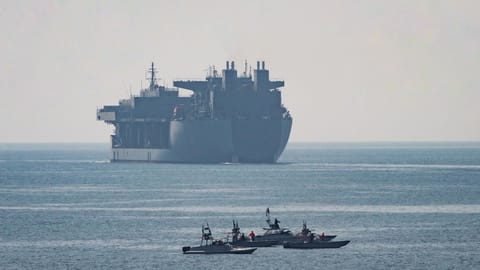
What has proven to be far more successful in getting America's and the international community's attention, on the other hand, has been their decision to close the Strait of the War.
Tehran has approached this through several different avenues. They have variously closed the Strait, reasserted their long-held position of sovereignty over the waterway, and proposed a series of tolls that the Islamic Republic would charge vessels transiting through.
In the war's first week, Tehran was able to effectively seal the entire Strait with extremely minimal effort.
A handful of drone strikes on tankers and the spectre of sea mines floating unpredictably around the waterway were enough to spook the insurers who underwrite the global tanker fleet. Within 48 hours, the war risk premium on a Gulf crossing had jumped about five times over and then kept climbing until it hit as much as 60 times its pre-war rate.
By this point, nobody was getting through.
Since then, the United States and Iran have been at loggerheads over a whole of issues though this has perhaps surprisingly taken the cake as one of the largest sticking points for the islamic republic the logic was relatively straightforward geography was massively working in their favor the u.s seemed able to overcome their blockade and the whole operation
Was shockingly easy to enforce given the outsized role that the insurers played here iran didn't actually need to physically block the strait going after a handful of commercial vessels was all it took once iran created a perception of intolerable risk ships simply would not cross in march tehran began requiring vessels to pay for safe passage and by early
May it had formalized the whole arrangement into something called the persian gulf strait authority it's a body modeled on legitimate institutions like the panama canal authority complete with an application process requiring vessels to disclose ownership insurance crew manifests and cargo before being granted a permit some ships have reportedly paid up to
Two million dollars per transit settled in chinese one and bitcoin transfers to irgc linked wallets before the official body launched scam operators had already popped up offering fraudulent transit paperwork in exchange for cryptocurrency which if nothing else tells you that there was a genuine demand from ship owners desperate enough to pay whoever was
Collecting with all of this working in their favor tehran has not made any indications that it would be willing to give up control of the straight to give you a sense of the scale of importance this plays in the regime's thinking mohammed mohba a senior advisor to the supreme leader told iranian media that the regime's position in homuz carries roughly the
Same strategic value as a nuclear weapon mohba's comparison is more revealing than he probably intended because unlike an actual nuclear weapon which iran spent decades pursuing and never managed to produce the strait fell into their lap the moment the war started and the rest of the world has been taking notes iran is certainly the most brazen example of a
State blocking international shipping for its own purpose but it's not the only one it's no secret that the last decade has seen a broader retreat from the era of free trade that dominated post-war statecraft but the move away from free navigation through the sea has gotten comparatively little coverage despite being a much older global principle what might
Be looked back on as kicking off this transition dates to 2018 when russia attempted a far quieter and far less controversial version of what iran is trying now it started with the construction of a bridge to crimea which by that point was under its control after it was finished moscow declared that the water underneath was actually its own not international
Essentially giving the bridge a dual purpose as a gate into the sea of azov and with that gate came restricted access from ukraine's eastern ports commercial vessels bound for maripol and bird angst whether ukrainian or international were subjected to ongoing arbitrary inspections that could hold a ship in place for days they didn't implement a uniform ban
The way iran has nor actually charged vessels for passage but the message was nevertheless a similar one this was as far as moscow was concerned russian waters and if you were going through you had to be prepared for what might be waiting for you it should have been seen as an international act of aggression but given the relatively weak response their
Annexation of crimea received in the first place occasionally harassing ships around the territory was never going to provoke anything harsher russia would then go on to declare that the northern sea route the shipping lane running along the siberian coast between europe and asia was its own internal waters requiring foreign warships to seek permission three
Months in advance and charging commercial vessels for the privilege of transit moscow in other words has spent a decade probing at the edges of the maritime order but it has never staged a complete inversion of the global shipping system nothing like a formal codified claim of a right to license passage through a waterway that other countries must pay to
Access much less one of vital importance to global energy markets the act that really broke this status quo came back in 2023 when the houthi rebels in yemen began their campaign against shipping in the bab el-mandeb passage in the southern red sea over the course of their campaign they hit more than 170 ships sinking four outright and killing nine sailors
Traffic through the waterway collapsed from roughly 70 vessels per day to around an average of 20. the strait wasn't quite as important as the strait of homoze but it nevertheless carried about nine million barrels of oil a day and close to a third of the world's containerized trade despite a joint us uk campaign that ultimately hit over a thousand targets
In yemen but proved to be largely ineffective against the group it took a ceasefire between israel and amas last october to actually bring this to a close throughout it all though the houthis still fell short of outright closure traffic was reduced but not cut to near zero like iran has done critically this was also done by a non-state actor while the
Houthis have effectively set up their own jurisdiction in the areas they control there is still a major difference between a group of rebels who are largely unrecognized internationally firing on vessels flagged to countries across the world and a formally recognized state with diplomatic relations that is what makes the actions of iran in the strait of
Homoze so concerning for the future of international shipping they're not the first to think about doing something like this but even countries not exactly known for strict adherence to international norms never dared go this far already it's had something of a transformative effect on countries around the world within a few weeks of the war breaking out
Beijing was already making its move chinese flag vessels strung a 352 meter floating barrier across the mouth of the scarborough shoal blocking filipino fishermen from the lagoon and backing the closure with coast guard ships the shoal is a reef inside the philippines own exclusive economic zone but it also sits within beijing's vast maritime claims over
Much of the south china sea the timing here not exactly a coincidence the u.s was bogged down with iran so when manila protested by sending coast guard escorts for its fishermen they were ineffective a third of all global shipping passes through the south china sea and the pattern here is difficult to miss beijing is pushing to see how far it can go in part
Emboldened by iran's strategy and in part because american attention is being diverted elsewhere increasingly it's looking as though the scarborough shoal might be a warm-up act there are plenty of places where beijing could try an expanded version of this but the most consequential by far would be the taiwan strait china has formally argued that the strait
Is not international waters at all but rather their own integral waters and exclusive economic zone a reading that while not recognized by any other states gives it legal authority to regulate restrict or charge every vessel that passes through and well that's a lot of vessels some 44 of the world's container fleet crosses it in a given year and 88 if you
Count ships by total tonnage bloomberg modeled that a forced closure would cost somewhere in the vicinity of 10 trillion dollars in just its first year which is a tenth of the entire global economy china has never been shy about asserting its claims of sovereignty over taiwan but what it's always lacked is an actual test case that took place somewhere else a
State that fenced off an international waterway set up tolls for passage and most importantly got other nations to actually pay up an australian defense scholar in an interview with time put it about as clearly as possible a ratified iranian toll hands china precisely the precedent it needs to argue the taiwan strait was never an international waterway to
Begin with now while china is certainly getting the lion's share of the attention here and not without good reason it's also not the only one thinking the same way about what iranian tolls in homos could mean for them the strait of malacca wasn't on many people's radar but it appears as though it might increasingly find its way there in april indonesia's
Finance minister wondered aloud whether his country could join with malaysia and singapore and set up their own toll booth in the strait split between the three of them he suggested the revenue could be quite substantial indonesia's foreign minister walked this back almost immediately after it came to light and the finance minister insisted the whole thing
Had been a joke whether that's true doesn't really matter here what matters is that the idea was front and center in their minds at all a fragile guarantee the open sea that countries across the world are rushing to fence off was not guaranteed to be truly open throughout much of human history the principle that no nation can own the ocean or charge for
Passage across it started as an argument a dutch lawyer named hugo grocious made all the way back in 1609 during a dispute between rival european powers portugal at the time claimed to own the sea lanes to the east indies the fact that this argument happened at all spoke to the practices of the time rising trade between countries was crashing into barriers
That had long been set up by those geographically fortunate enough to straddle major points of travel denmark for its part had been taxing every ship between the north sea and the baltic since 1429 and it ultimately took until 1857 for britain the us and a dozen other maritime powers to lean on copenhagen hard enough to kill the process off once and for all
The principles of maritime freedom that replaced it would hold because a dominant navy chose to enforce them the british royal naval navy through the imperial century and the united states navy after 1945 but it wasn't until 1982 in the law of the sea that the rule was ever codified by treaty but even at the height of the law of the sea's power its
Foundation was showing cracks back in 1984 iraq began firing on iranian oil tankers in the persian gulf in an effort to strangle tehran's war economy and iran hit back by going after iraq's financial backers namely kuwait and other gulf states who had been bankrolling baghdad's war efforts within a few years both sides had struck over 400 vessels between
Them and the strait of humus had turned into something that more closely resembled a shooting gallery than an international waterway something had to be done and the u.s stepped in back in 1987 washington began to reflag kuwaiti tankers under the american flag and run naval escorts up and down the gulf this was a massive commitment of resources that at its
Peak involved over 30 warships this was worth the short-term cost in the u.s's eyes as it would send a resoundingly clear lesson the strait is not up for grabs this operation was called earnest will over the course of a year the u.s navy escorted 270 ships across 127 convoys and on the very first run the reflag tanker bridged and struck an iranian mine
Captains who weren't under escort resorted to running the straight themselves at night 270 ships in a year sounds like a success until you remember what normal traffic through the gulf actually looks like in reality earnest will never came close to restoring pre-crisis volumes even by the standards of the 1980s and that was with iran and iraq largely
Consumed by their ground war unable to throw their full weight at the maritime front the takeaway should have been more uncomfortable than the way it's remembered even at an apex of american naval dominance with dozens of warships deployed and a demonstrated willingness to sink iranian vessels when provoked keeping a single choke point open was an uphill
Battle that they never fully pulled off fast forward to 2026 and a cheap iranian shah head drone or even the threat of one can take an entire tanker out of commission and freeze the straight try to protect convoys or blockade runners and you're looking at something more akin to mission impossible naval analysts over lloyd's lists have assessed that a basic
Convoy requires eight destroyers to protect just five to ten commercial vessels per convoy even under optimistic assumptions escorts could restore maybe 10 of pre-war homeless traffic and yet it's precisely that guarantee fragile as it turned out to be that the modern economy assembled itself on the scale of what that economy has built is genuinely difficult
To overstate over 80 of everything we collectively trade across nations now crosses open water at one point or another that's some 12.7 billion tons a year as of 2025 more than triple what moved in just 1990. that explosion hasn't just helped foster next day delivery on amazon it helped pull roughly a billion people out of extreme poverty in a single
Generation the global rate collapsed from 36 percent to nine percent between 1990 and 2017 alone all that trade however makes the international system you very sensitive to disruptions in the flow of goods.
Petrol prices tell this story all on their own. The thing that should keep policymakers up at night, though, is just how little it took to break the whole thing apart.
Iran didn't need a particularly sophisticated navy or a nuclear arsenal to just about shut down the strait. All it needed was a few drones, some mines, and the will to use them. That's a recipe any government sitting on a choke point can replicate tomorrow.
And it's difficult to imagine the current international system of trade surviving if multiple countries decide to try it at once.
Watch with Fronts Insider
Fronts Insiders get every video, the complete archive, and private sponsor-free playback.
Insiders Receive
- Every WarFronts, HomeFronts, and Insider video
- Complete sponsor-free video archive
- Support independent conflict journalism
Already a member? Log in →
Signed in or already a member, but still locked? Fix an access problem
From $5/month — cancel anytime