
The Islamic State in Mozambique is Evolving
The Islamic State in Mozambique is Evolving — a Fronts video briefing on Africa.
Simon Whistler • January 27, 2026
Members only
Note: this transcript was generated by AI and may contain errors or inconsistencies.
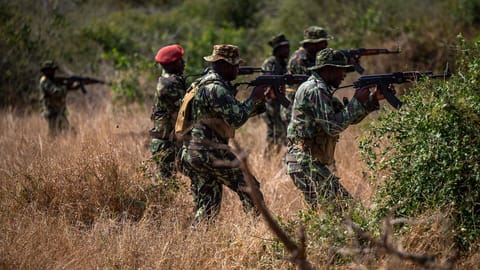
In October 2017, a group of 30 armed men attacked three police stations in the town of Massimboa de Praia in northern Mozambique, marking the beginning of an armed insurgency that has led to the deaths of more than 6,000 people and displaced hundreds of thousands. Since 2017, the insurgency has gone through multiple evolutions.
They were initially called al-Shabaab, despite having no relation to the Somali group of the very same name, before they aligned themselves with the Islamic State and styled themselves as the Islamic State, Mozambique Province, or ISM.
In that time, their methods evolved from small-scale attacks targeting police stations and villages, to major attacks targeting a natural gas plant in Palma, and finally back to small-scale attacks targeting villages after the Mozambican government and allied forces from Rwanda and the Southern African Development Community, or SADC, weakened them
Significantly.
Regular viewers of our main channel, Warfronts, will be familiar with some of this.
We've covered the crisis in Mozambique's Cabo Delgado province extensively, and even featured it in our list of overlooked conflicts of 2025, because despite the death toll and the large number of displaced people, the conflict has received a fraction of the media attention that other conflicts are getting.
And that lack of attention means that the conflict's latest evolution has gone almost entirely unnoticed.
According to a new report by Peter Boffin, a senior analyst at the Armed Conflict Location and Event Data Organization, or ACLAD, the Islamic State, Mozambique, has developed significant new income sources through kidnapping, extortion, and ransom, as well as by exerting control over artisanal and small-scale mining.
For Mozambique, this represents a major turning point, and how the government responds will determine whether Islamic State Mozambique fades into irrelevance or becomes a self-sustaining threat for years to come.
The ACLAD report documents a stark shift in how Islamic State Mozambique operates. In 2025, kidnappings for ransom quadrupled compared to the previous year, accounting for roughly 10% of all ISM activity. The group's most lucrative operations happen along the N380 highway, particularly along the stretch between Maconia Town and Awase village.
The tactic is simple, but extremely effective. ISM sets up roadblocks, stops all traffic, and holds vehicles and passengers for ransom. Then the friends, families, and employers of the victims get calls demanding a ransom.
All payments go through their mobile money accounts, typically M-P-E-S-A, E-MOLA, or M-Cash, with the insurgents asking victims to transfer money to mobile money accounts, likely controlled by ISM collaborators in urban areas. These collaborators form the black bone of ISM's financial operations.
They register new SIM cards, often using fake identities, open mobile money accounts attached to the numbers, and withdraw ransom payments before victims can share the recipient number with authorities.
For this system to work. Collaborators must be able to register new accounts frequently enough to stay ahead of detection, which suggests security practices around SIM card and mobile money registration have completely collapsed.
As Woffin explains in an exclusive interview with the Warfront team, quoting him here, the only way you can do that is through a lot of people knowing, be they mobile money agents or even people in the mobile phone companies, potentially.
So how much is the ISM making from these operations? In one week in March 2025, the group raised over $3,000 through roadblock operations on the N380. In one incident that June, the group stopped a truck and demanded roughly $4,000.
At least 10 bus passengers were also stopped in the same incident and released after paying ransoms of up to $600 each.
Now, these figures might not seem like a lot, given that in places like the United States, the average kidnapping for ransom demand, according to insurers Burns and Wilcox, is $1.15 million, or that Islamist terrorist group Janim, which is active in the Sahel, recently got $50 million for the release of three hostages.
However, in Mozambique, where according to Lloyds Bank, high-skilled individuals earn on average roughly $450 a month and low-skilled workers significantly less, these ransoms represent devastating sums that can wipe out months or even years of savings for victims and their families.
What makes these operations particularly brazen is their location. There are at least five military outposts along the N380 between Macomia Town and Owassee Village, yet ISM operates there with apparent impunity.
Previous SAC-led reports have documented how security forces stationed along the route consistently failed to protect civilians, leaving them vulnerable to repeated attacks.
Apart from the kidnapping, the ISM has also dramatically increased its presence around artisanal gold and gemstone sites in several districts of Cabo Delgado, including Molucco, Montepuez, and Anquabe. Despite their increased presence, Boffin notes that the ISM very rarely attacks mines with less than 10 documented attacks in all of 2025.
Instead, they've established a sustained presence, visiting sites regularly and interacting with miners in ways that suggest they're trying to control the sector rather than destroy it.
In October, at the Natola gold mine in Montepuez district, ISM called a meeting with miners and laid out their terms. According to a local source, they stated that they'd come to stay, required daily cash contributions, and wanted access to gold. They threatened to burn property if their demands were not met.
A week after this meeting, when presumably their demands were not met, they launched an attack destroying property and forcing the police guard to abandon his post. According to the report, the ISM's interest in gold is not surprising. Over the past three years, the price of gold on the global markets has more than doubled.
What's still unclear is how this translates into revenue for the group, especially as there's no evidence to suggest? that ism actively controls any mining operation however the mozambican government alleges that ism militants have been found with gemstones and gold in their possession which would suggest that the group may be attempting to penetrate
Regional illicit markets the report argues that if this is the case then it's likely happening through local not international buyers exploiting existing trade networks through tanzania finally the report addressed how the ism is acquiring weapons it alleges that the group is arming itself in the same way that it has since the beginning of the insurgency by
Seizing weapons and ammunition from government forces in combat the group ramped up their weapon seizures in 2021 likely due to the intervention of sadc and rwanda the number of weapon seizures would increase in 2022 before reducing in 2023 and 2024 a reflection of the insurgency's weakening position however by the end of 2025 ism weapon seizures had
Significantly surpassed the total for 2024 and that raises two rather obvious questions first what weapons does the group have and second why do they have such an easy time capturing weapons despite their numbers being significantly reduced to answer the first question we need to turn to the group's social media where they post images showing small to
Medium-sized machine guns mortars and rocket propelled grenade launchers with ammunition fighters whether posing for propaganda or courting combat footage carry weapons that look identical to those used by the mozambican military the only exception shows up in occasional images of rifles seized from the rwanda defense force after a may 2025 clash we posed
The second question to boffin who pointed to a speech made by the mozambican president daniel chapo while appointing the chief of the country's defense forces the president complaints of corruption saying that some members of the military were willing to sell out their homeland and leak details of operations to the enemy information that leads ism to capture
Weapons would undoubtedly command a high price and given that a mozambican soldier can earn as little as 140 dollars per month the temptation to sell operational details must be enormous the risk of leaks has allegedly forced the military to restrict information sharing within its own ranks soldiers in the field are sometimes kept in the dark about
Objectives and immediate plans which ironically makes them more vulnerable to attacks apart from the leaks there's the simple fact that the mozambican army often communicates through unsecured channels including popular messaging apps that are vulnerable to interception this means that the ism could simply be targeting the military based on information that
Anyone with enough time talents and equipment can obtain once they obtain the weapons there's the question of what they will do with them as boffin points out weapons need to be maintained stored and distributed to fighters who have been trained in their use after seven years of insurgency ism has clearly built that capacity with the fact that weapons don't
Leak to the criminal community indicating that the group has effective control mechanisms and all of this leads us to perhaps the biggest question of all why is the islamic state mozambique province doing this now given that the group has been significantly diminished by the mozambican government and allied forces it begs the question of why they would be
Developing these new revenue streams and ramping up their weapons acquisitions the answer likely lies in how islamic state's global financing network operates external financing for african provinces particularly in the democratic republic of congo and mozambique has historically come through the al-kara office managed by is somalia however according to both
The bridgeway foundation and the un security council the funding ism received was never particularly substantial or regular and significantly less than what went to central africa province in drc the transfers were also unpredictable relying on trust-based hawala money transfer services physical cash deliveries from south africa and tanzania and
International transfers through mobile money networks that funding despite being unreliable was essential when ism had 3 000 fighters with only 300 now there's theoretically less need for external support there's also another factor to consider alcohol financing may have been disrupted by intensified operations against ir structures in somalia by puntland
Forces supported by the united states and the uae that started in early 2025. beyond these financial pressures facing the group and its main backer there's another uncomfortable possibility that we have to think about could is mosambique be building these domestic revenue stockpiles because they're preparing for something big are we looking at the groundwork
For another attack on the scale of palma an attack that we should mention led to the deaths of more than a thousand people the displacement of more than 40 000 and the halting of a billion dollar project all this mind you with very limited casualties for the islamic state and we have to point out that the last time the ism had a significant arms build up was
In 2021 which coincided with their attack on palma in our interview with boffin we asked about the likelihood of palma becoming a target again especially since total energies has expressed interest in restarting operations at the liquefied natural gas project he was clear that ism doesn't have the numbers to launch an attack on that scale anymore more
Importantly total energies is taking a completely different approach to security unlike in 2021 when the project's workers stayed in palmer town the company is now flying them into and out of the site no one stays in town anymore he also added that the lng plant has become a fortress with heavy security around the perimeter and multiple layers of protection
Keeping personnel isolated from any potential threats so at the moment palmer doesn't seem like a possible target but if palmer is too difficult of a target the risk remains that ism will set its sights on another lucrative location the group has demonstrated it can identify vulnerable high value targets and successfully attack them and with the revenue
Streams that they're developing their robust command control and logistic systems the group seems extremely capable of launching another devastating attack there's also the fact that as we pointed out in a previous chapter forces have consistently failed to protect civilians leaving them vulnerable to repeated attacks and it's not just mozambican forces that
Have proven incapable of defending the country's civilian population in a previous report boffin documented how the rwanda security forces or rsf an unfortunate acronym all things considered given the genocidal group with the same initials operating in sudan had failed to help protect civilians instead choosing to prioritize the natural gas project boffin
Spoke to a senior figure in mozambique's local force a government back militia on the front line against the ism who said that the rwandan forces in northern mozambique's cabo delgado province are now unwilling to engage with ism militarily this is happening despite the fact that the rsf is the best trained best equipped and most experienced force positioned
Against ism and it has more than 10 times the insurgents numbers with 4 000 troops deployed to cabo delgado there are also fears that the rsf could be doing this to entrench a dependency on rwandan forces in the mozambique government calton kadero a researcher at the center for strategic and international studies argued that this could be the case pointing
To rwanda's growing role in cabo delgado and the locals resistance to it as proof one person told the local media and we'll quote them here rwandans came to masimbo da praia to provide support in the fight against terrorism and when they start building infrastructure it's not clear what the real intention of these troops is so given all these headwinds how
Is maputo dealing with this when we asked boffin about the government's response to the insurgents evolving tactics he pointed out that maputo had provided military support to convoys of commercial traffic so while vehicles could travel on their own they were advised to travel with escorts while this is a positive step boffin pointed out that some of these
Convoys had been attacked by the islamic state which was a worrying trend but military escorts only address part of the problem the isolated mining sites where ism no operates regularly remain largely unprotected as often explained to us these sites are in very remote areas and the mozambican military is severely under resourced some sites have security
Provided by the rapid intervention unit known by the portuguese acronym uir and elite riot police force that is heavily involved in counter-insurgency operations most however don't leaving them completely vulnerable to either direct attacks or extortion by insurgents who can operate with near impunity and then there's the mobile money problem which we
Mentioned earlier that does remain unaddressed what makes this even more frustrating is that other countries have successfully tackled similar problems kenya for instance which uses a similar mobile money transfer system to mozambique has developed effective systems for tracking and disrupting al-shabab's financing networks the fact that these lessons
Haven't been learned or applied suggests a deeper problem with mozambique's counter-insurgency strategy for maputo all of these headwinds indicate that our assessment in october when we first covered carbo delgado still holds It's true that even with international assistance, Maputo has proven incapable of ending this insurgency.
The ACLED report makes it clear what needs to happen. Mozambique needs comprehensive security sector reform to address military corruption.
It needs tightened finance and banking security to shut down mobile money networks that fuel ransom operations. It needs better management of mineral resources to prevent ISM from establishing control over artisanal mining.
Without these changes, the people of Cabo Delgado will continue to suffer in a world that is at best indifferent, and at worst, just couldn't be bothered to care.
Unlock premium video briefings
Members get full access to premium reporting, in-depth briefings, and subscriber-only analysis.
Insiders Receive
- Full access to all premium articles and briefings
- Exclusive subscriber-only analysis and dispatches
- Support independent conflict journalism
From $5/month — cancel anytime