
The West African Drug Crisis is Worse than You Think
West Africa is facing a growing drug crisis, with cocaine, tramadol, and cannabis flooding the region.
Simon Whistler • June 9, 2026
Members only
Note: this transcript was generated by AI and may contain errors or inconsistencies.
If we mention West Africa, odds are you'll be expecting a video on either coups or terrorist attacks. And yeah, that's with good reason. Since 2020, the region has had at least seven coups across five countries.
Mali, Guinea, Burkina Faso, Niger, and Guinea-Bissau. And those are just the successful ones. Both Benin and Nigeria successfully thwarted coup attempts just last year.
In that same period, there have been so many terror attacks that the Sahel now accounts for nearly half of all terrorism-related deaths globally. Now, all of this happening simultaneously would be a lot for any region to handle. And the strain is showing, especially in places like Mali.
But there is another crisis that has been brewing far away from the headlines. A crisis that is destabilizing the region just as effectively as the terrorists and military men with a penchant for sunglasses and overthrowing governments. And that crisis is drugs.
According to a report by the UN Office on Drugs and Crime, UNODC, the amount of drugs flowing into the region has increased dramatically. In 2022, 1,466 kilograms of cocaine were seized in the Sahel, compared to an average of 13 kilograms between 2013 and 2020.
That means that in just two years, the amount of cocaine seized has increased by nearly a hundredfold.
And that is just cocaine. Add in other substances, and we are looking at a crisis that, if left unchecked, could see West Africa eventually rival Latin America in terms of drug flow. The key difference?
Most of Latin America isn't already a crisis point. So what happens when Latin American-style drug flows enter a region that is already broken beyond repair? Since we've already mentioned cocaine in our introduction, let's stick with the white stuff for a moment.
West Africa has long served as a natural transit point for cocaine moving from Latin America to Europe. It sits directly across the Atlantic from South America's coca-producing nations at a distance of roughly 3,000 kilometers, making it a logical midpoint for traffickers seeking to avoid the more heavily policed direct routes to European markets.
Now, apart from the geography, West Africa is also popular with cocaine traffickers because of widespread corruption, poorly policed borders, and extensive trade networks that could be easily exploited.
The cocaine business in West Africa is run by a network of criminal organizations spanning three continents. Brazil's Primario Comando de Capital, commonly known as the PCC, has become one of the more dominant players on the Latin American side.
Originally started in the 1990s in São Paulo's prison system, the gang has since evolved into what Washington has described as the most notorious crime organization in Brazil.
On the West African side, the Global Initiative Against Transnational Organized Crime, or GITOC, are reports that criminal organizations from the West Balkans, including the Montenegrin Kvach clan and its rival the Shkalyari clan, two groups that, to put it lightly of a chequered past, have agents embedded throughout the region.
These agents handle logistics, partner with local actors to move their community-based chain groups to move their lives, to choose between the different countries. So our goal is to become one of the best choke несwares and creatives that have been a part of the product and launder the money from the sale.
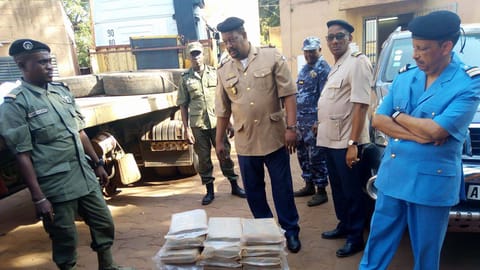
According to Gitok, at least 30% of Europe's cocaine now passes through West Africa. And to give you an idea of what 30% looks like, in 2024, Ivorian authorities captured over two tons of cocaine in the port city of San Pedro, with additional seizures in Abidjan and along the coast.
That same year, authorities in Guinea-Bissau, which at one point was dubbed Africa's first narco state because of how brazenly cartels trafficked drugs into and out of the country, they captured 2.6 tons of the drugs on a Gulfstream private jet that had flown in from Venezuela.
While these numbers are absolutely staggering, they only represent what the authorities can intercept, which means the true amounts are almost certainly larger. But it's not just cocaine that's flowing into West Africa. Tramadol, a synthetic opioid, has flooded the region.
The pharmaceutical is legally prescribed worldwide for pain management, typically in 50 milligram or 100 milligram doses. However, the Tramadol reaching West Africa comes in 225 milligram and 250 milligram tablets.
These high-potency pills are manufactured illegally in South Asian countries, primarily India, Pakistan and China, specifically for the black market, rather than being diverted from legitimate medical supply chains.
Tramadol is popular for its calming and anti-fatigue effects. There are also reports that in farming communities, Tramadol is used by humans and fed to cattle to enable them to work under extreme conditions. And it's not just cocaine and synthetic downers, cannabis also plays a major role in the region.
Morocco, while not part of what we would traditionally consider West Africa, it's more Africa for beginners if anything, is the largest producer of cannabis resin, manufacturing an estimated 700 tons annually.
While much of this is trafficked to Europe, an interesting dynamic has emerged where, according to Gitok, criminal networks are exchanging hashish directly for cocaine. According to the report, the same ship will often transport cocaine from South America and then return carrying hashish.
Many of these ships travel through West Africa, dropping off cargo, adding to what law enforcement describe as giant stockpiles of hashish along the West African coast. Within West Africa itself, Nigeria and Ghana are the largest cannabis producers.
In Nigeria alone, between 2020 and 2024, authorities seized and destroyed more than 10 million kilograms of cannabis, worth roughly $100 million.
Heroin is also present in West Africa, though in far smaller quantities than cocaine or pharmaceutical opioids. The region has served as a heroin transshipment point since the 1950s, with Nigerian criminal organizations playing a particularly prominent role.
The heroin entering West Africa today is primarily produced in Afghanistan, moving through established networks that connect Southwest Asian sources to European and American markets.
And finally, there's Kush, a synthetic drug that has emerged as perhaps the region's most lethal substance. The drug first appeared in Sierra Leone around 2016 and has since spread throughout the region. Chemical tests indicate that it contains nitazines.
This is a highly addictive opioid that can be 25 times more powerful than fentanyl, holy sh**, as well as- synthetic cannabinoids research by gitark indicates that some of the substances used to make kush are being imported from china the netherlands and the uk kush is believed to have killed thousands of people in west africa the situation is particularly
Dire in sierra leone where in 2022 so many people died that it overwhelmed mortuary systems forcing the government to authorize group cremations to deal with the ever-increasing number of deaths according to sierra eye magazine bodies are frequently found abandoned on the streets before being collected by the authorities now while this level of deaths is a
Massive tragedy in its own right what makes the situation a lot worse is the fact that these drugs aren't just finding criminal networks and fueling addiction they are also financing something more dangerous the jihadi link in 2013 uk authorities seized cocaine valued at over 17 million pounds at the port of tilbury in essex while this is a significant
Amount the value of the seized drugs isn't the main story the main story is where the drugs came from and what had been exchanged in order to get them the drugs originally from colombia were smuggled via senegal to europe by al-qaeda in the maghreb they at the time were the main al-qaeda affiliate in the region officials believed the drugs were part of a
Deal between this group and the colombian insurgent group farc in which farc provided cocaine in exchange for weapons this was a decade ago and in that time the jihadist landscape in west africa has changed significantly what hasn't changed though would be the role of drugs the biggest change is that al-qaeda in maghreb is no longer the main al-qaeda
Affiliated group in west africa that position is now held by jama'at nusrat al-islam wal muslimim or janim an organization that was formed by among others al-qaeda in maghreb in the years since its formation janim has become a much bigger threat than its predecessor ever was now regular viewers of war fronts will remember that in april this year janim
Launched a coordinated attack against the malian government with the help of the asawad liberation front or fla an ethno-nationalist twareg militia apart from janim several other insurgent groups have emerged since 2013 including the islamic state west africa province or isswa which was an offshoot of boko haram and these groups have emerged as significant
Players in the regional drug trade according to anna aguilera a researcher at the international observatory for terrorism studies drug trafficking has been an important source of revenue for janim and has allowed it to expand into areas where the group traditionally didn't have a strong presence and build connections with other insurgencies in 2018 the u.s
Drug enforcement agency or dea dismantled a latin american criminal organization that was attempting to make a deal with ansar dean one of the groups that joined with al-qaeda in maghreb to form janim as part of the deal the latin american group would deliver surface-to-air missiles to ansar dean which would then provide safe passage for cocaine across the
Sahara boko haram is also involved in drug trafficking with investigations suggesting that it smuggles heroin and cocaine across the region according to europol the income the group gets from drug trafficking accounts for a significant part of their total funding local scholars miracle ebay and emmanuel ojukwu have also documented that iswap has been
Involved in the drug trade since its formation in 2015 taking advantage of the poorest border to earn millions and that money goes a lot further in west africa than almost anywhere else on the planet in a country where more than 40 of the population live below the poverty line defined by the world bank as living on less than three dollars a day millions of
Dollars buys a lot of influence young people living in rural nigeria bikina faso or elsewhere in the region have few viable options so when the jihadist groups come knocking promising money that might not be a lot by western standards but is life-changing to those in poverty they find a lot of people willing to listen which would explain why these groups
Seem to have a never-ending pool of recruits to pull from millions of dollars is also able to buy you a lot of weapons in 2023 the un reported that in mali's gao timbuktu and menaka regions ak-style assault rifles were being sold for 750 dollars while cartridges were being sold for 70 cents that is a lot of guns for very little money and these jihadist
Groups aren't just buying guns they are buying everything from rpgs to weaponized drones which janim has used in multiple attacks finally the money buys the jihadists a lot of government officials with millions in their coffers the jihadists can afford to offer local government officials bribes that in some cases can be more than twice what they make in a
Month in exchange the officials look away whenever drugs reach checkpoint share sensitive intelligence with the jihadists including the date and time when raids are going to be conducted and in extreme cases facilitate the purchase of weapons all of this paints a concerning picture west africa is facing an interconnected crisis where each element reinforces
The other the presence of jihadist groups is making it easier for drugs to be trafficked and the drug trafficking is earning the jihadists money to support their operations the question now becomes can west africa handle this crisis before the region transforms into the next major narco trafficking corridor time is running out in the previous chapter we
Mentioned that janim and the fla recently launched coordinated attacks against the malian government what we didn't mention was just how devastating those attacks were the insurgents managed to kill the nation's defense minister and even forced mali's russian allies from the africa corps to abandon multiple positions and now they appear to have placed the
Capital bamako under blockade stopping shipments of fuel from getting in and mali is not an outlier in nigeria boko haram killed at least 170 civilians in february and at least 20 more in a suicide bombing the following month in burkina faso the government has lost control of more than 60 percent of the country because of the jihadist threat the governments
Facing this level of violence drug trafficking can seem like a secondary concern something to address after the immediate threat of armed insurgency has been dealt with but as we've already seen these challenges are interconnected and treating them as separate issues will only guarantee that neither gets solved still even with most their attention focused on
The jihadist threat west african governments have managed to have some success in the war on drugs seizing multiple tons of product all over the region and arresting some of the traffickers there have also been attempts at cross-border collaboration through the economic community of west african states or ecowas but these efforts while important are still
Insufficient while the government tout the massive amount of drugs they seize as proof that their enforcement programs are working the amounts captured represent only a fraction of what is actually flowing through their territory to make matters worse even when drugs are captured there's no transparency in where they end up and in some cases whether the
Traffickers are actually charged or whether they bribe their way out of a prison sentence civil society organizations warned that without accountability public confidence in the state's ability to handle the crisis will erode as long as west africa remains one of the world's most corrupt regions winning the war on drugs will remain an uphill task and so will
Winning the war against the jihadists the coordinated attack by janim and the fla pushed the malian government to the brink of collapse that it didn't fall is by most accounts a matter of luck more than any military competence and there is a real question of just how much longer that luck can hold especially given that soldiers aren't affecting from the
Malian government to janim the most high-profile defection so far has been that of captain sagda dean senior military commander in mali's volatile three borders region who reportedly joined janim with 19 pickup trucks several soldiers and dozens of machine guns what makes this defection particularly concerning other than the sheer force he defected with is
That the three borders region links mali with burkina faso and niger making it a hot spot for jihadists operating across the borders of each nation sober marco has not only lost one of its senior commanders in one of the country's most volatile regions he is now actively working with the terror group looking to bring the government down and this isn't the
Only issue that mali is facing the more territory falls to janim the more this toxic combination of jihadism and narco-terrorism spreads and while a complete overthrow of the government at this stage looks unlikely simply allowing these interconnected groups to gain a larger foothold likely means storing up more trouble for the future not just in mali but
Also elsewhere in west africa other jihadist groups across the region will learn from janim's success and while the main lesson will be on the importance of forming alliances and launching multiple attacks at once to overwhelm government forces the other jihadists won't miss the role that drug trafficking revenues played in building the capacity to make
Those attacks successful all of which suggests that west africa could be in for a very bumpy ride thank you for watching
Unlock premium video briefings
Members get full access to premium reporting, in-depth briefings, and subscriber-only analysis.
Insiders Receive
- Full access to all premium articles and briefings
- Exclusive subscriber-only analysis and dispatches
- Support independent conflict journalism
From $5/month — cancel anytime