
WarFronts Weekly: 5.26.2026.
🟨 WarFronts Weekly | Ukraine Endures Heavy Russian Bombardment & More
Evan Moloney • May 26, 2026
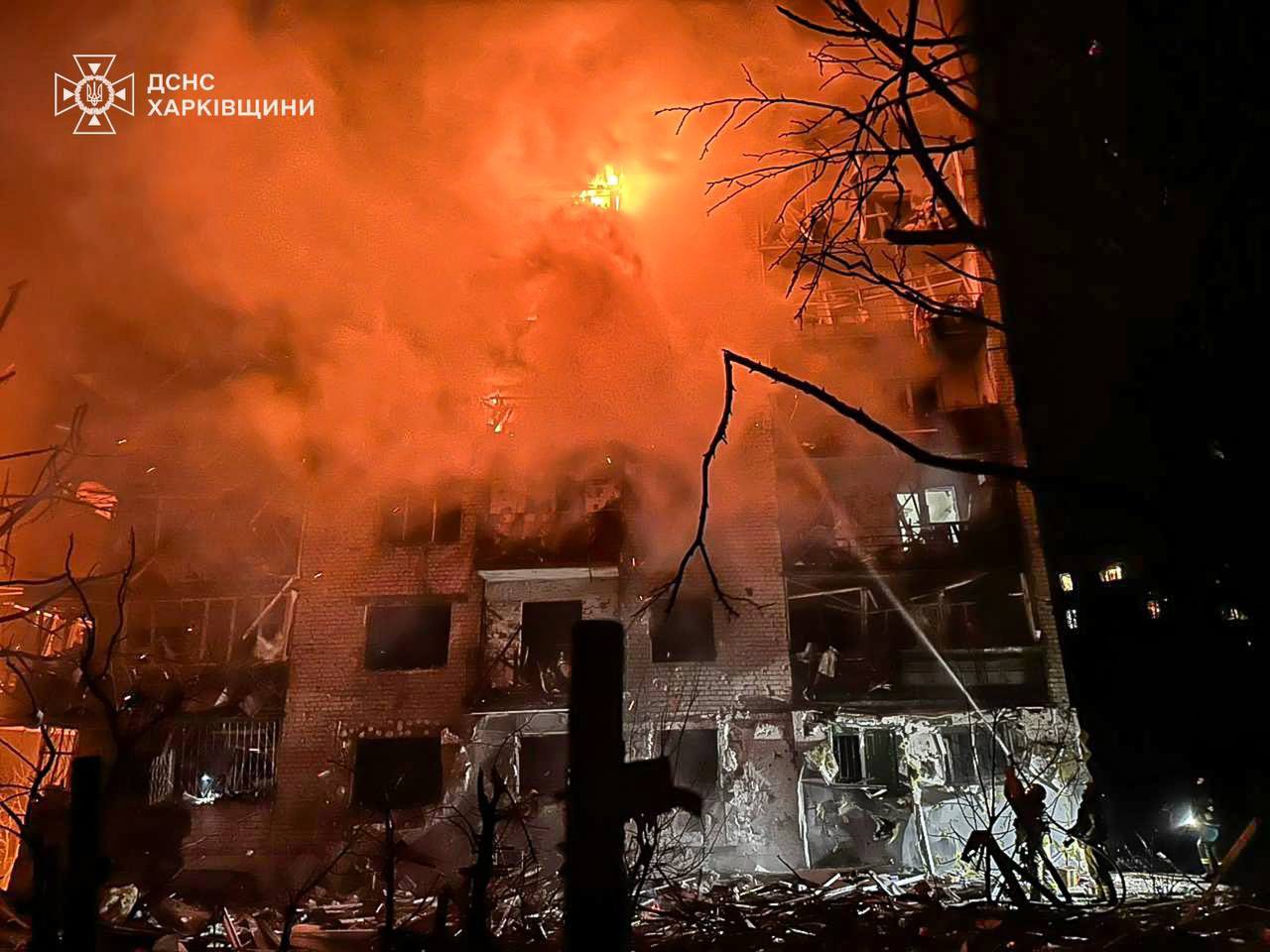
“Putin wanted to show “strength” but only confirmed his weakness. […] Unable to achieve any results on the battlefield, Putin turns to terror against civilians.”
-Ukrainian Minister of Foreign Affairs Andrii Sybiha, via X.
Ukraine Endures Heavy Russian Bombardment:
Russia battered Ukraine with an intense and extended bombardment over the weekend, targeting Kyiv and several other major cities. The attack was clearly intended as a display of Russian military might, and featured a range of much-hyped Russian projectile models, including the Iskander and Khinzal ballistic missiles, the Tsirkon cruise missile, and the nuclear-capable Oreshnik missile.
The Oreshnik, in particular, has captured media and public attention—and for good reason. Russia had launched only two copies of the Oreshnik toward Ukraine before this weekend, one in 2024 and one in January 2026; the missile is widely regarded as a political signal of Russian strength, and implies the delivery of a nuclear weapon, even when the missile uses conventional warheads—as it did this weekend.
While the Oreshnik is frequently described as a hypersonic missile, it is not a maneuverable cruise missile—the criterion to identify weapons of the ‘hypersonic’ class that powerful global militaries are working to develop and deploy. Instead, the Oreshnik is a high-altitude ballistic missile, difficult to intercept as it plunges back to Earth at speeds up to 13,000 kilometers per hour.
According to Russia, this weekend saw multiple launches of the Oreshnik, including one that hit the city of Bila Tserkva according to Ukrainian President Volodymyr Zelenskyy. There, the missile split into thirty-six submunitions before impacting several locations across the city, including a garage complex.
Across Ukraine, Moscow claimed to have used its other weapons to target military intelligence sites, air bases, military-industrial targets, and sites used by Ukraine’s land forces. Russia denied using its weapons to target civilians. Conflict-monitoring group ACLED, however, described “Extensive damage of civilian infrastructure, government buildings, as well as key cultural institutions, metro stations, and shelters […] across every borough of the capital”.
In all, the strikes damaged at least thirty buildings in Kyiv, killing two and wounding another eighty-one. Two other people were killed elsewhere in Ukraine. The strikes leveraged over ninety Russian missiles of varying types, and more than six hundred drones. Then, Ukraine was hit again across Sunday night and into Monday, with at least two more people killed in southern Kherson. Ukrainian attacks killed at least five people, including two teenagers, on Russian and Russia-controlled Ukrainian territory, according to local authorities.
Russia’s Foreign Ministry issued a new threat on Monday, claiming that Moscow will soon carry out a “systematic series of strikes” against Kyiv, including drone design, manufacturing, and programming sites, as well as “decision-making centers and command posts”.
Per the Russian statement, the new strikes are intended to avenge a Ukrainian strike on the Luhansk State Pedagogical University on May 22, where twenty-one students were killed and forty-two wounded, according to official sources in occupied Luhansk. Ukraine maintains that it struck a military unit in that attack.
Despite their destructive potential, Russia’s strikes have been interpreted by most Western analysts as a symbolic attempt to gin up support on the home front. Per the Institute for the Study of War, Moscow is losing momentum on the battlefield, and may soon be faced with new Ukrainian localized counteroffensives. Contrary to the Kremlin’s likely expectations, Russian milbloggers expressed disdain for the strikes; quoting the ultranationalist ‘Russian Movement of Strelkov’, “Just another bunch of empty shells that, aside from being “kind of a cool special effect,” don’t really accomplish anything […]”.
Image Credit: “Destructions in Balakliia after Russian attack, 2025-11-17(01) by State Emergency Service of Ukraine (dsns.gov.ua) is licensed underCC BY 4.0.
This Week on WarFronts:

On Friday, WarFronts discussed a wave of defections across Sudan’s paramilitary Rapid Support Forces, as high-ranking leaders distance themselves from the RSF and seek safe harbor from Sudan’s military government. While some of the former RSF commanders are linked with some of the paramilitary’s worst abuses, including the destruction and subsequent genocidal killings in El-Fasher, their ability to provide intelligence and entice other defectors may outweigh the Sudanese government’s desire to hold them accountable.
On the battlefield, meanwhile, the Sudanese Armed Forces continue to press forward. In Blue Nile State, SAF forces captured the district of Al-Barka, and inflicted heavy losses on the RSF and their allies. With Al-Barka under control, the SAF is within striking distance of Kurmuk, a strategic holding that has allowed the RSF to sustain an offensive from the south with clear Ethiopian backing.
Intense Crackdowns on Turkish Opposition:
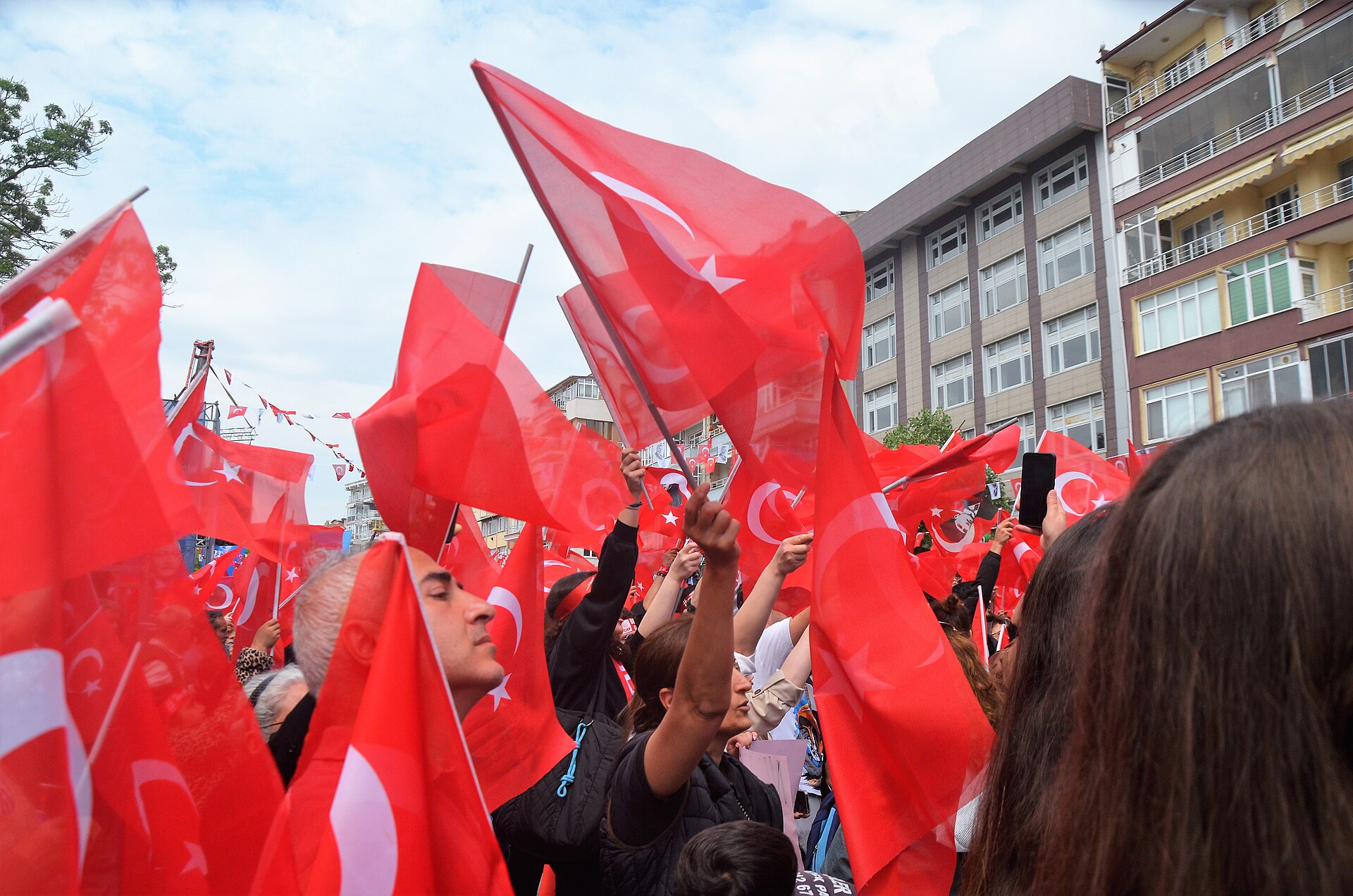
Over the last decade, Turkish President Recep Tayyip Erdogan has worked relentlessly to consolidate power over Ankara, through crackdowns, purges, and legal reprisals against a range of domestic rivals. On Sunday, however, Erdogan’s internal repression reached new levels, when Turkish riot police stormed the offices of the country’s largest opposition group, the Republican People’s Party (CHP).
Last Thursday, May 21, a Turkish court formally ousted Ozgur Ozel as the leader of the CHP, overturning a leadership contest that Ozel had won against former party chairman Kemal Kilicdaroglu. The court claimed that procedural irregularities were responsible for Ozel’s victory, and reinstated Kilicdaroglu as the CHP’s formal leader.
Ozel’s judicial defeat is unprecedented in the Turkish legal system, and represents a clear blow to opposition efforts to oppose Erdogan in future elections, scheduled for 2028 at the latest. Kilicdaroglu is a controversial figure who has already lost to Erdogan in a past election, whereas Ozel is widely regarded as a legitimate threat to Erdogan’s authority—the first since the sentencing of former candidate and Mayor of Istanbul Ekrem Imamoglu to a 2,352-year prison term.
CHP members responded to the Turkish court order with defiance, especially after the party initially lodged an appeal to the Turkish Supreme Court, but then saw the lawyers responsible for the appeal fired by Kilicdaroglu. Ozel took refuge at CHP party headquarters, where his supporters barricaded entryways with furniture and buses, and prepared to resist a siege by police.
Despite resistance, Turkey’s police stormed the party offices and put an end to the standoff on Sunday, removing journalists and engaging party supporters in a melee. Ozel was served with a court order demanding his removal from the premises; Ozel was depicted on video ripping up the order before leaving the building and marching some eight kilometers to the national parliament.
In response to the raid, Ozel told supporters that the CHP was “de facto shuttered”, but would be re-established in the future. Ozel remains an elected legislator, for now, and appears to command the support of the overwhelming majority of CHP members, contrary to Erdogan’s apparent intent to start a more balanced leadership schism. He’s also secured the support of Turkey’s leading pro-Kurdish DEM Party, which condemned the ruling against Ozel and resolved to support CHP efforts to promote democracy.
While Ozel remains a free man, Erdogan is widely expected to pursue further legal action rather than allow Ozel to gain momentum as an outside challenger. Against Imamoglu and other rivals, Erdogan has proved able to use the Turkish judiciary as a weapon, in a fate that Ozel is unlikely to escape without a major escalation in his own tactics.
Image Credit: “2023 Turkish Presidential Election 2 nd round Rally in Silivri, Istanbul” by CeeGee is licensed underCC BY-SA 4.0.
What We're Reading:
After more than four full years of war in Ukraine, Russian asymmetric attacks across Europe are hardly a secret. The logic driving Russia’s hybrid operations, however, is more difficult to track, given the wide range of tactics, targets, and agent recruitment methods that Russia tends to use.
On Sunday, the Organized Crime and Corruption Reporting Project (OCCRP) released a new comprehensive report on Russian hybrid operating procedures, in partnership with Delfi Estonia. Through analysis of leaked documents, the OCCRP and Delfi reconstruct the command structure that drives and coordinates Russian operations, tracking their point of origin to the offices of the Russian presidency itself.
Our WarFronts/HomeFronts Team is proud to announce the launch of Fronts.co, our brand-new subscriber service.
Around the World:
A terror attack in Pakistan’s southwest Balochistan province left over thirty people dead outside the city of Quetta, according to local sources. The attack was carried out by the separatist Baloch Liberation Army, who dispatched a suicide bomber to ram a car bomb into a train as it passed. The train in question was transporting Pakistani soldiers, security personnel, and their families en route to the Jaffar Express, a train that Baloch insurgents hijacked and held hostage in March of 2025.
Myanmar’s military junta has launched several new offensives into vulnerable border zones, including areas held by ethnic Chin, Kachin, and Karen rebel militias. The push appears to be the work of Ye Win Oo, Myanmar’s new military chief, who took command of the nation’s armed forces after junta leader Min Aung Hlaing transitioned to the ostensibly civilian role of president. The offensive is focused on rare-earth mines and border checkpoints.
The Sahel insurgent group JNIM seized two military barracks in on Monday, in one of the clearest signs yet that JNIM intends to expand its operations there. While Benin had largely been spared any outright violence until early 2025, JNIM has used the country’s sparse northern territory and its porous borders to support operations elsewhere. Monday’s attacks took place near the border with Burkina Faso.
The United States conducted what it called “” in Iran on Monday, indicating that its targets posed a threat to US troops. Washington targeted missile launch sites and boats attempting to place mines, in and around the southern city of Bandar Abbas. Iran condemned the strikes and vowed a retaliation.
A land dispute in rural Colombia left at least seven people dead and more than 110 injured, after armed indigenous groups faced off in the municipality of Silvia. Colombia deployed over five hundred soldiers to the area to stabilize the situation, in advance of tense elections scheduled for this Sunday.
Protests in Serbia escalated again this weekend, when nearly 200,000 people rallied across Belgrade in a reinvigoration of the popular movement that’s driven Serbia’s opposition since 2024. According to a independent group of journalists and experts, Saturday’s protests were the second-largest demonstration in Serbia since the 2000 ouster of former strongman Slobodan Milosevic. Police and masked pro-government enforcers clashed with protesters in the streets after the event; over twenty people were arrested.
The US military engaged in a show of force over the Venezuelan capital city of Caracas on Saturday, carrying out a military exercise that simulated an evacuation by US Marines. The exercise used two MV-22B Osprey tiltrotor troop transports, flying to and from the US embassy compound in the city. Venezuelan officials stated that the exercise was approved, but the demonstration prompted protests from citizens around the capital.
Senegalese President Bassirou Diomaye Faye dismissed the nation’s prime minister, Ousmane Sonko, and declared its government dissolved on Friday. All ministers were dismissed in Faye’s decree, in response to rising economic turmoil and delays in efforts to reach an agreement with the International Monetary Fund. Faye appointed a former international banking head to the role; Sonko, meanwhile, was of the Senegalese parliament, setting the conditions for future confrontation.
The Canadian province of Alberta announced a non-binding referendum for October, evaluating Albertans’ desire to remain part of Canada. While the vote will be symbolic in nature, and will not formally begin a move toward separatism, the initiative will carry symbolic importance for Canada after repeated US threats to annex the country. Alberta’s wealth of oil and natural resources are also a matter of importance for Ottawa.
US President Donald Trump stated on Monday that he had encouraged Saudi Arabia, Qatar, Pakistan, Egypt, Jordan, and Turkey to normalize relations with Israel en masse, under the framework of Trump’s first-term Abraham Accords. Most of those nations are unlikely to willingly normalize relations, for varying reasons, but Trump’s framing of the proposal as “mandatorily requesting” participation may indicate penalties for nations that refuse.
During his recent meeting with Chinese President Xi Jinping, Trump reportedly expressed strong support for Japanese Prime Minister Sanae Takaichi, according to unidentified US government sources via Reuters. While the aftermath of the summit has left Taiwan’s security situation in doubt, a firm Trump endorsement from Japan would likely have left an impression in Beijing, after Takaichi indicated that Japan could defend Taiwan from invasion.
Venezuelan opposition leader and Nobel laureate Maria Corina Machado announced that she will return to her home nation this year, and plans a run for president in the near future. A return by Machado will pose problems for the United States, which has abandoned its one-time support of Machado in favor of regime transition leader Delcy Rodriguez despite Machado’s ongoing relationship with the US government.
French far-right leader Marine Le Pen vowed to withdraw France from NATO’s integrated military command if she is elected in 2027, foreshadowing what would be a major shift for the alliance and for broader perceptions of internal European stability. Le Pen specified that France would remain a part of the NATO alliance, but gain the ability to make decisions independent of Trump’s leadership in the US; while Le Pen is unlikely to secure a dismissal of a ruling that currently bars her from candidacy, her protégé Jordan Bardella is expected to be a contender for the presidency in next year’s elections.
New Zealand announced a much-needed boost in defense funding, worth the equivalent of over 900 million US dollars, to acquire new drone systems and revitalize its naval fleet. New Zealand’s two primary surface combat vessels, the frigates HMNZS Te Kaha and Te Mana, are expected to be outdated by the mid-2030s without modernization efforts.