
WarFronts Weekly 6.2.2026.
🟨 WarFronts Weekly | Ukraine Hammers Crimea & More
Evan Moloney • June 2, 2026
“Since the beginning of spring, mid-range strike attacks cleared Russian air defense in the region, and it allowed us to fly over to any point in temporarily occupied territories. Now getting to those highways is a matter of one hour for us.”
Ukraine Hammers Crimea:
After months of consistent pressure against Russia’s back lines in occupied Ukraine, Kyiv’s mid-range drone offensive has achieved stunning results, undercutting Russia’s planned spring and summer offensive and turning the tide in favor of renewed, limited Ukrainian advances.
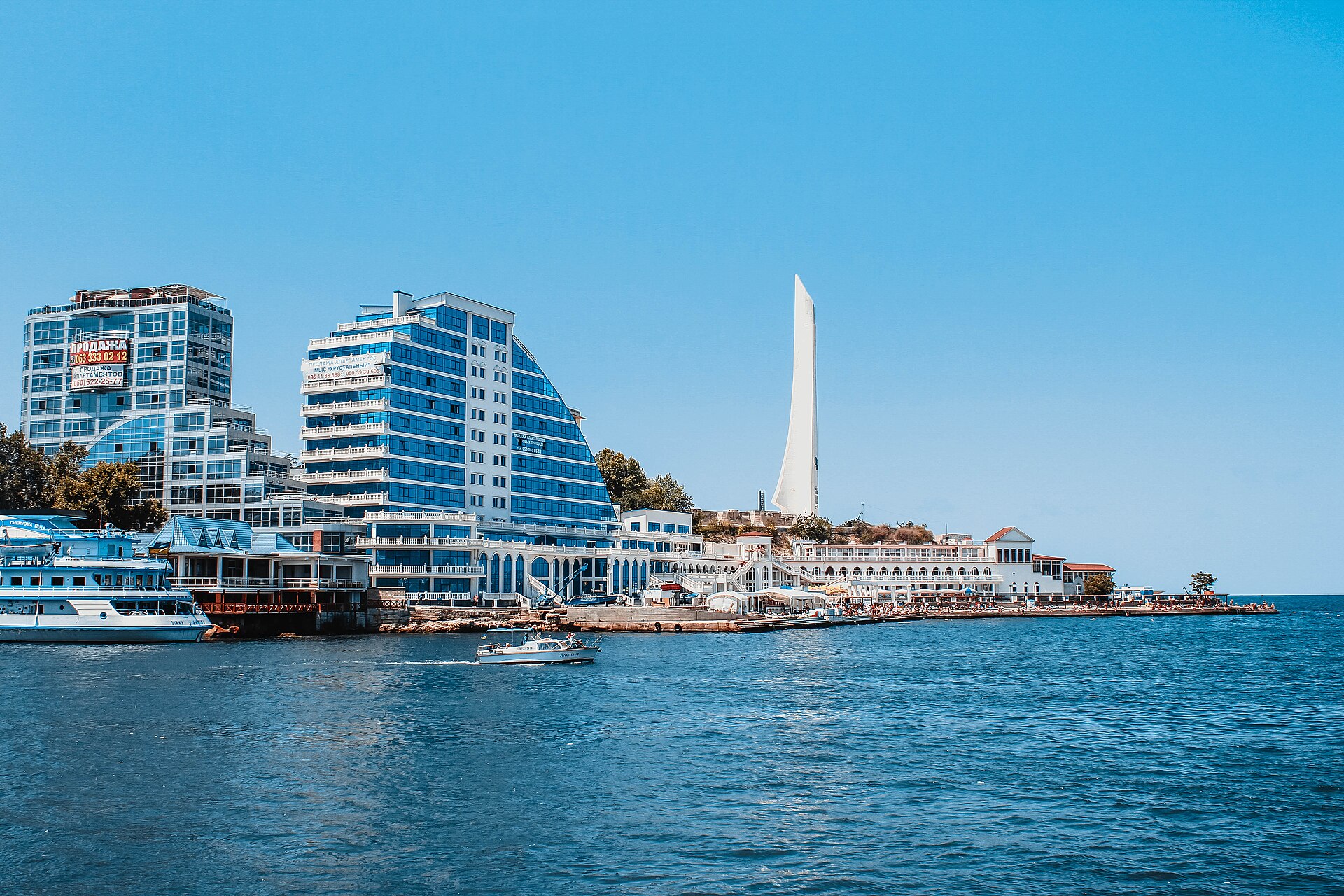
Ukraine’s newfound victories have created the most pain for Russia, however, in . There, the isthmus territory is in the midst of a fast-growing fuel crisis, as civilians and the Russian Black Sea fleet alike are left stranded—with little hope of relief.
Ukraine’s impact in Crimea hinges on attacks, not against Crimea itself, but against the vital M-14 road from occupied Mariupol to the Crimean city of Simferopol. There, Ukrainian mid-range drones have declared open season on Russian logistical support and supply lines, regularly hitting fuel tankers and box trucks all up and down the highway.
The strikes have achieved systemic interruption to Russia’s Crimea resupply efforts, which have largely become dependent on the M-14 highway because of the dual risks of sea drone attacks, for logistical transport over water, and threats to the Kerch Strait Bridge. Social media footage regularly depicts burned-out trucks, and on May 26, analyst Clement Molin identified 125 trucks that had been struck on or near the highway, with over eighty destroyed.
In response to Ukraine’s aerial dominance over the occupied territories, Crimean officials were forced to introduce fuel rationing over the weekend, when Russia-installed puppet leader Sergey Aksyonov announced that multiple fuel grades will be limited or provided only through the use of gasoline vouchers. Ordinary civilians are typically not issued vouchers, unless they are provided by employers.
Screenshots of discussions between Crimeans on messaging platforms reveal that Ukraine has purportedly destroyed all fuel storage infrastructure on Crimea, necessitating the construction of underground infrastructure as soon as possible. If true, then even if Ukrainian attacks on highways in the occupied territories were to cease, Crimea and its Russian forces are likely to suffer from protracted shortages across several months.
According to Russian milbloggers, insurers may not even allow Russian oil tankers to transit routes to Crimea in the near future. Crimean citizens and businesses are unwilling to risk storing fuel, while fuel transport over the Kerch Strait Bridge is permitted only in exceptional cases, to minimize risk of a highly damaging attack by Ukraine.
Beyond the impact in Crimea, Ukraine’s campaign is believed to be undermining Russia’s ability to “transport personnel to the frontlines, frontline positions, and conduct the on which Russian forces have relied to advance”, according to the Institute for the Study of War.
Image Credit: “Sevastopol.Crimea” by Handrymailova is licensed under CC BY-SA 4.0.
This Week on Fronts:

This week, regular Fronts contributor Wilfred Waimiri recorded an episode of Fronts’ regular, free-to-access podcast, Due South, featuring Liam Karr: the leader of the Africa Team at the Critical Threats Project.
Over the last several years, Karr has directed Critical Threats’ open-source intelligence investigations into African affairs, providing regular updates from across the continent and diving deep on flashpoints from the Sahel to the Horn to the Great Lakes region. Karr’s work is indispensable to our team on WarFronts, HomeFronts, and Fronts.co; take a listen, to hear him in action.
Colombian Elections Yield Polar-Opposite Runoff Candidates:

Far-right political outsider and lawyer Abelardo de la Espriella notched a surprise first-round victory in Colombia’s presidential election on Sunday, walking away with 43.7% of the national vote. His opponent in the runoff will be the far-left senator and human rights activist Ivan Cepeda, who secured 40.9% of the vote after most polls showed him leading the race.
De la Espriella and Cepeda offer polar-opposite visions for Colombia’s future, especially in their respective proposals to handle the nation’s ongoing internal security crisis. With dissident rebel factions and organized criminal elements growing in strength, Colombia’s next leader will be tasked primarily with reducing or ending the violence.
De la Espriella is a hard-right leader in the mold of El Salvador’s Nayib Bukele, who has overseen sweeping crackdowns that have nullified his nation’s once-dominant gangs, but drawn consistent, credible accusations of authoritarian backsliding. De la Espriella—who refers to himself as el Tigre or “the Tiger”—has promised a policy of total confrontation against Colombia’s armed non-state actors.
Cepeda, meanwhile, is the son of a senator who was gunned down in Bogota in 1994 during a series of regime crackdowns; Cepeda the younger is seen as the architect of Colombia’s “total peace” policy, implemented—with questionable effect—by the nation’s current president, Gustavo Petro. While Petro’s management of the policy has left some to be desired, Cepeda’s supporters suggest that he will properly apply the strategy, and use it to peacefully dismantle Colombia’s criminal groups.
The first-round vote was not without controversy; one day prior to the election, Colombia’s Foreign Ministry accused Ecuador of “deliberate interference” after Ecuadorean President Daniel Noboa agreed to lift bilateral tariffs on Colombia starting yesterday, June 1. Per Noboa, De la Espriella struck a direct agreement with Ecuador to secure tariff relief, after De la Espriella confirmed his “willingness to promote a real and joint fight against narcoterrorism”. Noboa has also pledged to extradite Colombian criminals.
The two men will face off within just weeks, with a final vote scheduled for June 21; De la Espriella is thought to be the early favorite. His shock victory is believed to have been the result of a surge of support away from another candidate, establishment conservative Paloma Valencia. While Cepeda still has a path to victory, De la Espriella is likely to draw a high share of the remaining vote as an anti-establishment candidate, while Cepeda’s post-vote complaints about fraud and his lackluster campaigning have left his race hobbled.
Image Credit: “Ivan Cepeda Congreso” by IvanCepedaCastro is licensed under CC BY-SA 4.0. “Abelardo de la Espriella in an interview, 2025” by Red+ Noticas is licensed under licensed under CC BY-SA 4.0. Composite by WarFronts Weekly.
What We're Reading:
As Russia grows increasingly desperate to change the balance of the war in Ukraine, NATO member states are raising the alarm over a potential Russian incursion into Latvia, attacks on isolated islands like Sweden’s Gotland, or long-range strikes targeting Western officials in Ukraine.
Often neglected in these conversations, however, is the Arctic archipelago of Svalbard. Recognized as Norwegian territory, Svalbard spans the stretch of ocean between the Barents Sea and the Atlantic—a critical high-Arctic shipping route that will only become more important, as sea ice begins to melt at an accelerated pace.
This report by la Fondation pour la Recherche Stratégique explains Svalbard’s strategic value to Russia, and the possibility, however improbable, that Russia could undertake direct action to seize Svalbard in the next several years. With Russia probing for worthy avenues to pressure-test the NATO alliance, Svalbard may be regarded within the Kremlin as an especially compelling target.
Our WarFronts/HomeFronts Team is proud to announce the launch of Fronts.co, our brand-new subscriber service.
Around the World:
At least eighteen people were killed in Ukraine overnight into Tuesday, after a of Russian drones and missiles rained down across the nation. The city of Kyiv appeared to be the attack’s primary focus, with six people killed inside the city, although strikes also impacted several other Ukrainian cities and towns. Russia launched a total of 656 drones, thirty-three ballistic missiles, thirty-two relatively conventional cruise missiles, and eight Zircon hypersonic missiles, a precise and difficult-to-intercept anti-ship missile, according to the Ukrainian Air Force. Russia claimed that its strikes were an act of retaliation after a Ukrainian strike on a dormitory in Luhansk last month, which Ukraine denies carrying out; the Kremlin claimed that Ukraine’s “inhumane acts of terror” have pushed the war into a ”new paradigm” in which systemic strikes are permissible.
Iran and the United States traded strikes over the weekend, after an anticipated extension of the two nations’ shaky ceasefire failed to materialize. The United States shot down two Iranian drones, destroyed air defenses, and struck multiple ground control stations; Iran shot down an American drone and targeted an unidentified US airbase, believed to be in Kuwait, where air defenses were activated on Monday. US CENTCOM reported two ballistic missiles intercepted, with no US personnel harmed. The United States also struck a civilian vessel attempting to reach an Iranian port.
Israeli Prime Minister Benjamin Netanyahu ordered Israeli troops to push deeper into Lebanon in the coming weeks, after Israel seized the Crusades-era Beaufort Castle and a strategic ridge in the nation’s south. Hezbollah launched heavy fire toward Israel before Netanyahu’s announcement, which is likely to send Israeli troops to at least the Zaharani River, ten kilometers north of the river that typically demarcates the end of Israeli military action, the Litani. Netanyahu also ordered the bombing of southern Beirut, but the strikes after alleged pressure from US President Donald Trump, prompting uproar from centrist and right-wing Israeli politicians. Israel and Lebanon are technically governed by a ceasefire, which was recently extended. On Monday, Iranian state TV presenters stated that the US-Iran ceasefire is very likely to end if Israel’s operations in Lebanon proceed as planned.
A blast in a rebel-controlled part of Myanmar left at least fifty-five people dead, after a stockpile of mining explosives detonated accidentally. The explosion took place in the village of Kaung Tat near the Chinese border, in a zone controlled by the Ta’ang National Liberation Army. The group is participating in a ceasefire with Myanmar’s ruling regime.
Ukrainian drones hit an oil tanker and a refinery in the southern Russian city of Taganrog, damaging both, according to local authorities. Ukraine also struck an oil depot in Armavir. On Saturday, however, Russia alleged that a Ukrainian drone struck the Russia-controlled Zaporizhzhia nuclear power plant, impacting a turbine hall; Ukraine denied Russia’s claim.
A border skirmish left one Guyanese soldier wounded late Friday night, in an exchange of fire along the edge of Guyana’s oil- and resource-rich Essequibo region. The soldier was shot by unidentified armed men, and Venezuela accused Guyana of “fabricating a false narrative” around the confrontation; Venezuela claims Essequibo, two-thirds of Guyanese territory.
China’s Liaoning aircraft carrier carried out drills in the Pacific Ocean east of the Philippines last week, according to a bulletin via Japan’s defense ministry. Per Tokyo, the carrier sailed east of the Philippine island of Luzon, accompanied by several other vessels; aircraft and helicopters based on the Liaoning conducted roughly 170 flight drills.
London-based anti-regime outlet Iran International reported on Sunday that Iranian President Masoud Pezeshkian attempted to tender his resignation this week, in a letter to Supreme Leader Mojtaba Khamenei. Pezeshkian’s offer was purportedly declined; his letter focused on the Iranian Revolutionary Guard Corps’ effective takeover of the nation’s civilian-led government.
Recently ousted Turkish opposition leader Ozgur Ozel drew tens of thousands of attendees to a rally in Ankara on Saturday, in a demonstration that is expected to signal to President Recep Tayyip Erdogan that Ozel remains a potent political force. Ozel is regarded as Erdogan’s foremost political rival besides former Istanbul Mayor Ekrem Imamoglu, who is imprisoned.
Nicaraguan indigenous leader Brooklyn Rivera died in state custody this weekend after a case of COVID-19, after three years imprisoned by the nation’s Ortega regime. Prior to his death, the Nicaraguan government published photos of Rivera in the hospital while in critical condition, in an apparent signal to Nicaraguan dissidents on the extent of the regime’s repression.