
WarFronts Weekly 7.7.2026.
🟨 WarFronts Weekly | Russian Africa Corps Massacred in Mali & More
Evan Moloney • July 7, 2026
“[…] Provided the rebel coalition wins today, fragmentation of Mali will be certain, and that includes such a massive loss of reputation of Russia, that is visible to the eye”.
-Sahel expert Pawel Wojcik, via X.
Russian Africa Corps Massacred in Mali:
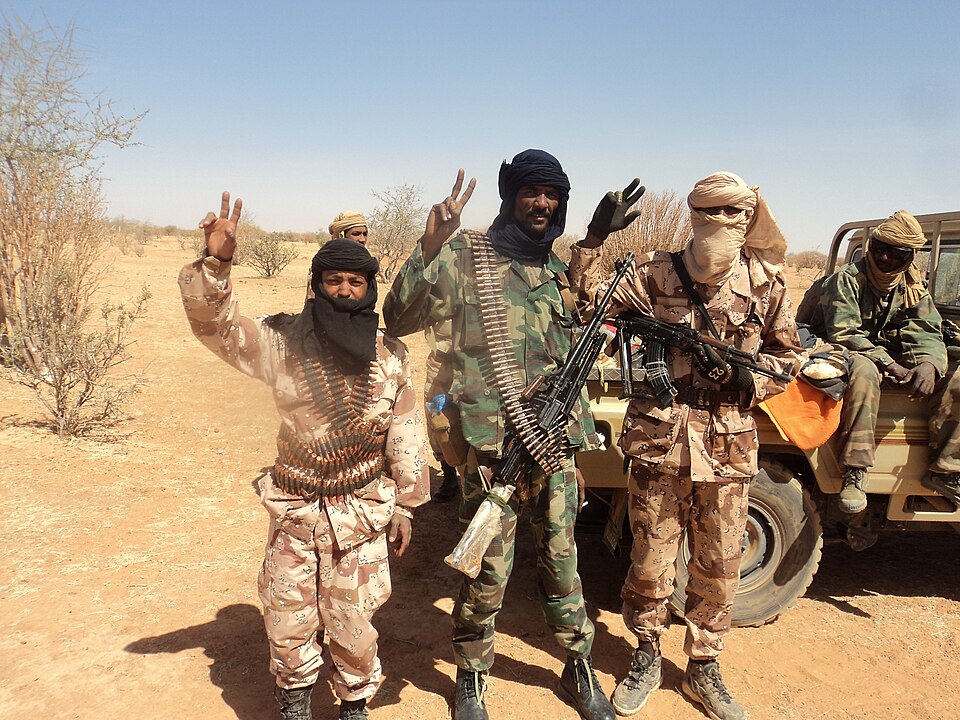
Malian government forces and their Russian paramilitary allies remain under attack today, after a coordinated assault against at least seven military installations that began on Saturday. Perpetrated by rebel groups including the al-Qaeda-linked insurgency JNIM, and the Tuareg-led Azawad Liberation Front, the attacks are believed to have led to the deaths of dozens, if not hundreds, of Malian and Russian troops.
The attacks began at dawn on Saturday morning, local time, when JNIM and Tuareg forces attacked several cities and towns and a prison in the country’s east, including Anefis, Aghuelhok, and Gao. The town of Sevare, in central Mali, and the town of Kenioroba in the south were also attacked. According to a JNIM statement released later in the day, the group managed to take over at least seven positions across the country. Mali denied that any of the JNIM attacks had succeeded, and has claimed that the group was repelled.
In reality, however, the JNIM-Tuareg forces appear to have made considerable gains, especially in and around the city of Anefis. As of Tuesday, Anefis appears to still be under siege, with Malian soldiers defending alongside high numbers of Russian paramilitaries under the Africa Corps organization.
According to local sources and open-source analysts, Russia attempted to reinforce the base with multiple convoys sent from Gao, but those convoys have been turned back, after substantial casualties and heavy fighting. During one exchange, a Russian Mil Mi-24 attack helicopter was shot down while providing support for ground forces; its two crew members were killed. A unit attempting to provide relief, from the town of Aghuelhok, has been cut off from the rest of the Malian/Russian forces.
Russia has deployed its own Shahed-style drones in response, but, quoting regional expert and Fronts.co contributor Pawel Wojcik: “The Anefis military camp is being by mortars, other artillery and FPV drones, several vehicles and sites belonging to Russian contingent confirmed burnt/damaged. .”
Nor does the fighting appear likely to end anytime soon. Sandstorms are likely in the coming hours and days, creating an even better opportunity for insurgent forces to attack the base. If Anefis falls, meanwhile, the capture of Aghuelhok is all but certain, clearing the way for JNIM and their Tuareg allies to secure most of the Malian east.
The attack is the second coordinated, cross-country wave of assaults by JNIM-Tuareg forces this year, after an April offensive led to a Mali-Russia defeat in the key city of Kidal. While JNIM and the Tuareg forces are allies of convenience, rather than true partners, they have realized impressive success, and appear likely to degrade Malian forces further in the coming months.
In the periphery of this latest round of attacks, the Islamic State – Sahel is likely to attempt limited attacks at a minimum, targeting isolated Malian positions or even JNIM units while both forces’ strategic leadership are distracted. As of the time of writing, however, IS-Sahel is not known to have launched any peripheral assaults.
Image Credit: “Tuareg secessionists […]” by Magharebia is licensed underCC BY 2.0.
This Week on Fronts:
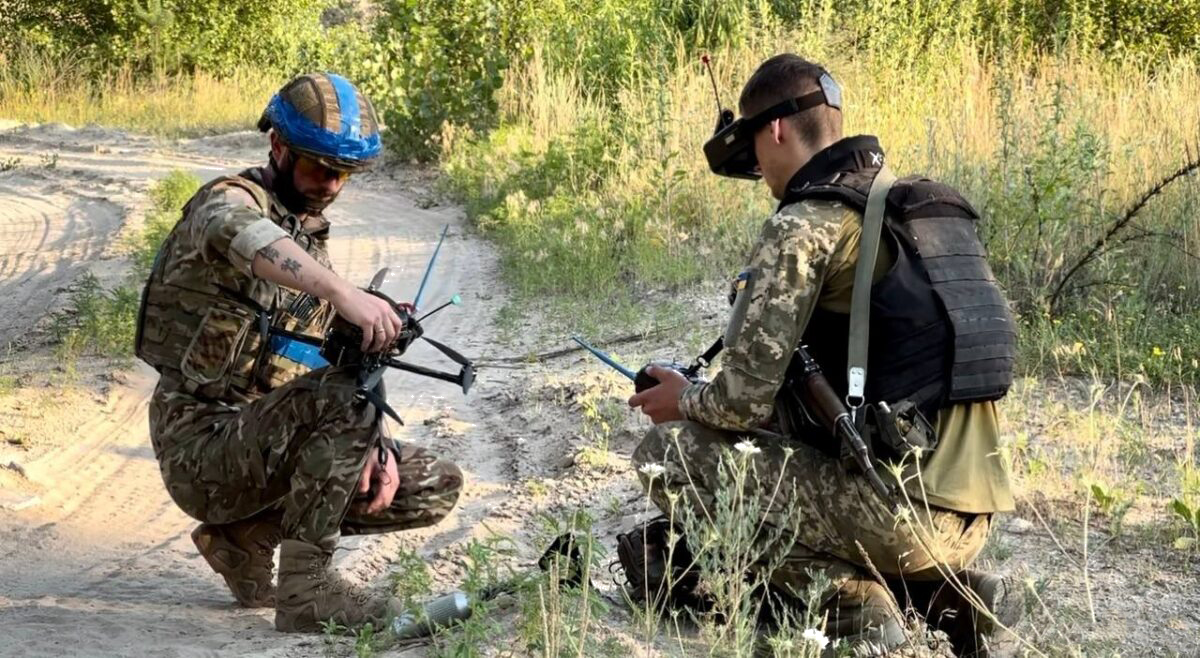
“NATO Needs to Dronify or Die.” This was the urgent message published by Illia Sekirin, unofficial senior advisor to Ukrainian High Command, on Fronts.co last week. In his expert commentary, Sekirin explains the degree to which military drone adoption, by NATO-member militaries, must be regarded as an existential priority for the entire alliance.
NATO’s progress—or lack thereof—on drone warfare will be on full display at this week’s alliance summit in Turkey. There, Ukraine will be working toward several drone procurement and production deals with NATO-member states, even as the United States demands signs of progress on remilitarization across the European continent.
China Conducts Rare Ballistic Missile Test Launch:
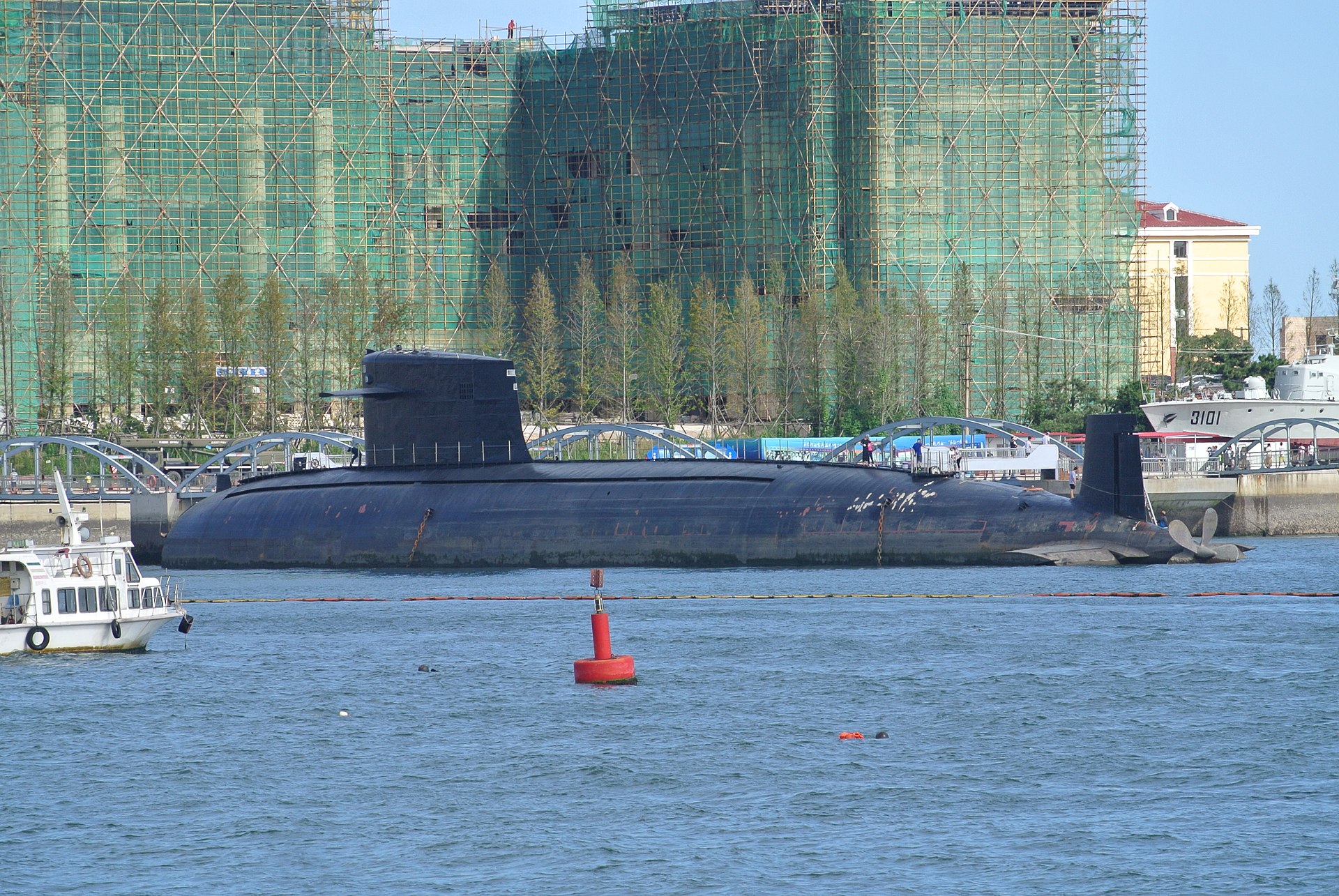
On Monday morning, China conducted a test of a long-range ballistic missile, launched from a nuclear-powered submarine in the Pacific Ocean. Chinese test launches of this kind are very rare, with the last test taking place in 2024, and while the test missile carried an inert dummy warhead, China’s regional rivals have been quick to voice their concerns anyhow.
The missile launch took place within waters that had been designated for a Chinese military exercise, with ninety minutes’ notification provided to other regional governments before the launch took place. According to China’s Foreign Ministry, the launch was a “routine part of annual military training”, and was not aimed at any country; the missile splashed down in the South Pacific Nuclear Free Zone.
According to an analyst from the Open Nuclear Network, the missile was most likely launched from China’s Bohai Bay. It was tracked by a trio of Chinese ships that deployed to the Western Pacific, between New Guinea and Guam. While China did not indicate the missile type that was chosen for the test, it was likely a JL-2 or JL-3, with the former capable of traveling over 7,000 kilometers. Both missiles are nuclear-capable.
The launch prompted quick condemnationsfrom regional powers including Japan, Australia, and South Korea, with Japan indicating that it had attempted to discourage the missile launch before it took place. China has largely dismissed other nations’ concerns, expressing “hope that the relevant countries will avoid overinterpretation”.
In a geopolitical sense, the launch could be interpreted as a signal to several Chinese rivals, each of which have engaged in recent actions that Beijing is likely to have found provocative. Japan’s new Minister of Defense recently visited South Korea for the first time, and Japan and India have agreed to a development deal to build stealth-warship technology, as well as new maritime security plans.
Australia recently sealed defense pacts with Fiji and Vanuatu, as part of an attempt to prevent China from expanding its power in the open Pacific. The United States, meanwhile, routinely tests its own ballistic missiles while China pushes for a parity of expectations with Washington around defense development. The US is also due to participate in a NATO summit this week, where China’s test launch may be a point of discussion.
Image Credit: “中文(简体)” by StefanTsingtauer is licensed underCC BY-SA 4.0.
What We're Reading:
Between the war in Iran and the ongoing evolution of Russia’s Ukraine invasion, the world has largely moved on from Washington’s early-2026 brinksmanship over the autonomous Danish territory of Greenland. In the long term, however, that episode is likely to be remembered as a damaging turning point in US-Europe relations: a moment when Europe’s closest and most powerful security partner revealed its willingness to use force against the continent in a direct confrontation, even over a dispute with no immediate bearing on American national security.
This report from the Wall Street Journal, published on Sunday, reveals new insights on the European response during the crisis. As the report explains, European nations intended to draw a line in the sand with America over the issue, despite the risk that a direct confrontation could have led to a far larger security breakdown between the allies—and still may, over the course of the coming years.
Our WarFronts/HomeFronts Team is proud to announce the launch of Fronts.co, our brand-new subscriber service.
Around the World:
Russian strikes on Kyiv left at least twelve people dead on Monday morning, after Ukrainian forces largely failed to intercept incoming ballistic missiles. According to Ukraine’s own air force data, Kyiv was unable to stop even a single ballistic missile on approach, indicating severe shortages in the country’s stockpile of Patriot missile interceptors. Ukrainian President Volodymyr Zelenskyy is set to meet with US President Donald Trump at this week’s NATO summit in Turkey, where Zelenskyy and European partners are likely to appeal to Trump to continue shipments of the US-made interceptor. Ukraine’s other interceptor systems appear to be functioning as normal, with over ninety percent of Russia’s 351 drones and thirty-seven cruise missiles brought down in the same barrage.
Also on Monday, Ukrainian drones hit Russia’s largest oil refinery, at Omsk, and sparked a fire there, although the extent of the damage is unknown. The Omsk refinery is located nearly 2,500 kilometers from the Ukrainian border, and processes over 21 million metric tons of crude oil each year; Ukraine impacted a refining unit that handles roughly forty percent of that overall processing volume. Ukraine also struck two oil tankers in the Sea of Azov, and the Kerch Oil Depot and a long-range radar in Crimea. On Monday night into Tuesday, Ukraine another eight oil tankers, a cargo ship, and a ferry, all in the Sea of Azov.
As JNIM and Tuareg forces collaborate in Mali, at least fifty soldiers and militiamen were killed in , this time in Burkina Faso. The death toll is expected to rise in the coming days, after JNIM destroyed and looted several military camps across a broad geographic range.
In Damascus, Syria, two bombs exploded Tuesday morning near a hotel where French President Emmanuel Macron spent the previous night, leaving eighteen people injured during the first visit of a European head of state since the fall of Bashar al-Assad in 2024. No members of the French delegation were harmed in the attack, and Macron met with Syrian transitional leader Ahmed al-Sharaa as scheduled. The Islamic State is suspected to be responsible for the bombing, but has not yet claimed credit.
A prison battle in Sri Lanka left at least twenty-six people dead on Monday, after a group of convicted prisoners clashed with a group of detainees at a center north of the capital city. While the cause of the clash is unknown, it is the latest challenge for Sri Lankan authorities as they battle a complex internal threat from narcotics-trafficking networks, made worse by severe prison overcrowding and elite corruption.
Ten assailants were killed and three others were arrested in a against Mexican naval personnel in Sinaloa State, while those naval personnel carried out flood-monitoring patrols to safety-check river water levels. One sailor died in the attack, and three others were wounded.
A in Pakistan’s southwestern Balochistan Province left nine police officers dead, in an assault by dozens of ethnic Baloch militants in a rural area of Ziarat District. Eight other police officers were temporarily taken hostage, but were recovered. Security forces responded with clearing operations that killed fifteen insurgents, according to a spokesman for Pakistan’s Balochistan administration. Days earlier, Baloch insurgents claimed credit for an attack against a security post at a coastal town, while Pakistani officials acknowledged that armed men attacked civilians near the regional capital, Quetta.
The United Kingdom Maritime Trade Operations center reported an attack on a cargo ship off the coast of Yemen in the Red Sea, in a Sunday announcement. Per the UKMTO, the ship was attacked by a sea skiff approximately 55 kilometers away from the port city of Hodeidah; security guards returned fire, and all crew were reported safe. The attack was likely perpetrated by Yemen’s Houthi rebels, in an area where Somali pirates and other alternative suspects do not typically travel.
The impeachment trial of Philippine Vice President Sara Duterte began in Manila on Monday, with over six thousand police officers deployed to the nation’s Senate to secure the area during proceedings. Among other charges, Duterte is accused of threatening to have the nation’s president assassinated, and may be permanently disqualified from holding public office if convicted. Also on Monday, a close Duterte ally—senator Rodante Marcoleta—was arrested on a plunder charge, hours before he was expected to sit as a senator-judge during the trial.
The Tanzanian government has arrested several dozen people ahead of a series of anti-government protests planned to take place today, Tuesday 7 July, in commemoration of Tanzania’s deadly crackdown on protesters one year ago. National leaders have urged demonstrators to avoid taking to the streets, although student and community organizers have indicated that the marches will take place as planned.
Canada has announced that Germany’s ThyssenKrupp will build a fleet of twelve new submarines for Ottawa across the coming decade, ending a lucrative competition between ThyssenKrupp and South Korea’s Hanwha. The diesel-electric submarines are expected to dramatically expand Canada’s capacity for maritime-security operations, especially in Arctic waters.