
Disposables: Inside Russia's Global Hunt for Soldiers
Russia's war in Ukraine has led to a global hunt for soldiers, with recruiters luring in workers from all over the world. But at what cost?
Fronts Staff • February 23, 2026
Up next
When There's Unrest in Russia, Watch the North Caucasus
Neil Hauer · September 7, 2026 · 9 min read
Why Did Russian Democracy Fail? Start With its Minorities
Henrik Hannes Herkel · August 24, 2026 · 13 min read
What's Really Going On With Fedorov’s Firing? A Former Adviser Explains
Mykhailo Fedorov’s dismissal was officially presented as part of a government reshuffle. The real explanation lies in his growing popularity, his confrontation with Ukraine’s military establishment, and the powerful interests threatened by his defence reforms.
Illya Sekirin · August 18, 2026 · 12 min read
With the Kremlin losing around 1,000 soldiers per day in its assault on Ukraine, recruiters are finding a new way to fill the ranks: foreign fighters. These headhunters lure in workers from all over the world, including Asia, Africa, the Middle East, even South America. The rewards are obvious: vast commissions for the scouts; more soldiers for the Kremlin. The people they’re bringing in, though, are finding that it’s a short distance between a friendly Telegram message and a trench in the Donbas.
The Anatomy of a Modern Trafficking Ring
The first node of Russia’s foreign fighter pipeline starts online, on social media platforms like Telegram. That’s where Omar, a Syrian national, was recruited by a smiling woman named Polina. Offering a pathway to easy citizenship, high salaries, as well as sign-on bonuses several times higher than the average annual wage in targeted countries, recruiters like her have been successful in luring an estimated 20,000 foreign nationals to Russia.
For Polina and her ilk, the cash incentives at both ends of the pipeline can be huge. First, they charge high fees for visa processing and job placement - in Omar’s case, he was asked for the equivalent of $3,000 USD to be placed in a non-combat role. Then, once a recruit is delivered to a military commissariat, they receive another payment, this time from the state. It can range from $1,300 to $2,600 USD, depending on the region.
This state-funded bonus is the fuel for a new market that has emerged during the war; one in which ordinary Russians compete to get the most human bodies into the army. Known as the referral economy, it involves everyone from local officials to new mothers on maternity leave, to former schoolteachers like Polina in need of a side hustle. Even some local human resources operations are getting involved; bonuses make military recruitment a far more profitable operation than hiring for civilian roles.
The reach of these headhunters is global. In her Telegram channel, called “Friends of Russia,” Polina posted 490 invitations in 2025 to foreign nationals from all over Africa. The scale of her audience is also growing, adding an average of 1,200 new prospects every month, or roughly 40 people per day to a digital ecosystem designed to manipulate them and funnel them toward the front.
In general, while initial Russian recruitment efforts are focused on post-Soviet states, the Ukrainian Coordination Headquarters for the Treatment of Prisoners of War has verified the identities of foreign fighters from 128 different countries, including India, Syria, China and dozens of nations throughout Africa. A 2025 analysis of recruitment efforts on VKontakte by OpenMinds found that ads targeted outside of Russia made up one-third of posts, which marked a 700% uptick from 2024.
This pipeline is bolstered by a growing number of cultural centers and diplomatic attachés throughout Africa and the Middle East that help these intermediaries get their victims to Russia under the guise of education or labor exchange. A key player in this area are Russian Houses, which claim to promote Russian language and culture throughout Africa and other areas of strategic interest. However, an investigation by INPACT revealed that they also serve as a hub for influence campaigns, espionage and military recruitment. Some Russian Houses have a local network of informants, which help identify former militia members for potential recruitment. By facilitating visas and travel paperwork, their institutional involvement connects seemingly scattered efforts into a centralized and state-sponsored operation.
Foreigners are also targeted on a massive scale inside of Russia, which weaponizes the legal status of migrants who have recently obtained their passports. Under a 2024 law, those who refuse to register for the draft face revocation of their citizenship, turning a Russian passport into a mandatory enlistment contract. For the migrant, these predatory laws mean that Russia offers a home, but demands blood in exchange. And because further decrees keep all personnel in service indefinitely, that trade has become a one-way street.
Alexander Bastrykin, leader of Russia’s Investigative Committee, confirmed that authorities had apprehended over 80,000 naturalized citizens, primarily from Uzbekistan, Tajikistan and Kyrgyzstan, who had failed to register for the military draft. Of them, he said that 20,000 were immediately sent to the front lines. Russian officials have even begun conducting raids on warehouses, mosques, factories and markets to funnel migrants into the military. This shows a desperation for domestic volunteers that’s backed up by data — figures released by Dmitry Medvedev, the Deputy Chair of the Russian Security Council, suggest that 2025 saw a 6% decrease in military signups compared to 2024. Despite this, Russia will be increasing its recruitment target in 2026, likely prompting headhunters to broaden their global search for personnel.
From Arrival to Assault
Although intermediaries like Polina are openly recruiting for the military, the level of deception involved can be startling. Omar paid her a large sum to be placed away from the front, only to be sent into combat after only 10 days of training. Other recruiters are even more economical with the truth. In the case of a group of fighters from Bangladesh, one escapee told of being recruited to work as a cleaner in a military camp. According to an investigation by the Associated Press, this man, named Rahman, and three others who arrived with him to a processing center, were presented with contracts in Russian. Believing they were for custodial roles, they signed, and were promptly sent away for military training.
Situations like these are surfacing all over: Rakesh, an Indian national, left for St. Petersburg on a study visa and was forcibly drafted into the Russian army. After calling his family from a Russian line to let them know his passport and phone had been taken and he was on his way into combat, he was never heard from again.
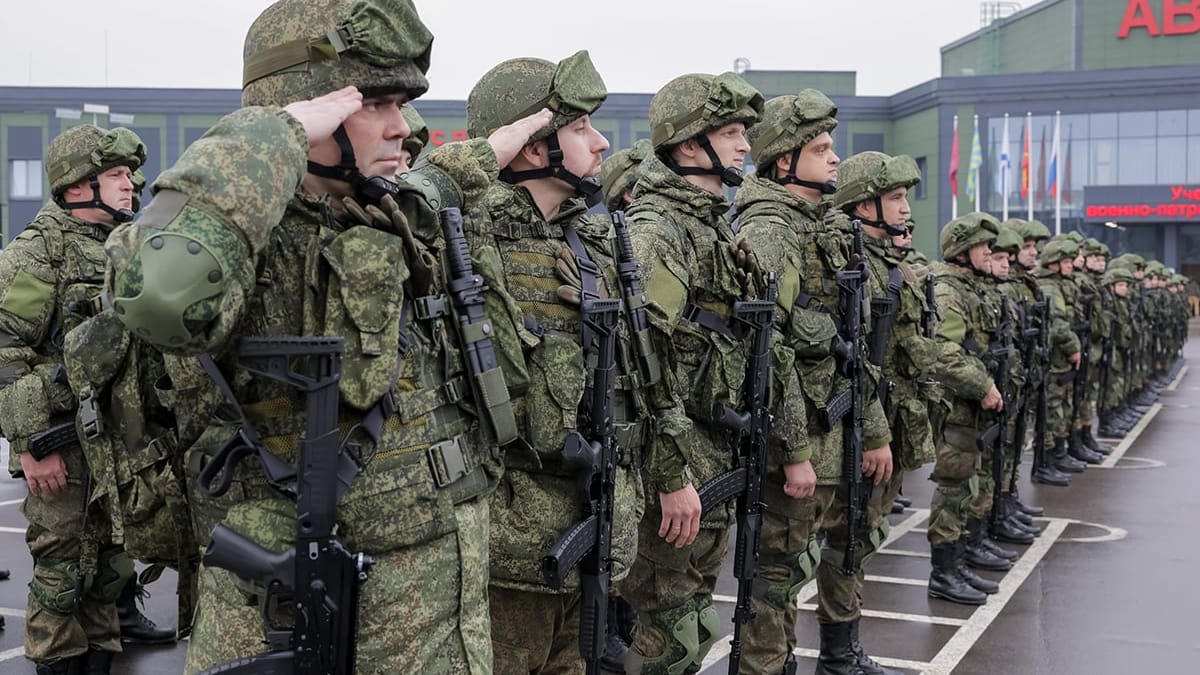
For many, like Rakesh and Rahman, the transition from visitor to soldier occurs only a day or two after their arrival to Russia. Newcomers are processed at administrative hubs like the Avangard or Sarmat training centers. They often have their passports and phones confiscated on arrival for security processing, cutting them off from communication with their families. In Omar’s case, his passport was burned. It’s often in these centers that recruits begin to understand the reality of their situations; far from filling non-combat roles, they will soon be heading to the front.
Once processed, the recruits enter a rushed training cycle. Although the Russian Defence Ministry mandates at least four weeks of combat and survival training, some foreign mercenaries reported receiving as little as 10 days of basic instruction before being sent out. This, however, is not limited to noncitizens; one Russian soldier reported having to teach his comrade how to use a machine gun after being sent to battle with only five days of training.
At the front, foreign recruits are often funneled into high-risk assault units where they are used as “mayachki,” or beacons. These soldiers are ordered to walk ahead of ethnic Russian troops to dig trenches or draw enemy fire. In one video, an African fighter is apparently expected to storm Ukrainian positions with a landmine strapped to his chest, blowing himself up to open a skirmish. The Russian soldier behind him called him a “piece of coal” while pushing him toward the objective with the business end of his weapon. Another video seems to show a Russian-speaking voice referring to a group of African soldiers as “disposables,” laughing that they would all soon be sent into the fray.
This cruelty on the front line is reinforced by a secondary system of discipline designed to crush any remaining resistance once recruits receive their orders. Those who protest their working conditions or attempt to get out of their contracts are threatened with violence or death. This abuse is exacerbated by a purposeful type of isolation in which foreign units are often organized without any Russian speakers. This forces commanders to communicate through translation apps or hand gestures and ensures that the foreign soldiers stay disconnected from the regular forces they’re expected to give their lives for.
The tactical brutality of the “mayachki” protocol serves an important political function for the Kremlin. By scouring the world for manpower, the Russian command has created a buffer of ghost soldiers whose deaths carry no political weight in Russia. Because there’s no domestic accountability for the loss of a foreigner, these individuals are treated as expendable human materiel, allowing the Russian military to sustain its staggering loss rate, estimated to be around 1.2 million as of January 2026, while prioritizing the survival of ethnic Russian soldiers. This strategic outsourcing is likely designed to prevent another mass mobilization like the one in 2022, which resulted in political unrest and mass emigration among the local populace.
Nor are these tactics limited to the battlefield. In an effort to sustain Russia’s wartime manufacturing needs, similar programs have begun targeting foreign women. Generally from developing countries, ages 18-22, they’re drawn to Russia for a work-study program in the foodservice industry or similar. Adau, from South Sudan, told the BBC she was interested in becoming a tower-crane operator - but when she arrived she was instead put to work in a drone factory, a role that placed her in direct danger when Ukrainian forces targeted the building.
The Economics of Abandonment
Moscow’s recruitment of foreign soldiers is based on a devious financial strategy: the promise of newfound wealth, followed by a bureaucratic disappearing act the moment they’re no longer useful on the battlefield. By late 2025, at least 11 regions in Russia began delaying injury payouts and reducing sign-on bonuses as a result of budget shortfalls. As funding steadily depletes, even death benefits are being withheld or reduced. This has locals speaking out, although Russian families are at least reported to receive gifts from authorities in lieu of payment, from towels to vegetables.
The families of noncitizen fighters by contrast receive no such consolations. For them, collecting benefits can be even harder, if not outright impossible.
Russia has been accused of concealing deaths by listing soldiers as missing rather than killed to create ambiguity around payouts. Intercepted calls published by Ukrainian intelligence reveal commanders insisting that their dead comrades are still alive in an effort to freeze compensation claims. Senior Russian military officials are acknowledging a similar problem — according to Sergei Lyapin, unit commanders are overwhelmingly failing to conduct appropriate checks before labeling soldiers as absentees, resulting in about 60% of those labeled as AWOL being designated without sufficient justification. These tactics allow the Ministry of Defense to void death benefit payments.
This abandonment of responsibility extends to repatriation, where the remains of foreign combatants are often treated as logistical waste. Investigations by the I Want to Live project have revealed a systemic issue where Russia includes its own deceased in exchanges meant for handing over Ukrainian defenders; the remains of at least one foreign mercenary was among them. The bodies of other international personnel are simply being left on the battlefield, like that of Charles Wangari, a 32-year-old from Kenya. After being told by one of Wangari’s brothers-in-arms that his remains couldn’t be retrieved, his family was forced to hold a symbolic burial with an empty casket.
As its abuses become harder to conceal, Russia’s international recruitment tactics have attracted attention from global governments, forcing many nations to choose between maintaining diplomatic relations and keeping their own citizens safe. In response to reports of its people dying on the front lines, the Kenyan government promised in February to ramp up efforts to secure the release of locals tricked into military service through employment scams. Taking a more severe approach, Baghdad, handed down a life sentence to a Russian military recruiter found by the judiciary to have engaged in human trafficking.
The treatment of foreign fighters reveals a grim new fact of modern warfare: the ability states have to outsource their suffering. For the Kremlin, foreign lives are cheaper than Russian ones, and far easier to lose without consequence. In 2026, the Russian war effort has become a machine that consumes the desperate from around the world to protect the elite at home, turning the battlefield into a graveyard for those — like Omar and Charles — who had the misfortune to believe the smiling woman on Telegram.
Written by
Fronts Staff delivers reporting and analysis across defense, security, and global affairs.
Related articles
When There's Unrest in Russia, Watch the North Caucasus
Neil Hauer · September 7, 2026 · 9 min read
Why Did Russian Democracy Fail? Start With its Minorities
Henrik Hannes Herkel · August 24, 2026 · 13 min read
What's Really Going On With Fedorov’s Firing? A Former Adviser Explains
Mykhailo Fedorov’s dismissal was officially presented as part of a government reshuffle. The real explanation lies in his growing popularity, his confrontation with Ukraine’s military establishment, and the powerful interests threatened by his defence reforms.
Illya Sekirin · August 18, 2026 · 12 min read
Continue in
Become a Member
Members get full access to premium reporting, in-depth briefings, and subscriber-only analysis.
Insiders Receive
- Full access to all premium articles and briefings
- Exclusive subscriber-only analysis and dispatches
- Support independent conflict journalism
Signed in or already a member, but still locked? Fix an access problem
From $5/month — cancel anytime