
Are Two of the World's Deadliest Wars About to Collide?
Simon Whistler • September 8, 2026
Members only
Note: this transcript was generated by AI and may contain errors or inconsistencies.
On Saturday, the 1st of August, the world woke up to the news that no one wants to hear, but the deadliest war of the 21st century has just restarted. We don't use those words lightly, so let's say them again. The deadliest war of the 21st century.
In the last 26 years, the world has witnessed devastating fighting in Iraq, Ukraine, Afghanistan, the DRC, Sudan, and so many other places, but the Tigray War stands out above all the rest. Most estimates put the death toll at over 600,000, and historical accounts consistently highlight just how willing both sides were to commit war crimes.
And although Tigray has faded from the global headlines since the fighting ended, the situation there hasn't gotten any better.
In fact, it seems like things are about to become much worse, especially now that Sudan's devastating civil war seems to be converging with the deadliest war in Ethiopian history.
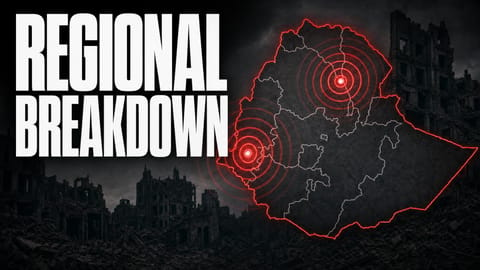
Drone strikes and alliances When the fighting erupted on the 1st of August, it began in the same place most observers thought it would, on the western edges of the Tigray region, on territory that has been contested since the end of the recent war.
It's contested by the Amhara, the community that was allied with the Ethiopian federal government during the First Tigray War, but is currently in the midst of their own conflict with the state.
Back at the height of the Tigray War, the Amhara used the conflict as an opportunity to seize the land that's disputed today, and they've held that land ever since. Apart from grabbing the lands, we'd be remiss not to mention that the Amhara committed a whole host of war crimes during the prior conflict.
The Tigray and their regional paramilitary force, known as the TPLF, want that land back.
They argue that returning it to Tigray was part of an arrangement that was supposed to settle this issue years ago, known as the Praetoria Agreement. To keep a really long story short, the first iteration of the Tigray War between the Tigray TPLF on one side and the Ethiopian national defense forces and their allies on the other, began in 2020.
That war followed a concerted effort to reduce the TPLF's influence across Ethiopia.
Tigray had dominated Ethiopian politics for nearly three decades, and their rule had become extremely unpopular, which led to massive protests in 2015 and the resignation of the prime minister at the time.
This paved the way for Abiy Ahmed, the nation's current prime minister, to rise to power, and once he took charge, he launched a concerted effort to reduce the TPLF's influence.
We're obviously glossing over a lot of the history here, and if you'd like to learn more, we have several episodes in the archives here on Warfront, so do check those out if you like, this episode, of course.
And I mean, if you want to watch the Mad Free, there's always Fronts.co, isn't there? The renewed fighting of 2026 started because the Praetoria Agreement, the peace deal that ended the First War, didn't resolve a lot of the underlying issues that caused the fighting in the first place.
With a lack of attention paid to those problems, the Praetoria Agreement allowed frustrations to simmer until they bowled over.
Analysts of the conflict monitoring group Akled believed that the TPLF decided to retake the territory and mobilize their forces for an attack.
They called up an experienced paramilitary unit that had fled Sudan, at the end of the last war and once there ended up fighting alongside the sudanese armed forces or saf against the paramilitary rapid support forces or rsf in sudan's own civil war these are the forces that fought the ethiopian federal military on the first of august according to multiple
Reports the tigre were pushed back and suffered significant losses in the process for a while afterwards there were no further clashes and it seemed that cooler heads would prevail with at least one tplf source confirming to agence france press that this situation had since de-escalated as it turned out however ethiopia has about as much of a chance of going
Back to normal as the french do at winning a war on the 10th of august ethiopian military struck a school that was on holiday break in merewa the village about 160 kilometers from the tigrean capital of mckelly the bbc reported that three tplf fighters were killed while seven were wounded a local official also claimed that one civilian was killed and four
Others wounded adding that a nearby river where people fetched water was also hit a few days later ethiopia struck again this time targeting multiple locations in and around mckelly on the 18th and the 20th the tplf accused ethiopian forces of targeting residential areas and injuring over a dozen civilians and then from the 24th to the 26th adis albaba
Struck across eastern northwestern and southern tigre ground fighting also picked up albeit temporarily on the 15th government and tplf forces fought around kobo a town near the border between the tigre and amhara regions both sides had reportedly been amassing their forces near the area and these clashes were just proof of how quickly the situation could
Escalate throughout this time both adis ababa and mckelly have been trying to win the war of public opinion ethiopian state media has portrayed the tplf as the aggressors and an illegal governing entity while the tplf has repeatedly denounced the federal government as being genocidal amid the drone strikes but the most consequential development of all was
The recent announcement by a rebel commander named zamena kassi not the leader of the tplf but the leader of the strongest of the militias collectively known as the farno the farno and amhara ethno-nationalists organized into fighting forces that are currently engaged in their own battles against the government during a rare sit-down interview with swiss
Outlet le ton cassi announced the months of negotiations with seven other armed groups had concluded and they had formed an alliance called simdo with one goal to remove abby ahmed from power what makes this alliance particularly noteworthy isn't the ambition although it's important to know that the alliance members all believe that they're able to succeed
Right now every insurgent leader around the world not just in ethiopia but everywhere wants to emulate the man who currently serves as the transitional president of syria ahmed al-shara prior to becoming the interim leader of his country al-shara led the rebel group hayat tahrir al-sham which overthrew long-time syrian dictator bashar al-assad al-shara has
Lived out the transformation that every rebel leader aspires to in which he went from being a jihadist commander loyal to our Kaida to a president who sat at the same table as the American president, Donald Trump, and French president, Emmanuel Macron.
But what really makes the new Ethiopian Rebel Alliance noteworthy are the members.
The man who announced the agreement, Zemene Kasi, told the outlet that the Farno, the TPLF, another powerful ethnic militia called the Oromo Liberation Army, and several other ethno-nationalist groups across Ethiopia were all part of the alliance. And to be clear, most of these groups cannot stand each other, at least in ordinary times.
The Amhara and the Tigrayans have decades of bad blood between them, and that's before you get to the war crimes both sides committed against one another during the last war, or the fact that they both still claim Western Tigray as their own.
The Amhara and the Oromo, meanwhile, have been fighting over a different patch of territory for years, with the Amhara accusing the Oromo of trying to drive them out of the region entirely. Getting all of these groups to agree on anything would have been unthinkable a few short years ago.
If anyone had suggested that they would all be fighting on the same side, they would have been laughed out of the room.
The fact that they are seemingly on the same side now is a testament to how much of a threat they consider Abiy Ahmed to be. With all of them on one side, they pose a much more significant threat to Addis Ababa.
In an exclusive interview with the war front team, Michael D'Angelo, Horn of Africa expert at the Critical Threats Project, explained, "The potential for tactical military collaboration between the groups could put additional pressure an Ethiopian military already fighting or preparing to fight on multiple fronts." D'Angelo added that Ethiopian federal
Forces had been unable to root out the Faroe and Oromo insurgencies, forcing the government to devote additional resources to containing If these groups were to collaborate and became more militarily effective as a result, then the Ethiopian government would find itself increasingly stretched thin, especially at a time when it should be addressing the TPLF's
Consolidation of power in Tigray.
However, the alliance might not be quite as solid as it appears. The fact that these groups share a common enemy in Addis Ababa doesn't erase the years of hatred between them. It also doesn't change the fact that each group has its own goals for the nation's government in the event that any of them could bring Ababa down.
All of this, according to D'Angelo, will likely hinder the formation of a broader alliance. And cracks have already started to appear.
On the 8th of August, regional security forces in Oromia, a local militia, and elements of the Oromo Liberation Army all clashed with the Farno in an area called East Walega, despite the fact that the Oromo and the Farno are supposed to be allies.
Instead, the Oromo ended up coordinating with government forces for the very first time. That's according to ACLED senior analyst Dr. Jalale Garachubiru. There are cracks inside the Farno too, despite the fact that they're the ones pushing hardest to form this new rebel alliance.
Eskinder Neger, one of the movement's most influential figures, told DW that the alliance was being put together without the knowledge of all of Farno's members, a reality that he's called unacceptable.
He since reportedly surrendered to the government according to local outlet newsadis d'angelo told our team that if the news of this defection were true it would be deeply symbolically significant because of eskinder's prior leadership role in farno however it would have limited practical impact because the current farno leadership has been isolating
Eskinder since early 2026. given that there haven't been any more reported defections the alliance does seem likely to survive at least for now this is a troubling development for addis ababa but a major win for the alliance's primary external backers sudan and eritrea sudan in particular has reportedly facilitated multiple meetings around the rebel group
Since 2025 to coordinate military strategy against the ethiopian federal government and all of this raises a couple of interesting questions first of all why are sudan and eritrea so willing to back the new rebel alliance and second could sudan's involvement in ethiopia's crisis herald the moment two of the world's deadliest conflicts merge into one single
Disastrous war enemies everywhere so let's go back to that first question shall we why would sudan and eritrea support this rebel alliance against ethiopia during the first tigray war eritrea fought on ethiopia's side because eritrea's long-time dictator isias afwerki viewed the tigray as one of his most dangerous opponents this enmity dates back to the 1998
War between eritrea and ethiopia back when the tigray were in charge over unresolved border disputes that was a war in which more than a hundred thousand people died ethiopia would go on to win that war after the eritrean military basically collapsed despite losing on the battlefield eritrea would go on to have a significant diplomatic victory after an
International boundary commission awarded the disputed village of badme to eritrea in 2002. however the tplf-led government in ethiopia simply refused to hand it over the next 16 years the two nations coexisted uneasily and then the tplf lost power when abhi ahmed became prime minister abhi made peace with eritrea relinquished ethiopia's claim to any
Disputed territory and got a powerful ally in afwerki when the war between adis ababa and the tplf began afwerki sought a chance to settle that old score eritrean troops didn't just fight in the war that followed they were accused of some of its worst atrocities including the mass killings and violence documented across the whole tigray region then the war
Ended and eritrea got nothing for its trouble the praetoria agreement was negotiated entirely between the tplf and the federal government and despite the role that eritrea had played in helping abi's forces secure victory asmara was left out in the cold on top of that landlocked ethiopia spent the next few years yearning for access to a seaport and the
Country took a particular interest in assab an eritrean deepwater port that was previously adis ababa's main access to the sea before eritrea gained independence in 1991 and say whatever you will about abby ahmed but the guy loves a bit of waterfront property to the point that he's made several of his neighbors nervous not just eritrea that he could engage
In over military action to reach the sea in response eritrea supported multiple separatist groups within ethiopia including the fano eritrea hopes to use them to keep ethiopia fractured preoccupied and too internally bogged down to ever mount a serious push for the red sea as part of this strategy eritrea has also mended fences with its old rival the tplf
And is now one of the group's main supporters by the way that is a running theme in this part of the world there seems to be no historical grievance that two factions can't put aside at least temporarily to join forces in going after a common rival after fighting and resumed in early august senior eritrean military officers turned up in tigray for a meeting
With their tigrean counterparts broadcasts at the meeting showed the eritrean tigrayan and tplf flags flying side by side with the ethiopian flag noticeably absent and then the sudan khartoum's involvement in ethiopia's crisis seems to stem from the fact that addis ababa chose a side in sudan civil war and that side was the sudanese military regime's enemies
The paramilitary rsf in december 2023 the rsf's leader landed in adis ababa to be received by abhi ahmed personally abhi later posted pictures of himself and the leader a guy who could be charitably described as a genocidal maniac seated at a restaurant table at the time the rsf was going from strength to strength having recently captured sudan's second
Largest city wad madani given the momentum that the group had observers were predicting that they had a real shot at winning the war that relationship has only deepened since despite claims by abhi's government that they have remained neutral in the war in february this year reuters reported that ethiopia had built a secret training camp for the rsf near the
Sudanese border with the uae reportedly financing construction and providing trainers reuters also revealed that the camp had been set up by general geduchu gdena as the chief of the defense intelligence department of the ethiopian military the camp can hold up to 10 000 fighters and by january there were around 4 300 rsf fighters undergoing military
Training at the site the saf has also accused ethiopia of letting the rsf launch drone strikes and stage attacks from inside ethiopia's borders all of which brings us to the rsf leader her methi's second visit to addis ababa on the 26th of august this year methi was received by abi's deputy pm who does double duty as foreign minister along with his state
Minister national security advisor and other senior officials that kind of reception is usually reserved for a high-ranking foreign dignitary not the leader of a paramilitary group that's been credibly accused of committing genocide among other war crimes which begs the question why is ethiopia supporting the rsf especially in light of you know all their
Atrocities the answer as in so many questions across the horn of Africa these days is the UAE.
Abiy Ahmed is loyal to Abu Dhabi because without Emirati support, probably would have been defeated by the TPLF.
In late 2021, it seemed the TPLF was on the upswing, winning battles and pushing federal forces back. They were about 320 kilometers from the capital at one point, and observers feared that it would only be a matter of time before they covered that distance and captured the city.
But then the UAE sent an air bridge of more than 90 flights containing drones and other critical fighting equipment that halted the TPLF's advance. the same kind of support that the Emirates is giving to the RSF, which explains why there's so much bad blood between Khartoum and Addis Ababa and why Khartoum seems willing to work with Abiy's enemies.
All of which leads us to our final question. Are we witnessing the moment when Sudan's civil war and Ethiopia's internal crisis combine into one? Unfortunately, nobody knows for sure, but Ethiopia's allies do seem concerned, and in moments like these, their concern definitely counts for something.
After Hometi went to Ethiopia, the leader of the Sudanese military regime went to Eritrea in a not-so-subtle reminder to Abiy that the SAF has friends too. However, a visit is not a declaration of war, especially because the Sudanese military can't afford to open up a new front right now.
The RSF has been making significant strides in Blunar state, including capturing two army bases.
The paramilitary is currently making its way toward the capital of Blunar state, and the SAF around the clock to prevent the city from falling into the RSF's hands. At the same time, Khartoum is fighting a very different war on the international stage.
Washington has proposed expanding an arms embargo, which is currently limited to the Darfur region, to cover the whole of Sudan.
Marsha Aboulos, senior advisor to the president for Arab and African affairs, argued that is the only way to stop external support for the conflict.
But while this is a commendable idea, and we've said multiple times on this channel that the only way to get both sides to the negotiating table is to cut off external support for this war, this version of an expanded arms embargo would probably backfire.
In current form, it would only serve to hamstring the Sudanese military while the RSF continues to be supplied by the UAE.
At this point, the Emirates have built a network of willing partners, including Ethiopia, and don't seem to even slightly care about the existing embargo. It's unlikely the UN Security Council will approve the proposed expansion, given that Russia was warning that it could significantly impact the Sudanese military's ability to fight.
While that's good news for the SAF, they can't really relax until the issue is put to rest.
Ethiopia, on the other hand, doesn't have to deal with an international arms embargo. Instead, the various insurgencies within the country have Addis Ababa's full attention, especially if there's a risk of them joining into a real, long-term rebel alliance.
That doesn't leave much room for a fight with Sudan, even if Khartoum facilitated the union between the various insurgencies.
All of which is to say that a war between these these two neighboring nations is unlikely. likely is not impossible, especially when both nations are so deeply entwined in the other's crisis at a moment when one wrong move could set the whole region alight.
Watch with Fronts Insider
Fronts Insiders get every video, the complete archive, and private sponsor-free playback.
Insiders Receive
- Every WarFronts, HomeFronts, and Insider video
- Complete sponsor-free video archive
- Support independent conflict journalism
Already a member? Log in →
Signed in or already a member, but still locked? Fix an access problem
From $5/month — cancel anytime
