
Skip to content
Fronts.co
Insider

Meet the Marco Rubio of the Middle East

Simon Whistler • August 19, 2026
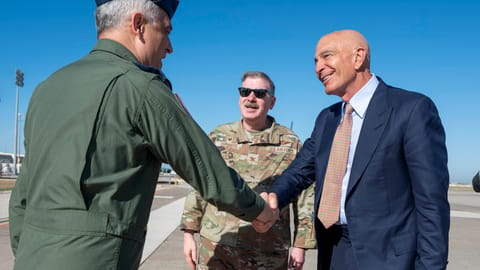
Meet the Marco Rubio of the Middle East

Members only

Note: this transcript was generated by AI and may contain errors or inconsistencies.

There is a man in the current Trump administration who's punching way, way above his weight. A man with so many jobs that it's hard to keep them all straight, who seems to be running into our countries himself. Countries other than the United States.

The man you're almost certainly thinking of is none other than Marco Rubio, whose resume has taken on a life of its own. Yet we're actually not discussing the Venezuelan viceroy today at all. Instead, we're talking about the man who may be his Middle East equivalent.

Tom Barrack is a guy who holds nearly as many jobs as Rubio while getting only a fraction of the attention.

But despite the lack of focus on him, he's equally fascinating, not least because he appears to be pursuing a foreign policy that deviates from much of the rest of the administration, including skepticism towards Israel and a more friendly approach towards Turkey. And that makes him worth a closer look.

One man, many jobs. When Tom Barrack arrived in Ankara in May 2025, he did not have the typical resume of a diplomat. He'd spent the majority of his life in private equity, where he had befriended Donald Trump all the way back in the 1980s.

Now, friends of administrations getting ambassadorial roles despite having no such qualifications is nothing new. But usually they're sent to rather less insignificant outposts where the damage they can do is relatively limited. Turkey, however, is not what you would call insignificant.

And incredibly, it's not even Barrack's most difficult assignment. In his first month, he was also appointed as special envoy for Syria and then also was tasked with overseeing the disarmament process in Lebanon with Hezbollah.

From there, the lines of separation between what is and is not officially his responsibilities have become increasingly difficult to make out.

He now serves as special envoy to Iraq, where he's been working closely with their new prime minister. There, the two have coordinated to move fast to combat that outsized role that Iranian-backed proxies play in the country.

And in case that wasn't enough, he's also been spotted in multiple rounds of negotiations with the Israelis, usually pertaining to Syria and Lebanon, but has increasingly played a role in pushing back on Jerusalem on a number of issues across the region.

Barrack's also not been shy about making a name for himself while there. During a panel discussion earlier this year, in Antalya, for example, he was discussing the fragile ceasefire in Lebanon when he said that he believed Israel and Hezbollah to be equally untrustworthy. For non-US viewers, that may seem a bit of a nothing-burger statement.

But given Washington's long-standing relationship with Jerusalem, this was damn near heretical. And true to form, it set off a series of fireworks in US media.

Fox News host and long-time champion of Israel, Mark Levin, called Barrack the worst and poison, adding that he should be fired outright, while the pro-Israel Foundation for Defense of Democracy's executive director, Jonathan Schanzer, wrote that Barrack was undermining US interests.

The Wall Street Journal editorial board stopped short of outright calling for his ouster, but nevertheless tore into him in their piece, Tom Barrack has his own Mideast policy. This isn't the first time Bragg's caused a stir regarding Israel either.

Last summer, in the aftermath of a massacre in the Syrian province of Sueda, where clashes between Druze and Bedouin fighters killed no fewer than 1,120 people before Israeli jets bombed downtown Damascus to force the government to withdraw, Bragg wasn't afraid to take a stand against Israel.

He accused Jerusalem's foreign policy of being based on keeping Syria fragmented and divided rather than allowing for a strong central government to emerge. You'd have thought that, given all this, someone inside the administration might have told him to, you know, tone it down a bit.

Yet his influence only seems to be growing, especially when it comes to the US alliance with Turkey, which had long been under strain.

It was, after all, Trump himself back during his first administration who kicked Ankara out of the F-35 program on account of their purchase of the Russian S-400 air defense system.

Relations had stayed chilly under the Biden administration on account of his long-time support for the Kurds, as well as the debacle that was Turkish reluctance towards admitting Sweden into the NATO alliance. But with Bragg now on the scene, relations are so warm they're positively toasty.

He had long been a champion of reconciling Washington and Ankara and quickly became one of the administration's most enthusiastic advocates for readmitting the Turks back into the F-35 program.

He repeatedly insisted that the S-400 system was a barrier that could be overcome, as the Turks would be willing to just return it back to Moscow on account of it being more trouble than it was worth. Now, we should note that at the time of writing, Barack still has yet to get his way.

As of August 2026, Erdogan remains outside of the oh-so-exclusive F-35 club, looking in on all the guys having fun with their new toy. But it's starting to look as though he might get his way.

Turkey has announced that it's in discussions with the UAE to transfer the system to them, and despite a fierce effort from Israel, Trump announced that he would, quote, do something that's going to make Erdogan very happy.

Now, by this point, you might find yourself wondering something like, who the hell is this guy? Well, when it comes to answering that, Barack has been remarkably transparent about both who he is and where he stands. And many of those takes have made for some spicy headlines, to say the least.

A Different Worldview Barack's comments have landed him in hot water, it might just seem that he's simply channeling his boss. You know, throwing out some verbal bombs and moving on without much of an underlying philosophy or worldview. That could not further from the truth.

Barack has quite the philosophy when it comes to Washington's approach to the Middle East, and it basically comes down to thinking that the US has spent far too much time trying to decide what the region ought to look like, how it should be run, and ultimately, what governance structures it should revolve around.

He doesn't lay the entirety of the blame for current Middle East crisis woes at the feet of Washington, though. In keeping with the administration's euro-bashing, he says the blame lays at the feet of the Sykes-Picot agreement between Britain and France that carved up the former Ottoman Empire.

While plenty of historians have slated the agreement for drawing new borders haphazardly, Bragg goes one step further. In his telling, the bigger mistake was the assumption that drawing any set of borders would turn societies built primarily around family, village, sect, and religion into functioning states.

As he put in one interview, the West essentially drew borders around tribes, then spent the next century wondering why national identity did not simply replace all of the loyalties that existed before it.

Now, the history in the region is more complicated than Bragg lets on. Sykes-Picot was never fully implemented, and the West was never consistent about democracy promotion in the region. Its closest partners have, after all, tended to be monarchies.

But Bragg's broader point is nevertheless an interesting one, and one that does get to the heart of more than a century of issues in the region. A different borderline running between Syria and Iraq, for example, would likely not have resulted in either becoming paragons of stability.

But when you take this as Bragg's starting point, a lot of what he's doing starts to fall into place.

If Washington has repeatedly gotten itself into trouble, both at home and abroad, by trying to impose a vision that makes sense to itself on a region that doesn't accept it, then the answer is not another grandiose American plan for building the region. Instead, Uncle Sam should concentrate on getting the hell out of Dodge.

If that sounds like the type of isolationism that usually comes from the likes of Thomas Massey, you wouldn't be the only one to make that connection.

But the underlying philosophy is quite different. It's not that the US has no role to play in the world. It's instead a recognition of the US's limitations in terms of what it can realistically achieve.

That's why Bragg has been quite dismissive of anything in the vein of democracy promotion, focusing less on natural rights and more on whether a state can actually deliver on basic governance.

He has, after all, come out and said that the only thing that's ever worked in the Middle East were powerful leadership regimes, either benevolent monarchies or monarchical republic-like structures. Adding that countries that have put on the cloak of democracy or that we pursued for human rights have failed.

However, the point isn't whether his philosophy makes sense in its own terms. It's that this is all a massive departure from previous US policy in the region. And the core of this is the relationship between Turkey and Israel, where Brak firmly seems in Ankara's corner.

Given his worldview, it's not difficult to see why. In a region where Western democracy has a pretty piss-poor track record of taking hold, Turkey's tradition of strong, centralized rule has proven to be durable for decades. This, of course, predates Erdogan, it was there in other forms before he showed up.

The military spent much of the country's modern history acting as its own system of checks and balances, carrying out four separate coup de tas in as many decades when it thought any government was getting a bit too big for its britches.

Erdogan has largely dismantled that old system, but the broader tradition of a powerful state and centralized authority very much remains.

Brak's point here is not that Washington should go around creating systems like this, more that it should stop interfering with ones that already do function along these lines, so long as they do, in fact, function as states.

That view matters even more in Syria, where Ankara has outsized influence over the new government, meaning that backing Turkey effectively now means backing Damascus too. And when it comes to supporting the Turks just about anywhere in the region, it's bound to come at the expense of the Kurds.

Barack has repeatedly rejected calls for federalism inside Syria that would grant ethnic minorities, Kurds included, greater autonomy, siding with the same centralized model that both Damascus and Ankara have been pushing for.

But beyond Turkey and Syria, this gets to a bigger question about how the Trump administration governs, because Barack is far from the only person who essentially seems to be freelancing foreign policy.

Governance Trump-style While very few US administrations have ever had a completely consistent set of foreign policies, the Trump White House is on a whole other level.

For both of his terms, he has governed as an eclectic combination of isolationist and interventionalist, ranging from variously promising to withdraw from NATO all the way to launching a major war with Iran.

Part of this can be attributed to his highly erratic nature. A guy with elite-level concentration, this is not. But that can only explain so much.

An administration, especially one governing a global superpower, is far more than just the executive himself. And that's where Barack really stands out. Trump goes well beyond anything previous administrations have in terms of granting enormous latitude towards various staffers who happen to carry his favor at any given moment.

The man we opened today's episode comparing Barack to is himself a perfect example of this. Marco Rubio is the first person to hold both the role of Secretary of State and National Security Advisor since Henry Kissinger, but is doing so while also effectively co-running the nation of Venezuela alongside acting President Delci Rodriguez.

And Rubio isn't even alone in holding a gigantic portfolio he seems able to put his personal stamp on.

Trump's son-in-law, Jared Kushner, has been an omnipresent factor when it comes to the administration's dealings with the Middle East across both Trump terms. Kushner was, after all, one of the masterminds behind the Abraham Accords.

Steve Wyckoff, meanwhile, has played a similar role in the second administration, becoming the guy the White House turns to whenever it wants to cut a deal with Iran or Russia that heavily favors America's enemies.

But what differentiates Barack is that unlike these other guys, who are largely playing for the team in perhaps slightly different ways, Barack really does seem to be freestyling his own foreign policy, and often in a way that runs counter to the rest of the administration. Yet, Barack still seems to retain their trust.

Rubio praised him publicly as recently as this past May, and Trump himself is consistently at his back.

Whether that's because they genuinely agree with him or they merely recognize that he's a man who can carry favor with Erdogan is an open question. But either way, nobody who actually has the authority to rein Barack in has shown any public interest in doing so.

And yet, there are obvious to letting one diplomat shape his own policy, even when it isn't at odds with the administration's stated goals.

Otherwise, you get the kind of confusion and chaos we already saw earlier this year.

Depending on who you ask, the US might have been moving toward arming the Kurds earlier this year in an effort to topple the regime in Tehran, or the US might have been pressuring Israel into not arming the Kurds in an attempt to stop the Turks from entering the war on behalf of Iran. far as anyone can tell, both of these things appear to have been true.

If the reporting is to be believed, one part of the administration was all like, yay, the Kurds, our secret weapon, another part, headed by Barack, was going, the more and more, we don't want to piss off Turkey, okay, guys?

The results, in that case, were chaos, with potentially serious knock-on effects for US foreign policy. And they may just be a taster of things to come, not least due to the enormous number of portfolios Barack is managing. As we speak, Trump's man in the Middle East is currently neck-deep in Turkey, Syria, Iraq, Israel, and at least until recently, Lebanon.

When combined with outsized role the US plays in the Middle East, the result of all of this is that one man's instincts about how the region actually works can have a serious impact.

In that sense, comparing Barack to Rubio almost undersells his role, because here, the thing that historians seem likely to be most surprised by is less the various titles he holds, and more the amount of US Middle East policy now flowing through the judgment of one man.

Whether that judgment comes to be seen as wise or spectacularly wrong-headed by those future historians, is something we'll just have to wait and see.

Thank you for watching.

Insider access

Watch with Fronts Insider

Fronts Insiders get every video, the complete archive, and private sponsor-free playback.

Insiders Receive

  • Every WarFronts, HomeFronts, and Insider video
  • Complete sponsor-free video archive
  • Support independent conflict journalism

Already a member? Log in →

From $5/month — cancel anytime