
Russia REALLY Hates Britain. Here's Why.
Simon Whistler • September 17, 2026
Members only
Note: this transcript was generated by AI and may contain errors or inconsistencies.
There's an old joke paraphrased for modern times and it goes a little something like this two englishmen are sitting in a railway carriage one is reading the sunday times and the other is reading the comsomolska pravda an old soviet newspaper the first man looks over and he says good god charles why are you reading that the man folds the paper down and says
Well when i read the sunday times i learned that britain is broken the nhs is collapsing the army can't recruit the navy has no ships the trains don't work the government is incompetent and nobody can afford a house and he holds up his own newspaper and says but according to this we secretly run ukraine control the european union commander nato from the
Shadows overthrow governments with mi6 sabotage russian pipelines organized revolutions cross-continents direct the entire western media and have spent the last three centuries masterminding the global conspiracy to encircle russia it's much better reading old chap now look of course this is a joke but there is a kernel of truth to it for whatever reason the
Kremlin does seem to truly believe that the uk is a far more malignant powerful force than it really is former president and prime minister of russia dimitri medvedev said of britain that it quote is and will be our eternal enemy he also elected to call it a quote impudent and disgustingly damp ireland well i mean he's half right it is damp but the bigger
Point is that this is a genuine mystery why does russian high command have such a visceral distaste for the uk when other countries send more arms to ukraine seize more russian shadow fleet tankers and act more forcefully oh and moscow i'm not sure that's the answer to that question but i think it's the answer to that question i think that's the answer to
That question i think that's the answer oh when moscow crosses the line and what does this tell us about the current thinking in the kremlin the british puzzle the entire security apparatus of russia doesn't like the uk in march of 2025 the svr think of them like russia's cia called london the main global warmonger they even revised the old phrase perfidious
Albion to describe britain which frankly is a way cooler nickname than we deserve the trains barely work russian officials have also described britain as the locomotive that pulls other countries along behind it and i'm sure there's another train joke in there somewhere perhaps our locomotives are at least pulling something there have even been thinly veiled
Kinetic threats with russian officials and propagandists openly musing about bombing the uk but this kind of ridiculously over-the-top rhetoric begs the question of why in 2026 britain and i am speaking as an oh-so-proud brit here is a second-rate world power with prospects somewhere between dire and grim the armed forces are a mess the economy is stagnant
We change prime minister more frequently than italy and our most popular politician may be a man with a bin on his head the idea that we're secretly influencing global events is flattering and also deeply deeply unlikely so then why does russia's hostility towards britain massively outweigh its true geopolitical position on the world stage you might say the
Obvious answer is ukraine london has held firm in its stance over supporting ukraine in its fight against russia but that doesn't really explain things at least not in its totality and in comparison to other nations after a slow start germany has now supplied more military aid to kiev than any other country bar the united states poland is geographically much
Closer and has been itching for a fight with moscow for years the baltics and finland are much more strident on russia at the eu and nato level and france are now much closer to russia than any other country and yet it is the uk specifically that draws extraordinary levels of russian attention political influence operations by the russian regime on britain
Are vast russia is regularly snooping in british waters mapping undersea infrastructure using submarines to the extent that britain's own security review in 2025 considered counter submarine operations critical to the defense of europe meanwhile in 2025 nathan gill the former ukip mep and reform uk member admitted to taking tens of thousands of pounds in a
Year to provide aid to russians in terms of military equipment for the russians russian defectors have seen their lives threatened as a result of clandestine russian operations on british soil whether it was alexander litvinenko and the case of the radioactive d in 2006 or the scripple case in 2018 when moscow deployed a weapon of mass destruction on the
Streets of salisbury russia has been causing trouble for britain long before ukraine was even in the picture again the question is why britain well let's just say that russia and britain have a lot of history in the history of russia and britain have a lot of history in the history of russia and britain have a lot of history in the history of russia and
Britain have a lot of history in the history of russia and britain have a lot of history in the history of russia and britain have a lot of history the old british hands now the obvious starting point here is the old british hands now the obvious starting point here is the old british hands now the obvious starting point here is the long-standing
Anglo-russian long-standing anglo-russian long-standing anglo-russian rivalry during the 19th century britain rivalry during the 19th century britain rivalry during the 19th century britain repeatedly obstructed russian ambitions repeatedly obstructed russian ambitions repeatedly obstructed russian ambitions around the ottoman empire the around the ottoman
Empire the around the ottoman empire the mediterranean persia afghanistan and mediterranean persia afghanistan and mediterranean persia afghanistan and central asia this was known in part as central asia this was known in part as central asia this was known in part as the great game britain's work was often the great game britain's work was often the great
Game britain's work was often done indirectly through coalition done indirectly through coalition done indirectly through coalition building financing or supporting other building financing or supporting other building financing or supporting other powers naval pressure intelligence powers naval pressure intelligence powers naval pressure intelligence
Activity and backing states around activity and backing states around activity and backing states around russia's periphery this at some point russia's periphery this at some point russia's periphery this at some point generated the wonderfully russian generated the wonderfully russian generated the wonderfully russian expression anglachanka guarded
Figuratively expression anglachanka guarded figuratively expression anglachanka guarded figuratively speaking this means britain is causing speaking this means britain is causing speaking this means britain is causing trouble again literally speaking it trouble again literally speaking it trouble again literally speaking it means the english woman defecates
Such a means the english woman defecates such a means the english woman defecates such a phrase was used to explain when things phrase was used to explain when things phrase was used to explain when things went wrong for russia with the old went wrong for russia with the old went wrong for russia with the old british hands seen as the scheming power british
Hands seen as the scheming power british hands seen as the scheming power lurking in the backgrounds which was lurking in the backgrounds which was lurking in the backgrounds which was true to an extent then came the russian true to an extent then came the russian true to an extent then came the russian civil war british forces intervened in civil war
British forces intervened in civil war british forces intervened in northern russia during the first world northern russia during the first world northern russia during the first world war and continued supporting anti-bolshevik war and continued supporting anti-bolshevik war and continued supporting anti-bolshevik forces afterwards britain supplied white
Forces afterwards britain supplied white forces afterwards britain supplied white forces fought red army units and forces fought red army units and forces fought red army units and operated against the bolsheviks in the operated against the bolsheviks in the operated against the bolsheviks in the baltic royal navy motorboats attacked baltic royal navy
Motorboats attacked baltic royal navy motorboats attacked soviet warships at kronstadt in 1919 soviet warships at kronstadt in 1919 soviet warships at kronstadt in 1919 which is just one of those wonderful which is just one of those wonderful which is just one of those wonderful little historical footnotes you find little historical footnotes you find little
Historical footnotes you find sometimes when researching these things sometimes when researching these things sometimes when researching these things churchill and the cold war then provided churchill and the cold war then provided churchill and the cold war then provided reinforcement for that image of britain reinforcement for that image of britain
Reinforcement for that image of britain working against russia now of course working against russia now of course working against russia now of course russia and britain have not always been russia and britain have not always been russia and britain have not always been eternal enemies the two were allies in eternal enemies the two were allies in eternal
Enemies the two were allies in world war one prior to the bolshevik world war one prior to the bolshevik world war one prior to the bolshevik revolution and both fought against nazi revolution and both fought against nazi revolution and both fought against nazi germany in world war ii but broadly germany in world war ii but broadly germany in world war ii
But broadly britain has always frustrated russia in britain has always frustrated russia in britain has always frustrated russia in the same ways by building coalitions the same ways by building coalitions the same ways by building coalitions helping russia's neighbors controlling helping russia's neighbors controlling helping russia's neighbors controlling
The sea gathering intelligence and the sea gathering intelligence and the sea gathering intelligence and influencing global finance all of which influencing global finance all of which influencing global finance all of which prevents moscow from converting prevents moscow from converting prevents moscow from converting regional strength into wider regional
Strength into wider regional strength into wider geopolitical dominance and this is geopolitical dominance and this is geopolitical dominance and this is remarkably similar to what russia accuses remarkably similar to what russia accuses remarkably similar to what russia accuses the uk of doing today an important the uk of doing today an important the uk of
Doing today an important thing to remember from putin's own thing to remember from putin's own thing to remember from putin's own perspective is that he views himself and perspective is that he views himself and perspective is that he views himself and his reign through russia's own his reign through russia's own his reign through russia's own historical
Lens and for a guy so historical lens and for a guy so historical lens and for a guy so obsessed with history that he wrote a obsessed with history that he wrote a obsessed with history that he wrote a rambling essay about ukraine in order to rambling essay about ukraine in order to justify a full-scale invasion it justify a full-scale invasion it justify a
Full-scale invasion it perhaps makes sense that it'd be more perhaps makes sense that it'd be more perhaps makes sense that it'd be more than a little hung up about all those than a little hung up about all those than a little hung up about all those times britannia defecated on russia's times britannia defecated on russia's times britannia defecated on
Russia's plans putin himself also comes from the plans putin himself also comes from the plans putin himself also comes from the soviet kgb and presides over a state soviet kgb and presides over a state soviet kgb and presides over a state unusually dominated by the russian unusually dominated by the russian unusually dominated by the russian security
Apparatus he has forever security apparatus he has forever security apparatus he has forever existed in a security culture existed in a security culture existed in a security culture predisposed to interpret politics predisposed to interpret politics predisposed to interpret politics through espionage proxies subversion and through espionage proxies
Subversion and through espionage proxies subversion and shady shenanigans so historically shady shenanigans so historically shady shenanigans so historically britain fits that narrative really well britain fits that narrative really well britain fits that narrative really well london grad london grad london grad now as we said relations between britain now
As we said relations between britain now as we said relations between britain and russia were not always terrible and russia were not always terrible There is, of course, the allyship of yesteryear thanks to the Second World War, but you don't even need to go back that far to find when relations were last alright between London and Moscow.
Putin made a state visit to the UK in 2003, at a time when Russia was emerging from the chaos and collapse of the 1990s into a world ready to receive them. At the same time came the emergence of what came to be known as London Grad.
Russian money poured into Britain after the Soviet collapse, but so did Russian exiles, defectors and, crucially, opponents of Putin's regime. We already mentioned Litvinenko, the former Russian spy and defector who was poisoned with polonium in his tea.
Britain gave asylum to him when he escaped Russia, as well as to other political opponents, like the late billionaire oligarch Boris Berezovsky.
The UK also granted asylum to Chechen separatist Ahmed Zakhaev, and Moscow repeatedly demanded his extradition, accusing Britain of harbouring terrorists. London's response was that the government "can't tell" in terms of what was happening in Moscow, and that it "couldn't find a way out".
London's response was that the government "can't tell" in terms of what was happening in Russia.
London's response was that the government "can't tell" in terms of what was happening in independent courts to hand over enemies of the Russian regime. Presumably, Putin wondered why not. That would have deeply irritated Moscow.
London then was a sanctuary for its enemies, but simultaneously a playground for its elites. Russian oligarchs bought up masses of homes, educated their children at Britain's best private schools, and stored masses of wealth in Britain that would be hard for the Kremlin to reach.
The problem for Moscow was that whenever relations deteriorated, and by golly would they deteriorate, that same financial system that welcomed Russian money could also freeze that Russian money.
After Russia's full-scale invasion of Ukraine in 2022, well, that's exactly what Westminster did. And then you have the question of British intelligence. Britain might be a second-rate military power in the modern day, but one thing it has always dominated is intelligence.
From Moscow's perspective, Britain is not merely a middling European country that can't even build high-speed rail properly. It has nuclear weapons, P5 membership to the UN Security Council, one of the foremost intelligence agencies in the world in MI6 and GCHQ, plus one of the best special forces regiments on the planet.
And on top of that, it operates within the Five Eyes intelligence network, with extremely close links to Washington, current administration notwithstanding.
So Britain's security and intelligence power is significantly larger than its population and conventional military would suggest. And yet it's increasingly convenient for Moscow to state, whether the Kremlin truly believes it or not, that Westminster is pulling the strings. Similar ideas exist elsewhere.
For example, there is a lingering conspiratorial belief among parts of the Iranian elite that the United States targets Iran on the orders of its secret paymaster, Britain. To echo our opening joke, there's something really rather nice about reading those theories: it makes us Brits feel far more relevant than we really are.
For Russia and Russians, this anglophobic conspiracy extends all the way to the Ukraine war.
Putin himself has claimed, and it's since become an international talking point, that Ukraine was ready to negotiate with Russia in March of 2022 when, who else but British Prime Minister Boris Johnson torpedoed a supposedly imminent peace agreement a month later while visiting Kyiv.
The actual Istanbul negotiations remained unresolved on major issues unrelated to Johnson and, crucially, took place at a time when the Russian drive on Kyiv was already turning into a fiasco. But such a narrative is very convenient for the Kremlin.
Of course, it wasn't that Putin's initial incursion had vastly overstretched itself and given the Ukrainians confidence that they could demand more in negotiations than could complete capitulation. Of course, Ukrainians couldn't have any agency of their own, or desires to remain an independent country.
The British must have manipulated those proceedings, because there's simply no other way for Putin to resolve the cognitive dissonance of the confused Russians in Ukraine opting to fight back rather than welcome their invader with open arms.
Despite all this, there is some reality to Russia's perceptions of Britain related to Ukraine, and that's because London has often been the first mover against Moscow. While operational orbital might sound like a series of gigs by the beloved electronic music duo, it was in fact a 2015 British program to train Ukrainian troops.
Britain later helped lead a much larger continent wide training program and is still doing so to this day.
It also moved early on, providing Ukraine with kinetic aid in the early days of the full-scale invasion, at a time when Germany was boasting about sending helmets in field hospitals, and later delivered Challenger 2 tanks and storm shadow missiles.
Britain's unwavering support of Ukraine and the rhetoric that came with it has also encouraged more hesitant allies to follow in its footsteps. This is why Britain is viewed as a locomotive by the Kremlin.
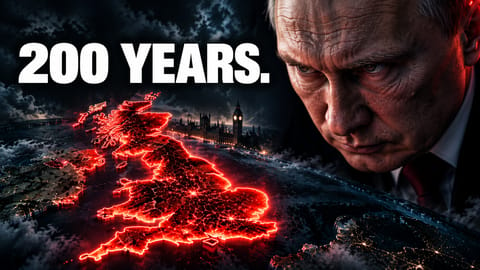
Westminster pulls the others along. In that sense, Britain doesn't have to be the largest carriage, nor the most anti-Russian, but it is often the one shoving the coal in to get the rest of it moving. London has effectively been saying, "Don't worry, we've been fighting the Russians for 200 years.
We'll go first. Just follow in behind." Moscow hates that decisiveness, because it counts on a lack of unity among Western allies in order to operate at will. But that influence is also a double-edged sword.
It makes Britain a unique ally of Ukraine and a leader in European defense. It also makes the country more of a target. If Moscow believes Britain helps organize collective opposition, then disrupting Britain potentially matters more than simply attacking whichever European country has donated the most ammunition.
And of course, there are more legitimate geographical concerns that place Moscow and London at odds. Russia's northern fleet is concentrated around the Kola Peninsula. Access to the Northern Atlantic runs through strategically constrained waters, including the GIUK Gap.
Britain sits directly on that maritime architecture, and its submarines have been chasing Russians all over the North Sea for generations.
In the event of armed conflict, degrading Britain's naval bases, communications, and undersea surveillance infrastructure could help Russia blunt one of NATO's main submarine hunting forces, making it easier for northern fleet submarines to break out into the North Atlantic.
Instead, Moscow has been limited to accepting NATO's surveillance of their submarines, whilst brazenly sailing the now-rusting corpse of the carrier Admiral Kuznetsov through British waters as a show of force.
And so you can start to see why senior Russian governments and military figures are casting Britain as the perfect villain. The US is so powerful that blaming Washington for everything, especially under the current Trump administration, would reveal Russia's weakness against an overwhelmingly stronger superpower.
Poland, Romania, and the Baltics can all be dismissed as hysterical American satellites.
Germany spent decades trying to accommodate Moscow, and will immediately start doing so again should the AFD ever take power, and France retains its own streak of strategic independence. That leaves the UK, the disgustingly damp island that somehow has the cojones to stick up to Russia.
Small enough to mock as a declining former empire, but powerful enough to have nuclear weapons, serious intelligence capabilities, financial reach, a Security Council seat, and unusual influence in global affairs.
It's literally the "our enemies are simultaneously extremely strong and extremely weak" meme brought to life. Russian rhetoric, though, has no issues holding those two contradictory ideas at the same time.
To Moscow, Britain can remain a pathetic American vassal state that doesn't matter, whilst also being the sinister power that pushes the US and Europe towards confrontation with Russia.
Their hostility is partly strategic and partly mythologized in Russian historical revisionism. The UK really does organize coalitions, assist Russia's neighbors, operate Cape Bull intelligence services, control important maritime approaches, and punch above its raw weight internationally.
It reportedly even has small numbers of special forces on the ground in Ukraine, according to leaked US documents.
Moscow then takes that narrative and runs with it, inflating those characteristics into the stereotype of an endlessly scheming enemy just out of reach. That is why Russian governmental disdain for the UK appears disproportionate, but it also helps serve a purpose. Creating a concrete enemy the Kremlin can point to that goes beyond just a nebulous "West".
Because if there really is a shadowy nation pulling the strings behind the scenes, then it helps explain away all the failures of a three-day special military operation that has now lasted for four and a half years and killed hundreds of thousands of young Russian men, in return for very little gain.
And as we see time and time again in the modern world, if it comes to a choice of believing in conspiracy theories or facing their own failings, the rich and powerful will choose the conspiracy theories every damn time. Thank you for watching.
Watch with Fronts Insider
Fronts Insiders get every video, the complete archive, and private sponsor-free playback.
Insiders Receive
- Every WarFronts, HomeFronts, and Insider video
- Complete sponsor-free video archive
- Support independent conflict journalism
Already a member? Log in →
Signed in or already a member, but still locked? Fix an access problem
From $5/month — cancel anytime