
Skip to content
Fronts.co
WarFronts

The New “Middle Eastern NATO” Isn’t What You Think.

Simon Whistler • August 15, 2026
The New “Middle Eastern NATO” Isn’t What You Think.

Members only

Note: this transcript was generated by AI and may contain errors or inconsistencies.

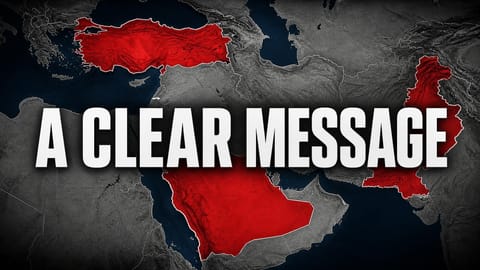
On the 7th of August, 2026, the Middle East changed forever. On that day, the leaders of Saudi Arabia, Turkey, and Pakistan jointly announced that they were forming an alliance and binding the fates of their nations in perpetuity.

Signed in Mecca, Islam's holiest city, the new agreement is clearly intended to send a message that the Muslim world's only nuclear power, its only NATO member state, and the largest economy in the Middle East were forming a single coherent axis with a single coherent vision for the future.

According to the three nations, an attack on any member state will be regarded as an attack on all, in a moment when the Middle East appears to be slipping into a period of long-term breakdown and catastrophe.

Since the deal was announced, there's been a whole lot of talk about how Riyadh, Ankara, and Islamabad have built a new Middle Eastern NATO to constrain and defeat Iran, protect the Persian Gulf, and strike back against the region's most destabilizing rogue actor. But if our team at war fronts may be so bold, most of that analysis missed the point.

The alliance between these three nations is not a Middle Eastern NATO, but nor is it just some display of collective vanity. It's a security arrangement that's been years in the making, and while it's going to be useful in dealing with today's Middle East crisis, this pact really isn't about Iran.

It's meant to prepare for a much wider Cold War across the Middle East and the wider Muslim world, one that brings together a range of smaller Cold Wars that have each been playing out quietly for a long time.

This new axis between Saudi Arabia, Turkey, and Pakistan does matter, and it will change the Middle East for decades to come. But far off in the future, when the story of this alliance is written, the US war with Iran will be a mere footnote, and the wider Middle East crisis of 2026 will only be an opening chapter.

A Grand Alignment The Middle East's new defensive alliance, known properly as the Mecca Joint Defense Agreement, brings its three signatory nations together into a collective security agreement.

As we've already mentioned, the core of the agreement is a commitment to mutual defense. An attack on any of the participating nations will be regarded as an attack on all, basically the same as the Article 5 provision of the NATO alliance.

Also similar to NATO, the agreement calls for Saudi Arabia, Pakistan, and Turkey to take steps to unify their defense policy and their approach to the rest of the world.

Under the arrangement, the group will create new mechanisms to allow each country's defense minister, foreign minister, and head of its arms forces to work together much more closely with their counterparts, and otherwise build new mechanisms to coordinate jointly with each other.

The countries will step up their military exercises, training together on land, air, and sea, and they'll offer each other specific support in some of the most important aspects of modern warfare, including air defenses, artificial intelligence, electronic warfare, and unmanned technology.

The defense industries of the three nations will start using together much more closely than before, especially working on advanced research and the development of new products.

All of that's to say, the deal is basically what you might expect from a mutual defense pact, and out of everything we'll be discussing today, the exact contours of the deal are one of the less interesting parts of the story.

More interesting. is the deal doesn't include most prominently any reference to pakistan's nuclear arsenal whereas the nato alliance for instance extends the u.s nuclear umbrella to protect their other members that issue hasn't been addressed directly by any of the nations in the mecca agreement anonymously saudi and pakistani sources have both suggested

That islaabad's nuclear umbrella would extend to saudi arabia turkey and any other signatories although in public pakistani leaders have tried to ease those concerns saudi arabia has been very interested in hosting nuclear weapons since the 2010s partly to counter iran partly to hedge its bets against israel and mostly to simply ensure that it can't have its

National security threatened in any major way if they get one we have to get one for now the ambiguity doesn't hurt especially in the middle east where israel still refuses to acknowledge its nuclear arsenal and where iran's nuclear timeline is constantly in flux just as important is how this deal has already been applied if you like our warfronts team spend

Way too much time reading geopolitical hot takes online then you've probably seen at least a few people poo-pooing this agreement because saudi arabia is under attack from both iran and yemen's iran-backed houthi rebels and neither turkey nor pakistan has formally entered the conflict in fact some have gone so far as to say that because ankara and islamabad

Haven't leapt to saudi arabia's defense this security back means nothing there are however two problems with that interpretation first and foremost that as of the time of writing this agreement hasn't even been signed for a full week the idea that pakistan and turkey could surge their forces into an ongoing conflict and fight alongside saudi arabia without

Setting up any of the command arrangements that would allow the countries to coordinate on a timeline of just a few days doesn't reflect military reality large-scale deployments take time and the ink on this deal isn't even dry yet but it's also worth noting that pakistan and saudi arabia signed a bilateral version of this agreement in september 2025

Basically extending it to turkey this month and under last year's agreement pakistan has deployed some serious military force to saudi arabia already in may reuters reported that pakistan had quietly deployed a full 8 000 troops a fighter jet squadron and an air defense system to saudi soil with commitments to send more support as needed while pakistan has

Held off on striking iran outright that's most likely due to pakistan's other role in the conflict facilitating negotiations between tehran and washington in that role pakistan has made clear that it still fully supports saudi arabia and its troops appear to be following a purely defensive mandate don't help to strike back but make sure that attacks against

Saudi arabia are thwarted as well as possible whether or not the alliance could expand well that's a matter of some debate when the new security pact was announced international onlookers were surprised to see egypt left out of the deal but although we'll get into the reasons for egypt's hesitation in a moment the members of the pact have made clear that

Egypt is also a part of their club in fact egyptian leaders have indicated that they may join the pact sooner rather than later quoting once certain technical matters are sorted out after the deal was signed turkey's foreign minister jetted off to cairo probably to work toward egypt's eventual inclusion pakistan's foreign minister meanwhile confirmed that

The agreement is open to new members in the future kuwait for instance signed a new defense agreement with pakistan in july of this year although for now the deal doesn't go quite so far as to ensure a collective defense clause qatar is also a likely candidate in the near to mid future and syria jordan and even azerbaijan have been identified as possible

Entries but right now perhaps the biggest open question around this alliance is the impact it might have on the ongoing security challenges that all three nations face saudi arabia as we've mentioned is dealing with iran but also with the houthi rebel group in yemen this thursday the 13th of august turkey's defense ministry confirmed that it's going to join

Saudi-led efforts to build a maritime defense coalition in the red sea to protect global shipping from houthi missiles drones and boarding parties after pakistan already agreed to take part whether turkey or pakistan would join offensive operations against the houthis meanwhile is another matter and it's an important question to answer as rumors circulate

That saudi arabia may support a new yemeni government offensive to retake the red sea coastline pakistan deals with several overlapping internal insurgencies it recently fought a border war against afghanistan and it's nearly 80 years into its rivalry with its arch enemy india finally turkey isn't fighting any active major conflict after the conclusion of

Its internal fight against kurdish militants but it's now a key member of two neutral defense pacts nato and the mecca accord how turkey balances those alliances and how the alliances interact with each other remains to be seen unity and the new cold war the alliance between pakistan turkey and saudi arabia may not exactly be a middle eastern nato but it's a

Complex arrangement that took a long time to put together and creates a serious interdependence between some of the most powerful nations of the islamic world countries don't just wake up one day and decide to link their geo-strategic futures together for no reason this is a defensive alliance built to respond to an outside force that all sides consider to

Be a threat most obvious threat of course is the nation of iran and it's true that the ongoing war in the middle east probably made an impact on all three of these nations saudi arabia has been the one in the process but each country has watched as the united states struggled to make good on its defense commitments across the persian gulf rather than

Prioritizing the safety of its middle east allies the u.s chose to start a war with iran that was poorly conceived entirely optional and all too quick to spiral out of washington's control american air defenses have proven not to be as reliable as expected and now saudi arabia and other countries are having to rely on ukraine for help protecting the skies

Turkey's got to be thinking through the implications as a nato ally and pakistan's probably going through the same process both questioning what it's really worth to be america's major non-nato ally and fearing that its other sponsor in beijing might not be any better but this growing middle eastern alliance isn't about iran it's Instead, it's been coming

Together for months, before the current Middle East crisis even began.

In fact, we covered the emerging axis between Saudi Arabia, Pakistan, Turkey, and Egypt extensively here on war fronts in over an hour of discussion this past January.

That was because at the time, those formations were banding together to respond to a different emerging threat, one with far greater global influence and far better staying power than Iran will ever have.

The security alignment between Saudi Arabia, Turkey, and Pakistan, plus countries like Egypt and Qatar, forms one side of an emerging regional Cold War, in which participating nations have been getting closer and closer by the day. On the other side of that regional Cold War are the United Arab Emirates, Israel, Morocco, Ethiopia, and even India.

Before the Corrib War erupted in the Middle East, the nations on each side of the divide were slowly moving into coalition with each other, first in partnerships of convenience, and then as real allies. This new emerging Cold War in the Middle East actually brings together several smaller Cold Wars and geopolitical rivalries.

Turkey, for example, has been embroiled in a growing contest for influence against Israel, in which both nations view the other as their primary regional competitor.

Yes, this means that Israel sees itself as outgrowing its rivalry with Iran, while Turkey is pursuing this rivalry against a very close US ally despite its place in the NATO alliance.

Similarly, Saudi Arabia and the UAE used to be close partners, but ever since they tried to fight together in a coalition against Yemen's Houthi rebels in the 2010s, they've been growing apart.

Today, the Emirates share a deep intelligence-sharing and security relationship with Israel, while undermining Saudi interests and competing directly on economic, diplomatic, and even security issues.

Pakistan stands shoulder-to-shoulder with the Saudi and Turkish side, while India has been increasingly aligned with Israel and the Emirates, and of course, the India-Pakistan rivalry needs no introduction. Just like any other Cold War, these two coalescing sides have been fighting proxy battles across the region with a growing intensity.

Turkey and Israel are battling covertly for Syria.

The Emirates and Saudi Arabia have been pushing and pulling over Yemen. Egypt and Turkey have backed Sudan's military against the Emirates-backed Rapid Support Forces. And many of these countries try to exert influence simultaneously in Somalia and Libya.

But funnily enough, the one thing that all of those nations seem to have in common across both sides of the regional divide is that the world was moving toward a post-Iran geopolitical order. Iran isn't on either side of this rivalry.

It's an isolated third faction, reliant on occasional support from Russia and China, and only able to count its own non-state proxy groups like Hezbollah and the Houthis as allies in the Middle East.

Late last year, and at the start of this year, Iran was in dire straits, dealing with a water crisis, a collapsing economy, and a massive protest movement. And it was around the time that Iran's situation started looking really bad that these other countries shifted their attention and started to focus on each other more openly.

In fact, there's a strange irony to the way that by starting a war of choice against Iran, the U.S. and Israel inadvertently handed Iran control of the Strait of Hormuz, giving it enough geopolitical leverage that it's now more relevant than it's been in years.

But nonetheless, the two sides of this much wider Middle Eastern Cold War seem to agree. In their ideal world, competition is with each other, while Iran is forced to sit in the corner and mind its own business. All across the Middle East, the reactions to this new Turkey-Saudi-Pakistan defense pact confirmed that really this isn't about Iran at all.

Israel's reaction was especially telling. According to Israeli media, Jerusalem interprets the agreement as confirmation that American influence is fading and coordinated opposition to Israeli interests is rising.

Quoting Israel's Minister for Diaspora Affairs, the deal is a, quote, very dangerous and very troubling development that is very, very bad for us, for Israel, end quote.

Perhaps even more telling, quote, it requires us to deepen our alliances with Greece and Cyprus, Turkey's long-time adversaries, the United Arab Emirates, and Somaliland, end quote.

In the Emirates, meanwhile, prominent officials and members of the Emirati intelligentsia reacted with outrage, prompting influential Saudi voices to immediately shift the conversation to the Emirates' own alignment with Israel.

But while Israel and the Emirates reacted in a way that would certainly suggest they believed that they were the targets of the new alliance, Iran was practically nonchalant, with one prominent spokesman even suggesting that the deal, quote, has a chance of helping to strengthen security and prevent instability and abuses by the Zionist enemy and its allies,

End quote.

And if insider reporting from across the Middle East is to be believed, Egypt was left out of the deal, but now, because Saudi Arabia is concerned that Egypt is too close with the United Arab Emirates. Turkey, meanwhile, wants Egypt to join the alliance, because it would cut into Egypt's strained but enduring relationship with Israel.

Egypt traditionally avoids taking sides in Middle Eastern rivalries where it can, but this time around, countries on both sides of the divide seem eager to force Egypt to take a stance.

Over the coming few years, the three signatory nations of the Mecca Accord will most likely direct their combined powers toward a handful of short-term threats. One way or another, the Persian Gulf will have to be secured, and Gulf states will need to build alternative pathways to export oil and natural gas without being at risk of an Iranian blockade.

The Houthis in Yemen will need to be dealt with, and the Red Sea will need to be secured.

Pakistan will continue to deal with its internal insurgencies, and Turkey will continue with its geopolitical chess match in Syria.

But over the course of the coming decades, this new agreement between Pakistan, Turkey, and Saudi Arabia will form the backbone for a larger regional alliance, probably alongside Egypt, Kuwait, Qatar, and other countries across the Islamic world.

They'll be engaged in constant economic battles, geopolitical rivalry, scientific and technological competition, and probably a series of proxy conflicts on the soil of nations too weak or too unlucky to prevent themselves from being turned into a battleground.

But their adversary in those battles generally won't be Iran. It'll be Israel, the Emirates, India, and all the other nations that are aligned against the interest. of the Mecha Alliance.

Insider access

Watch with Fronts Insider

Fronts Insiders get every video, the complete archive, and private sponsor-free playback.

Insiders Receive

  • Every WarFronts, HomeFronts, and Insider video
  • Complete sponsor-free video archive
  • Support independent conflict journalism

From $5/month — cancel anytime