
WarFronts Weekly 1.27.2026.
🟨 WarFronts Weekly | Israel-Hamas Ceasefire Progresses to Stage Two & More
Evan Moloney • January 27, 2026
“The first to go out, the last to come back. Our hero.”
-Israeli civilian Talik Gvili, mother of Ran Gvili.
Israel-Hamas Ceasefire Progresses to Stage Two:
The nation of Israel celebrated a long-awaited, but bittersweet moment on Monday, when the remains of Ran Gvili , the last hostage in Gaza, were positively identified by the Israeli military. While the return of Gvili’s remains was a key Israeli priority for many reasons, the remains were also highly geopolitically significant, as they were the final remaining barrier before Israel and Hamas progress to stage two of the ceasefire governing the Gaza Strip.
Despite intermittent Israeli airstrikes, occasional fatal skirmishes on the ground, and internal repressive action by the Hamas organization, the Gaza Strip is still covered by the ceasefire agreed in October of 2025. Under the conditions of the ceasefire’s first phase, Hamas was charged with the return of all hostages, living or dead, and other conditions that the group states have now been fulfilled.
The return of Gvili’s remains paves the way to shift into phase two of the ceasefire. In the second phase, Israel and Hamas commit to addressing the larger structural issues that have governed conflict in Gaza for generations, including the eventual disarmament of Hamas, and a transition to new structures of governance.
On Monday, Israel marked the moment by opening the Rafah border crossing between the Gaza Strip and Egypt, which has been closed nearly continually since May of 2024. That opening is expected to take effect within the next several days, allowing the evacuation of an estimated 18,000 Gazans who require medical care abroad, according to the World Health Organization. By opening the crossing, Israel will satisfy its remaining obligations under the first phase of the ceasefire.
Unfortunately, Israeli, Palestinian, and outside observers largely agree that stage two of the ceasefire will bring serious challenges . While the actions required to satisfy phase one were largely logistical and military—cease operations, locate and return hostages, etc.—phase two will require both Israel and Hamas to engage collaboratively to build a future Gaza Strip, with the outcome likely to bear little resemblance to either Hamas’ ideal situation, or Israel’s.
On Jerusalem’s side, the IDF will need to coordinate much larger-scale delivery of humanitarian aid , and is expected to face pressure to allow the return of journalists and pull back from its Yellow Line , a slowly growing zone of control that positions Israeli troops on a majority of Gazan territory. Israel has not given any indication that it plans to pull back.
For Hamas, disarmament is the key concern—and the group appears unwilling to comply. Since the ceasefire was implemented, Hamas has engaged in internal crackdowns, weapons stockpiling, and other actions that suggest it intends to become more entrenched, not less. While Hamas is expected to demilitarize and disarm itself under the ceasefire deal, that outcome is unlikely in practice —as evidenced by US President Donald Trump’s recent threat to use force against the group, at the World Economic Forum in Davos.
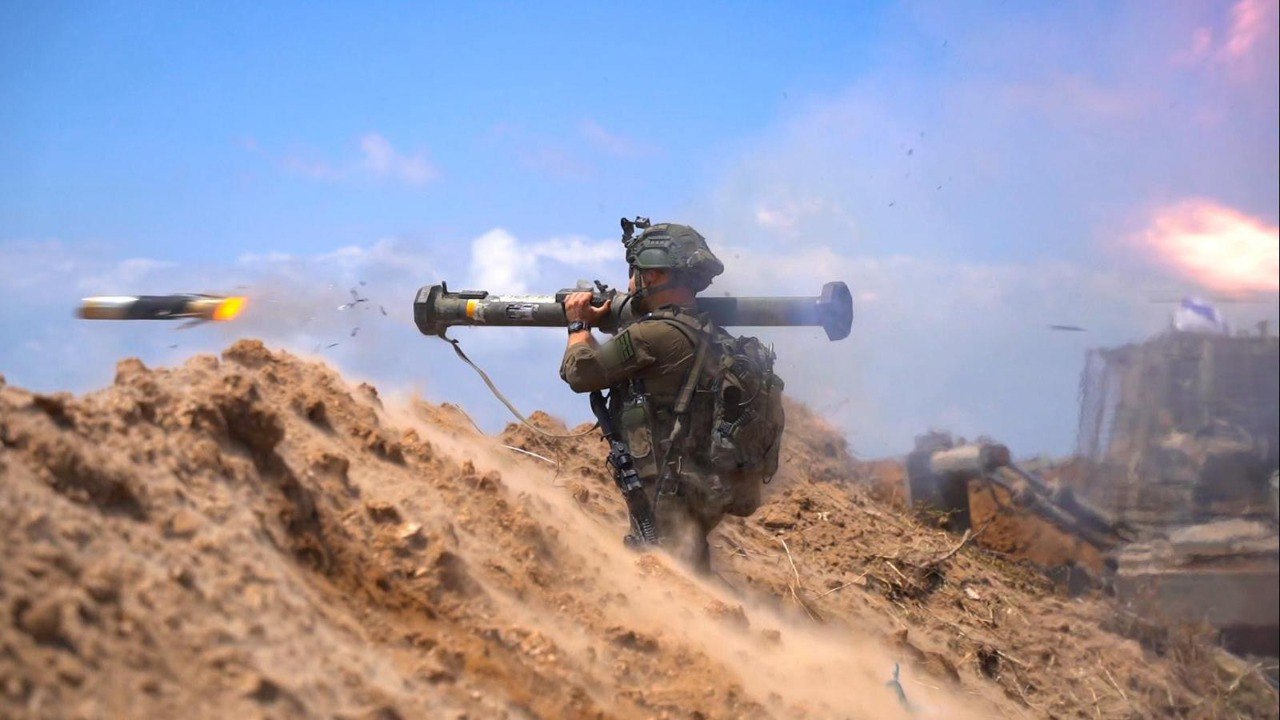
Image Credit: “IDF soldier firing an M141 Bunker Defeat Munition in Gaza on April 12th, 2025” by Israeli Defence Forses Spokesperson’s Unit is licensed under CC BY-SA 3.0.
This Week on WarFronts:
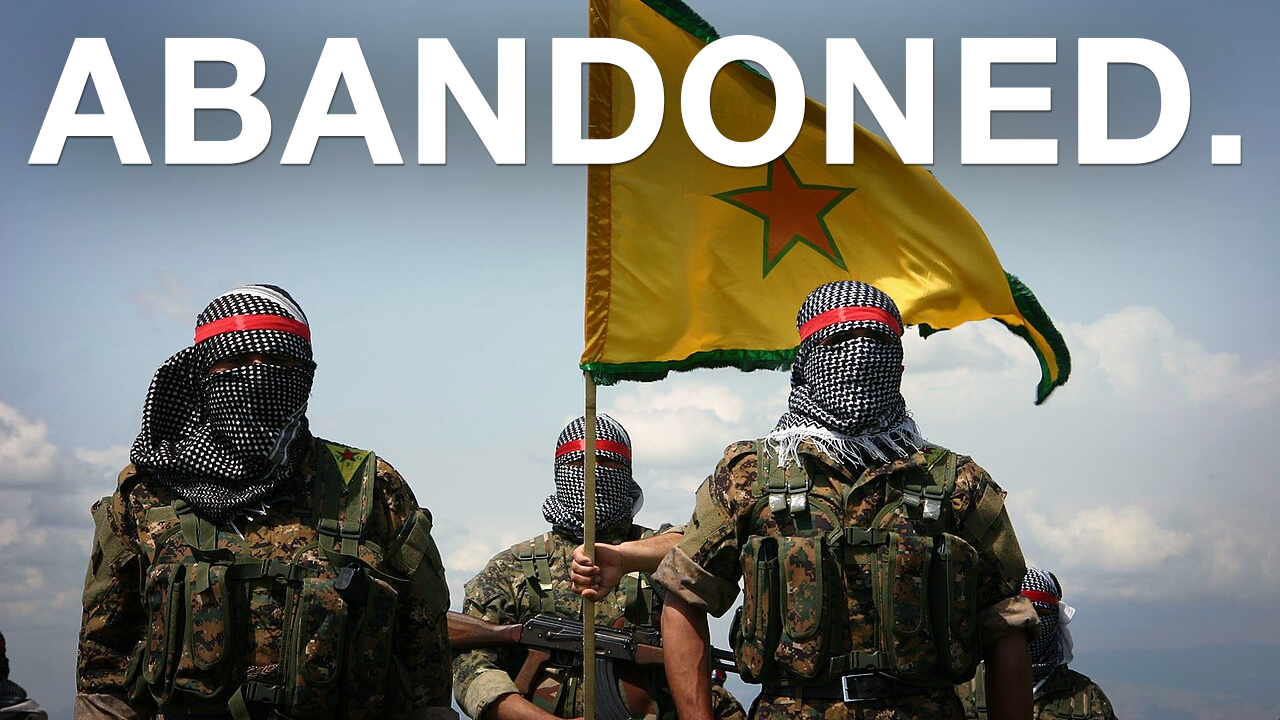
Over the last two weeks, Kurdish-led forces in Syria have absorbed major defeats and territorial losses in the face of a Syrian Army advance, in developments our team covered here on Saturday.
Since that episode was released, Northeast Syria seems to have gained a temporary reprieve from violence. Over the weekend, Damascus reached an agreement with Kurdish-led forces to extend a ceasefire for fifteen days , through early February. In a key positive sign, Turkey indicated that ceasefires should hold while Islamic State prisoners are transferred to Iraq, suggesting that Damascus is not under immediate Turkish pressure to restart hostilities while the ceasefire is in place.
Also over the weekend, Russia appeared to begin withdrawing forces from Qamishli Airport in northeastern Syria, in the same zone of the country where Syrian Army forces are working to seize control. Russia’s Qamishli unit was the smallest of its three remaining troop deployments in Syria; those soldiers appear to be departing toward Russia’s Hmeimim Airbase.
US Builds Up Assets in the Middle East:
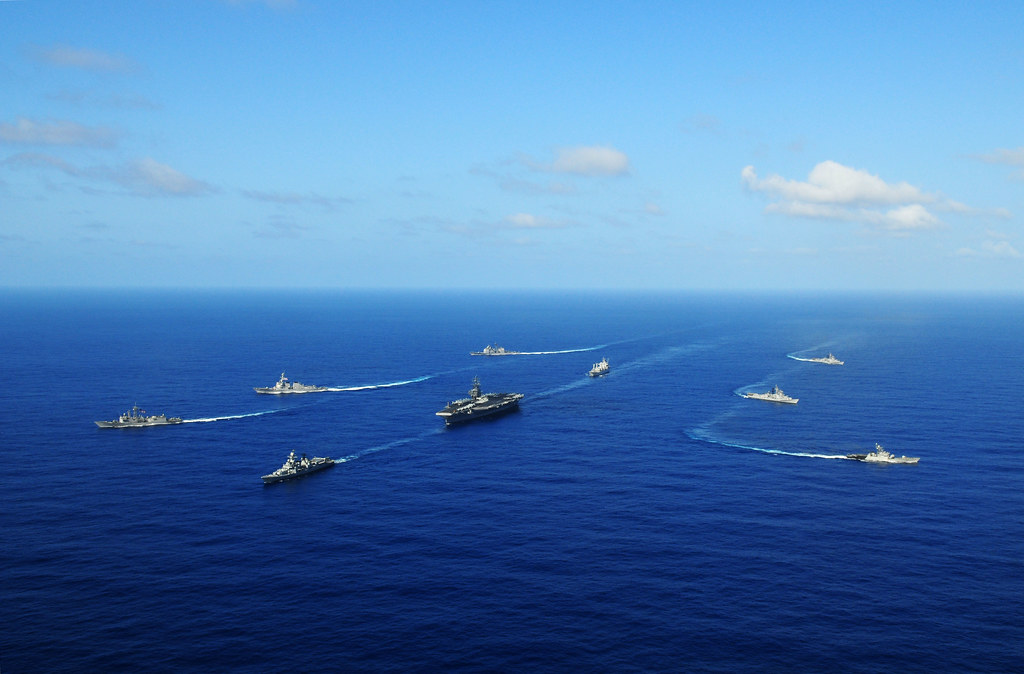
The United States has moved substantial military assets into place around Iran over the last several days, with even greater assets expected to be in position by mid-week. As reports emerge from predominantly Israeli sources on Washington’s apparent plans , all indications are that at a minimum, the US intends to try and decapitate the Iranian regime.
Of Washington’s newly deployed assets , easily the most notable are the multiple carrier strike groups that appear to be inbound to the region. On Monday, the USS Abraham Lincoln and its associated strike group crossed into US CENTCOM (Central Command) control, with an estimated two to three days remaining before it’s positioned to facilitate an attack—although some sources suggest it may already be in position near Oman’s southern coast, outside the range of Iranian anti-ship missiles. Conflicting reports suggest that other carrier groups may already be en route to the area.
Even a single strike group would grant the US immense firepower , as well as seaborne air-defense capabilities, to launch a comprehensive air campaign against Iran and deter a large share of Iran’s anticipated retaliatory strikes. Other US bases in the Middle East have received new aircraft groups, including B-52 strategic bombers sent to Qatar, and F-15E Strike Eagles sent to Jordan. Yesterday, a crucial Rivet Joint intelligence aircraft departed the US for the Middle East, while another repositioned asset, the EA-37B electronic warfare plane, appears poised for its first known taste of combat.
Also in the region , the United States’ base at Diego Garcia provides Washington with a critical option to receive, refuel, supply, and provide a home base for land-bound long-range aircraft. Nor can the possibility of strikes directly from the US be discounted, as shown by B-2 Spirit strikes on Iran in 2025 that flew continually from the United States.
Cargo flights from the United States have been a constant, ferrying munitions and air-defense systems on C-17 strategic airlifters that can carry over seventy tons of cargo per plane, per trip. One likely indicator of an imminent strike, air-to-air refueler flights that would be supplying fighter aircraft on long-range travel, has not yet been revealed—suggesting that strikes may still be a few days away.
Israel has indicated privately to the United States, per sources speaking to global analysts, that it will work in a support role instead of spearheading the air campaign, as it did in 2025. Israeli air defenses have been positioned for an all-out defense of the country, anticipating retaliation, with some sources suggesting that Israel believes it can absorb up to 700 ballistic missiles using its current defenses.
Per other Israeli sources, the United States intends to target Iranian Supreme Leader Ayatollah Khamenei for assassination , likely alongside senior regime officials. The United States’ other targets are not yet clear, although Iran is known to lack sufficient air defense to cover critical economic targets like oil refineries , as well as many of its bases . Per the Jerusalem Post , the US may also be considering a blockade as an alternative.
The prospect of retaliation from Iran, however, is still a meaningful one—and a growing group of experts now believes that Israel won’t be the nation in the crosshairs. Instead, the main concern is that Iran will attack the Gulf states , particularly their oil fields and energy infrastructure. Gulf nations have reportedly been pleading with the US to avoid launching an attack, and have signaled clearly to Iran that they do not endorse, and will not facilitate, a strike. Whether Iran or its Houthi allies are moved by those displays, is not yet clear.
Image Credit: "U.S. Carrier Strike Group Ronald Reagan with the Indian Navy" by aeroman3 is marked with Public Domain Mark 1.0 .
What We're Reading:
For now, Donald Trump’s geopolitical obsession with the island territory of Greenland seems to have been sated, after America’s NATO allies managed to bring Trump into alignment with a vague deal to increase the territory’s security. But the larger underlying question—just why Trump has been so fixated on Greenland, when pre-existing agreements give the US essentially free rein on the island—remains unanswered.
One possible explanation comes from Trump’s backers, and specifically, a group within America’s new-money tech oligarchy that appears to regard Greenland as a major asset for the future. This report by The New Republic argues that their focus on Greenland is more than geopolitical strategy or even a desire to exploit resources—but is, instead, the focus of a budding project to build a so-called “ sovereign network state ”. It’s a strange, rather darkly dystopian report, but it’s worth a read.
Around the World:
China’s top general, Zhang Youxia , was targeted for investigation and has been purged from his post, in a move confirmed by Chinese officials. Zhang was one of Xi Jinping’s few remaining rivals within China’s uppermost tier of leaders, and played a key role in the restructuring of Beijing’s military. His removal is most likely a blow to Chinese ambitions toward Taiwan, and across the Indo-Pacific region.
Ukrainian President Volodymyr Zelenskyy told the global press that a US document providing security guarantees to Kyiv is “ 100% ready ”, pending a signing ceremony at a time and place yet to be determined. Zelenskyy also noted that at trilateral meetings in Abu Dhabi over the weekend, Russia stuck to its position that Ukraine should abandon eastern regions that Russia has yet to capture.
The Sudanese Armed Forces broke through to the besieged city of Dilling on Monday morning, surging reinforcements and resupply into the city on pickup trucks and motorcycles. Because of the limited capacity of the light vehicles used in the attack, the Sudanese Army did not appear to bring enough supplies to alleviate near-famine conditions in the city. Nor is it clear that the siege is broken permanently; instead, SAF troops may have run the blockade in hopes of strengthening the city’s resistance, as the siege continues.
All civilians, as well as UN and other humanitarian aid workers, have been ordered to leave three counties in South Sudan’s Jonglei State , as government soldiers prepare for large-scale operations against the nation’s opposition insurgency. The Jonglei region, located on the Ethiopian border, has been the site of a recent offensive by opposition-loyal fighters.
The Islamic State-linked Allied Democratic Forces carried out an attack on the village of Apakulu, in the Democratic Republic of the Congo’s Ituri province. The raid, and local shootings nearby, left at least twenty-five people dead, most of whom were men who were either burned alive or shot within the village.
An apparent cartel attack in the Mexican city of Salamanca left eleven people dead and twelve injured at a football pitch, in an attack by a group of unidentified armed assailants. The shooting comes as violence has escalated in Salamanca and the surrounding Guanajuato State, which has long been among Mexico’s most dangerous areas.
Ugandan opposition leader Bobi Wine’s home was raided by authorities again on Saturday night, in the second instance of a raid since Wine was officially handed a defeat in Uganda’s recent elections. After Saturday’s raid, Wine’s wife was brought to a local hospital, and Wine accused soldiers of holding her at gunpoint, choking her, and partially undressing her, while assaulting his staff in the process.
Al-Shabaab militants killed a local chieftain in the northeastern Kenyan city of Hulugho, near the Somali border, on Monday. The killing appeared to be a cross-border action by assailants who fled the scene; a local teacher was also killed in the incident. Al-Shabaab attacks in Kenya are fairly common, as a pressure tactic to force Kenya to withdraw its troops from peacekeeping operations in Somalia.
Seven people were killed in a suicide bombing attack in Pakistan on Friday, when a suspected Pakistani Taliban member targeted a wedding ceremony. The site of the wedding was also the headquarters for a peace committee made up of local elders, which seeks to counter Pakistani Taliban attacks and mediate local peace arrangements. Pakistan
Haiti’s transitional leadership council announced the firing of now-former Prime Minister Alex Didier Fils-Aime, shortly before the council itself was set to dissolve. The decision is likely to spike internal tensions within Haiti’s UN-backed leadership structure, with the US, in particular, protesting Fils-Aime’s removal and implying that political support for Haiti’s gangs had been a motivator for his ouster.