
WarFronts Weekly 10.20.2026.
🟨 WarFronts Weekly | Egypt, Britain Weigh Saudi Arabia Deployments & More.
Fronts Staff • October 20, 2026

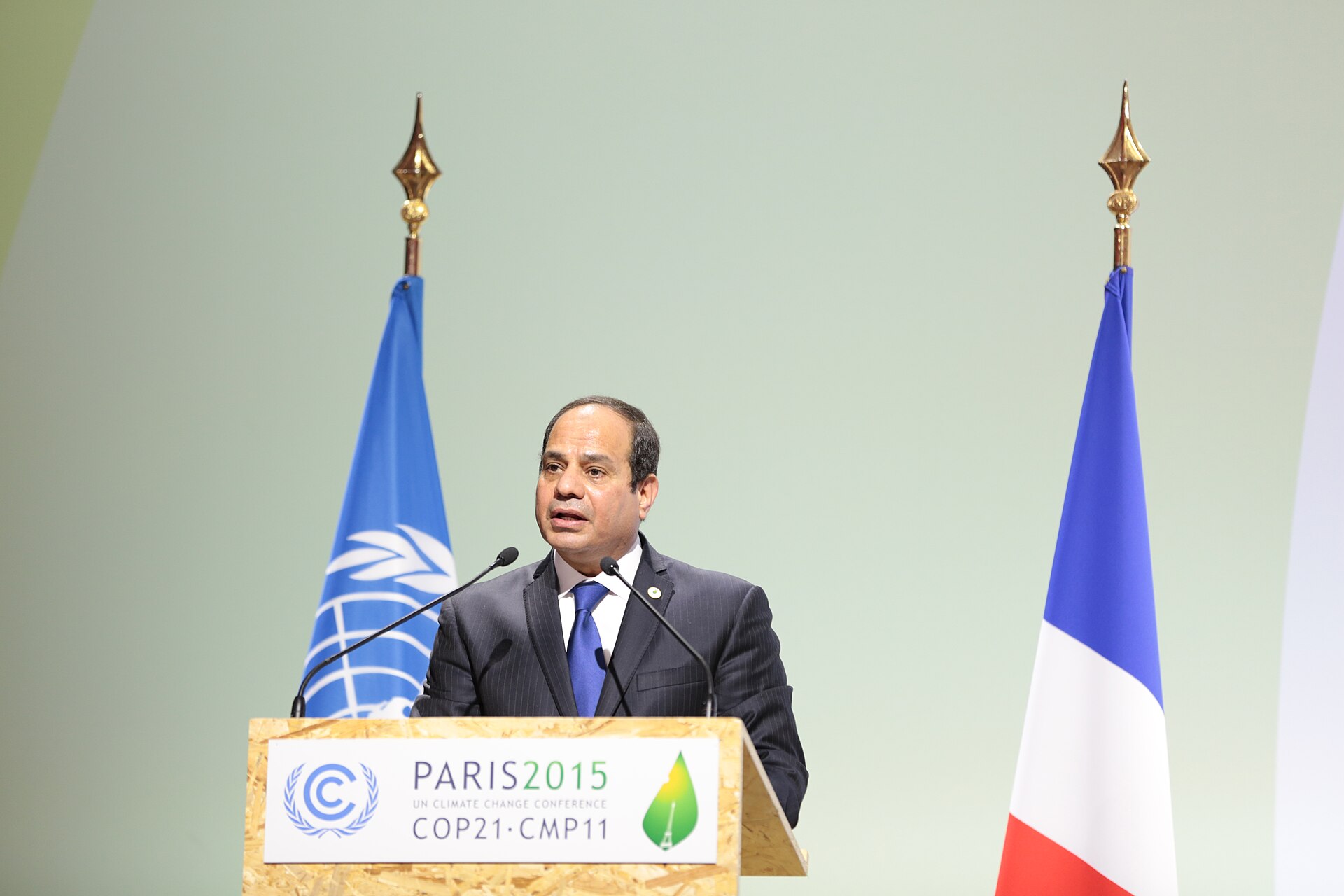
"It is inconceivable that we would allow Saudi Arabia, its security or stability to be harmed.”
Egypt, Britain Weigh Saudi Arabia Deployments:
For weeks, Saudi Arabia has struggled to contain or counter Yemen’s Houthi rebels, after a Houthi lightning offensive allowed the group to establish control over most of Yemen’s Red Sea coast, and complete their encirclement of the besieged city of Ta’iz. But after Saudi allies, including the United States, Turkey, and Pakistan, have each provided underwhelming support to Riyadh, Egypt and Britain are considering military deployments to help fill the void.
After the latest round of violence escalated in Yemen, Saudi Arabia has been on the receiving end of near-daily drone and missile strikes. Saudi air defenses have proved woefully insufficient, and have not prevented strikes on King Khalid International Airport outside Riyadh, nor against other airports, refineries, and key targets across the country. WarFronts covered Saudi Arabia’s air defense struggles in depth, here.
Especially disappointing, from Riyadh’s perspective, is the unwillingness of treaty allies Pakistan and Turkey to take a more active role, after the three nations entered a mutual defense pact earlier this year. But, in a surprising turn of events, Egypt—a close partner of all three nations—is now seeking to deploy troops to Saudi Arabia despite declining to join the tripartite alliance, when it was first announced.
On Saturday, Egyptian President Abdel Fattah al-Sisi announced that Egypt will seek to take any measures necessary, to help defend Saudi Arabia at Riyadh’s request. Just hours later, the Egyptian parliament met to discuss the prospect, while the nation’s top defense chiefs vowed their support. While a vote to authorize Egyptian support for Riyadh has been temporarily delayed to 26 October, the measure is expected to pass.
Cairo has not yet disclosed any further details on the deployment that it envisions, including whether Egyptian troops would operate on the ground in Yemen, in any large numbers—a prospect that regional security experts consider unlikely. The Houthis, however, are clearly concerned about Houthi involvement, and have threatened “grave danger to [Egypt’s] national security and internal stability”.
Egypt’s willingness to deploy troops, despite its hesitance to formally join the Mecca Joint Defense Alliance, underscores Cairo’s public commitment to a strategy of non-alignment and non-intervention, even when its interests and its military conduct diverge in private. Egypt still enjoys a close relationship with the United Arab Emirates, a growing rival of the Mecca Pact countries, and has been unwilling to publicly take sides in the Middle East's growing cold conflict, between coalitions of powerful nations.
Nevertheless, the coming Saudi deployment is the latest sign of shifting Egyptian policy, after Cairo has conducted airstrikes in Sudan and Libya against Emirates-backed Rapid Support Forces supply convoys, and grown its military despite Israel’s discomfort with its rapid expansion.
Nor was Egypt the only nation to step up this week, in Saudi Arabia’s defense. On Monday, British Prime Minister Andy Burnham authorized a deployment of Royal Air Force Typhoon jets, military advisors, and an A400M tactical airlifter to Saudi Arabia for defensive operations, protecting Saudi infrastructure and population centers from Houthi missiles and drones.
The UK will not carry out offensive strikes against the Houthi rebels, according to Defense Secretary Wes Streeting—making Britain the latest country to decline to substantively assist Saudi-backed anti-Houthi operations in Yemen. Nevertheless, Britain’s deployment is one of the few recent instances in which a major European military has rendered military assistance to an ally, despite the United States having declined to do the same.
Image Credit: “His Excellency Mr. Abdel Fattah El Sisi, President of Egypt” by UNClimatechange is licensed under CC BY 2.0.
Introducing DefenseFronts:
The team behind WarFronts, HomeFronts, and Fronts.co is proud to announce the launch of DefenseFronts on YouTube.
On DefenseFronts, our team takes a close look at the global defense industry, focusing on the tech, the tactics, and the cutting-edge innovations that shape modern battlefields. From changing alliances to future flashpoints, we know that today's global military-industrial complex is a window into tomorrow's geopolitics. With Simon at the helm, and a growing team of experts and Fronts-universe veterans working behind the scenes, we know you'll love DefenseFronts, so check it out.
This Week on Fronts:
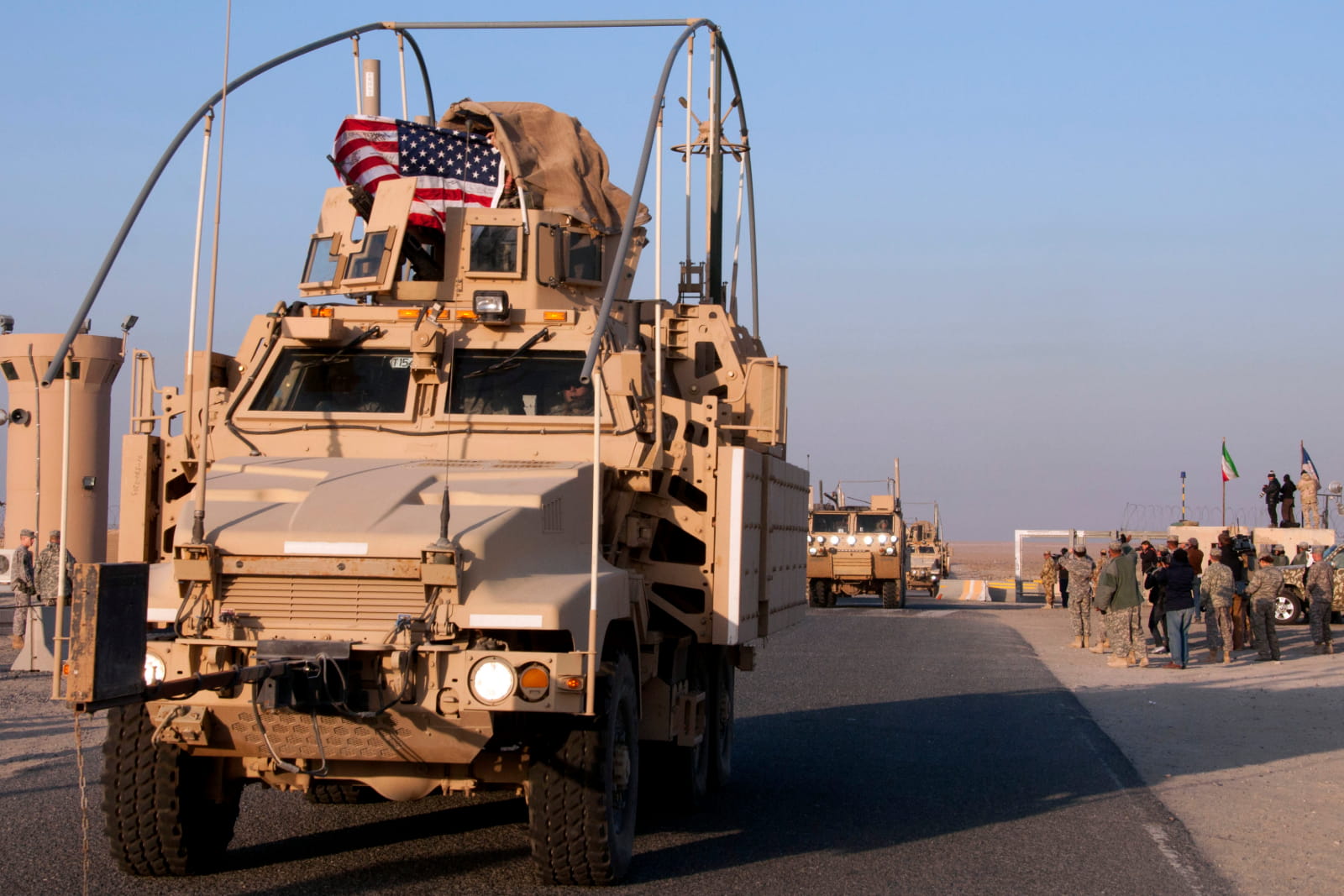
Across Fronts, WarFronts, and the WarFronts Weekly newsletter, our team has often discussed the threat of a resurgent Islamic State in Iraq and Syria, as US military support winds down, autonomous Kurdish-led forces are subsumed into the post-Assad Syrian military, and Iraqi security forces struggle to meet the demands of their complex, dangerous domestic environment.
In his latest analysis for Fronts, Polish analyst Paweł Wójcik detailed the Islamic State’s ever-improving prospects, after the United States completed its withdrawal from Iraq on 30 September. Wójcik highlights a recent series of attacks in Kirkuk, which killed an Iraqi brigadier general, as further evidence that the US departure from Iraq has helped to widen the country’s security vacuum.
Haitian Gangs Attack International Suppression Force:
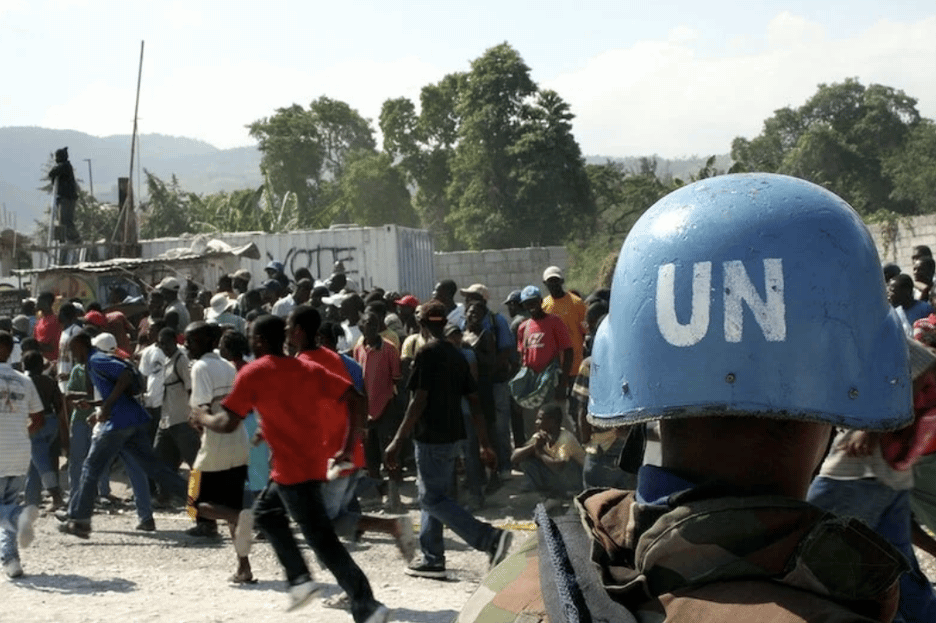
After its mandate was recently renewed by the United Nations, the international Gang Suppression Force in Haiti has been slowly, but surely expanding its troop presence on the ground, in hopes of applying meaningful pressure against the gang alliance that controls most of Haiti’s capital city. On Sunday, however, five soldiers from the Gang Suppression Force went missing, after the gangs’ largest direct attack on the force thus far.
The attack took place in a gang-controlled district north of Port-au-Prince, Haiti’s capital, when five soldiers from El Salvador—including four aviation technicians—visited a shopping center to stock up on provisions. Some international news sources list four soldiers involved in the incident, or describe the troops as Salvadoran Air Force personnel, although El Salvador has described the unit as including five soldiers. The group then came under attack, in what El Salvador describes as an ambush in which their vehicle was hit by explosives and caught fire.
One of the five Salvadoran soldiers managed to radio for help and report that he had been injured, but the Salvadoran military and the Gang Suppression Force have been unable to locate or communicate with the soldiers ever since. El Salvador dispatched military helicopters to support its troops, forcing gang members to retreat, but the helicopters also came under direct fire, while other attempts to relieve the Salvadoran troops were unsuccessful. Rescue operations are ongoing, but without results.
While the troops’ status is unknown, they are likely to have been captured by at least one of Haiti’s gangs—if, indeed, they are alive. They came under attack in territory controlled by a gang called Chien Méchant, translating to “vicious dog”, but where another group known specifically for kidnappings, 400 Mawozo, also operates freely. The area is a designated “red zone”, where a shopping trip by those troops would have been unusual without orders to maintain a presence in that area.
The attack is the clearest indicator yet, that Haiti’s gangs intend to respond to the expanding Gang Suppression Force with violence rather than retreat. The force remains low on troops, expected to comprise 5,500 soldiers from around the world, but currently comprising only around 2,000, from Chad, El Salvador, Sri Lanka, Jamaica, Guatemala, and Mongolia.
Image Credit: “A Sri Lanka soldier attached to the United Nations forces in Haiti […]” by U.S. Marine Corps is dedicated to the public domain.
What We're Reading:
After serving Moscow as a military officer during the ongoing invasion of Ukraine, Lieutenant Lev Stupnikov switched sides, and quickly became one of the deadliest and most effective military saboteurs in modern history.
In this extended interview with the Wall Street Journal, Stupnikov details his efforts to undermine Russia’s offensive, before making a successful, but highly risky escape from the Russian front lines.

Around the World:
The United States continues to withhold intelligence support for Ukraine, according to Ukrainian President Volodymyr Zelenskyy, after Kyiv received no advance warning of an overnight wave of drones and ballistic missiles that killed ten people on Monday. The attack involved sixteen ballistic missiles and roughly two hundred drones; six Ukrainians, including three children, were killed at a park near Kharkiv. On Tuesday, another Russian drone and missile wave killed at least seven, and caused new power outages across twelve regions of Ukraine. Ukraine retaliated on Monday with a wave of over 1,000 drones, one day after a concentrated Sunday attack on St. Petersburg left the Petersburg Oil Terminal, the Ruchyi oil depot, and several industrial warehouses burning.
Amidst their wider war with Saudi Arabia and Yemen’s Saudi-backed, internationally recognized government, the Houthi rebel group targeted a Yemeni military camp with a missile strike on Monday, killing at least seventy-three people at the latest count. The dead were all new recruits to the Yemeni military, all between ages eighteen and twenty, who were lined up in formation at the al-Alam training camp when the Houthi strike hit. Over two hundred others were injured. According to a Yemeni official speaking to the Associated Press, the recruits were expected to serve in internal security and policing roles in government-held Shabwa Province, not to fight on the front lines.
A series of drone strikes by the Sudanese Armed Forces killed over seventy people at a market in the disputed Abyei region, according to government officials in neighboring South Sudan. Although the Sudanese Armed Forces have not yet acknowledged the strike, two sources told Reuters that the strike impacted a fuel depot within the market, which had been used previously by Sudan’s rebel Rapid Support Forces to supply its fighters. Abyei deals with near-constant fatal incidents, both due to fighting between internal armed factions, and spillover violence from the civil war in Sudan.
At least fifteen people were killed, including ten soldiers and five members of the Civilian Joint Task Force militia group, in an ambush on a military convoy in Nigeria’s northeastern Borno State. There, patrolling troops drove onto a mine that was likely planted by Boko Haram, forcing the convoy to halt and killing eight troops instantly, per local sources. The rest were killed in a subsequent ambush by multiple gunmen, with at least six others wounded.
Military training accidents this weekend left over a dozen people dead in two countries: Canada and Libya. In Canada’s Alberta province, a fast-moving grass fire enveloped a group of soldiers at Canadian Forces Base Wainwright, killing four troops, leaving nineteen in critical condition, and overwhelming local hospitals. In Libya, near the capital city of Tripoli, nine members of the Anti-Threat Security Agency died when a mortar blast tore through a training exercise. The blast took place in the city of Zawiya, a frequent target of internal violence between armed groups, and the home of Libya’s largest operating oil refinery.
French authorities instituted curfews in Paris, Marseille, Nice, and several other cities, after a weekend of intense protests, riots, arson, and looting across the country. Approximately 550,000 people took part in Saturday’s protests, according to the nation’s Interior Ministry, and nearly 2,400 people were arrested, with roughly 1,500 shops vandalized by the weekend’s conclusion. French Prime Minister Sébastien Lecornu blamed far-left protesters for the violence, as hard-left presidential candidate Jean-Luc Mélenchon gains support in the polls, and sets up a showdown with hard-right perennial candidate Marine Le Pen in April 2027.
Outside France, several other European and African nations have been rocked by mass demonstrations and, at times, violent expressions of public discontent. In Albania, student protesters and their allies in the nation’s Flamingo Revolution torched government buildings, including the Supreme Court, days after a student movement fused with the wider revolution. In Tunisia, citizens took to the streets in the largest protests in years, demonstrating broad discontent under President Kais Saied after years of creeping authoritarianism. Italy will deploy five hundred troops to Milan after a weekend of protests and looting, while southern farmers and truckers have shut down commercial traffic in protest against high gas prices. Italy will hold a general strike on 20 November, while organizers in Spain and Portugal are planning similar action on 11 November.