
WarFronts Weekly: 10.27.2026.
🟨 WarFronts Weekly | Melania Trump-Brokered Ceasefire Begins Today & More
Fronts Staff • October 27, 2026

Before we begin...
CALLING ALL WRITERS:
Our team is seeking new regular contributors to WarFronts, HomeFronts, and DefenseFronts, as we expand our roster of freelance scriptwriters. For now, this call is exclusive to readers of WarFronts Weekly.
We’re looking for self-motivated, curious writers with prior knowledge of geopolitics, global affairs, and armed conflicts. Candidates who meet one or more of the following criteria will be given priority consideration:
· Past work and/or academic experience in relevant fields.
· Past experience as a professional writer.
· Residence in a time zone that substantially overlaps Central European Time.
· Deep knowledge of the Global South (Africa, Latin America, South and Southeast Asia).
These criteria are not mandatory. All freelance writing positions are remote, and we welcome global applicants with a strong command of English.
Our team offers competitive per-word compensation, to be discussed at first contact.
Applicants must be able to regularly contribute at least 15,000 words of polished prose each month, and abide by our team’s strict no-AI policy and other editorial standards. Applicants whose materials are found to include AI output will not be considered. Applicants must be able to accept and work with constructive critique in a collaborative editing process, and must be able to use feedback to adjust their style over time, in line with the unique voice of our channels.
To apply, please send your resume/CV and two writing samples (published work preferred, links acceptable) to writeforus@fronts.co. In a first email, you are welcome to include specific pitches for future episodes, which we may ask you to develop into a complete test script.
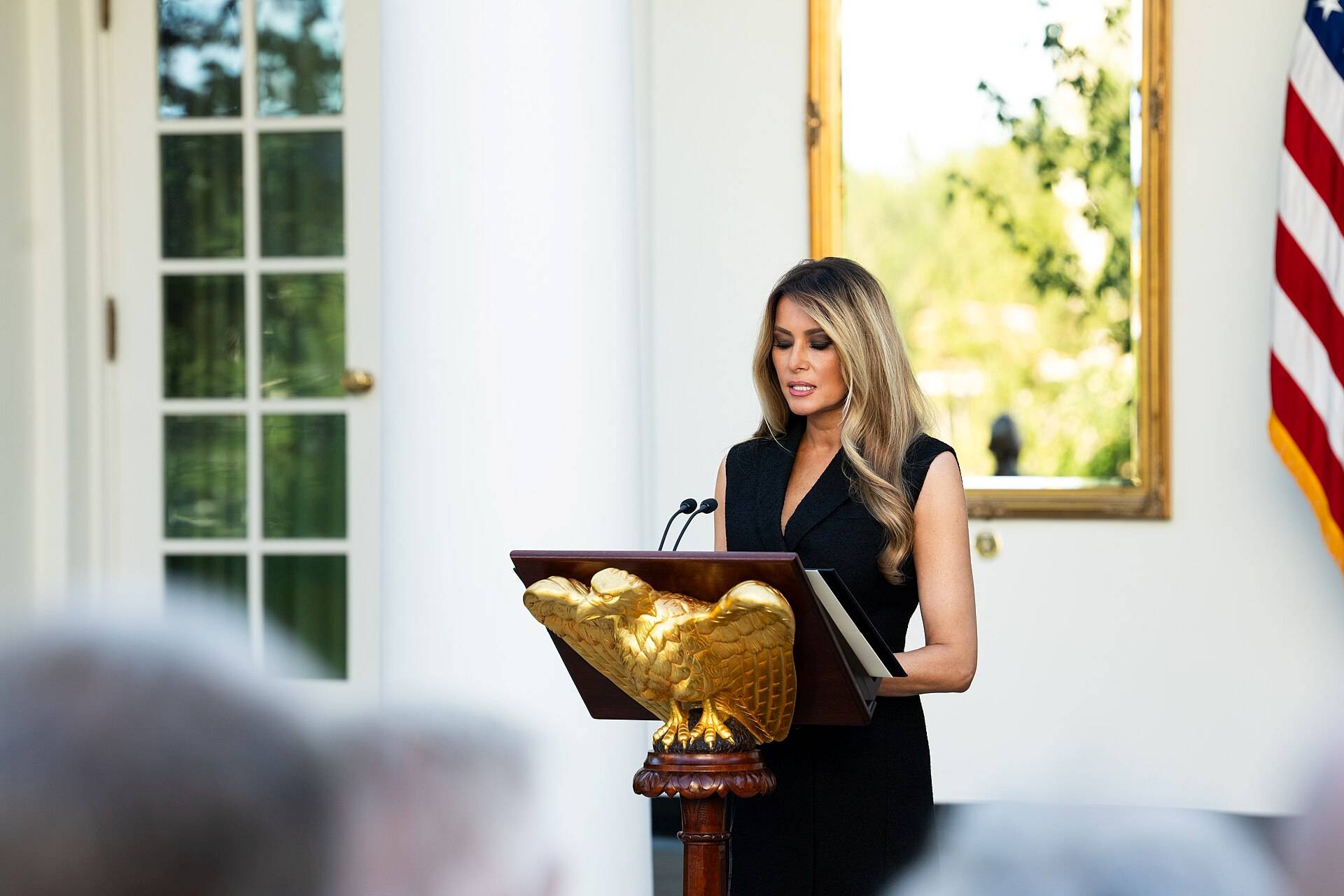
“It was abundantly clear that without my intervention, the possibility to bring humanitarian aid into the city and to evacuate the elderly would be impossible.”
-US First Lady Melania Trump.
Melania Trump-Brokered Ceasefire Begins Today:
The First Lady of the United States, Melania Trump, made headlines last week when, in a Friday press release, the White House announced that she had brokered a local ceasefire deal between Russia and Ukraine. Despite initial skepticism, both Moscow and Kyiv have confirmed the agreement to pause hostilities in and around the small city of Oleshky, with the ceasefire scheduled to begin at 03:00 local time today, Tuesday 27 October.
The agreement is a desperately needed measure to relieve pressure on civilians in Oleshky, a front-line city that has been under Russian control since the first day of the full-scale invasion, but has been isolated, not occupied directly, due to ongoing fighting along the frozen local front line.
The humanitarian situation inside the city has become dire, according to Ukrainian and international reports, with the remaining residents trapped without reliable access to food, water, heat, or electricity, ahead of Ukraine’s harsh winter. Past Ukrainian appeals for a humanitarian ceasefire have been ineffective, while the city’s remaining several thousand residents are at constant risk of attack by Russian drones, which target civilians indiscriminately.
Melania Trump is one of several high-profile figures attempting to raise awareness of the situation in Oleshky, alongside the Pope. America’s First Lady claimed to have spoken directly with both Ukrainian President Volodymyr Zelenskyy and Russian President Vladimir Putin, while the Kremlin confirmed that it is working with the Ukrainian military to determine and implement the details of the ceasefire.
The deal arranges for a three-stage plan to relieve civilians in the city. First, both Russia and Ukraine are expected to halt local fighting while mine-clearing operations take place, to open a route into the city. Then, humanitarian aid will be moved into the city, including food, medicine, and other essentials. Finally, civilians will be able to choose whether they wish to be evacuated, and those who choose to leave will be given safe passage.
Already, however, Ukrainian and Russian forces have indicated that the ceasefire may not hold. On Monday, the Russian Ministry of Defense accused Ukraine of striking Oleshky repeatedly with artillery and drones ahead of the ceasefire, and claimed that Ukraine’s actions had prevented the delivery of aid. Ukraine has long accused Russia of preventing civilians from coming and going, and civilians who have escaped the city explained this week that many remaining residents are sick or elderly, making relocation difficult.
As of Tuesday afternoon, local time, both Russia and Ukraine confirm that the ceasefire is in effect. Relief efforts have not yet begun, as the situation stabilizes in the first hours of the truce. According to negotiators, doctors will enter the city along with humanitarian aid, before the evacuation process begins. As expected, Ukraine and Russia have continued normal operations across other areas of the front line.
Image Credit: “First Lady Melania Trump delivers remarks […]” by The White House is dedicated to the public domain.

Introducing DefenseFronts:
The team behind WarFronts, HomeFronts, and Fronts.co is proud to announce the launch of DefenseFronts on YouTube.
On DefenseFronts, our team takes a close look at the global defense industry, focusing on the tech, the tactics, and the cutting-edge innovations that shape modern battlefields. From changing alliances to future flashpoints, we know that today's global military-industrial complex is a window into tomorrow's geopolitics. With Simon at the helm, and a growing team of experts and Fronts-universe veterans working behind the scenes, we know you'll love DefenseFronts, so check it out.
This Week on Fronts:
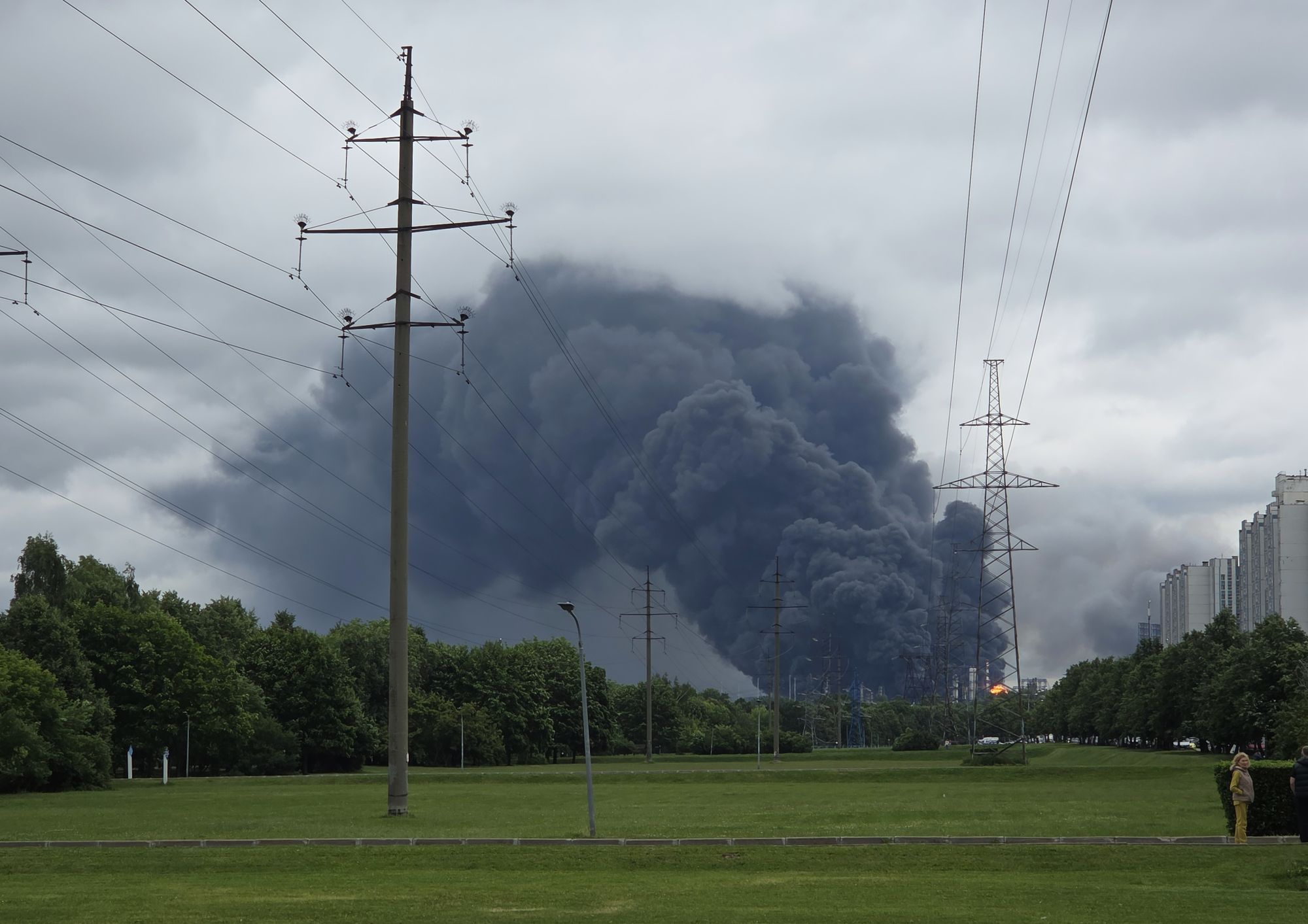
Ukraine’s investment into long-range kamikaze drones has yielded impressive results in 2026, as Kyiv’s campaign against Russian energy infrastructure, e-retailers, data centers, logistics, and other targets has intensified pressure on the Russian economy. With its deep strikes into the Russian heartland, Ukraine hopes to impose serious costs on ordinary civilians, to erode popular support for a war that the Kremlin has tried to keep out of its citizens’ view.
In this Fronts analysis, however, Illya Sekirin—a Ukrainian veteran drone operator and informal advisor to Ukraine’s military high command—argues a contrary case. According to Sekirin, Ukraine’s long-range strikes are broadly effective, and are a useful propaganda tool, but they demand resources that would be better spent elsewhere. On Fronts, Sekirin lays out the case for Ukraine to re-focus its drone funding, on efforts to kill more Russian troops on or near the front lines.
Israel Begins Blockade of West Bank City:
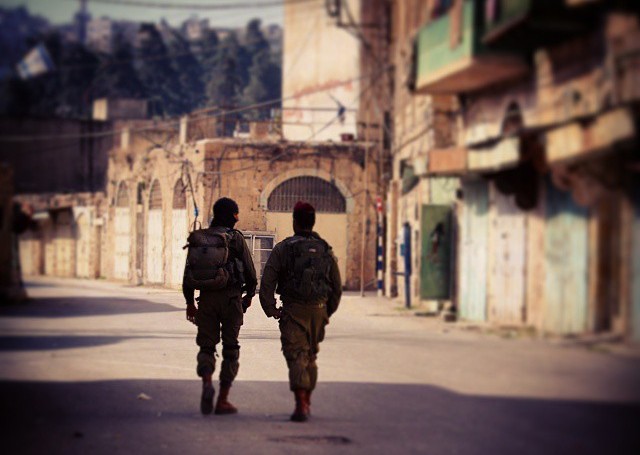
Days ago, the Israel Defense Forces (IDF) began a sweeping series of military operations in the West Bank city of Hebron, after two Palestinian militants killed two Israeli soldiers and wounded several others. After a weekend of house-to-house searches, over 2,000 Palestinians are known to have been displaced, with Israeli Prime Minister Benjamin Netanyahu vowing that the raid will continue.
The attack that sparked IDF action took place on Friday, at a checkpoint outside Hebron. There, the two Palestinian gunmen—still unidentified at this time—opened fire on Israeli soldiers, and were killed in the resulting shootout. The IDF indicated that large quantities of ammunition were found in the Palestinians’ car, suggesting that the two had planned a mass-casualty attack.
While Hamas praised the attack, the organization has not yet claimed credit, and Israeli officials have not yet publicly identified a group responsible, or otherwise established that the two gunmen were acting alone. Instead, Netanyahu and other senior leaders have sentIDF forces to the West Bank, with Netanyahu initially vowing to blockade the entire region. The premier later walked back his claim, but Israeli forces have moved to shut other crossings around the territory.
In practice, the IDF has begun its operations by sealing Hebron’s entrances and exits, evicting hundreds of Palestinian families, and concentrating its attention on the neighborhood of Deir Baha. Israeli Defense Minister Israel Katz indicated that the IDF seeks to follow the example of its past operations in the cities of Tulkarm and Jenin, where Israeli forces displaced tens of thousands of residents in early 2025, and still remain today.
Once inside the city, Israeli forces have conducted door-to-door searches and largely flattened several areas, including businesses near the neighborhood of Farsh al-Hawa, and multiple homes in Deir Baha. At least forty-seven people had been detained by Sunday, according to the Palestinian Prisoner’s Society. Per Netanyahu, the zone is to be settled by Israelis: “We are going to destroy terrorist infrastructure, and we are going to build the infrastructure for settlement”.
Amidst accusations of collective punishment of the West Bank’s Palestinian community, global observers have also tied the operations to Netanyahu’s security-oriented approach to governance, in the days ahead of Israel’s nationwide election. That election takes place today, Tuesday 27 October, with no party currently expected to secure an outright majority. Netanyahu, however, is believed to be relatively likely to lose his mandate to lead, in the nation’s first vote since the attacks of 7 October 2023.
Image Credit: “CPT Palestine, two Israeli soldiers walk down Emek Hebron street” by CPT Palestine is licensed under CC BY 4.0.
What We're Reading:
Across the ongoing Middle East conflict, no nation has been caught so totally off-guard as Saudi Arabia. Between Iranian retaliatory strikes against Saudi infrastructure and the Strait of Hormuz, American difficulties in honoring long-time security commitments, and the resurgence of Yemen’s Houthi rebels, Riyadh has been forced to postpone its sweeping development plans and draw down its gargantuan investment profile.
In this article, The Economist explains the myriad crises facing Crown Prince Mohammed bin Salman, in a moment when the Gulf autocrat had been expecting to cement his vision for Saudi Arabia’s future.

Around the World:
At least sixty people were killed in the Ethiopian region of Oromia over the last week, according to representatives from the Ethiopian Orthodox Church. According to the church, all of the dead were Christians, killed across two attacks in the Merti and Sherka districts. Over twenty other people were seriously wounded across the two attacks, and homes were burned. The Ethiopian government alleges that rebel forces, particularly the Oromo Liberation Army, were behind the attack, while the Oromo Liberation Army accused Addis Ababa of being responsible.
A large battle between Somali federal forces and the jihadist insurgency al-Shabaab is estimated to have killed at least 115 fighters in total, across both sides of the exchange. According to Somali soldiers who spoke to Reuters, at least forty soldiers were killed, along with over one hundred wounded, after al-Shabaab car bombs destroyed several military vehicles. According to Somalia’s defense ministry, roughly seventy-five al-Shabaab militants were killed and over fifty others were wounded in the battle.
At least sixty-two people were killed in northeastern Nigeria on Friday, when gunmen stormed the village of Binnari in the nation’s Taraba State. The attackers were likely part of a heavily armed bandit gang, one of many active in this part of Nigeria. Humanitarian death toll estimates have continued to climb, after a group of people attempted to flee the violence in a boat that capsized, killing many aboard.
Nine people were killed in a suspected terror attack in Jordan on Friday, when several gunmen stormed a Greek Orthodox church during a funeral, approximately 120 kilometers southwest of the capital city of Amman. Another forty people were wounded in the shooting. Three armed suspects were apprehended on Monday after a shootout. The Islamic State is believed to be responsible for the attack, but has not yet claimed credit. In the pre-dawn hours on Tuesday, Jordan launched retaliatory airstrikes into southern Syria, where Amman claimed to have killed over twenty Islamic State militants; Damascus disputed the Jordanian figure, and alleged civilian casualties.
Brazilian President Lula da Silva narrowly won a fourth term in Sunday’s runoff vote against Flávio Bolsonaro, in a stunning reversal after Lula fell short in the first-round vote. Sunday’s runoff was marred with controversy after a Lula-appointed Supreme Court judge, formerly the president’s personal defense lawyer, extended voting in some cities with only minutes to spare before polls closed, citing voter bus service problems. Bolsonaro, son of convicted Brazilian ex-president Jair Bolsonaro, said that he will contest the results.
In Serbia, nationalist autocrat Aleksandar Vučić conceded a stunning defeat in the nation’s general elections, also held on Sunday, after resigning his post as President of Serbia to seek the position of Prime Minister. The vote was a long-awaited, improbable victory for Serbia’s student-led protest movement, which has opposed Vučić’s government continuously since 2024. Vučić had dominated Serbian politics since 2012, and was expected to employ the nation’s institutions to keep a firm grip on power.
A series of drone attacks by Sudan’s paramilitary Rapid Support Forces (RSF) resulted in blackouts across southeast Sudan, according to the nation’s Electrical Holding Company. The strikes impacted five power stations across three states, severely damaging equipment, as the RSF shifts its tactics to increase pressure on the Sudanese Armed Forces.
France’s second week of massive nationwide protests resulted in the estimated turnout of 410,000 people, according to the French Interior Ministry, whereas union leaders claimed a much larger total of approximately 800,000 attendees. This weekend, the protests were followed by clashes with police, resulting in some 1,300 arrests, but did not devolve into the large-scale riots and looting of the prior weekend. French organizers have indicated that they will return to the streets next Saturday.
In Albania, anti-corruption protests continued on Sunday, just hours after the nation’s Prime Minister, Edi Rama, announced steep fines against participants in protests that turn violent, including against individuals who do not directly engage in violence. In response, demonstrators set fire to several chairs that Rama had placed in front of the Education Ministry building, as a symbolic invitation for protesters to engage in dialogue.
Unrest also continued in Italy this weekend, with major protests devolving into clashes with police officers in Rome, Turin, and Bologna. Many other cities were frozen by the protests, although they remained peaceful in those other areas. Italian police had deployed thousands of officers nationwide in advance of the demonstrations, which are intended to protest the rising cost of living, as well as foreign wars. Spain reported smaller-scale protests and looting in Barcelona and wider Catalonia, with one hundred arrested.
Elections in Bulgaria will go to a runoff vote scheduled for Sunday, after a record-low-turnout election did not indicate an outright winner in the nation’s presidential contest. While Bulgaria’s presidency is a mostly ceremonial role, the vote was expected to be an outlet for Bulgarians to show support or discontent after a sequence of Russian drone attacks off the Black Sea coast, which are cumulatively believed to have killed dozens of civilian sailors. Incumbent President Iliana Iotova will go to the runoff, against pro-Western reformist candidate Andrey Gyurov.