
WarFronts Weekly 11.24.2026.
Evan Moloney •

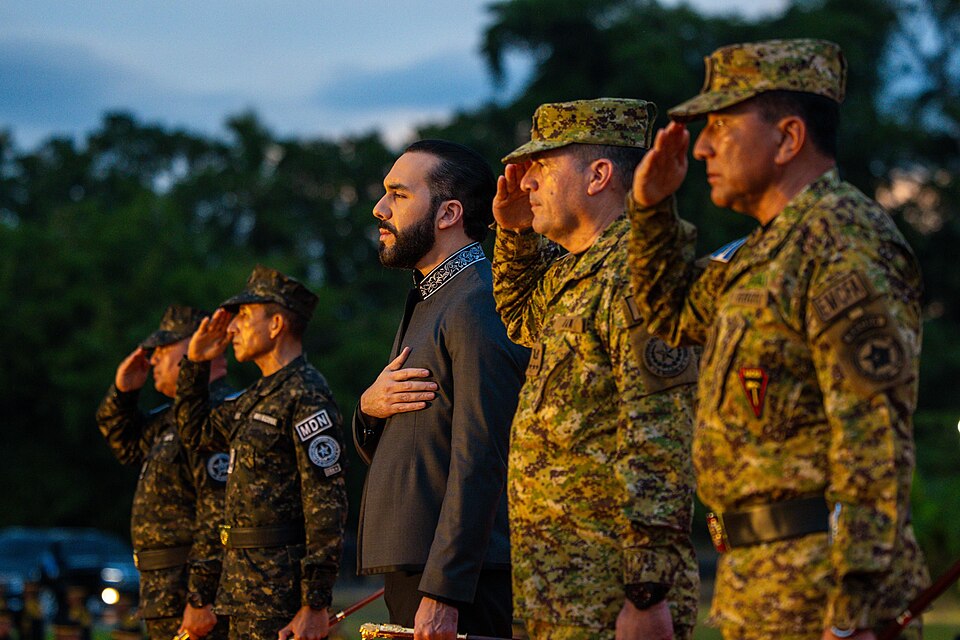
“They were fully aware of the immense risk they were taking, yet they chose to act to protect others. And they succeeded.”
-Salvadoran President Nayib Bukele, on the deaths of three Salvadoran soldiers in Haiti.
WarFronts Weekly
24.11.2026
Salvadoran Troops Killed in Haiti:
This weekend, El Salvador made its first formal acknowledgement of the deaths of its soldiers in Haiti, amidst Salvadoran President Nayib Bukele’s operation to intervene in Haiti’s gang crisis. The Friday death of three Salvadoran troops, in an accidental explosion at a military base, raises the stakes for Bukele as he doubles down on his operation.
On Sunday night, Bukele published a detailed social media post explaining the circumstances behind the three soldiers’ deaths. Per Bukele, the trio were killed, and another soldier was wounded, as they tried to control the descent of an explosives-equipped drone that was returning to base as its battery was running out. Bukele explained that the drone was equipped with a grenade that two of the deceased troops had been trying to manually dislodge and disarm; a third soldier was killed in the same incident.
Their deaths are the first that Bukele’s government has acknowledged, although San Salvador has forcefully denied local testimony and media reports alleging that other Salvadoran soldiers have been killed. In his statement on the incident, Bukele vowed that Salvadoran troops currently deployed to Haiti would be allowed to leave immediately if they chose, without facing reprisals.
Bukele’s handling of the deaths, thus far, suggests that he and the Salvadoran government may be wary of a change in public opinion, as the nation’s intervention in Haiti begins to generate personnel, materiel, and financial losses. The loss of the three troops risks creating tension with the Salvadoran public, which is broadly comfortable with the Haiti deployment, but may quickly lose tolerance as the costs of the intervention become more apparent. Bukele praised the three troops for their heroism, and promised a large payment and a monthly stipend for their families.
The sensitivity of the troops’ deaths underscores the domestic element of Bukele’s decision to intervene. El Salvador is slated to hold elections on 28 February 2027, in which Bukele will run for a third term, after constitutional reforms. Bukele is expected to win the vote, and enjoys broad support at home, but the move has been criticized as an attempt to convert El Salvador into a one-party state, potentially with Bukele in pursuit of a much longer tenure as president.
Bukele’s initial decision to deploy into Haiti was expected to bring real political benefit: expanding Bukele’s anti-gang strategy to a new regional hot-spot, and pursuing the return of four captured Salvadoran airmen with the UN-backed Gang Suppression Force. That demonstration of Bukele’s power, however, risks backfiring onto Bukele directly, if the costs of this intervention rise further before Salvadorans cast their votes.
Image Credit: “Nayib Bukele with military officers” by Casa Presidencial el Salvador is dedicated to the public domain.
Introducing DefenseFronts:
The team behind WarFronts, HomeFronts, and Fronts.co is proud to announce the launch of DefenseFronts on YouTube.
On DefenseFronts, our team takes a close look at the global defense industry, focusing on the tech, the tactics, and the cutting-edge innovations that shape modern battlefields. From changing alliances to future flashpoints, we know that today's global military-industrial complex is a window into tomorrow's geopolitics. With Simon at the helm, and a growing team of experts and Fronts-universe veterans working behind the scenes, we know you'll love DefenseFronts, so check it out.
This Week on Fronts:
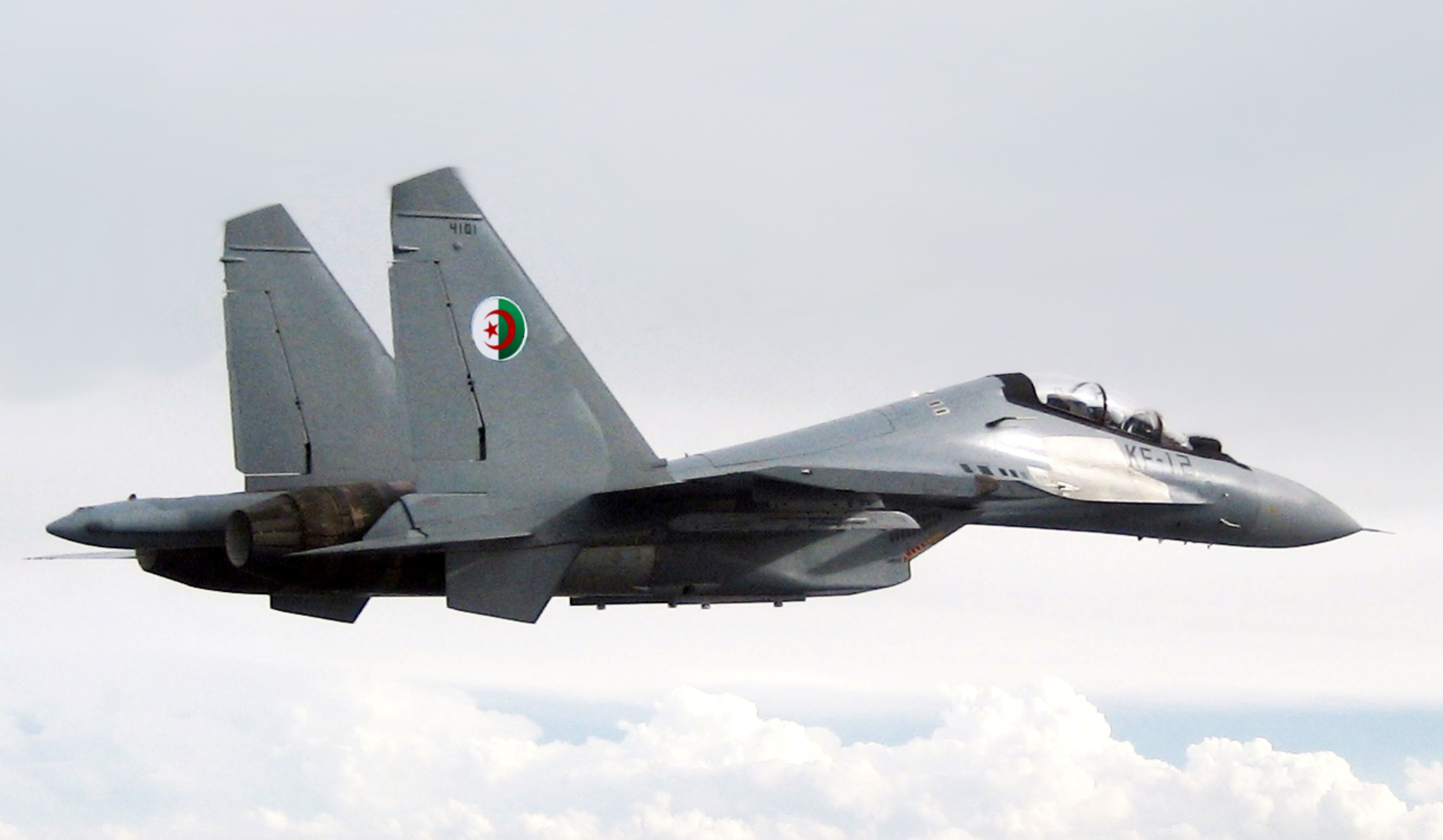
After decades of careful adherence to a policy of non-intervention, Algeria is beginning to flex its muscles across North Africa and the Sahel. The apparent policy change in Algiers is timely: the transnational jihadist conflict impacting its southern neighbor, Niger, threatens Algerian interests in the country, and Morocco moves to consolidate control over Western Sahara, despite the opposition of the Polisario Front resistance group that Algeria has backed for decades.
In this free-to-read article on Fronts, regional analyst Hasret Kargin asks whether Algeria’s changing approach to the region is deliberate, or is instead a reaction to shifting global circumstances. In the process, Kargin explains the collateral effects of Algeria’s sixty-year commitment to non-intervention, as one of Africa’s most powerful nations finds itself dealing with a range of crises in which it chose not to interfere.
Mogadishu’s Diplomatic Breakdown with Abu Dhabi:
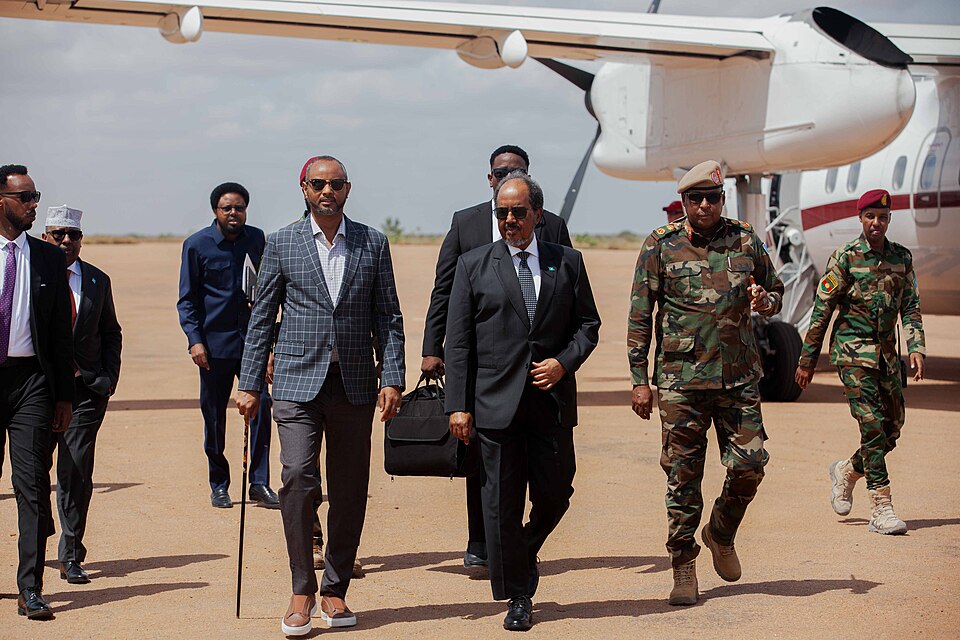
The strained relationship between Somalia and the United Arab Emirates has all but collapsed this week, after the Somali government announced on Thursday, 19 November, that the Emirati ambassador to Mogadishu had been expelled from the country. The decision all but confirms Somalia’s place as a new epicenter of regional tensions, as Abu Dhabi’s adversaries across the Islamic world align behind Somali President Hassan Sheikh Mohamud.
The UAE has worked to advance its own interests in Somalia for years, often in ways that did not align cleanly with Mogadishu. The Somali breakaway region of Somaliland and the autonomous region of Puntland have each enjoyed a close relationship with the UAE, resulting in lucrative port-expansion and rehabilitation projects, and the establishment of an alleged weapons-smuggling corridor between the UAE and Sudan.
This week, however, Somali President Mohamud justified the decision to expel the Emirati ambassador by alleging a far more damaging expansion of the Emirates’ operations in Somalia: that Abu Dhabi had directly supported armed forces outside the federal government’s control.
Mogadishu condemned “Emirati aggression” in the nation, and withdrew Somalia’s ambassador to Abu Dhabi. Mohamud personally claimed that Abu Dhabi had financed non-Mogadishu-aligned regional governments: “A brother does not burn your house. A brother does not buy your property without your knowledge. A brother does not divide your family.”
The Emirates rejected Mohamud’s description of its activities, and reiterated that it had already withdrawn its other diplomatic staff from Mogadishu, in January of 2026. Abu Dhabi has, however, spent the past several months growing closer with several Somali separatist or autonomous governments: not just Somaliland and Puntland, but also the southern administration of Jubaland.
The breakdown fits neatly within a wider regional context, as the Emirates and its formal and informal allies in Israel, Morocco, Azerbaijan, India, and elsewhere, move into broader geopolitical alignment. That axis of nations is increasingly opposed to a rival axis, comprising Saudi Arabia, Turkey, Pakistan, Egypt, Qatar, Syria, and others.
Somalia has become an increasingly important hot spot in those groups’ proxy conflict, ever since Mogadishu announced, in January, that it had cancelled all of its deals with the Emirates after the leader of an Emirates-backed separatist faction, in Yemen, fled the collapse of his movement via a flight that landed on Somali soil in Somaliland.
Now, however, the escalating tensions with the Emirates come after Israel recognized Somaliland’s independence claim in December 2025, and as President Mohamud attempts to consolidate power and unconstitutionally extend his term in office.
By detonating his country’s remaining links with the Emirates, Mohamud may be attempting to rally support against an external enemy. Nonetheless, he risks galvanizing the Emirates and its allies even further, to support Somali opposition efforts that would force Mohamud out.
Image Credit: “Somali President Hassan Sheikh Mohamud and Defense Minister Abdulkadir Mohamed Nur arrive […]” by United States Army is dedicated to the public domain.
What We're Reading:
As the renewed civil war in Yemen continues to intensify, reliable expert analysis and updates from the conflict zone are of paramount importance for our Fronts team. Unlike well-covered conflicts in Ukraine or the Persian Gulf, the details of Yemen’s front-line developments are often missed, overshadowed by reports of damage to Saudi Arabia.
Among the experts our team trusts, we strongly recommend the Basha Report, a US-based risk advisory service by analyst Mohammed al-Basha. Updates via the Basha Report are provided regularly via X, and al-Basha regularly contributes expert insights for major global news outlets.

Join the Fronts Community:
Love our work on WarFronts, HomeFronts, and DefenseFronts?
Fronts.co is our team's independent media outlet, where we join forces with global conflict analysts and subject-matter experts, to dive deeper on geopolitics than we ever could on YouTube.
Also on Fronts, we host our premium subscriber service, where we offer exclusive video episodes and ad-free access to our entire YouTube back catalogue.
Fronts visitors enjoy free access to our regular podcast series, Due South and the Middle East Roundtable, no account required, plus a free selection of written articles and this very e-mail newsletter, WarFronts Weekly.
A subscription to Fronts costs just $5 USD each month, or $50 USD each year. With your support, our team can maintain our independence, and create new, free offerings like HomeFronts and DefenseFronts, for all of our fans around the world.
Around the World:
Over sixty members of the Fulani ethnic group in north-central Nigeria were killed over the weekend, according to Fulani local officials in Niger State. According to those officials, the killings were a wave of reprisal attacks against the Fulani after five people were killed on Saturday by suspected Fulani gunmen at a church during morning prayers. This was the latest wave of fighting in Nigeria’s farmer-herder conflict, in which primarily Fulani herding groups and primarily non-Fulani sedentary farming communities try to gain local dominance in a resource-scarce region divided along religious lines.
Ukraine launched several naval drone strikes against Russian or Russia-aligned ships this weekend, including the sinking of a naval corvette, the Merkury, which was commissioned in 2023. The Merkury was sunk in the Libyan port of Benghazi, with Ukraine using seven naval drones to hit the vessel. Ukraine also struck the dry-cargo ship MV Angara, which Kyiv alleges that Russia has used to smuggle weapons. Another suspected Russian weapons-smuggling cargo ship, the Sparta II, is being towed out of the Gulf of Finland after being set aflame in a Saturday strike. According to Finland’s Ministry of Defense, a Russian helicopter may have penetrated up to 4.1 kilometers into Finnish territory shortly after the Sparta II was hit.
Also in the Russia-Ukraine conflict, Russian strikes killed at least four people in and around Kyiv on Sunday, with the death toll expected to rise after a drone struck an apartment building. Elsewhere, Ukraine is expanding its campaign of mid-range drone strikes against Russian supply routes in the occupied Donbas, after the partial destruction of the Kerch Strait Bridge last week. Over the weekend, Ukraine also expanded its long-range strike campaign to target the Russian exclave of Kaliningrad for the first time, after air-raid alerts from the territory indicated that Ukraine likely targeted the bases of Russia’s Baltic Fleet.
Mexico was rocked by heavy fighting on Saturday, after state security forces captured ‘El Chapo Isidro’, the head of a cartel known as Los Mazatlecos. The capture took place in the city of Guasave, where a wider firefight between soldiers and alleged cartel members left four soldiers and seven others dead. Mexico City stated that the US Trump administration provided information leading to the capture of El Chapo Isidro, who is a veteran ex-member of the Beltrán Leyva cartel, and a close ally of the Sinaloa Cartel internal faction “Los Mayos”.
The Front pour la Refondation de la Nation (FRN), the Congolese rebel alliance that includes M23 and its partner factions, captured the town of Bunyakiri in a major offensive earlier this month. The offensive is critical in interrupting the supply routes that government forces depend on, as they try to support operations in the border region between North Kivu and South Kivu provinces—both partially under FRN control.
Indonesia formally charged a former chief of the National Police and five other current and former senior police officers with conspiracy to carry out acts of treason, in connection to a scandal in which President Prabowo Subianto and numerous other targets were illegally wiretapped and surveilled. The plot was allegedly in support of that former police chief, General Listyo Sigit Prabowo (no relation), who briefly served as the president’s Chief of Staff before the investigation came to light. Indonesian authorities cited evidence, including One Piece flags, that purportedly link the plotters to Indonesia’s dormant youth-led protest movement.
Russia plans to launch a satellite armed with a nuclear weapon by the end of 2026, according to an assessment by NATO-member intelligence services, reported on Monday by German media. Per that assessment, Russia’s Sputnik-S satellite was assembled years ago, and is intended to destroy adversary satellites with a nuclear explosion and electromagnetic pulse in outer space.
Fulcrum Enterprises
{% unsubscribe %}