
WarFronts Weekly: 12.30.2025.
Warfronts Weekly: December 30, 2025. Context and analysis on conflicts across the world. Two emails each week: Warfronts Weekly on Tuesdays, Friday Blitz on Fridays.
Evan Moloney • December 30, 2025
"It's time, at this sensitive moment, to let reason prevail by withdrawing from the two provinces and doing so peacefully".
-Saudi Defense Minister Khalid bin Salman, via X.
Saudi-Backed Standoff in Yemen:
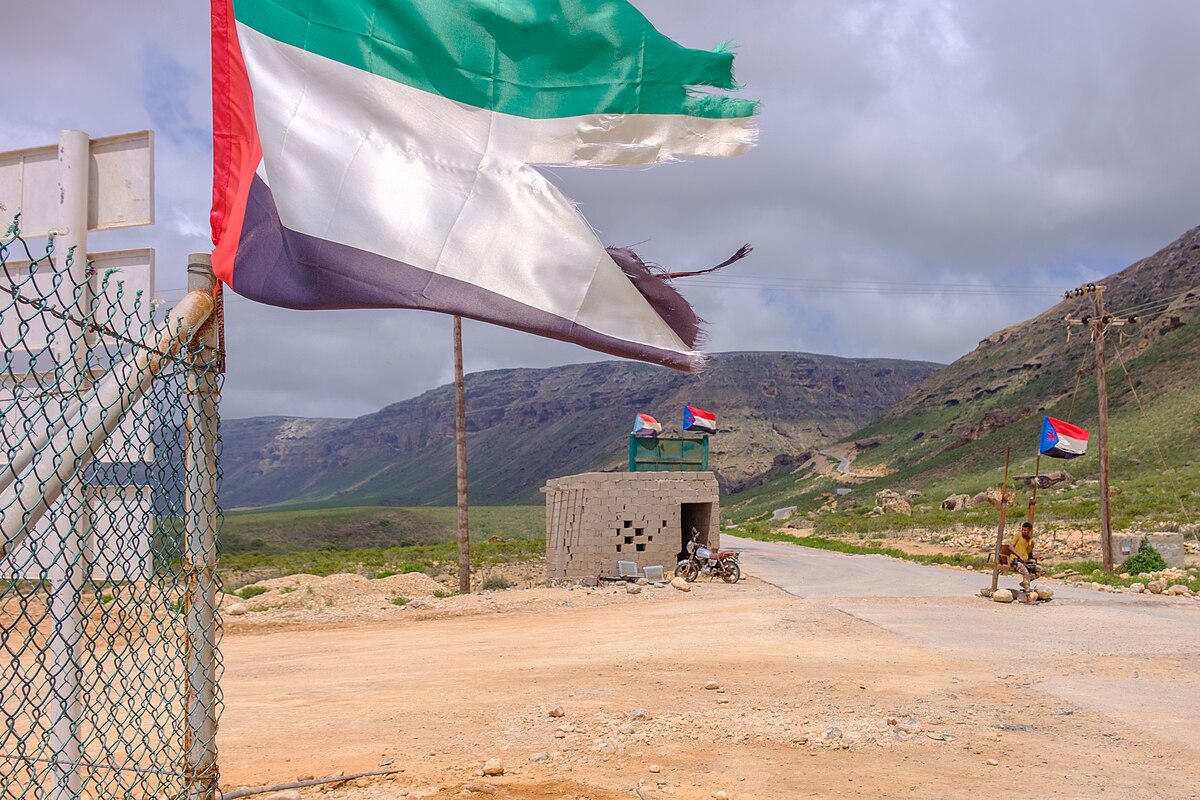
A new round of fighting may be imminent in eastern Yemen , as tens of thousands of Saudi-backed fighters mass for a potential counteroffensive against the UAE-backed Southern Transitional Council (STC). After what had initially been a fairly smooth withdrawal from territory captured by the STC, Saudi-aligned tribal militias are now reinforced by direct Saudi air support , as Riyadh demands a peaceful STC withdrawal from much of the region.
The new standoff marks a reversal of what had seemed to be Saudi Arabia’s approach to the STC’s conquest, when, during the main thrust of the STC’s offensive, Riyadh had brokered and approved deals allowing its friendly militias to withdraw and reposition safely. Riyadh’s conciliatory approach was a major factor in preserving the mostly bloodless nature of the STC’s recent victories.
Over the last week and more, however, Saudi-backed forces have been massing on Saudi territory , and on Thursday, Riyadh called on the STC to withdraw from areas now under its control. Specifically, Riyadh is calling for the STC to vacate the governorates —or, regions—of Hadhramaut and Mahra , each of which are currently under full control of STC forces.
Notably, the STC did hold limited territory in both governorates prior to its recent offensive, including most of the southern coastline. While Saudi Arabia may not actually expect a full STC retreat from those areas, it has not yet made a distinction between long-time STC holdings and the rest of the governorates.
In Saudi Arabia’s telling, the STC’s recent conquests constitute an “ unjustified escalation that harmed the interests of all segments of Yemeni people, as well as the southern cause and the coalition’s efforts. ” From Riyadh’s perspective, that may well be accurate; prior to its offensive, the STC maintained a tense working relationship with the Saudi-backed Republic of Yemen government and its associated tribal factions.
As Riyadh’s focus shifts toward a counteroffensive , it will leverage the support of the National Shield Forces , a powerful fighting coalition that’s believed to have massed anywhere from ten to twenty thousand troops in preparation for the new campaign. On Tuesday, Saudi Arabia bombed the port city of Mukalla —under STC control—targeting an alleged shipment of weapons sent from the UAE. The STC has also reported scattered skirmishes in areas close to the massing Saudi-backed forces.
Tactically, military exchanges in this part of Yemen tend to favor attacking forces , which can gather in the thousands for localized offensives while defenders must spread themselves thin across a remote landscape. During the STC’s initial takeover, Saudi-backed tribes had few options to rally a large-scale defense.
By conceding temporary losses, massing their forces, and waiting for Saudi air support, those Saudi-backed forces now have a greater chance at territorial recapture than they otherwise would have, if they’d allowed fighters and equipment to be lost in area-by-area defensive operations.
The true extent of Saudi Arabia’s military objectives, however, is currently unknown. While Riyadh may indeed seek a return of the land captured by the STC, or even the entirety of Hadhramaut and Mahra Governorates, it may alternatively choose to pursue a more limited series of goals.
Similar to Turkey in northern Syria, Saudi Arabia may attempt to carve out a buffer zone , where friendly fighting forces can remain and be supplied directly by Riyadh. Or, Riyadh may seek to regain control of Yemen’s oil fields, or capture enough of a contiguous geographic area that the Republic of Yemen government doesn’t cease to exist, at least nominally, while living under the protective umbrella of Saudi-backed forces.
Either way, the STC has vowed to resist Saudi Arabia and its proxy fighters, and it’s likely to draw on popular support in the areas it controls. Recent pro-separatism protests drew thousands of attendees, calling for the STC to declare the establishment of a sovereign state of South Arabia.
Image Credit: “Southern Transitional Council – roadblock Socotra (2)” by Hardscarf is licensed under CC BY 4.0 .
This Week on WarFronts:
This week, we published this episode on the United States’ escalating confrontation with Venezuela, exploring the background behind what appears to be a looming crisis.
Now, though, US President Donald Trump’s recent comments on a radio show have muddied the waters, with Trump claiming that the United States “ knocked out ” a “ big plant or big facility ” on Venezuelan soil within the last several days. The strike was not previously reported or acknowledged, by either the US or Venezuela.
When asked about the incident, unnamed US officials told CNN that the strike was conducted by America’s Central Intelligence Agency via drone, against a site where Tren de Aragua gang members were allegedly storing narcotics and preparing boat shipments. According to those US sources, there were no casualties in the strike, as nobody was present at the facility when the strike took place.
Israel Recognizes Somaliland Sovereignty:
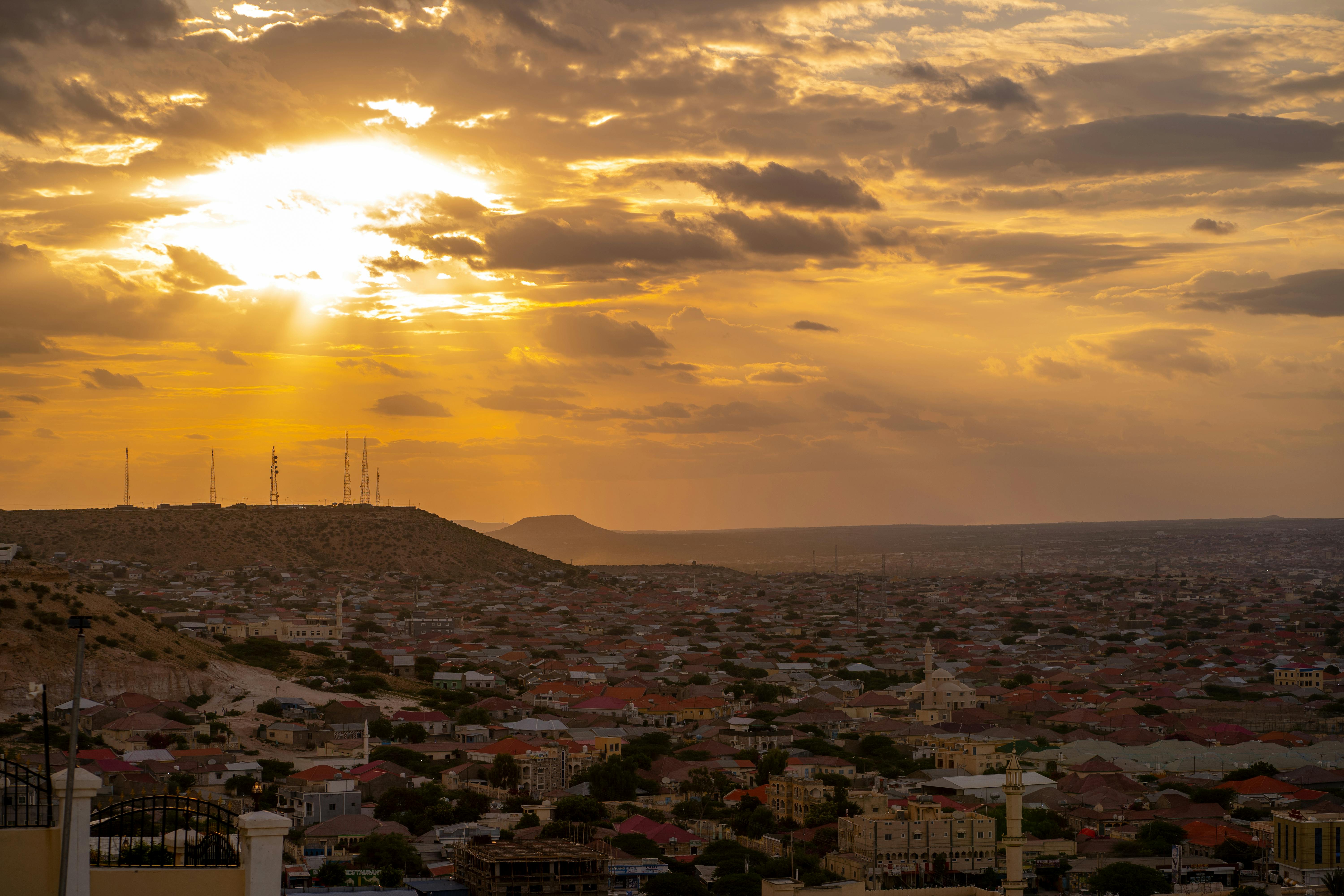
This week, the broadly unrecognized Somali breakaway state of Somaliland got some of its best news in years, when the nation of Israel became the first country to grant Somaliland full recognition of its independence . But although the decision was a diplomatic breakthrough for Somaliland, it drew immediate condemnation from all across the globe.
Somaliland declared its independence from Somalia over three decades ago , but, until now, it has been unable to secure any international recognition of that claim. Somaliland is widely recognized as a more democratized, more stable geopolitical anomaly, in contrast to the rest of Somalia, although it’s been criticized for recent authoritarian backsliding and local conflicts as the prospects of true Somalilander sovereignty seemed to dim.
So, Israel’s decision to suddenly recognize Somaliland’s sovereignty came as a rapid reversal of fortunes for the government in Hargeisa. According to Israel, the decision was motivated by a desire to extend the impact of the Abraham Accords , and continue Jerusalem’s broader efforts to normalize relations with the Islamic world.
From the perspective of most world nations, however, the decision wasn’t seen as a bold, progressive step by Israel, but instead, as a risky and potentially destabilizing misstep . The African Union fiercely condemned the decision, reinforcing its general, strong opposition to the recognition of African secessionist movements, and, naturally, the Somali federal government reacted with outrage.
The decision was criticized by China, the European Union , and regional power players like Turkey, Egypt, Saudi Arabia, and Qatar . Even the United States , Israel’s long-time backer on the world stage, chose to reiterate its support for Somalian territorial integrity, despite a growing push on the American right to embrace Somaliland as a sovereign nation.
But the move probably drew the quiet approval of one close Israeli ally: the United Arab Emirates . While the UAE supports most factions in Somalia, Somaliland and neighboring, autonomous Puntland are treated as proxies by Abu Dhabi. For more information on the UAE’s proxy network, we recently published a free-to-access guide via Fronts.co, here .
It’s not clear whether the UAE will join Israel in recognizing Somaliland, although some sources suggest that India may consider throwing its support behind Hargeisa. Shortly after the announcement, Somalia’s ambassador to India defected in support of Somaliland.
For both Israel and the Emirates, Somaliland is an important strategic asset . Positioned on the Gulf of Aden, Somaliland is a perfect vantage point to monitor the key Red Sea global shipping lane, keep tabs on the Houthis , and facilitate action across Africa . The UAE and Israel enjoy a deep and growing strategic relationship , and the UAE already maintains a military base and other key assets on Somaliland’s territory.
Behind the scenes, it appears that the US may be more open to Israel’s decision than it has let on. The US has been diplomatically engaged with Hargeisa for some time, and on Sunday, just after Israel’s decision, an American V-22 Osprey traveled to Somaliland from Djibouti, for unknown reasons.
According to regional experts , the US, Israel, and the UAE may be increasingly aligned in a security strategy that views Somaliland as essential to Red Sea maritime security . Israel would also stand to gain by counterbalancing Turkish influence in the African Horn, although Turkey and the UAE share their own complex, but generally friendly relationship.
Image Credit: “Stunning Sunset Over Hargeisa, Somalia” by Abdulkadir Hiraabe is dedicated to the public domain.
What We're Reading:
Vladimir Putin’s persistence in Ukraine , despite staggering battlefield losses and few plausible paths to total victory, has perplexed Western experts for the last several years. Despite the Russian military’s dismal performance, its inability to make meaningful progress on the front lines, and its rapidly depleting personnel and resources, Putin appears content to continue his Ukraine invasion, even if a potential peace deal doesn’t materialize.
This recent report by the Financial Times may help to explain why. According to the report, Putin still receives regular, wildly optimistic battlefield briefings from his generals, where he is frequently told of Russian victories that do not exist . Putin appears to have full trust in the military leaders providing this information, and as such, he reportedly believes that total victory in Ukraine is still a real possibility .
If accurate, the article paints a damning picture of a leader who’s not just willing to continue an abjectly ruinous war, but who lives within a practically impenetrable information bubble that outside voices haven’t yet reached. Over the weekend, Putin reiterated in a national address that Moscow will accomplish its goals in Ukraine by force, if Ukraine is not interested in resolving their conflict peacefully.
Around the World:
International aid workers painted a grim picture of the Sudanese city of El Fasher , after accessing the city for the first time since the Rapid Support Forces carried out a likely genocide. Aid workers reported that the city was largely deserted, with a few people sheltering in buildings or under makeshift outdoor covers. The sheer emptiness of the city suggests, but does not confirm, the likely fates of around 150,000 civilians currently listed as missing—but who are not believed to have made it out of the city in time.
Tensions continue to rise in Syria, where an explosion at an Alawite mosque in the city of Homs left eight people dead. An ultra-conservative Sunni group took credit for the strike; it’s the same group that claimed to have struck a Damascus church in June, killing 20. After the bombing, Alawite protests broke out in several cities, but in the coastal city of Latakia, three people were killed in the streets—with some sources suggesting that pro-Assad loyalists were behind those three deaths.
Thailand and Cambodia reached a ceasefire agreement this Saturday, their second of 2025, establishing a conclusion to weeks of fighting in the two nations’ disputed border region. The ceasefire appears to be holding, as of the time of writing, although there have been isolated violations reported already.
The United States launched a round of airstrikes in Nigeria last Thursday, in an operation approved by Nigerian President Bola Tinubu. The strikes hit two camps linked to the Islamic State-Sahel Province in Nigeria’s Sokoto region, according to the Nigerian government. Donald Trump alleged that the targeted jihadists had been attacking Christians.
A raid in a town in northwest Turkey left six Islamic State fighters and three Turkish police dead, as Turkish authorities attempted to continue a recent series of nationwide arrests. Eight other officers and a member of Turkey’s security forces were wounded; the raid was one of over one hundred across the country on Monday. Subsequent raids on Tuesday saw the arrests of 357 suspected Islamic State members.
Vladimir Putin alleged on Monday that Kyiv had attempted a large-scale drone assault against his presidential residence in Russia’s Novgorod region, which Russia claims was unsuccessful. Ukraine has forcefully denied the allegations, which Putin levied shortly after what had seemed to be a cordial, relatively successful meeting between Donald Trump and Volodymyr Zelenskyy at Mar-a-Lago. According to Zelenskyy, Moscow’s new allegations are meant to justify additional attacks on Ukraine, and further prolong the war.
Also this week, Zelenskyy expressed a willingness to entertain the idea of a demilitarized zone in the Donbas region, as long as that demilitarized zone was based on a mutual, matching withdrawal from the front line by both Ukraine and Russia. US-backed proposals for a DMZ have called for Ukraine to abandon the remaining Donbas region, in line with Russia’s demands.
Poland reported that several dozen objects, likely smuggling balloons, were sent into Polish airspace by Belarus on Christmas Day, while, on that same morning, Polish fighter jets scrambled to intercept a Russian reconnaissance aircraft flying near Polish borders over the Baltic Sea. Polish intelligence called the balloon launch “ a provocation disguised as a smuggling operation ”, similar to recent waves of balloons sent into Lithuania.
China has initiated massive military exercises around Taiwan, using air, naval, and rocket forces, days after the largest US sale of arms to Taiwan in history. The drills will be conducted in areas surrounding the island, and will focus on patrol, port blockades, joint seizure operations, and deterrence of foreign intervention from outside Taiwan.
Donald Trump announced on Monday that the United States would support a new round of Israeli strikes against Iran , and suggested that Iran is working to reconstitute its missile and nuclear weapons programs following strikes in 2025. Iran denies that it has a nuclear weapons program; on Saturday, Iranian President Masoud Pezeshkian alleged that his country is embroiled in a “ full-scale war with the US, Israel and Europe ”, though in context, his comments appeared to be intended as an observation rather than a threat.
A cross-border drone attack left two soldiers dead in Chad, in a region where Sudanese refugees take temporary shelter at a major transit camp before moving away from the Sudanese border. Chadian officials noted that the origin of the drone was unclear, but vowed retaliation if the drone was launched by the Sudanese military.
Israel carried out an airstrike in Lebanon last Thursday that purportedly killed a member of Iran’s elite Quds Force. The target, posthumously identified by Israel as Hussein Mahmoud Marshad al-Jawhari, was an alleged member of Quds Unit 840, a covert group linked to numerous assassination plots and acts of destabilization around the world.
Also in the Middle East, Jordan carried out its own airstrikes in the vicinity of its northern border with Syria, attacking what it described as “ launch points ” used by arms and drug smugglers, as well as “ factories and workshops ”. The strikes hit land under the de-facto control of Israel-backed Druze militias, and were backed by unnamed regional allies.
The leader of the military of the internationally recognized Libyan government, General Muhammad Ali Ahmad al-Haddad, was killed in a plane crash in Turkey last Tuesday. Al-Haddad was one of five military officers who died aboard a private jet shortly after takeoff from Ankara, alongside three crew members; the crash was provisionally blamed on a technical malfunction, although investigations are ongoing.
Myanmar’s first round of phased elections registered low turnout over the weekend, demonstrating a lack of public interest in supporting the military regime’s efforts to legitimize its rule. While the vote is intended to cement the junta’s claim to power, it has been widely condemned around the world as neither free nor fair.
Protesters in Serbia are pushing for an early parliamentary election this year, in hopes that a favorable result will allow the nation’s protest movement to oust President Aleksandar Vucic and his government. Protests in Serbia have been ongoing for over a year, after a November 2024 train station disaster that killed sixteen people as a result of endemic corruption and graft.
A damning report by the Swiss Armed Forces found that Switzerland cannot defend itself against a full-scale attack, at a moment when the nation faces growing risks of Russian aggression. Switzerland, long known for its neutrality, is in the midst of a military modernization effort, but according to the leader of the military, only one in three Swiss troops would be fully equipped to fight if war broke out today.