
WarFronts Weekly: 2.17.2026.
🟨 WarFronts Weekly | Europe Shows Backbone in Munich & More
Evan Moloney • February 17, 2026
“[…] I’m here today to make it clear that America is charting the path for a new century of prosperity, and that once again, we want to do it together with you, our cherished allies and our oldest friends.”
-US Secretary of State Marco Rubio, speaking at the Munich Security Conference.
Europe Shows Backbone in Munich:
One year after an unexpected takedown of Europe by US Vice President JD Vance, which prompted a crisis of faith among European members of the NATO alliance, global heads of state and defense leaders gathered together again at the Munich Security Conference. This time, European leaders took a noticeably harder tack on defense matters, while a more deferential presentation by US Secretary of State Marco Rubio seemed to be too little, too late.
This year’s Munich conference was a showcase for European leaders, who’ve spent the last year scrambling to facilitate a strategic rethink of the continent’s security posture—both within, and beyond, the NATO alliance. Most notable of all, according to remarks by German Chancellor Friedrich Merz, was recent action by France, where Paris and Berlin have reportedly started talks to extend France’s nuclear umbrella to European partners.
Both Merz and Macron took to the stage in Munich, with Merz urging a strategic reset of Europe’s relationship with the US, and demanding that Washington work to rebuild lost trustacross the Atlantic. In Macron’s remarks, the French leader emphasized the utility of new deep-strike capabilities, as well as his nation’s independently controlled nuclear arsenal.
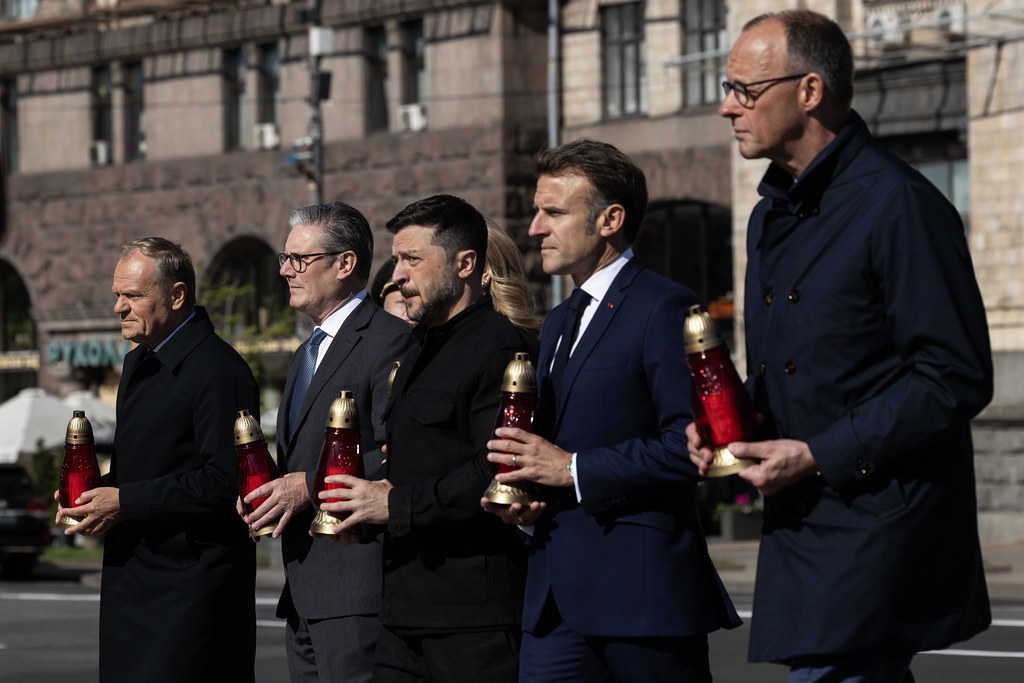
UK premier Kier Starmer was also present, calling for an expansion of British hard power and a deeper integration between Britain’s military and its European counterparts. Polish President Donald Tusk, leading Europe’s most impressive rearmament in the 21 st century, emphasized Poland’s and Ukraine’s conduct as a display of European values in times of hardship, directly pushing back against US allegations of European moral decay.
The weekend’s most anticipated speech came from Marco Rubio, who took a far more conciliatory approach to Europe than JD Vance had done in Munich, a year prior. This time, the US official weaved a story of shared cultural history, and shared threats of “civilizational erasure”, in what seemed to be a rhetorical defense of Europe’s place at America’s side.
But while European leaders publicly took the speech well, emphasizing that Washington’s reassurances had been heard, reports from the event broadly indicate the opposite. In a post-conference summary, Politicodetailed consistent skepticism from European defense officials, who concluded that in essence, Washington’s positions had not changed. Reports by CNBC, Le Monde, the Financial Times, and other outlets broadly concurred.
The harshest, and most immediate rebuke came from EU foreign policy chief Kaja Kallas, who took to the stage after Rubio, and issued a takedown of Washington’s overall criticisms: “Contrary to what some may say, woke decadent Europe is not facing civilizational erasure”. Ex-NATO Secretary General Jens Stoltenberg and French Europe Minister Benjamin Haddad each took a similar tone.
By that time, however, the conference had mostly cleared out. Rubio, for his part, had jetted off to Slovakia and then to Hungary, to visit two hard-right leaders who have become clear favorites of the MAGA movement, despite strained relationships with most of their fellow European heads of state.
Image Credit: “Prime Minister Kier Starmer visits Ukraine” by Simon Dawson / No 10 Downing Street is licensed underCC BY 2.0.
This Week on WarFronts:
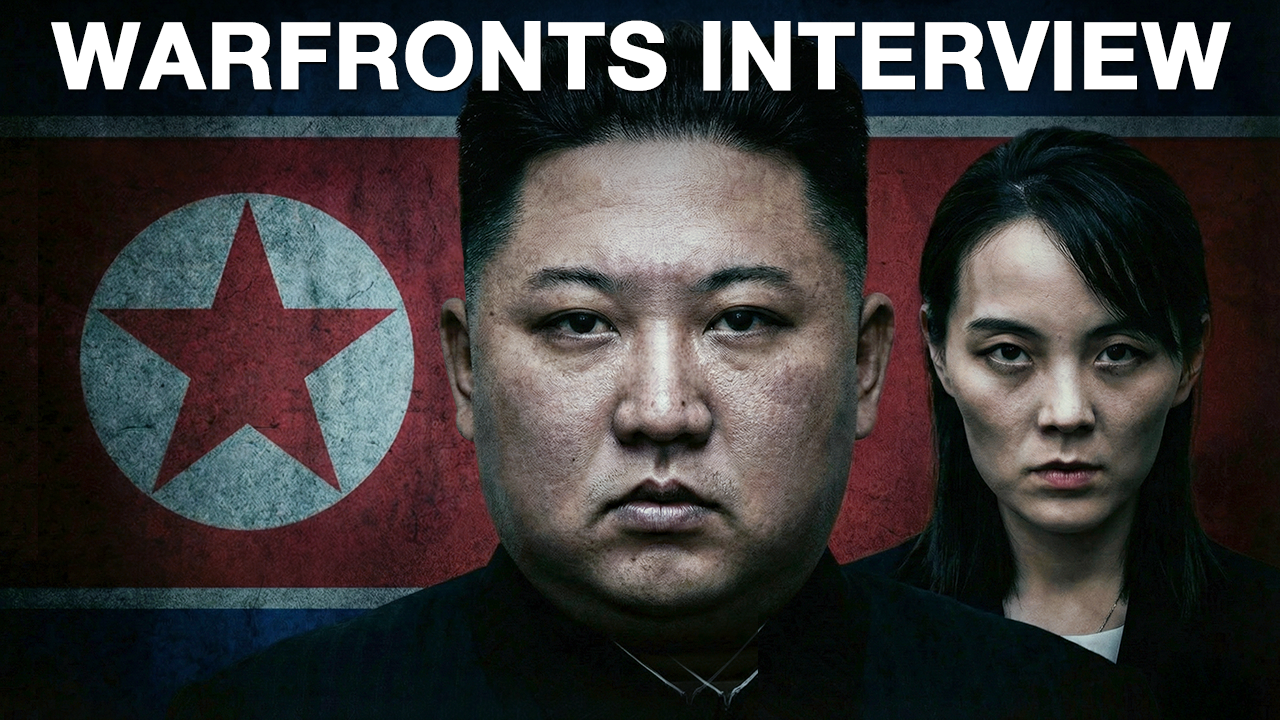
Last week, WarFronts published a conversation between Simon and Greg Scarlatoiu, President and CEO of the Committee for Human Rights in North Korea. The wide-ranging conversation came just days before South Korean legislators revealed that, according to their nation’s intelligence services, Seoul now believes that Kim Jong-un’s daughter (believed to be named Kim Ju-ae*) is being groomed as his successor. According to that assessment, the younger Kim is likely to be formally designated as such, in the near future.
On Monday, North Korean state media released images depicting Kim Ju-ae with her father in Pyongyang, opening a new housing district for families of soldiers killed while assisting Russia in its war against Ukraine. While the press appearance may have been planned in advance, its timing—and depictions of Kim Ju-ae constantly present at her father’s side, seeming to take part in conversation—may also be a tacit nod to the South Korean assessment.
*Note: The woman depicted in our episode thumbnail is not Kim Ju-ae, but Kim Jong-un’s younger sister, Kim Yo-jong, a key advisor who was once thought to be her brother’s likely successor.
US Forces Massing Near Iran:
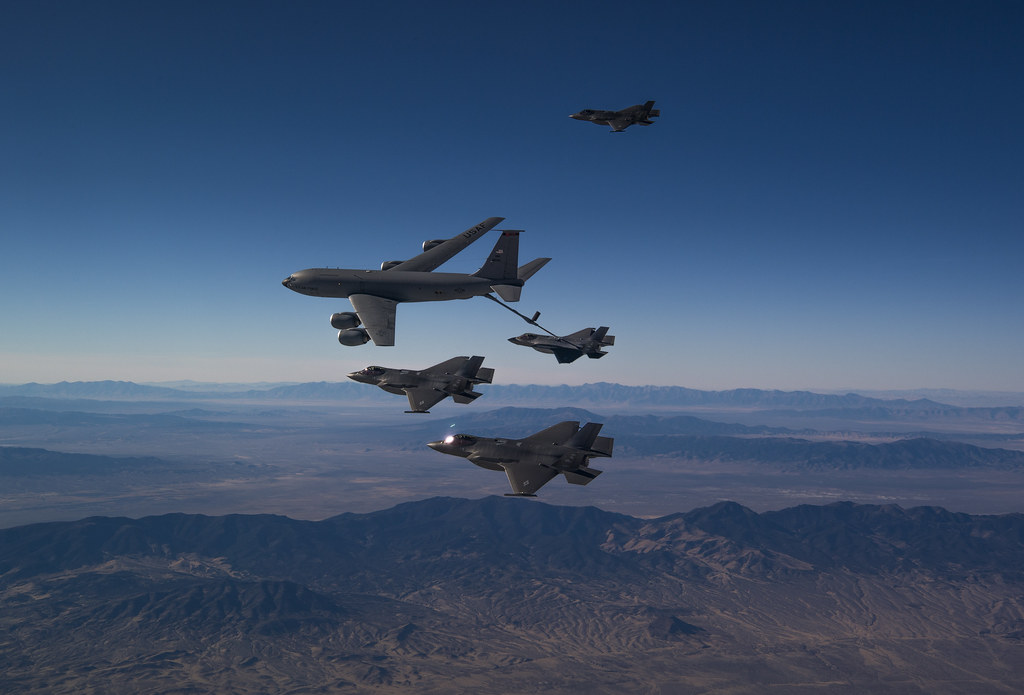
Although expert predictions (and our team’s own Polymarket bet) on a January invasion of Iran proved inaccurate, recent insider reports and military hardware movements indicate that US operations against the Islamic Republic may still be forthcoming. With a second carrier strike group just days away from the Iranian coast, an American campaign of regime change appears to be close at hand.
Days ago, an exclusive Reuters report quoted high-level US insiders, who indicated to the outlet that Washington is now “preparing for the possibility of against Iran”. Per the report, US planning has become highly complex, with Washington now intending to target nuclear, state, and security infrastructure across Iran. The US expects that Iran will attempt to retaliate against Washington and its allies.
On Sunday and Monday, open-source intelligence analysts highlighted the movement of up to eighteen F-35 fighter jets, or possibly even more, flying to the Middle East from the RAF Lakenheath airbase in the UK. Those F-35s arrived in Jordan, contributing to a force that now includes thirty F-35s, twenty-four F-15E Strike Eagles, six EA-18G electronic warfare jets, and twelve A-10C attack planes.
On Tuesday, those movements only , with waves of tankers escorting more fighters toward the Middle East from both Europe and the US. Twelve F-22 stealth jets departed Langley Air Force Base, while thirty-six F-16s began their respective journeys from three bases.
Tracking publicly available flight data, our WarFronts team observed a series of inbound flights by C-17 strategic airlifters into Middle Eastern US bases. Those C-17s appeared to reactivate their transponders on approach to their destination—with no listed, or tracked, point of origin. Most telling of all, two E-3 early warning and control aircraft left Alaska late Monday night, en route to the UK and then, most likely, to the Middle East.
While Iranian leaders have attempted to provide a public-facing response, regime officials have presented mixed messages. On Sunday, after the Reuters report on US military objectives was published, an Iranian diplomat was quoted by the outlet, stating that Iran is working with the US on a nuclear deal with mutual economic benefits relating to “common interests in the oil and gas fields, joint fields, mining investments, and even aircraft purchases”.
Elsewhere in Iran, however, defense officials announced live military exercises in the Strait of Hormuz on Monday, with the Iranian Navy simulating responses to various hypothetical military threats. The exercises came one day before a new round of talks in Geneva; those talks are expected to be ongoing, as of this newsletter’s release. Domestically, Iranian agents are believed to be carrying out a nationwide crackdown, in the aftermath of the nation’s exceptionally deadly protests in January.
Image Credit: "Refueling during a combat power exercise Nov. 19, 2018." by aeroman3 is marked withPublic Domain Mark 1.0.
What We're Reading:
As the world shifts away from the post-Cold War, US-led global order of the early 21 st century, each region of the planet has reacted in its own way, but nowhere has change arrived faster than in the Middle East. As outside powers lose their ability to exert pressure on the most powerful Middle Eastern nations, the region’s ambitious leaders are charting their own respective paths, for the first time in many years.
In this War on the Rocks analysis, Turkish academic and analyst Ali Murat Kursun argues against the idea that this Middle East reformation is mere chaos, and lays out the case that this moment should be interpreted as the formation of a new local ecosystem of power and survival. Rather than a failure of outside efforts to control the region, this new phase is described as an attempt to undo, and recover from, generations of mistakesby the architects of a failed Middle Eastern experiment.
Our WarFronts/HomeFronts Team is proud to announce the launch of Fronts.co, our brand-new subscriber service.
Around the World:
Former Russian Wagner Group recruiters and propagandists are now playing a key role in the recruitment of disillusioned Europeans to carry out sabotage attacks, according to Western intelligence officials. Per those officials, Wagner personnel are targeting economically disadvantaged or vulnerable Europeans, to make up for a shortage of covert Russian agents after a series of diplomatic expulsions by EU nations.
Heavy fighting in the south of Nigeria’s Borno State left an unspecified number of soldiers and Islamic State – West Africa Province fighters dead, in what the Nigerian government described as a successful effort to repel simultaneous assaults on a pair of military bases. Per the Nigerian government, the Islamic State’s failure is a result of escalating pressure by Abuja and its international partners, including the US.
Across Nigeria, a suspected bandit attack left over thirty people dead in a series of raids on three villages in Niger State. The attack was the latest of many that have targeted sedentary civilian communities. The United States appears to be building up equipment in Nigeria, after a series of recent cargo flights appeared to drop off heavy cargo.
and a group of accompanying gunmen killed eleven soldiers and a child at a checkpoint in northwest Pakistan on Tuesday, in what appeared to be the latest attack by the Pakistani Taliban. Twelve militants were reported killed at the scene. On Monday, Pakistan had reported a separate attack using a motorcycle bomb one day prior; two people were killed in that incident.
In northern Burkina Faso, seven Ghanaian merchants were killed in an attack by suspected al-Qaeda-linked militants of the JNIM organization. The targeted Ghanaians, described by Ghana’s interior minister as tomato traders, were part of a larger group of eighteen; the seven killed were all men, while three other men and all eight women in the group were spared.
In Gaza, Medecins Sans Frontieres reported that it halted non-critical medical operations at Nasser Hospital in Khan Younis in January, because of the presence of armed, masked men who may have been moving weapons or otherwise taking part in military operations. The shutdown was the first report, by a major international humanitarian group, of armed men in a hospital or the potential use of a hospital to facilitate wartime activity.
The United States announced the completion of a mission to transfer Islamic State detainees from Syria to Iraq, after twenty-three days of operations. In Munich, Iraq’s foreign minister indicated that nations across the Islamic world are starting the process to take back citizens who became Islamic State fighters.
In a joint statement, Britain, France, Germany, Sweden, and the Netherlands accused Russia of killing anti-Putin dissident leader Alexei Navalny in a penal colony in 2024, using a toxin found in poison dart frogs that does not naturally occur in Russia. The Russian government has categorically denied the accusation as a “Western propaganda hoax”.
Ukrainian authorities detained former energy minister German Galushchenko this weekend, in the latest arrest related to a case called “Midas”, in which Ukrainian officials ran an alleged kickback scheme at Ukraine’s nuclear energy company worth roughly $100 million. Per Ukrainian anti-corruption authorities, the latest arrest came as Galushchenko attempted to cross an international border; he was ousted from his post in 2025.
Peru’s Congress will hold a debate today to consider a motion to remove President Jose Jeri, who was sworn into the post in October after the ouster of his predecessor, Dina Boluarte. Jeri, a member of Peru’s notoriously corrupt political elite, was revealed to have held undisclosed meetings with a Chinese businessman.