
WarFronts Weekly 2.24.2026.
🟨 WarFronts Weekly | US Sustains Pressure on Greenland & More
Evan Moloney • February 24, 2026
“We have a public health care system where treatment is free for citizens. That is a deliberate choice — and a fundamental part of our society. That is not how it works in the USA, where it costs money to see a doctor.”
-Greenlandic Prime Minister Jens-Frederik Nielsen, declining a US offer to send a hospital ship to the Danish territory.
US Sustains Pressure on Greenland:
The US Navy made the unusual decision to surface one of its secretive nuclear-powered submarines this week, just thirteen kilometers or eight miles off the coast of Greenland’s capital city, Nuuk. According to US and Danish officials, the unidentified submarine was forced to surface in a departure from its mission on Saturday, to medically evacuate a US sailor with Danish support.
While the sailor’s condition and the nature of their medical emergency are unknown, the unexpected surfacing reveals the location of a prized US military asset, very close to Greenland’s territory. Greenland, of course, was the site of an extended diplomatic standoff between the US and Europe just weeks ago, which seemed to end when Europe committed to a mission expanding Arctic security.
Due to the submarine’s proximity to Nuuk, and the presence of active and static monitoring equipment in the area, the submarine may have been known to Denmark prior to its surfacing. Neither Danish nor American officials have acknowledged the submarine’s status prior to the onboard medical emergency, and while its presence may have been disclosed to Denmark as a tool to monitor the region, it may alternately have been stationed without Denmark’s or Greenland’s knowledge.
On the same day, Washington engaged Greenland again, to send a very different sort of naval power to the region. US President Donald Trump wrote on social media that the US will send a “great hospital boatto Greenland to take care of the many people who are sick, and not being taken care of there.”
Danish and Greenlandic officials attempted to decline the offer (see our opening quote), and have stressed that Greenland’s population has not experienced any sort of widespread illness that would demand the support of a US hospital ship. While the ship may be intended to treat possible illness aboard the American submarine, Washington has given no indication of any illness or other problems aboard.
While chronic illnesses are relatively common in Greenland, and health infrastructure is lacking in remote parts of the country, these are not problems that could be addressed via the short-term deployment of a US hospital ship. As government officials have noted, Greenlanders receive free access to healthcare in both Greenland and Denmark.
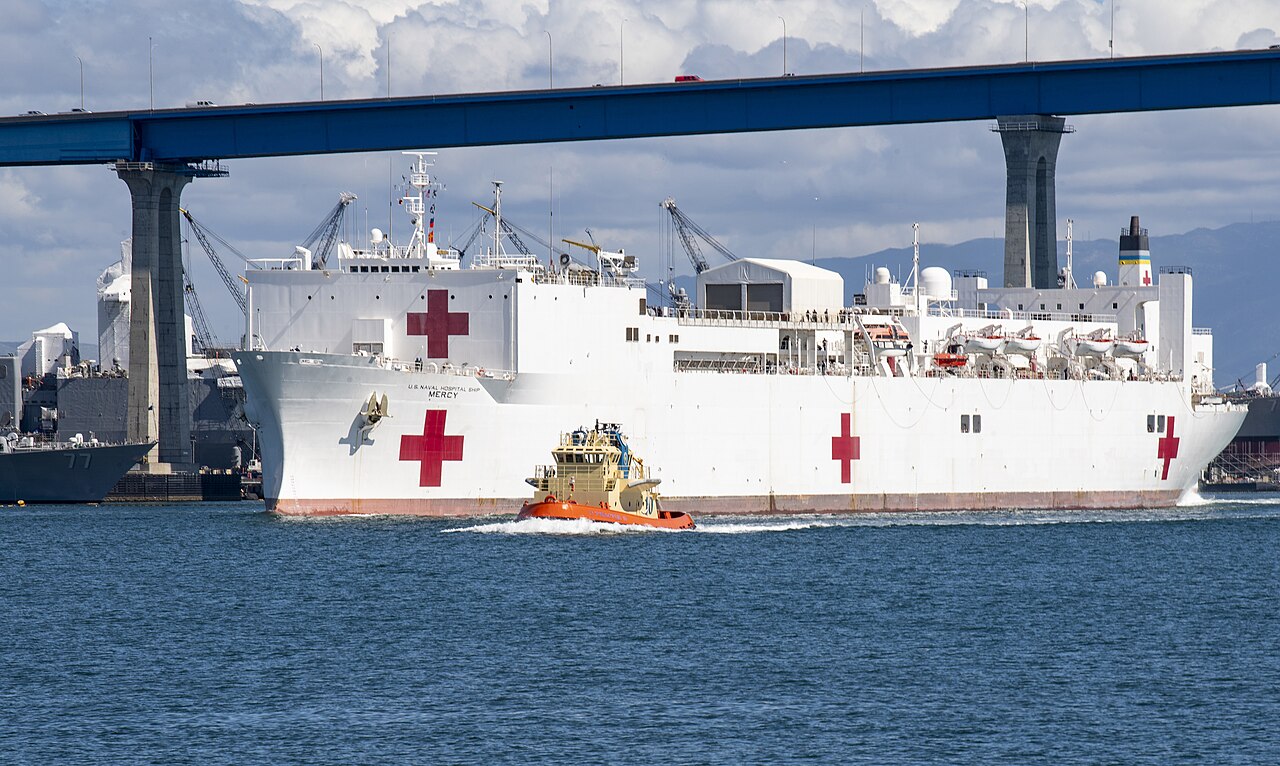
The United States operates two dedicated hospital ships, the USNS Mercy (pictured above) and the USNS Comfort. Both ships are currently stationed in port in the US state of Alabama, and would take over a week to arrive, if sailing at top speed.
Notably, neither hospital ship has deployed to the Middle East, where US forces continue to mass in advance of a likely offensive against Iran within the next several weeks. While the US has not made any attempt to ready American citizens for the possibility of US casualties, recent reports suggest that Washington may order a prolonged campaign, opening a distinct possibility of casualties at scale.
Image Credit: " USNS Mercy (T-AH 19) navigates the San Diego channel, March 23, 2020" by Official U.S. Navy Imagery is licensed underCC BY 2.0.
This Week on WarFronts:
Last weekend, we published this episode on the continued US military buildup in the Middle East. As of the time of writing, the buildup continues—including with a group of especially suspicious US air-to-air refuelers avoiding landmasses in Southeast Asia, likely towing highly sensitive American air assets behind them.
On Monday, a new report via Le Figaro revealed recent upheaval in Tehran, tracing back to the worst nights of massacres perpetrated by the Islamic Republic in January. According to that report, a group of Iranian regime elites attempted to remove Ayatollah Ali Khameneion the eve of the massacres, led by ex-President Hassan Rouhani. While the move would likely not have prompted regime change in the typical sense, it suggests an acute internal threat to Khamenei’s personal leadership, as Washington attempts to ratchet up pressure on the entire regime.
Islamic State’s “New Phase” of Syria Operations:
The Islamic State released a rare audio recording on Saturday night, issuing a global declaration of a “new chapter” of the organization’s operations in Syria. In the recording, a voice self-identifying as spokesman Abu Huzayfah al-Ansari claimed credit for two recent attacks against Syrian Army personnel, and vowed renewed attacks against the global West.
The recording was sharply critical of Syria’s transitional government under interim leader Ahmed al-Sharaa, who the speaker described as a “puppet without a soul”, doing the bidding of Western “crusaders”. In the recording, the rebel operation to overthrow former dictator Bashar al-Assad was described as a Turkish and American-arranged affair.
Sharaa is a known, long-time adversary of the Islamic State, after he and his then-rebel faction broke away from the group following a brief period of association in the early 2010s. Sharaa, a former al-Qaeda commander, was reportedly targeted by five Islamic State assassination attempts across 2025.
The public announcement comes at an especially sensitive moment for Syria, after thousands of Islamic State-linked detainees managed to scatter from refugee camps in northeastern Syria and disappear into the landscape. Many of those detainees—predominantly the family members of ISIS fighters—are still missing.
Their disappearance comes as the United States worked to relocate an approximated 5,700 ISIS prisoners from Syria to Iraq, in efforts that concluded on February 12. Now, however, the United States has begun its final withdrawal of troops from Syria, save for one small base near the Iraqi border. US sources indicate that they will have fully withdrawn within about one month, with their troops transitioning to Iraq or returning to the US.
While US officials have privately told the global press that an American troop presence is no longer needed in Syria, due to the Syrian government’s willingness to combat the Islamic State and other terror groups directly, global experts were already raising concerns before the latest threats from the Islamic State.
With so many fighters and family members believed to be roaming Syria, the Islamic State recording underscores a recent rise in ISIS attacks across Syria since the fall of Assad. The new Syrian government seems to lack the tools to deal with the Islamic State directly, at a moment when the Islamic State appears primed for a resurgence.
On Monday, Syrian authorities announced the first known, successful attack on state security forces since the ISIS recording was released: an ambush against a checkpoint near the city of Raqqa, killing four.
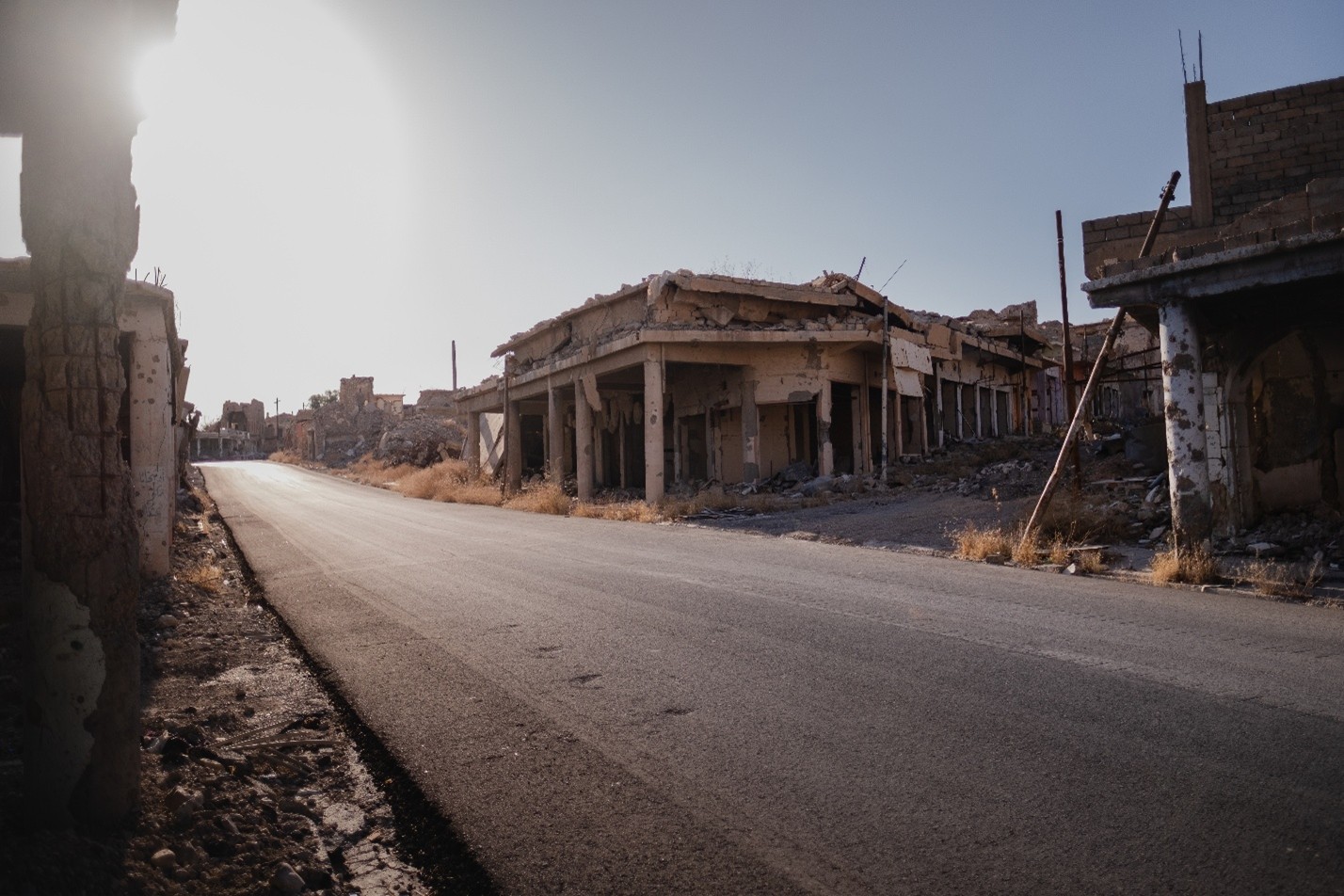
Image Credit: “Photos of the destruction in the old city of Shingal (Sinjar) after war with the Islamic State” by Levi Clancy islicensed under CC0 1.0.
What We're Reading:
Today marks the start of the fifth year of the full-scale Russian invasion of Ukraine, with no end in sight as the ongoing peace process fails to gather momentum. Via Foreign Affairs, Russia expert Michael Kofman provided an in-depth view of the war in its current stage, including Ukraine’s recent achievements and 2026 priorities, Russian tactical frustrations on the front lines, and both sides’ transition toward deep-strike capability.
Our WarFronts/HomeFronts Team is proud to announce the launch of Fronts.co, our brand-new subscriber service.
Around the World:
Mexican authorities killed notorious drug lord Nemesio Oseguera on Sunday, in a military raid intended to apprehend him. Oseguera, better known as “El Mencho”, was the leader of the Jalisco New Generation Cartel, a particularly powerful and extraordinarily violent group that predominantly smuggles fentanyl into the US. Cartel fighters responded with overwhelming violence across many Mexican cities and states, torching buildings, setting up over 250 roadblocks, and killing at least twenty-five members of the Mexican National Guard according to Monday’s official statements. While Mexican authorities had cleared all of the cartel roadblocks by that time, more violence is likely in the near future, and the death toll from the weekend’s fighting is expected to rise. We covered the situation in greater detail .
Pakistan launched a series of airstrikes against alleged militant targets in Afghanistan on Saturday, in response to a series of suicide bombings perpetrated by groups that Pakistan accuses of operating on Afghan territory. According to Pakistan, some seventy militants were killed in the strikes, although Afghanistan’s ruling Taliban government accused Pakistan of killing women and children. The strikes came just days after a Saudi-brokered deal to release three Pakistani soldiers, suggesting that Pakistan may have feared its soldiers could have been held in the same area. Pakistan indicated that it struck a mix of Islamic State – Khorasan Province (IS-KP) and Pakistani Taliban targets. Afghanistan vowed a response in the coming days; the United Nations confirmed at least thirteen civilians killed and seven injured.
Preparations continue for major hostilities in Ethiopia, with recent unconfirmed reports suggesting that Eritrea, the internationally recognized Sudanese military regime, the Tigray People’s Liberation Front, the Oromo Liberation Army, and the Fano militias of Ethiopia’s Amhara State signed an agreement to combat a federal offensive by the Ethiopian government. The agreement would signal unprecedented unity between anti-Addis Ababa factions, as Ethiopian forces continue to build their strength in the Tigray region.
Ukraine announced the recapture of approximately 400 square kilometers of territory, including eight settlements, across southern sections of the front line since the end of January. The victories, in the region of Dnipropetrovsk, were enough to offset more than a month of recent Russian territorial advances, and mark a modest, but important change in momentum after the cutoff of Starlink services for Russian forces.
In Lebanon’s Bekaa Valley, at least ten people were killed and over fifty wounded in a series of Israeli airstrikes on Friday. The strikes, concentrated around the city of Baalbek, were reportedly targeting Hezbollah missile-array command centers, per the Israel Defense Forces. The strikes come as Lebanon is working to demilitarize the group; Lebanese leader Joseph Aoun condemned the strikes as a violation of Lebanese sovereignty.
A Friday attack in Nigeria’s northwestern Zamfara State left at least fifty people dead, and several women and children abducted, in a roving assault across several villages. The attack was believed to be the latest in a long string of ambushes perpetrated by local bandit groups, who had been spotted in the area on at least 150 motorcycles one day prior.
Sudanese Rapid Support Forces paramilitary fighters clashed with Chadian soldiers in the border town of Tine on Saturday, killing five soldiers and three civilians. The attack is the third recent shootout with RSF forces in Chad, where RSF supply lines are under strain after the recent cutoff of other avenues of support from the United Arab Emirates.
A police officer was killed and 24 people were injured in an apparent improvised explosives attack in the western Ukrainian city of Lviv on Sunday. While Kyiv indicated that Russia was most likely behind the incident, the manner of attack was a sharp departure from Russia’s typical conduct, relying on long-range munitions to strike across Ukraine. On Monday, in the city of Mykolaiv injured seven police officers, while a blast outside a railway station in Moscow killed two, including an officer.
A 21-year-old man was shot and killed at US President Donald Trump’s Mar-a-Lago resort in Palm Beach, Florida, after breaching the site’s perimeter while armed with a shotgun. Trump was not present at the resort at the time of the incident, and the gunman was intercepted and engaged by Secret Service personnel and local police.
Protesters are back in the streets of Iran, with Monday marking the third day of continuous student protests since the end of the nation’s mourning period after January’s mass killings of demonstrators. At Tehran University, protesters chanted anti-government slogans and burned flags; state media reported limited confrontations with security officials.
Tensions are mounting in Albania, after running street clashes between police and demonstrators over the weekend. In opposition to socialist PM Edi Rama, right-wing protesters had gathered in anti-corruption protests outside the nation’s government headquarters, but the demonstration turned violent after protesters threw petrol bombs and fired incendiary devices toward the building.
Cuban security advisers are in the process of departing Venezuela, according to nearly a dozen sources interviewed by Reuters, as Venezuelan interim leader Delcy Rodriguez works to signal compliance to the United States. While Rodriguez is reportedly transitioning to Venezuelan bodyguards, Nicolas Maduro and his predecessor Hugo Chavez had long enjoyed the protection of elite Cuban personnel.