
WarFronts Weekly: 3.10.2026.
🟨 WarFronts Weekly | The Iran War's Global Ramifications & More
Evan Moloney • March 10, 2026
"This was a war that should never have happened, and a war that benefited no one.”
-Chinese Foreign Minister Wang Yi, on the Iran War.
The Iran War’s Global Ramifications:
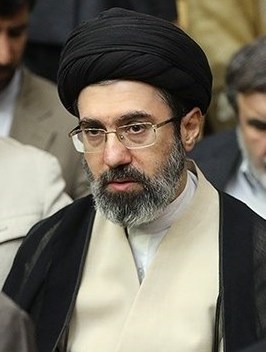
The ongoing war in Iran expanded in scope across the last week, with the nations of the Persian Gulf, Turkey, and Azerbaijan targeted by Iran directly. Days ago, Iran elevated its new Supreme Leader, Mojtaba Khamenei(pictured above), to succeed his father in power, while Israel intensified its attacks on Iranian energy infrastructure.
Across the globe, meanwhile, fallout from the war is growing, as the complexion of other world conflicts and flashpoints have started shifting to match.
In Gaza, Reuters reported on Monday that plans to end the Israel-Hamas War have been placed on indefinite hold since the start of the joint US-Israeli air campaign against Iran. While Gaza has remained mostly quiet during the Iran conflict, the delay may cause problems for the implementation of Washington’s Board of Peace program, which counts on the support of nations that now face direct attacks from Iran.
Also on Monday, Lebanon’s parliament unilaterally extended its own mandate for a period of two years, delaying elections that were scheduled to take place in May. Lebanese leaders have security-based reasons to remain in power, as Israel engages in a new series of strikes against Hezbollah. The decision, however, raises acute concerns around Lebanon’s notoriously unstable, corrupt political system.
Turkey, meanwhile, deployed six F-16 fighter jets to northern Cyprus on Monday, to protect the divided island nation’s Turkish community. Cyprus has come under attack from Iranian forces, but any buildup of Turkish forces will contribute to longstanding concerns over the ethnically divided island’s stability. Southern Cyprus is controlled by an internationally recognized, ethnically Greek administration; in its current state, Cyprus constitutes a frozen conflict zone.
In Ukraine, President Volodymyr Zelenskyy announced that the nation has fielded eleven requests for drone-interception support from nations near Iran, presenting an opportunity, and a strategic quandary, for Kyiv. While those requests are a chance for Ukraine to expand its influence and connections with the Arab world, particularly the rich and influential Gulf states, Ukraine faces a shortage of available drone experts and will be constrained by defense export controls.
China has struggled to break its own shipping free of Iran’s blockade at the Strait of Hormuz, despite ongoing attempts to secure the safe passage of oil and natural gas headed for Chinese ports. A Chinese spy ship is now deployed off Oman’s coast, working to validate ships’ declarations that they are China-flagged or transporting Chinese traffic, but those efforts have been only partially successful. China is dependent on the Strait of Hormuz for its supply of oil and liquefied natural gas, although it possesses sufficient reserves to endure a short crisis.
Finally, France has announced the deployment of nearly a dozen vessels to the eastern Mediterranean at this time, including its carrier strike group sailing with the Charles de Gaulle, and French President Emmanuel Macron is considering a deployment to the Strait of Hormuz. The decision would be the first major European deployment in response to the new Iran conflict, and would aid Macron in making the French case to Europe, as an increasingly relevant defense leader.
Image Credit: “Hojjat-ol-Islam Sayyed Mojtaba Khamenei” by Mahmoud Hosseini is licensed under CC BY 4.0.
This Week on WarFronts:
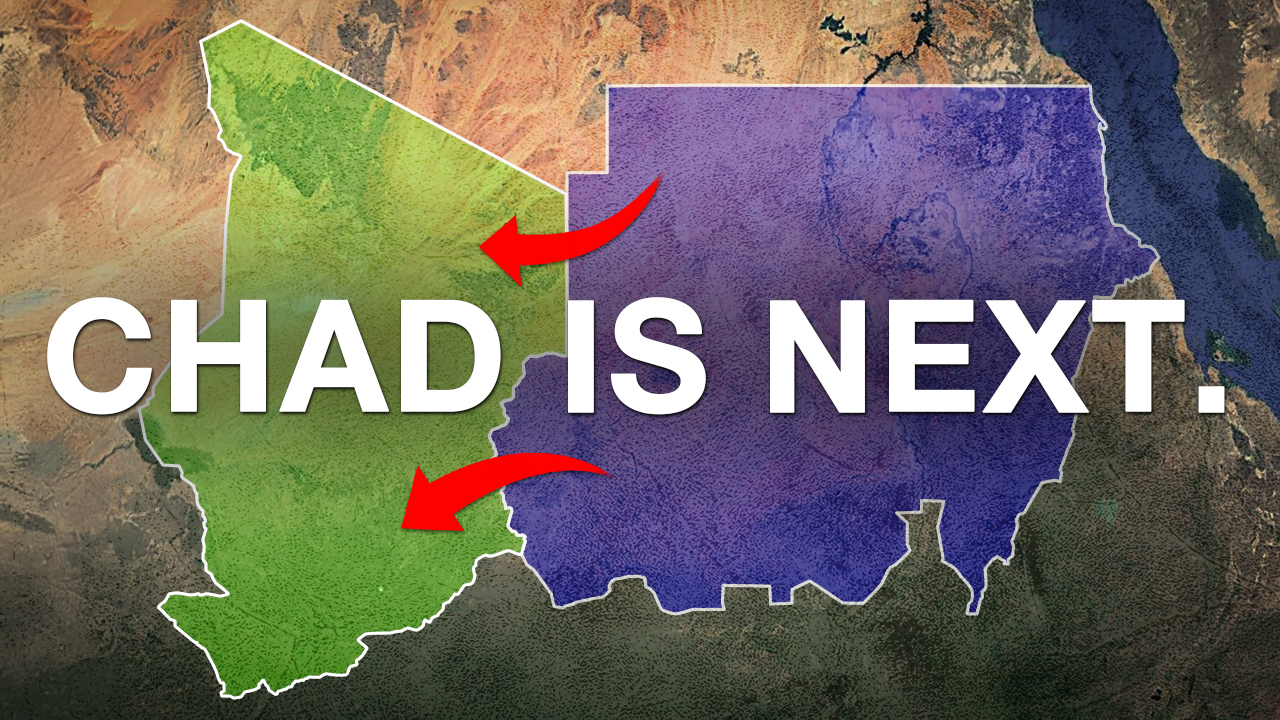
Last Monday, our WarFronts team published this episode, on the rising tensions within Chad as a result of action by Sudan’s paramilitary Rapid Support Forces. The RSF and the Chadian government have been forced into closer proximity due to Emirati troubles in resupplying the RSF through its usual logistical chains, leading to multiple violent clashes as the RSF pivots to rely on smuggling routes across the Chadian border.
This week, the Sudanese Armed Forces provided further evidence that the RSF is facing battlefield setbacks, recapturing the city of Bara on Thursday. Bara is the second-largest city in Sudan’s North Kordofan State, and has been captured and recaptured by the SAF and RSF during the conflict. This time, however, the SAF’s victory may be conclusive; with Emirati interests under attack in the Persian Gulf, the RSF’s supply shortages are unlikely to be addressed in the near future. The RSF has not been able to maintain significant reserves of munitions and critical warfighting equipment, and its forces are at risk of exhausting their remaining supplies unless they opt to shift into a defensive posture.
US Launches Intervention in Ecuador:
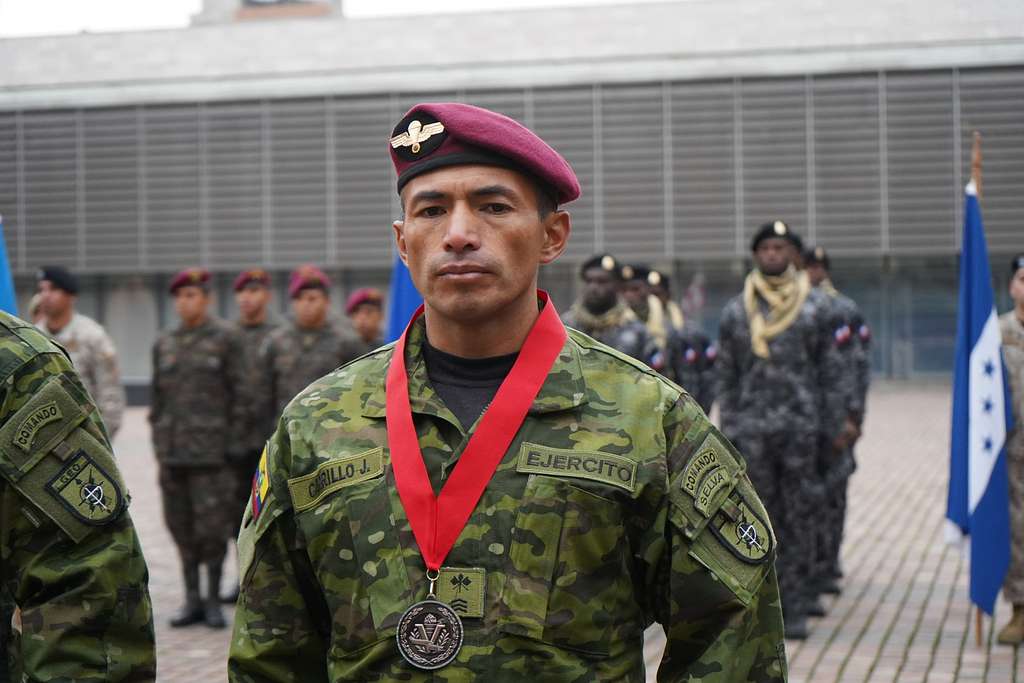
While the world spent the last week struggling to cope with the fallout of the Iran War, the United States began another series of military operations, on the other side of the globe. Last Tuesday night, Washington announced the start of joint military operations with Ecuador on Ecuadorean soil, in an expansion of the US’ military campaign against Caribbean and Eastern Pacific narcotraffickers.
According to US officials who spoke with the global press last week, Special Forces soldiers are already on the ground in Ecuador, supporting Quito’s special operations forces in targeted raids against narcotrafficking sites. While US troops are not participating directly in those raids, they are providing planning, logistical, and intelligence support.
By Friday, however, US support had escalated to include airstrikes against Ecuadorean territory, in joint action carried out with Quito’s endorsement. In that assault, Ecuadorean and US forces used aircraft, helicopters, boats, and drones to bomb a training camp for drug traffickers near the Colombian border. The targeted group was the Comandos de la Frontera, a FARC-dissident Colombian organized crime outfit.
Dubbed “Operation Total Extermination” in Ecuador, the campaign is seen as a boost to President Daniel Noboa’s political fortunes, helping to deliver on Noboa’s promises to crack down on national security. For the US, the Ecuador operations are part of the “Shield of the Americas” program, which has unified mostly right-wing leaders across Latin America to facilitate anti-crime operations.
Image Credit: “An Ecuadorian comando poses with a…” by boudewijnhuijgens isdedicated to PDM 1.0.
What We're Reading:
After four years of continuous fighting, Ukraine’s front lines are globally recognized as a crucible of drone warfare, where the world has learned firsthand of drones’ power to reshape a battlefield.
But drones are far from an abstraction for those living and fighting on the front lines. There, they are a matter of survival, but also deep and pervasive psychological trauma. This analysis by New Lines Magazine explores drones’ profound psychological impact on Ukrainian civilians, as well as Russia’s deliberate use of drones as a tool of mental warfare.
Our WarFronts/HomeFronts Team is proud to announce the launch of Fronts.co, our brand-new subscriber service.
Around the World:
Nigeria’s Borno State was the site of yet another mass kidnapping this week, when suspected Boko Haram fighters abducted over three hundred people in a likely act of retaliation after three Boko Haram commanders were killed by the military. Also in Nigeria, troops killed at least forty-five suspected bandits in Katsina State, losing three soldiers in the process, according to Abuja. In Borno State, suspected Boko Haram and Islamic State – West Africa Province fighters launched coordinated attacks , killing at least twelve soldiers and three civilians.
United Nations peacekeepers are with South Sudanese forces this week, after refusing to comply with an order from Juba to shut down a base in an opposition stronghold area. Juba ordered an evacuation from the town, near the Ethiopian border, but the UN has vowed to remain and provide protection for civilians. Humanitarian workers have already been withdrawn.
An early-morning blast at a Peruvian nightclub left over thirty people injured, including minors, in a bombing attack carried out by unknown perpetrators. The blast is the latest in a long series of attacks by organized criminal elements across the country; the incident took place in La Libertad, where illegal gold mining is often the cause of local violence.
A roadside bomb in Pakistan killed two police officers and two passers-by in Khyber Pakhtunkhwa Province, in the latest attack believed to have been perpetrated by the Pakistani Taliban. The attack took place despite Pakistan’s ongoing offensive against the Afghan Taliban and Pakistani militants operating in the Afghan border region.
Colombians voted in a series of congressional elections on Sunday, capping a campaign season that has been marred by persistent political violence. Mostly concentrated in rural areas, homicides and kidnappings have made this Colombia’s most dangerous period since the 2016 peace accord with FARC; the nation is headed toward an even more contentious national election in May.
The United States is close to finalizing an agreement with Mali’s military government, to resume intelligence and surveillance cooperation in the fight to rein in the Sahel’s JNIM insurgency. The decision follows months of work by Washington to re-engage Mali, where JNIM has demonstrated a fearsome capacity to challenge Malian soldiers nationwide.
The of imprisoned Istanbul mayor Ekrem Imamoglu began on Monday, on charges of heading a criminal corruption network made up of 407 co-conspirators, who are also being tried. Imamoglu is Turkish President Recep Tayyip Erdogan’s chief political rival, and is facing political prosecution; if guilty on all counts, Imamoglu faces a prison term of over 2,400 years.
The African nation of Guinea dissolved forty political parties by decree on Friday, including Guinea’s foremost opposition groups, and banned future political activity using the names or symbolism of those parties. Guinea has been governed by a military regime since 2021, and has become an increasingly dangerous place for opposition and democratic activists.
Months after seizing power in a military coup that fused with a Gen-Z-led protest movement, Madagascar’s president, Michael Randrianirina, ordered the dismissal of his Prime Minister and his cabinet on Monday. The move is expected to help Randrianirina consolidate his power at the head of the nation.
Also in Madagascar, the Russian embassy announced on Saturday that the nation’s Africa Corps had completed the training of their first class of students from the Madagascar Armed Forces. The Africa Corps are a successor to Russia’s mercenary Wagner Group, although Africa Corps are under the direct jurisdiction of Russia’s Ministry of Defense.
Greece is working to purchase an order of new naval frigates from Italy, with the intent to seal the deal within the next month. Greece will acquire two Bergamini-class ships, with the option to build two more, in Athens’ latest expansion of its armed forces. The decision comes as Greece works to keep pace with the furious rearmament drives of its arch-rival Turkey.