
WarFronts Weekly 3.17.2026.
🟨 WarFronts Weekly | Ukraine’s Quiet Counteroffensive & More
Evan Moloney • March 17, 2026
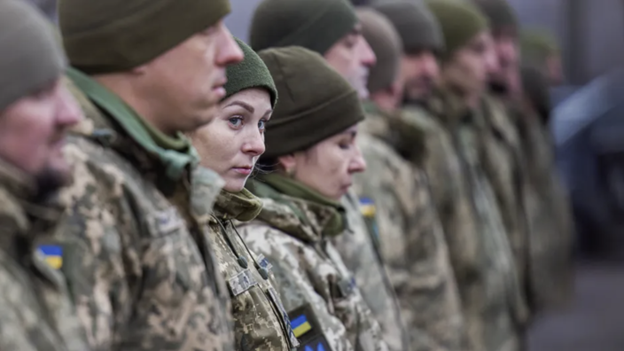
“Almost the entire territory of Dnipropetrovsk has been liberated.”
-Ukrainian chief strategist Maj. Gen. Oleksandr Komarenko.
Due to the constantly developing nature of the Iran conflict, and the sheer volume of Iran-focused updates on a daily basis, our team is exploring other ways to provide consistent coverage of the war on Fronts.co and direct to your inbox. For the duration of the conflict, WarFronts Weekly will remain primarily focused on other global developments. More information coming soon, and thanks for your patronage.
Ukraine’s Quiet Counteroffensive Builds Momentum:
For Ukrainian forces, the ongoing Middle Eastern conflict has brought a range of benefits: opportunities to partner with the Gulf states, a booming market for anti-drone technology, and more. But the war has also provided cover for a quiet series of Ukrainian victories, as Kyiv liberates hundreds of square kilometers of territory at a time.
Ukraine began to recapture substantial territory in late January, shortly after a cutoff of Starlink access for Russian forces. In the early days, however, that recapture seemed to mostly involve Ukraine seizing territory where minimal numbers of Russian troops were present as forward operators, contesting territory without truly establishing control.
By March 10, it was clear that something larger was happening; on that day, the Institute for the Study of War reported that Ukraine had recaptured over 400 square kilometers, taking more territory than Ukraine has lost for the first time since the summer of 2024. One day later, Ukraine’s top strategist (quoted above) indicated that Ukraine had recaptured most Russian-held territory in Dnipropetrovsk Oblast.
While Russia’s presence in Dnipropetrovsk had been limited at best, Kyiv’s ability to clear the region has reduced pressure elsewhere on the front line. In neighboring Zaporizhzhia, Ukraine has recaptured at least nine disputed towns. This week, Ukraine advanced in the direction of the long-embattled town of Slovyansk, with a Ukrainian brigade spokesman reporting on Saturday that Russia’s frontline near Slovyansk is almost completely exhausted.
Ukraine’s advances on the ground are partially the result of a recent tactical adjustment, in which Ukraine has started to prioritize mid-range strikes against Russian air defenses, missile launchers, supply depots, and other assets located 20 to 125 kilometers from the front line. Ukrainian forces have demonstrated clear successes at medium range in recent weeks, including with the destruction of multiple S-400 and S-300 air defense sites.
The pivot to mid-range attacks has allowed Ukraine to undermine Russian defenses in key areas, weakening front-line zones to create space for rolling drone attacks—also a new Ukrainian tactic on display. Just as important, however, the focus on mid-range attacks has allowed Ukraine to concentrate fire on staging areas, disrupting the movement and positioning of Russian assets in advance of an anticipated offensive by Moscow.
Ukrainian officials and global conflict experts widely believe that Russia will at least try to launch a 2026 springtime offensive. Already, however, that offensive would have been hampered by Russian troop loss rates, which have outpaced recruitment numbers for several consecutive months.
Ukraine’s new strike campaign adds another set of problems for Moscow to deal with. The 20-to-125-kilometer range is where Russia typically builds forces in advance of new localized offensives, either individually or in coordination with other units up and down the front. Prevent Russia from massing troops in its typical staging areas, and Ukraine can fundamentally disrupt Russia’s spring and summer offensive before it ever begins.
Image Credit: “Ceremony on the occasion of the 30th anniversary of the Armed Forces of Ukraine” by President of Ukraine is licensed underCC0 1.0 Public Domain.
This Week on WarFronts:

Amidst the ongoing Iran War, our team took a day last week to cover Cuba’s worsening crisis, as a US-imposed oil blockade brings the island and its communist government closer to the brink. That crisis escalated again on Monday, when Cuba’s national energy grid collapsed without warning. The collapse was the latest in a string of recent blackouts, each of which has left most of the island’s population without any source of power for hours or even days. This weekend, Cubans took to the streets in growing numbers, gathering in rare shows of mass discontent against the ruling government. In the city of Moron, a Saturday protest turned violent, with rioters setting fires at the local Communist Party headquarters.
Pakistan Resists Ceasefire Pressure from China:
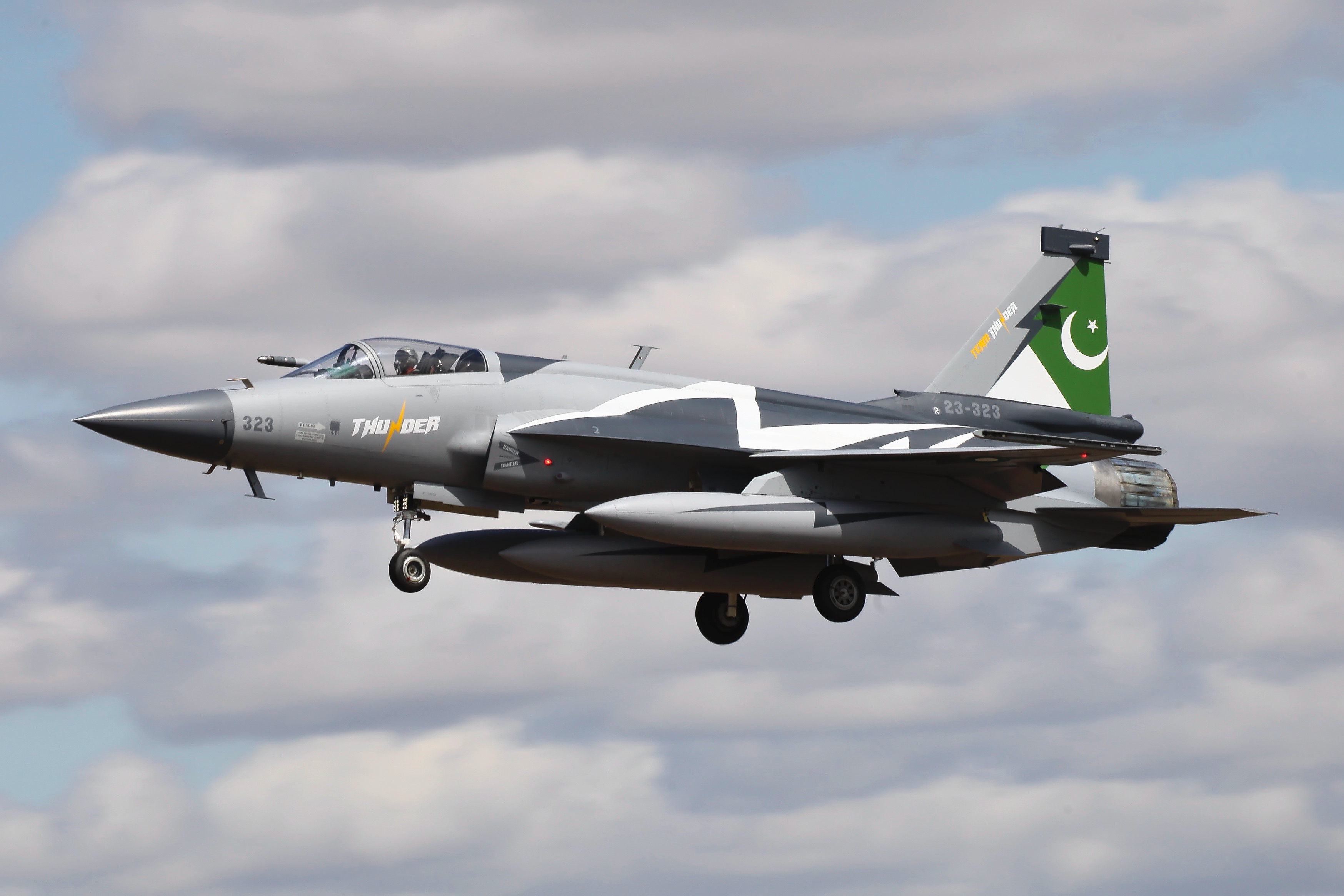
Nearly three weeks after it began, the ongoing war between Pakistan and Afghanistanshows no sign of slowing down. Instead, the war’s most recent developments suggest that Pakistan is ignoring or dismissing overtures toward peace, as the nation’s military pummels Afghan Taliban positions and militant hideouts alike.
Just a few days ago, the war across the historic Durand Line seemed to be winding down. Late last week, Pakistani airstrikes had paused for multiple days, as Beijing pressured Islamabad to draw down hostilities. While the war was prompted by a poorly conceived Afghan surprise attack, Pakistan has long since seized the fighting initiative, and is now able to decide to continue or conclude the conflict, basically at will.
But despite China’s attempts to mediate the conflict, Pakistan’s onslaught has begun to expand in scope. On Friday, Pakistan bombed a fuel depot held by a private Afghan airline, in a clear escalation of the overall conflict. On Saturday, Pakistan bombed across the Kandahar region, hitting what it claimed were facilities and tunnels that supported both the Afghan Taliban government and the Pakistani Taliban insurgency. Pakistan has also continued strikes against the city of Kabul, including in residential areas.
Pakistan’s most damaging strike appeared to come on Monday, when the Afghan government indicated that over four hundred people were killed when Pakistan bombed a drug rehabilitation center in Kabul. Pakistan denied striking the site, and instead claimed that it had aimed for military targets. The drug center in question is a 2,000-bed facility, and was shown in flames on videos released across social media.
Afghanistan has continued its own attempts to retaliate, claiming that it captured a military outpost and killed several Pakistani soldiers over the weekend. Afghanistan, however, appears to only rarely achieve the battlefield successes it claims. Both sides deny each other’s reports of successful hits, and each has routinely accused the other of hitting civilian targets. On Saturday, Pakistan acknowledged that the Afghan Taliban had attempted to strike its military headquarters outside Islamabad, although Pakistan claimed to have shot down all incoming drones.
According to the United Nations, the war has already displaced approximately 115,000 people, mostly in Afghanistan, and killed at least seventy-five civilians. China, Turkey, and other nations have continued to pressure both sides to pursue peace.
Pakistan, however, seems to have no desire to back down, while the Afghan Taliban appear to be hoping that they can lure Pakistan into a ground invasion. If that happens, Afghanistan will be more able to counter the Pakistani military, by reverting to the style of asymmetric guerrilla warfare that served the Taliban so well during the War on Terror. On Monday, Afghanistan dismissed China’s attempts to mediate the conflict, and vowed retaliatory action instead.
Image Credit: "23-323 Chengdu-Pakistan JF-17C Thunder Pakistan Air Force RAF Fairford 16.7.25 (54805835587)" by Colin Cooke Photo is licensed underCC BY-SA 4.0.
What We're Reading:
One week after a brief, but intense false alarm in the open-source intelligence world, in which Iranian Kurdish militia groups were rumored to have begun an offensive in northern Iran, a US/Israel-backed Kurdish offensive still has yet to materialize. Although airstrikes appear to have hollowed out some of Iran’s local defensive infrastructure, the border zone appears mostly quiet, for now.
In this article via New Lines Magazine, independent journalist Laurent Perpigna Iban profiles the Kurdish militia fighters that would have taken part in a ground offensive. Among them, Iban highlights the many young Iranian Kurds who have fled Iran and taken refuge in the Zagros Mountains—some of whom have trained to fight for years, while others have only recently arrived, after January’s protests in Iran and the reprisals that followed.
Our WarFronts/HomeFronts Team is proud to announce the launch of Fronts.co, our brand-new subscriber service.
Around the World:
Several dozen people were killed in a series of suspected suicide bombings in the Nigerian city of Maiduguri, capital of Borno State, Monday night. The bombings were the first major raid on Maiduguri in several years, and were preceded by a series of probing attacks early Monday morning. Jihadist insurgent groups Boko Haram and the Islamic State – West Africa Province have been surging through the area recently, and have attacked multiple military bases across Borno State this month. Boko Haram is believed to be behind the Maiduguri attack.
An artillery attack killed at least ten people—six of them children—at a Ramadan evening feast, in an area of Yemen controlled by the nation’s internationally recognized, Saudi-backed government. Officials blamed the Houthi rebel organization for the strike, in a province mostly controlled by Houthi forces. The death toll is expected to rise further.
An Islamic State – Central Africa Province assault targeted Chinese economic assets in the Democratic Republic of the Congo over the weekend, in a raid on a Chinese mine in chronically unstable Ituri Province. IS-CAP claimed that it killed seventeen Christian combatants during the attack; a Congolese Army barracks was also struck.
An ambush in Nigeria’s Plateau State killed approximately twenty members of the internal security forces and affiliated militias on Friday, according to local sources. While no group formally claimed credit for the attack, Plateau State is the site of near-constant ambush attacks by armed bandit groups, often resulting in mass casualties or kidnappings.
Hamas representatives met with envoys from the US-led Board of Peace initiative in Cairo this weekend, to resume meetings in preservation of Gaza’s ongoing ceasefire. The talks were intended to ensure that Gaza does not return to active conflict as part of the Iran-centric war in the Middle East; after the meeting, Israel announced that it would reopen the border crossing between Gaza and Egypt.
Chinese military flights around Taiwan resumed this weekend, after a weeks-long pause on flights that typically occur daily. Beijing has not disclosed the reason for the pause, which it ended by flying a total of twenty-six military aircraft in Taiwan’s vicinity across Saturday and into Sunday morning. China experts had suggested that the pause may have been intended to reduce tensions, before a March 31 meeting between Xi Jinping and Donald Trump. That meeting is likely to be delayed, and rescheduling discussions may have prompted Beijing to return to its prior posture.
Myanmar’s parliament convened for the first time in five years on Monday, as the nation’s military government works to establish a veneer of civil legitimacy over its dictatorial rule. Myanmar’s current parliament is the result of a set of elections widely recognized as a sham; the nation’s legitimate political opposition was barred from participation, and citizens living in rebel-held areas were largely unable to vote.
Kenyans will no longer be eligible to fight in Ukraine, according to Nairobi, under a new agreement sealed between Kenya and Russia. Over 1,000 Kenyans have been recruited to fight in Russia under false pretenses, per Kenyan leadership, and have been tempted into the warzone by promises of large paychecks and signing bonuses.
The Islamic State is formally and actively expanding in northern Azerbaijan, according to a Jamestown Foundation report by Paweł Wójcik, released Friday. Per the report, Islamic State cells have recently concocted several plots to attack targets in Baku, and have engaged Azerbaijani security forces in direct combat.
Rwanda threatened to withdraw its troops from Mozambique’s northern Cabo Delgado province, unless international funding pours in to sustain the deployment. Rwandan troops play a leading role as peacekeepers in countering a local Islamic State-affiliated insurgency, in an area rich with natural gas and ripe for foreign investment—including from Kigali.
European nations sharply criticized the United States after Washington reduced sanctionson Russian oil, to relieve pressure on global energy markets amidst the ongoing war in Iran. European leaders allege that the decision rewards Russian and Iranian attempts to manipulate the global economy, and that economic pressure on Moscow must be sustained despite the conflict.
After a two-month manhunt, Haitian authorities arrested powerful legislator Arnel Belizaire on charges including financing terrorism, and conspiracy against state security. Belizaire has long faced accusations of extreme corruption during the ongoing Haitian crisis, and had recently registered a new political party for Haiti’s upcoming election.
Ugandan opposition leader Bobi Wine has temporarily left his home nation, ending a two-month stretch in hiding after his attempt to oppose the re-election of longtime dictator Yoweri Museveni. In a video uploaded to social media, Wine did not specify his location, but vowed to return after addressing “critical engagements outside Uganda”.
Authorities in Kyrgyzstan widened an ongoing anti-corruption purge this week, accusing the former head of the nation’s internal security services of fraud. The accused, Kamchybek Tashiev, was seen as Kyrgyzstan’s second-most-powerful man after taking power alongside President Sadyr Japarov in 2020, following the end of Japarov’s father’s post-Soviet rule. Since February, Japarov has been working to purge Tashiev’s influence and allies from the Kyrgyz government.
Indonesia’s government opened a probe into a March 12 acid attack against activist Andrie Yunus, a forceful opponent of the Indonesian military’s expanding role in civilian leadership. Despite recent displays of unrest, Indonesia’s opposition has struggled to deal with the fusion of military and state under President Prabowo Subianto, a former general.