
WarFronts Weekly 3.3.2026.
🟨 WarFronts Weekly | Iran War Expands Across Middle East
Evan Moloney • March 3, 2026
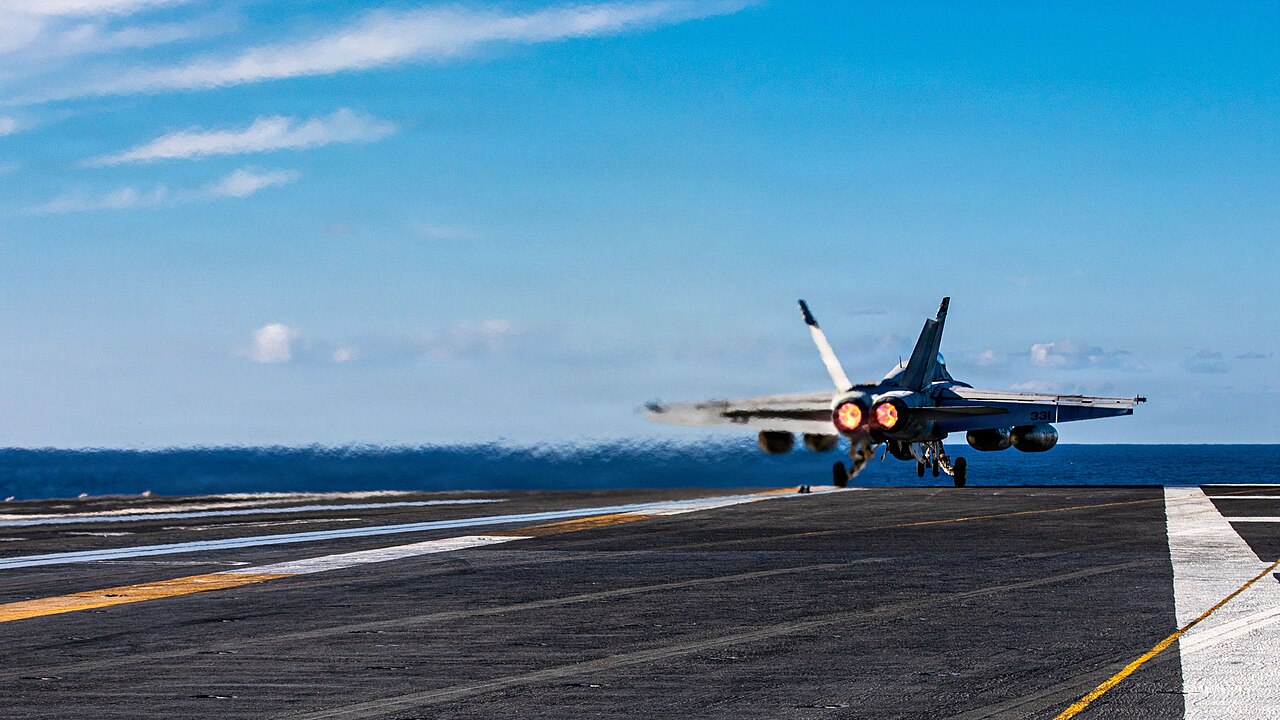
“We grieve for the true American patriots who have made the ultimate sacrifice for our nation […] Sadly, there will likely be more before it ends.”
-US President Donald Trump, following the deaths of three US soldiers in Kuwait.
Iran War Expands Across Middle East:
The joint US/Israeli air campaign against Iran broadened in scope over the weekend, as Iranian retaliatory attacks morphed to target Middle Eastern economic interests. As the ongoing Iran war continues to spread, the conflict shows signs of imminent expansion to new front lines across the region.
Starting on Sunday night, the United States began to leverage strategic bombers in its attacks, targeting mostly military facilities in Tehran and elsewhere. A Monday-morning set of strikes leveraged non-stealthy B-1 bombers, validating Israeli claims that joint forces have opened a reliable air-superiority corridor deep into Iranian territory.
Israeli strikes have shifted in their complexion somewhat, still targeting mobile missile launch infrastructure wherever possible, but now striking Basij internal paramilitary forces with regularity. Basij forces are a key obstacle preventing Iranian protesters from taking to the streets, as the US and Israel hope to prompt them to do.
Iran continues to respond at scale, targeting US military bases and Israeli territory in waves of missile and drone assaults. The United States revealed its first troop fatalities thus far, with three US Army logistics soldiers killed in Kuwait, and five others wounded. Speaking to global analysts, US sources have indicated that Iran’s low-speed, low-cost Shahed drones are the primary threat to US interests at this time, and are passing through air defenses.
Also in Kuwait, six US pilots survived the friendly-fire shootdown of their three F-15E Strike Eagle aircraft, due to Kuwaiti air defense efforts.
Beyond Israel and the US, Iran has shifted to target predominantly economic assets belonging to the states of the Persian Gulf. Over the last 72 hours, Iran has hit the Saudi Aramco refinery at Ras Tanura, forcing shutdown at a facility processing over 15% of Saudi oil exports. Even more important, Iran struck Qatar’s two major liquefied natural gas processing plants, cutting off roughly 20% of all global LNG exports.
In the United Arab Emirates, Iran has kept up visible strikes in the Emirates’ largest cities, increasing perceptions of risk among the UAE’s economically vital international community. Iran also struck an Amazon Web Services data center, and at least one offshore oil tower. Iran has damaged several oil tankers in the Persian Gulf thus far.
World nations have responded harshly to Iran’s attacks, with Saudi Arabia and the UAE now publicly demonstrating support toward US and Israeli operations. France will deploy its aircraft carrier to the eastern Mediterranean, Greece will deploy naval frigates and F-16s, and the UK will now allow US forces to use the island base at Diego Garcia to strike Iranian missile launch sites, after Iran struck a British base on Cyprus. On Monday, Qatar destroyed two Iranian Su-24 fighter-bombers.
The Lebanon-based Hezbollah organization, long a key ally and proxy force for Tehran, entered the conflict with a midnight missile barrage early on Monday morning. While Hezbollah has been severely diminished in its recent conflicts with Israel, the group was likely unable to refuse Iranian calls for support. Israel has responded with overwhelming airstrikes, and claims to have killed most of Hezbollah’s top intelligence officials in response. Lebanon has indicated that military actions by the group will be banned on its soil.
In Pakistan, at least twenty-two people were killed in an attempt to storm the US Consulate in Karachi, and another twelve people were killed in the northern Gilgit-Baltistan region after attempting to attack United Nations offices. In Iraq’s Green Zone, crowds attempted to force entry to the US Embassy, and engaged security forces in street battles using firearms.
Our team will be covering the Iran conflict continually on WarFronts, HomeFronts, and Fronts.co.
Image Credit: “USS Gerald R Ford supports Operation Epic Fury” by United States Department of Defense is dedicated to thepublic domain.
This Week on WarFronts:
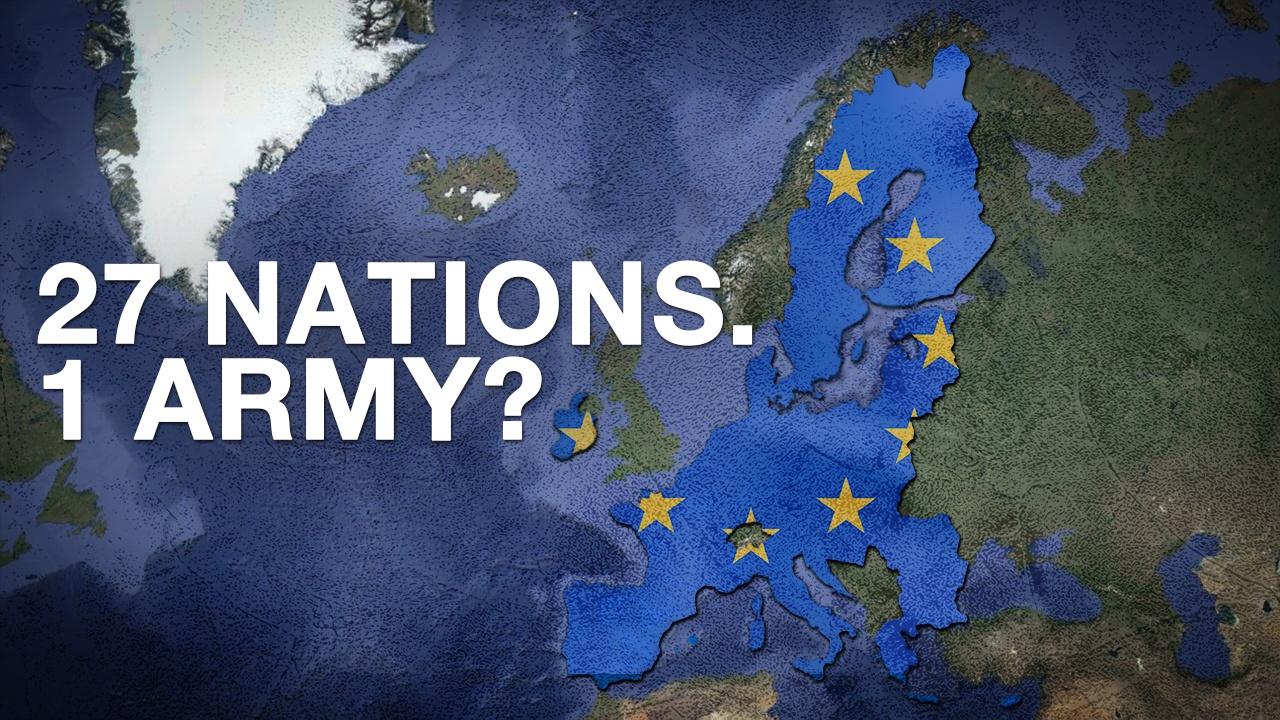
Last week, we published this episode on European rearmament, and the broad concept of a unified continental military. While a pan-European army would be a very difficult force to build and maintain, it is broadly technically feasible, and could bring major strategic and deterrent benefits for European nations.
Yesterday, Europe came one step closer to a continental deterrent, when French President Emmanuel Macron announced a series of changes to Paris’ nuclear security strategy. According to Macron, France’s doctrine will shift to increase its overall number of warheads, and stop public disclosures on the number of warheads in the French arsenal. Macron will also allow French nuclear-armed aircraft to be temporarily deployed to allied countries, while retaining sole decision-making authority on the use of the onboard weapons.
Pakistan-Afghanistan War Continues:
The growing war in the Middle East is far from the world’s only ongoing conflict—or even the only conflict to have begun within the last week. After a surprise attack last Thursday by Afghanistan’s Taliban government, Pakistan has been engaged in a growing counteroffensive, and currently gives no indication that it would pursue an offramp.
Pakistan reacted within hours after Afghanistan’s initial assault, conducting airstrikes up and down the two nations’ porous shared border. By the following morning, Afghanistan seemed to believe that it had lost the initiative, and made a direct appeal to the United Nations Security Council to intervene on its behalf.
Across the following days, however, Pakistan has kept up a relentless pursuit of its Afghan rivals, with Pakistan’s Information Minister now claiming that his nation has killed 435 Afghan fighters and captured thirty-one positions. Afghan leaders deny Pakistan’s claims, and alleged on Monday that they struck a Pakistani facility and dealt heavy casualties in the process.
Pakistan is ultimately in pursuit of the Pakistani Taliban, a nominally semi-independent terror insurgency that operates across the border region, and that Pakistan accuses of receiving direct support from both Afghanistan and India. At this time, however, Pakistani attacks have focused on Afghan military installations, in an attempt to degrade and pressure the regime it ultimately sees as responsible for the Pakistani Taliban’s actions.
Publicly, Pakistan has tied any talk of de-escalation to the requirement for action from the Afghan Taliban, to “choose to dismantle the terror groups that survive on conflict and its war economy”. Afghan leaders have yet to accept the demand, even rhetorically, and while the EU, Russia, China, and Saudi Arabia have pressured both sides to enter talks, Washington has thrown its support behind Pakistani operations.
One key location in the conflict is Afghanistan’s Bagram Air Base, where Pakistani fighter jets have engaged in multiple rounds of bombardment over the last few days. Some of those bombing runs have been contested by Afghanistan, which claims that its fighters drove Pakistani jets away with small arms fire.
Bagram Air Base is a known fixation of US President Donald Trump, who has called for Washington to re-establish a troop presence after the disastrous US withdrawal of 2021. According to Trump, Bagram is newly relevant as a vantage point to monitor China’s nuclear program, leading to speculation that Pakistan’s offensive may be intended to deliver Bagram to the United States. Neither nation has acknowledged this possibility.
During the conflict, the Afghan Taliban have shown limited, but notable improvements in their fighting capacity, primarily through the use of one-way attack drones. Their forces, however, are far less militarily capable than Pakistan’s, and the conflict is expected to be mostly one-way traffic in Islamabad’s favor.
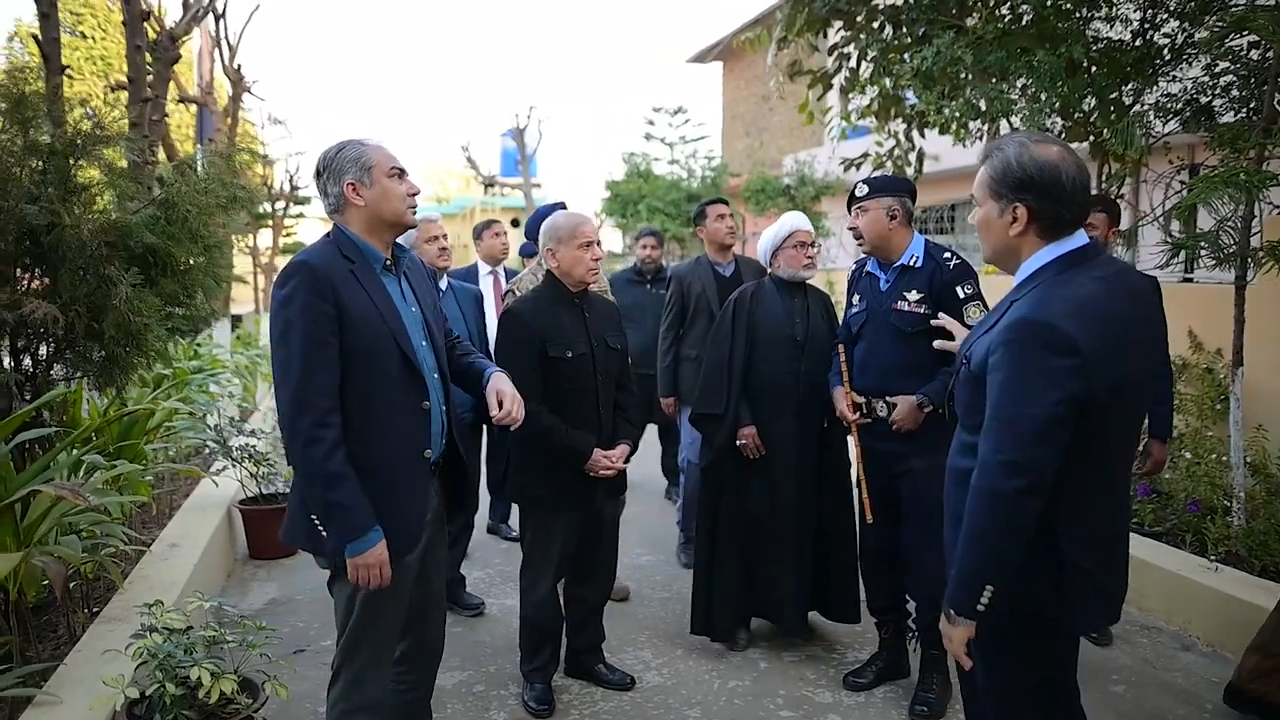
Image Credit: “Pakistani Prime Minister Shehbaz Sharif visiting Tarlai […]” by PMLN Lahore is licensed underCC BY 4.0.
What We're Reading:
As Iranian air defenses work to offer basic resistance against US and Israeli bombardment, and American warplanes crash in Kuwait, it’s worth remembering that even with air superiority, the sophisticated air forces above Iran are not safe from harm.
Days before the start of the offensive, America’s Air & Space Forces Magazine published this article, detailing a near-miss experience suffered by two F-16 pilots over Yemen in 2025. During the incident, the F-16s were targeted by Houthi surface-to-air missiles and were nearly hit. As an Iranian proxy force, Yemen’s Houthi rebels are in possession of broadly comparable air defense assets, underscoring the risk to pilots flying the same aircraft over Iran today.
Our WarFronts/HomeFronts Team is proud to announce the launch of Fronts.co, our brand-new subscriber service.
Around the World:
Unidentified assailants stormed the South Sudanese county of Abiemnhom on Sunday, killing at least 169 people including 90 civilians. Abiemnhom is in the Ruweng district, where tensions between rival political and ethnic factions has been especially high. Local authorities blamed youths from a neighboring state for the assault.
Myanmar’s Tatmadaw ruling regime carried out an airstrike against a civilian trading post on Sunday, killing over two dozen people and wounding twenty others. The attack came in an area where rural communities are known to trade with merchants from neighboring Rakhine State, where the powerful Araken Army rebel faction maintains control.
A simultaneous ambush of three villages in north-central Nigeria left at least fifteen people dead, in what appeared to be a mass assault on motorbikes by bandit groups. This is only the latest in a series of recent assaults, as bandits have stepped up operations in a challenge to Nigerian law enforcement.
The Congolese airport serving Kisangani, a strategic northeastern city, came under attack from four kamikaze drones in an assault blamed on the M23 rebel group. While Kisangani is operationally significant as a staging zone for the Congolese military, it is far from the front lines, indicating a growing long-range drone capability for the rebels.
Russia has indicated that it accepts a US proposal for post-war security guarantees in Ukraine’s defense, according to Ukrainian Presidential Chief of Staff Kyrylo Budanov. If accurate, this would constitute the biggest Russian concession in any Ukraine peace negotiation to date, at a time when Russian forces are suffering setbacks at the front lines.
Cuba’s Interior Ministry revealed new details on the killing of several alleged Cuban exiles off the island’s shores last week, claiming that the exiles traveled in a boat carrying nearly 13,000 pieces of ammunition, twelve high-powered assault weapons, and other military equipment. Cuba maintains that the exiles were attempting to carry out an act of terror.
Israel halted crossings into the Gaza Strip on Saturday, citing the country’s ongoing joint campaign with the United States against Iran. The order comes as border crossings out of Rafah have been constrained to very low rates of passage, predominantly to assist Palestinians who are in urgent need of medical treatment abroad.
Congolese officials have revealed the discovery of two mass graves in the eastern Congo city of Uvira, following the withdrawal of M23 rebels several weeks ago. M23 denied any awareness of mass graves, while Congolese authorities indicated that the graves held at least 172 bodies in total; Human Rights Watch reported mass summary executions in the city by M23, in a statement released in December.
Former South Sudanese Finance Minister Bak Barnaba Chol was the latest member of the South Sudanese elite to be taken into custody, when he was arrested on Friday while attempting to cross into Uganda. While the reasons for Chol’s arrest were not provided, his detention is consistent with crackdowns by the nation’s embattled president, Salva Kiir.