
WarFronts Weekly: 4.14.2026.
🟨 WarFronts Weekly | Worldwide Weekend Elections & More
Evan Moloney • April 14, 2026
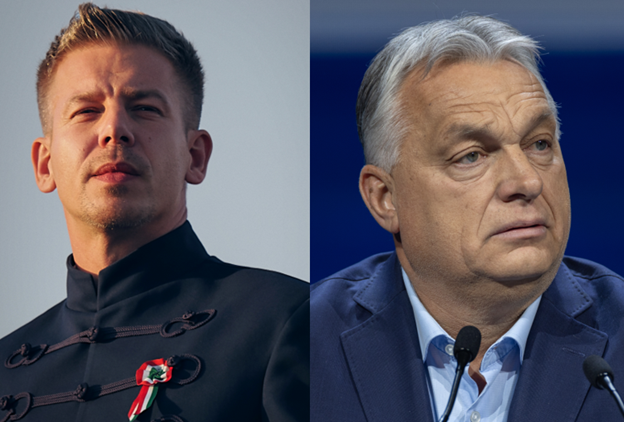
“We will restore the system of checks and balances. We will join the European Public Prosecutor's Office. We guarantee the democratic functioning of our country.”
-Incoming Hungarian Prime Minister Peter Magyar.
Worldwide Weekend Elections Bring Change:
This weekend, elections in five nations set the stage for new developments—or, in some cases, for the status quo—on various global-security issues. In Hungary, Russian ally Viktor Orban was handed a resounding defeat after sixteen years in power. In chronically unstable Peru, a runoff election is taking shape, while in Benin, a new leader prepares to combat a growing jihadist insurgency in the north. Finally, Canada’s ruling party was handed a legislative majority, while Djibouti’s long-time leader secured yet another extension of his rule.
The weekend’s election in Hungary is, by far, the one with the greatest global ramifications. There, Orban was forced out in a vote that handed his opposition, Peter Magyar and the center-right Tisza party, a legislative supermajority. Magyar’s legislative powers will be critical in dismantling a political apparatus that Orban had reshaped to perpetuate his own power.
With Orban gone, the European Union is expected to approve a frozen loan of ninety billion euros for Ukraine, while both the EU and NATO are likely to undertake further urgent action to strengthen Ukraine at a critical juncture. The strength of Magyar’s victory, and the speed of Orban’s concession, are likely to defuse what was a possible flashpoint between NATO’s European members and the pro-Orban White House. Today, we discuss the Hungary election result further, .
In Peru, votes are still being counted, but early results suggest that conservative leader Keiko Fujimori will move into a runoff election against one of two candidates: right-winger Rafael Lopez Aliaga, or center-left candidate Jorge Nieto. None of Peru’s candidates are on track to achieve even twenty-percent support, let alone the fifty percent required to win outright.
Peru’s next president will be its ninth in less than nine years, and outside observers broadly expect that the eventual victor will be hamstrung by corruption and infighting. The nation faces a growing threat from organized criminal syndicates, which have exploited Peru’s situation as cover to strengthen their transnational networks.
In Benin, Finance Minister Romuald Wadagni coasted to victory as outgoing President Patrice Talon’s chosen successor, in an election where Wadagni faced a relatively weak challenge from opposition candidate Paul Hounkpe. Wadagni’s party controls the entire National Assembly, in a political system that Talon and his allies have manipulated to ensure continuity of power.
While Wadagni represents an extension of Talon’s leadership, including his anti-dissent crackdowns, the new president will face pressure to address security crises that festered under Talon’s leadership. Most important is the expansion of the Sahel terrorist insurgency JNIM into northern Benin, where militants carry out intermittent attacks and use Beninese territory as a staging area for their offensives elsewhere.
In Canada, Prime MinisterMark Carney secured a parliamentary majority for his Liberal government on Monday, after three special elections in Liberal-friendly territory. The majority allows Carney to pass a sweeping legislative agenda, which includes various security-related measures to boost Canadian defense and distance Ottawa from Washington after decades of close cooperation.
Finally, Djibouti’s long-time leader Ismail Omar Guellah was re-elected with an official 97.8% of the vote. The election was tightly controlled, and boycotted by the political opposition. For Djibouti, continuity of rule provides real, albeit anti-democratic advantages; the nation is dependent on revenue from American, Chinese, French, Japanese, and Italian military bases, and Guellah’s presence offers a known, trusted Djiboutian partner.
Image Composite Credit: “Cumbre de Madrid 8 de Febrero” by Vox España is dedicated toCC0 1.0 Universal. “Peter Magyar at Heroes’ Square […]” by Norbert Banhalmi is licensed underCC BY-SA 4.0.
This Week on WarFronts:
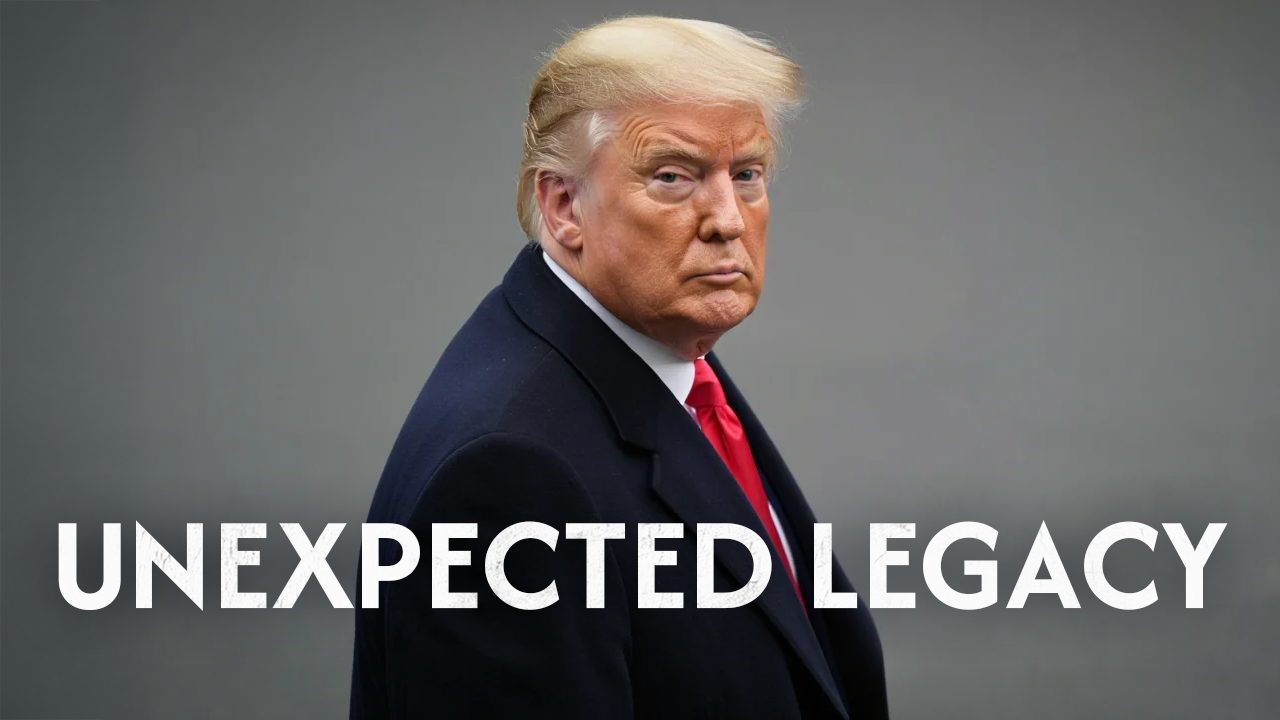
With Hungary’s Viktor Orban finally ousted, our WarFronts team highlights an episode produced via our sister channel, HomeFronts (then PoliticalFronts), in May of 2025. In that episode, our team laid out the prospect of a European centrist revival—and possibly even a return of political centrism in the US—as a reaction to US President Donald Trump.
Nearly one year after that episode was released, Orban’s defeat is the latest in a growing list of indicators that relatively centrist parties—not the European or American left—will be the force that blunts the momentum of Western hard-right populist groups. While new Hungarian PM Peter Magyar ran on his fundamental opposition to the corruption and Russian influence of the Orban era, Magyar is a center-right politician himself, and is expected to take similar positions to Orban on immigration and some social issues.
By declining to draw a sharp contrast with Orban on sociopolitical matters, Magyar succeeded in centering the election on corruption, Russia, and other issues where his Tisza Party could make a winning argument. Just as important, Magyar deprived Orban of the opportunity to rely on nationalist, reactionary arguments, and frame the election on what may have been more favorable terms.
Maritime Attack on Pakistan’s Coast Guard:
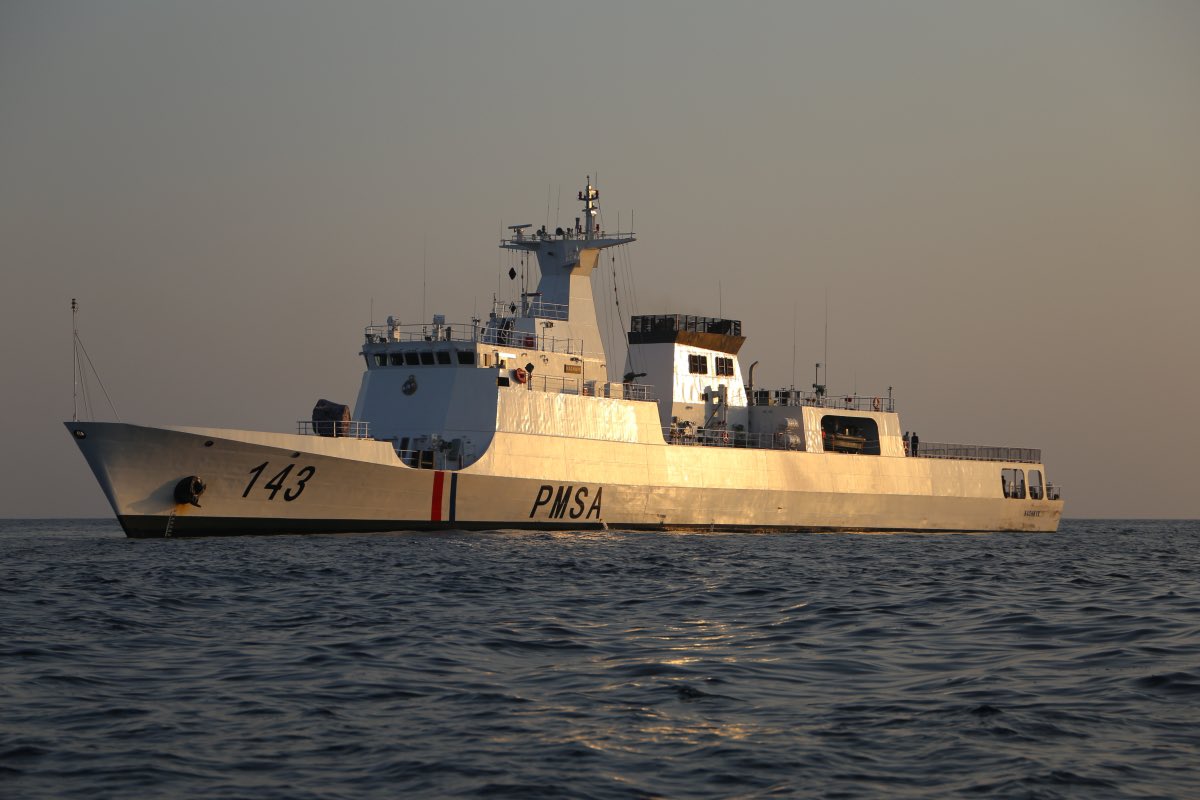
Separatist insurgents in Pakistan’s southwestern Balochistan region carried out a daring ambush this weekend, when on Sunday, a small skiff opened fire on a Pakistani Coast Guard vessel in the Arabian Sea. The ambush was the first-ever seaborne attack on a Pakistani patrol vessel, and represents a clear expansion of both the capabilities and tactics of the Baloch resistance.
The attack took place near the Pakistani coast, in an area close to the country’s western border with Iran. The nearest major port, Gwadar, is an economically vital and strategically important geo-strategic asset for Islamabad, and it is the target of regular Baloch insurgent attacks on land.
This time, however, the Baloch militants targeted the unnamed Coast Guard vessel while on routine patrol, spraying fire toward the ship from relatively close range. Three Coast Guard personnel were killed in the attack; no militants were known to have been killed or wounded.
The Balochistan Liberation Army (BLA) claimed credit for the attack shortly afterward. In its statement, the BLA acknowledged the clear tactical advances that the ambush had demonstrated; “Following the operations on land, the action in maritime boundaries marks a ”. While the BLA is far from the only Baloch insurgent group, it is by far the most powerful and influential of the region’s armed separatist forces.
The attack creates clear problems for Pakistan, especially during what was expected to be continued negotiations between the US and Iran, before Washington’s surprise withdrawal from the talks on Saturday. Also this weekend, suspected Baloch insurgents carried out an attack in the regional capital city of Quetta, killing two and wounding three others. Pakistan’s myriad insurgent groups faced common incentives to stage attacks this weekend during negotiations, to undermine perceptions of Islamabad as a stable, reliable force in the Islamic World.
The sea ambush also carries implications for China, where Gwadar is a critical node linking Pakistan to the Belt and Road Initiative. While Chinese Belt and Road assets are a relatively frequent target for the BLA and other insurgent groups, the Sunday Coast Guard assault suggests that the separatists’ capabilities are indeed growing.
Finally, any increased BLA interest in seaborne targets would reflect a growing awareness among global insurgent groups, of the vulnerable nature of seaborne vessels in an age of drone-enabled asymmetric warfare. While the BLA lacks access to a critical sea lane, in the way that Yemen’s Houthi rebels can threaten the Bab al-Mandeb Strait, the organization could consider the use of economic leverage against Pakistan by targeting maritime trade vessels in the future, or creating the perception—through ambushes like this one—that those sorts of attacks may be possible.
Image Credit: “PMSS Kashmir at Sea” by Gemini167 is dedicated toCC0 1.0 Universal.
What We're Reading:
The nation of Libya has enjoyed a recent period of relative peace, since the conclusion of the Second Libyan Civil War in 2020. But as Libya’s internationally recognized Tripoli government deepens its relationship with Ukrainian backers, and its rivals in Benghazi accrue air power from foreign sponsors, the nation seems to be at increased risk of destabilization by a range of nefarious actors.
This recent report by Jeune Afrique shines a spotlight on one such actor, the secretive financier Ahmed Gadalla. Based in Dubai, Gadalla has made himself into a critical ally for Libya’s splinter government under warlord Khalifa Haftar, and has built a global network to support the Haftar family in the likely battles to come.
Our WarFronts/HomeFronts Team is proud to announce the launch of Fronts.co, our brand-new subscriber service.
Around the World:
A Nigerian Air Force airstrike appeared to miss its target on Saturday night in the country’s northeastern Borno State, purportedly while aircraft were in pursuit of Boko Haram militants. Instead, the strike killed at least one hundred people, and possibly over two hundred, at a local village market. The market was in an area where jihadist militant groups are known to operate; Nigeria has promised a fact-finding mission, but routinely misclassifies civilian deaths as bandits when convenient.
Ukrainian President Volodymyr Zelenskyy announced a world-first by Ukrainian forces: the capture of an enemy position using only unmanned aerial and ground vehicles. The operation, which Zelenskyy attested took place “without infantry participation”, was able to force the surrender of Russian troops.
Israel launched an attack against the southern Lebanese town of Bint Jbeil on Monday, despite ceasefire talks slated for Tuesday between the Israeli and Lebanese governments. According to Israel, Bint Jbeil is a hideout for a handful of Hezbollah fighters who intend to hold out against an Israeli siege; Hezbollah confirmed its local presence on Sunday, when it took credit for the use of rockets, artillery, and kamikaze drones against Israeli forces.
South Sudanese opposition fighters recaptured the over the weekend, after it was taken over by government forces in March. The town, located in the restive Jonglei State, is a key stronghold for the nation’s civil and armed opposition. The United Nations responded with warnings of an imminent humanitarian crisis.
A joint Boko Haram and Islamic State – West Africa Province raid near the Chadian border in Nigeria left a commander and six soldiers dead on Sunday night, in the latest attack to leave a senior Nigerian officer dead. The attack was conducted via the use of motorbike swarms, as militants take advantage of Nigeria’s overstretched forces and emphasize their greater mobility as an asymmetric fighting force.
In Sudan, a senior Rapid Support Forces paramilitary commander known as al-Nour Guba switched sides this week, defecting to the Sudanese Armed Forces military regime after years fighting as an RSF major-general. His departure stemmed from ongoing disputes over the North Darfur region, where Guba was snubbed for the role of regional military commander.
A mutually agreed Russia-Ukraine ceasefire over the weekend, to mark the Orthodox Easter holiday, was violated repeatedly before its conclusion at midnight on Monday morning. Both Moscow and Kyiv accused the other of launching attacks in violation of the truce, with Russian drones confirmed to have hit the cities of Druzhkivka and Kramatorsk.
A Russian military court sentenced former Deputy Defense Minister Pavel Popov to nineteen years’ imprisonment on corruption charges, stemming from a 2024 case of fraud related to the construction of a military-themed tourist park. Popov’s sentence is the harshest of a recent string of corruption convictions for former senior defense officials.
Pakistan dispatched fighter jets and military forces to Saudi Arabia this week, in its first major show of force after the two nations signed a mutual defense pact last year. Pakistan’s deployment comes too late to stop Iranian attacks on key Saudi infrastructure, but is a potentially meaningful deterrent, if hostilities resume across the Middle East this week.
In a trip to Beijing this week, Spanish Prime Minister Pedro Sanchez called on China to take on a more meaningful international role, including on security and defense matters, as the US withdraws from a position of strategic leadership. While the statement is a boost for Beijing, coming from a major European NATO leader, it also presents a genuine challenge to China’s mostly passive, economics-focused strategic approach.