
WarFronts Weekly 4.28.2026.
🟨 WarFronts Weekly | Regime and Russians Defeated in Mali
Evan Moloney • April 28, 2026
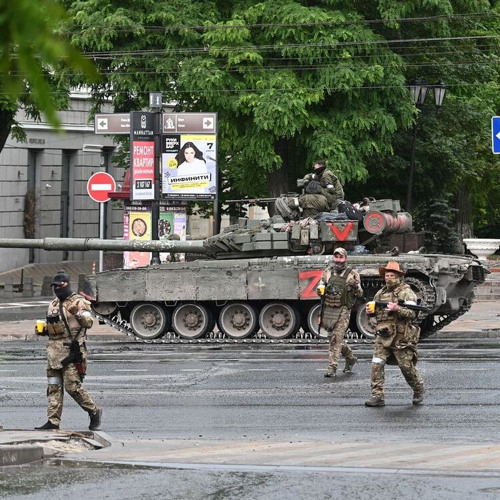
“It seems that Russia is withdrawing from Kidal. A humiliating development. Their push to oust Tuaregs from the city in 2023, and subsequent campaign to reach the border with Algeria, were their main goal for years. Now, in shambles. Another Russian defeat, but scale is different.”
-Sahel expert Paweł Wójcik on X.
Mali Jihadists & Rebels Deliver Blow to Russian Africa Corps:
Malian Defense Minister Gen. Sadio Camara was killed this week, and several senior government officials narrowly escaped assassination, in a major coordinated joint assault across the country. The attacks were carried outby the al-Qaeda-linked insurgency JNIM, operating in temporary alliance with Tuareg separatist groups, known collectively as the FLA.
The offensive saw JNIM and the FLA join forces and launch simultaneous attacks across the country, including the capital city of Bamako, the nearby military stronghold of Kati, the central towns of Mopti and Sevare, and the northern cities of Kidal and Gao. Rebel forces engaged government troops in day-long battles at several locations, captured the residence of a regional governor, and achieved outright capture of several population centers. In Kati, sustained gunfire was reported through Sunday.
Defense Minister Camara was killed at his residence in gun battles, after his home was hit with a suicide car bomb. Mali’s military intelligence chief, Modibo Kone, was also killed, while Chief of the Army Staff Oumar Diarra was severely wounded. The leader of Mali’s military junta, Assimi Goita, escaped an attack on his residence with the aid of Turkish paramilitary units; he is believed to be alive, but his whereabouts are unknown, as of the time of writing.
JNIM and the FLA’s attempted decapitation strike is the latest confirmation that the two groups, and especially JNIM, operate with impunity across much of the nation. Spread over such a broad geographic area, launched in coordination, these assaults were certainly the result of intensive planning by representatives of both groups. Mali’s failure to anticipate the operation, thwart any part of the attack outright, or even gather intelligence to indicate that an attack was forthcoming, represents a catastrophic military failure.
Equally to blame are Russia’s paramilitary Africa Corps, the successor organization to the Wagner Group. Present as security advisors for several years, Africa Corps fighters were nonetheless unable to pre-empt, deter, or comprehensively respond to the attack. While Africa Corps leaders claimed to have pushed JNIM back in some areas, the group has also reached separate peace arrangements to organize their own retreat from besieged cities, leaving Malian forces behind.
In an especially telling concession, Africa Corps units confirmed on social media that they had withdrawn from the northern city of Kidal, with FLA sources claiming that the Africa Corps had agreed to leave permanently. After then-Wagner fighters took over for French security partners in Mali, the capture of Kidal in late 2023 was the group’s only undeniable improvement on French aid, from the Malian government’s perspective. With Kidal lost, after such a complete defeat for Malian forces across the country, the Africa Corps’ claim to superiority over Western partners has been rendered meaningless.
Critically, however, the JNIM-FLA offensive does not appear to be an attempt to conquer Mali outright. Despite parallelsto Syria in 2024, where Idlib-based rebels launched a lightning offensive on Damascus while Bashar al-Assad’s Russian backers were distracted, JNIM appears to be focused on the long-term destabilization of the Malian state, rather than the creation of their own alternative government. The FLA, meanwhile, pursues sovereign control over Tuareg territory in the north. Whether Mali's government can withstand collapse, however, is another matter.
WarFronts will cover last weekend’s events in Mali at greater length on Tuesday evening.
Image Credit: “Wagner group rebellion” by Brunchadd isdedicated to the public domain.
This Week on WarFronts:
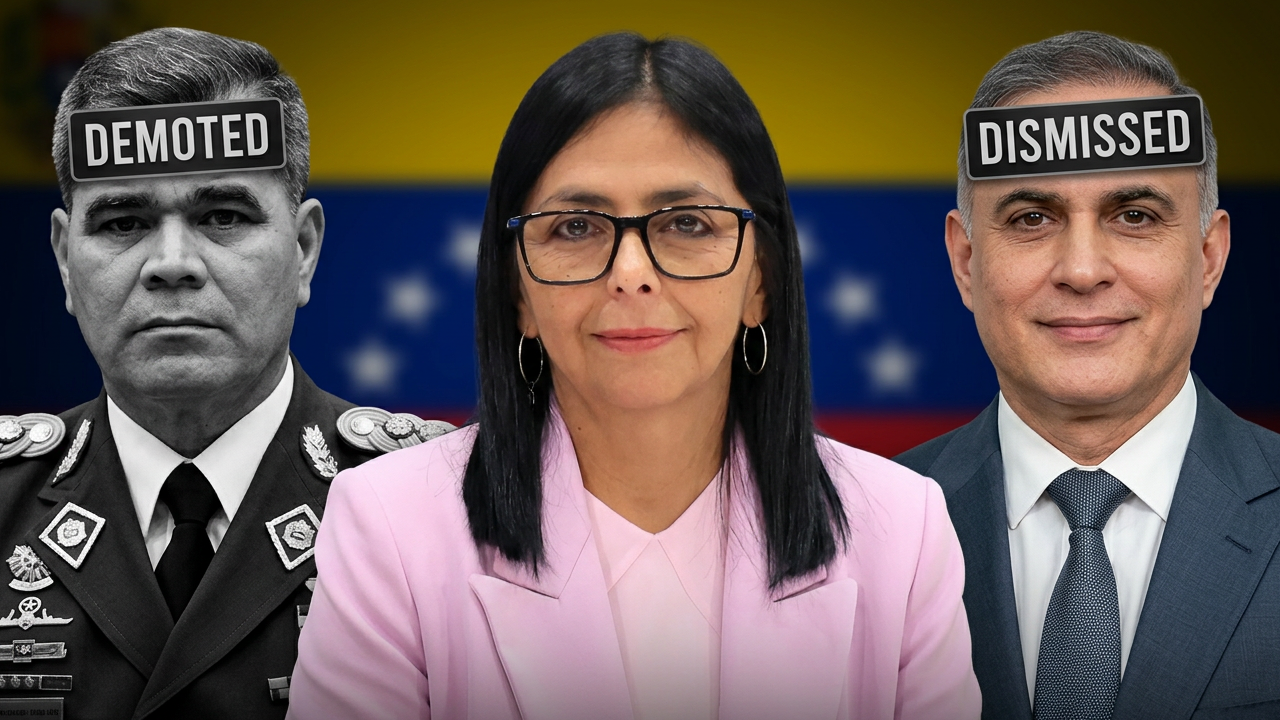
Last week, WarFronts covered the latest in Venezuela: an ongoing series of purges intended to strengthen Delcy Rodriguez’s hold over the country, and thus, to enhance government connectivity between Venezuela’s new administration and the Trump presidency that supports it.
Over the last several days, Venezuela has continued to make headlines, for reasons other than its ongoing purges. This week, Delcy Rodriguez indicated that the nation’s political-prisoner amnesty scheme was coming to an end, just nine weeks after it began. At present, fewer than five hundred prisoners are known to have been released—a tiny fraction of the dissidents still incarcerated on Venezuelan soil.
Meanwhile in the United States, Washington has agreed to allow the Venezuelan government to cover the legal fees for the trial of abducted ex-president Nicolas Maduro. Venezuela’s support serves two goals at once: to boost perceptions of Caracas as an institution still somewhat loyal to its recently deposed leader, and to secure forms of sanctions relief that the US will grant, to make Venezuela’s legal sponsorship possible.
On the Venezuelan oil sector, companies have started to remove oil rigs and other equipment from storage and prepare them for assembly, in signs that hesitant global oil majors are now readying to enter the country. Days ago, Chevron CEO Mike Wirth called upon the Venezuelan government to enhance its economic incentives to revive the oil industry, but noted that Venezuela’s changes, to this point, have made the nation a more appealing investment target.
On the Venezuelan streets, meanwhile, reports indicate that Caracas has yet to experience the socioeconomic revitalization that Washington promised, after its capture of Maduro. While security has stabilized in Caracas, the results of increased foreign investment have not made their way to most Venezuelans, according to El Pais.
At Least 20 Killed in Colombian Bus Bombing:

A Sunday bombing in Colombia killed at least twenty people and left at least thirty-six, including five children, injured on the Pan-American Highway in the nation’s Cauca province. The bombing is believed to have been the work of an ex-FARC guerrilla splinter group, which dropped an explosive cylinder onto a minibus.
The organization behind the attack is believed to be a dissident group under the command of drug lord Ivan Mordisco, one of Colombia’s most wanted criminal kingpins. Nor did the attack take place in isolation; across the prior two days, Colombian authorities catalogued at least twenty-six incidents in Cauca and nearby Valle del Cauca.
The attack on the minibus is Colombia’s most devastating strike against civilians in decades, and certainly since the 2016 peace deal that ended fighting between the Colombian government and the majority of the FARC organization, the Revolutionary Armed Forces of Colombia. According to the governor of Cauca province, the bombing used such high explosives that it left a crater two hundred meters in diameter.
The wave of attacks in Cauca province are the latest in an ongoing asymmetric campaign by dissident groups, believed to include a far greater national following than Ivan Mordisco’s cartel alone. The likely cause is Colombia’s upcoming election, scheduled for the 31 st of May, to choose the successor of current leader Gustavo Petro.
While the election has seen a clear ideological split on the issue of dissident armed groups—with leftist candidates promising future negotiations, and the right-wing opposition vowing crackdowns—the recent attacks appear likely to drive public opinion toward the opposition. Despite rebel groups' incentives to avoid military reprisals,the attacks may make a right-wing victory—and promised crackdowns—more likely.
Colombia’s remaining armed factions, however, do not appear to be focused on avoiding future battles. Instead, they appear to see value in encouraging a return to armed conflict, as a way to destabilize Colombia at a moment of growing regional instability. Transnational syndicates are expanding their reach across Peru, Ecuador, and Bolivia, but need greater impunity in Colombia to form an unbroken chain to Central America, and thus, to drug markets and human-trafficking routes that are each anchored in the United States.
Image Credit: “Bus en Cartagena, Colombia” by Jonathan Hood is licensed underCC BY-SA 2.0.
What We're Reading:
Over the last week, Washington and its NATO partners have increasingly acknowledged growing tensions, most recently through a leaked US memo that advocated a change in policy to revoke recognition of Britain’s sovereignty claim over the Falkland Islands. Also this week, Polish Prime Minister Donald Tusk openly voiced concerns that the US may not be a loyal NATO partner in the event of a Russian attack.
According to a recent Wall Street Journal article, however, those public tensions are only a by-product of a larger series of changes happening behind the scenes. The report details a fallback plan shared among European NATO members, with growing support, to respond to a sudden withdrawal of American backing under Donald Trump.
Our WarFronts/HomeFronts Team is proud to announce the launch of Fronts.co, our brand-new subscriber service.
Around the World:
left at least seven people dead and eighty-five wounded in northeastern Afghanistan, in Pakistan’s first attack on its neighbor since a recent series of China-mediated peace talks. Afghanistan accused Pakistan of striking a university—a charge that Pakistani officials immediately denied. Both governments had agreed not to escalate the conflict further, at a recent meeting in western China.
A local water dispute in Chad ended with mass violence, when at least forty-two people were killed in an armed clash between two families. The violence prompted intervention by the Chadian military, in the latest local dispute to result in large-scale bloodshed across the Sahel region. A Chadian clash in 2025 also left forty-two dead, under similar circumstances.
in northern Nigeria’s Adamawa State left at least twenty-nine people dead, in a protracted assault against the village of Guyaku. The death toll is expected to rise, even as the motive for the attack remains unclear.
Nineteen suspected communist guerrilla fighters were killed in gun battles with Philippine troops in the coastal town of Toboso, in the central province of Negros Occidental. According to a national task force, two Americans were among the insurgents; local human rights groups instead allege that local advocates, a student leader, and a community journalist were all killed in the fighting.
Indonesia’s restive Papua region was rattled by protests this week, when Papuan residents, including large numbers of students, engaged law enforcement personnel in riots at several locations in the capital of Papua Province. The protesters were attempting to demand a military withdrawal, and investigations into the recent deaths of fifteen people—including women and children—during a military operation.
Mexican special forces a top Jalisco New Generation Cartel commander, Audias Flores, after a standoff with dozens of cartel gunmen at a cabin outside Puerto Vallarta. Flores was believed to be a potential successor to the cartel’s recently killed leader, Nemesio Oseguera, whose death prompted a wave of retaliatory attacks across Mexico.
Somali pirates seized a fuel tanker off Somalia’s northeastern coast on Wednesday, according to Western officials, while the tanker was inbound to Mogadishu from the regional Somali port of Berbera. Days later, a second tanker was hijacked, this time while traveling off the coast of Somalia’s Puntland region from Egypt to Kenya.
The dissident splinter group New IRA is believed to be responsible for a car bombing in west Belfast this week, where a delivery driver was forced to drive his car to a police station after it was hijacked and fitted with a gas cylinder. There were no casualties in the attack, which took place outside the local station, mirroring a similar incident last month.
Romania recovered fragments of two drones after an overnight Russian attack against a city in western Ukraine, in the latest instance in which Russian drones are believed to have probed into NATO-member territory. One of the drones fell upon a city in Romania’s southeast, damaging property for the first time across the recent drone overflights.
A US Army major was charged with conspiring to support separatist fighters in the nation of Cameroon, the major’s home country, according to recently unsealed court records. The soldier, Kenneth Chungag, intended to support the Ambazonia Defense Forces, although his support for the group appeared to cease in 2014.
A rare series of local elections in the Gaza Strip, the first elections of any kind since 2006, resulted in only two victories for Hamas-aligned candidates across fifteen open seats. Candidates backed by the West Bank’s Fatah Party and Palestinian Authority secured six seats, while the others were won by groups not publicly aligned with either faction.
As Southeast Asian nations debate the re-integration of Myanmar into the regional bloc ASEAN, Beijing threw its support behind Myanmar’s newly elected, nominally civilian government. Foreign Minister Wang Yi visited the capital city of Naypyidaw on Saturday, for meetings with president and former military chief Min Aung Hlaing, in a likely attempt to signal Beijing’s desire for more active engagement by other regional governments.