
WarFronts Weekly: 4.7.2026.
🟨 WarFronts Weekly | Russian Spring Offensive Encounters Setbacks & More
Evan Moloney • April 7, 2026
“The Kremlin continues to face harsher backlash from Russia’s domestic populace about its intensified censorship efforts in recent weeks than Moscow likely expected or was prepared for.”
-Institute for the Study of War, Russian Offensive Campaign Update, April 4, 2026.
Russian Spring Offensive Encounters Setbacks:
Just weeks after Moscow initiated its spring and summer offensive, Russian forces seem to be struggling to gather the momentum required to punch through Ukrainian lines. While Russia’s advances are stymied at the front, Ukraine continues to sow chaos through Russia’s back lines, even as limited counteroffensives have seen Ukraine gain ground for several consecutive months.
The bulk of Russia’s spring offensive is concentrated into three discrete efforts. One involves a push toward Kharkiv City, supported by elite Chechen drone operators, with the apparent aim to push artillery near enough to begin shelling the city. The second involves a push to the Oskil River, also in Kharkiv, to push toward the city of Kupyansk and into the area that divides Kharkiv and Donetsk Oblasts.
The third, and most resource-intensive push involves an advance toward the city of Sloviansk, the northern anchor of Ukraine’s fortress belt in the Donbas region. To reach Sloviansk, Russia must first take the town of Lyman and several outlying areas. To aid in this effort and relieve pressure on its forces, Russia is also escalating its pace of attacks in a more southerly area, near the ruins of the town of Pokrovsk.
In each case, however, Russia’s advances have been minimal and costly. Personnel losses are especially high near Pokrovsk, where Ukrainian forces have engaged in several limited counterattacks. Elsewhere, Ukraine has entrenched its defenses, and is expected to be able to engage in months-long, attritional battles to impose costs upon the Russian advance.
In peripheral areas, Ukraine has enjoyed substantial recent victories, with military chief Oleksandr Syrski claiming on Sunday that Ukraine has now regained control of approximately 480 square kilometers of territory since late January. Those victories have mostly come in the south, while Russia’s push in the north, to carve out a buffer zone near the city of Sumy, has been stonewalled.
Ukraine has continued to pressure Moscow with attacks deep in Moscow’s territory, striking both military and energy infrastructure with stunning consistency. Ukraine has continued strikes against Russia’s main oil export facilities in the Baltic Sea; satellite imagery reveals heavy damage against Russia’s Baltic infrastructure. On Monday night, Ukraine scored several hits against oil terminals in Novorossiysk, on the Black Sea.
Elsewhere this weekend, Russia accused Ukraine of sinking a cargo ship in the Sea of Azov, which Ukraine had accused of carrying bulk shipments of stolen Ukrainian wheat. On Sunday, Ukraine claimed credit for strikes on a Russian missile frigate, in the port of Novorossiysk, and a strike on a Black Sea oil rig off the Crimean coast. According to March data, Ukraine launched more cross-border drone attacks than Russia for the first time since the start of the war in 2022.
Russia also announced that a senior Air Force commander was killed in the crash of an An-26 military transport plane last week, in occupied Crimea. While the crash was blamed on a technical malfunction, the presence of a high-ranking Russian leader increases the likelihood that Ukraine was behind the crash.
Military-aligned Russian commentators have described a significant improvement in Ukrainian dronesover the last several weeks, including in a video interview by Apti Alaudinov, commander of Chechnya’s Kadyrovites. He and other Z-commentators acknowledged the spread of nearly silent, hard-to-detect, electronic-warfare-resistant drones produced in great quantities, at high quality.
Finally, recruitment numbers seem to be flagging on the Russian home front, at a time when Russian front-line losses have outpaced conscriptions for several months straight. According to The Ukrainian Review, Moscow is running roughly fifteen percent shortof its daily conscription goals.
The shortfall comes as Moscow has deepened its Internet controls, in a likely effort to interrupt public communication and social media use before attempts to conscript soldiers from major Russian population centers. Russia has concentrated its recruitment efforts on poorer or minority-majority areas, where pools of conscripts have run dry, in an attempt to insulate more wealthy or influential Russians from the costs of war.
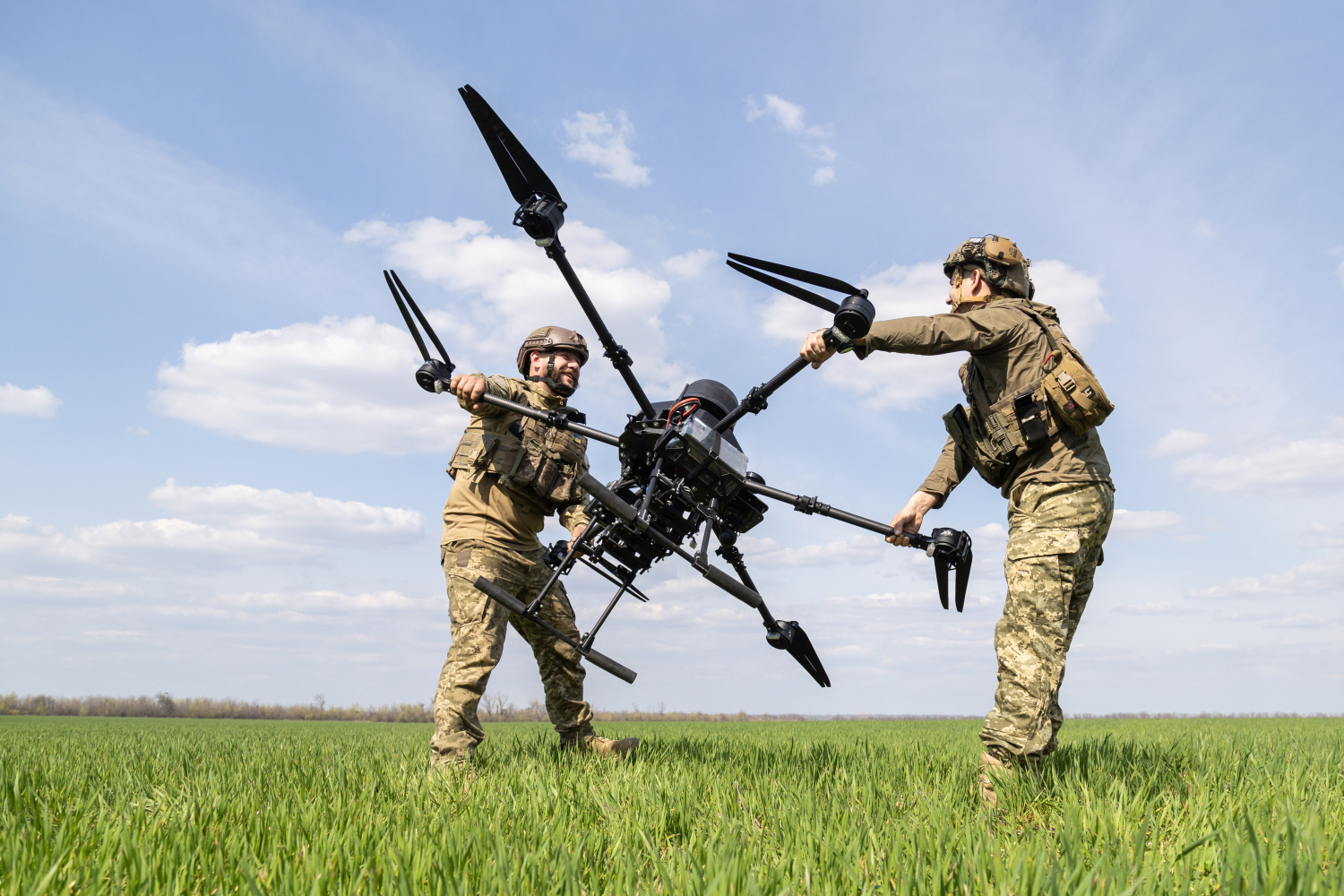
Image Credit: “Vampire, Ukrainian unmanned bomber octocopter” by АрміяІнформ is licensed underCC-BY-4.0.
This Week on WarFronts:
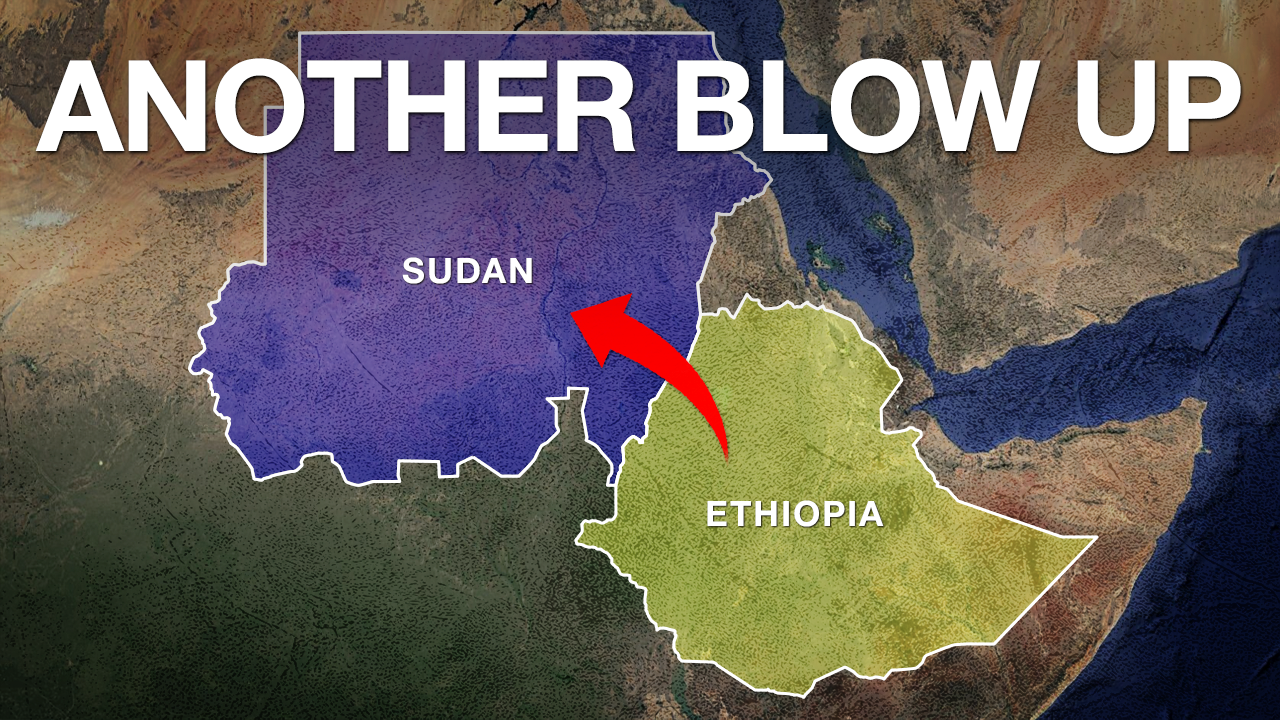
Saturday’s WarFronts episode delved into Ethiopia’s hidden role in the ongoing Sudanese Civil War, supporting the paramilitary Rapid Support Forces (RSF) and providing a staging ground for an unexpected RSF offensive into Sudan’s Blue Nile State.
Over the last week, Sudan’s military regime has responded, in part, through a series of sweeping changes in leadership. Most importantly, General Yasser Abdelrahman Hassan al-Atta was elevated to the military position of Chief of the General Staff. A hardliner and a particularly prominent military commander, al-Atta will take control over day-to-day military operations. The move is believed to reflect the regime’s consolidation of power amongst its hardliners, and signal the regime’s intent to continue the war against the RSF for the long term.
Suspected Hungarian False-Flag Attack Falls Flat:
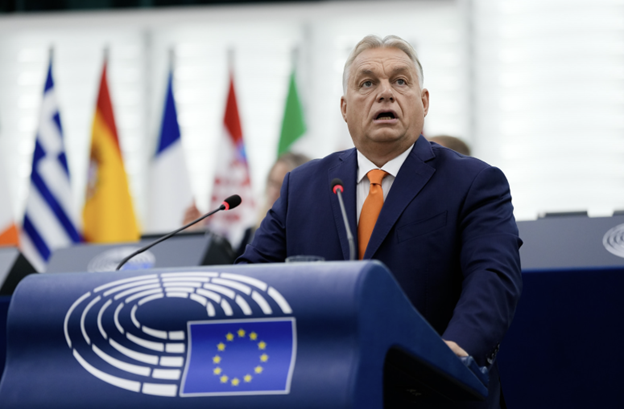
Embattled Hungarian President Viktor Orban is facing allegations that he attempted to stage a false-flag attack, to drum up support in advance of an election that Orban is likely to lose. The news comes after opposition leaders had made global headlines by warning of an attack in advance, with their claims now seeming to have been validated.
Orban announced the discovery of a purported sabotage attack on Hungarian energy infrastructure on Sunday, when he stated that he had been informed by Serbia’s President, Aleksandar Vučić, that “explosives of devastating power” had been planted on an extension of a pipeline known as the TurkStream.
Vučić confirmed the report, stating that Serbian police and soldiers had found two backpacks—each with a large explosive load and a detonator—located several hundred meters from the pipeline in the town of Kanjiža. Vučić declined to identify the origin of the explosives, although he made reference to “certain traces” that investigators had identified.
The allegation seemed to validate claims made by the Hungarian opposition two weeks ago, when opposition figures claimed that Hungary’s leadership was working—possibly alongside Russia—to fabricate an “emergency” that would either drum up support for Orban, or allow him to cancel upcoming elections.
In the wake of Sunday’s announcement, Orban called for an extraordinary meeting of Hungary’s defense council, while Russia’s Foreign Ministry alleged that Ukraine may have been responsible for the attack—an allegation that Hungary’s Foreign Minister declined to rule out. Orban’s main electoral rival, Peter Magyar, amplified concerns that this was the long-awaited false-flag operation to try and influence the coming election.
On Monday, however, Serbian military and intelligence leaders introduced a new layer of intrigue to the story. Rather than pinning the blame for the explosives on Ukraine as expected, Serbia’s intelligence chief, Đuro Jovanić, stated definitively that Ukraine was not involved in the plot.
Jovanić’s statement did not appear to be intended as a direct rebuttal against Aleksandar Vučić, who has now been accused of acting as an accessory to Hungary’s alleged false-flag plot. Instead, Jovanić claimed that Serbian intelligence had been trying to warn Vučić of an attack on the pipeline for months. According to Jovanić, the alleged attack used US-made explosives, which were planted by a migrant with military experience.
While Jovanić muddied the waters around the alleged act of sabotage, neither Orban nor Vučić have outlined an alternative explanation for the incident, after Ukraine has been exonerated. Nor has the Hungarian opposition explained what they claim was the decision to proceed with a false-flag attack, after false-flag allegations had already been made public.
Hungary’s elections will take place on Sunday, April 12.
Image Credit: “MEPs Debate Hungary’s Presidency programme with Prime Minister Viktor Orban” by European Parliament is licensed underCC-BY-4.0: © European Union 2024– Source: EP.
What We're Reading:
Ukraine’s homegrown defense industry has allowed Kyiv to achieve remarkable feats of innovation, adaptation, and front-line sustainment in its war against Russia. As Ukrainian resistance develops, and its startup-driven defense-industrial complex prepares for an eventual transition to post-war manufacturing, drone-makers have shifted their attention to a new challenge: the cleanliness of their supply chains.
This New York Times report explains Ukrainian efforts to cut foreign components, especially Chinese-made parts, from their current and future drone designs. While Ukraine’s ultimate goal is true self-sufficiency, the nation’s short-term objective is to minimize reliance on Chinese parts or raw materials, to whatever extent is possible under adverse conditions.
Our WarFronts/HomeFronts Team is proud to announce the launch of Fronts.co, our brand-new subscriber service.
Around the World:
Nigeria weathered a wave of suspected Islamist attacks before and during the Christian holiday of Easter Sunday. In the north-central Benue State, armed men stormed a small community and killed roughly seventeen people, according to locals. At an Easter service in Kaduna State, a group of assailants killed five people in a small village. On Saturday morning, four police officers were killed in an extended gunfight with Islamic State-affiliated militants. In better news for Abuja, thirty-one worshippers abducted during the Kaduna State attack were rescued by Nigerian soldiers. A local Christian group disputed the claim, however, and insisted that has taken place.
In neighboring Niger, the Islamic State – Sahel claimed credit for the killings of thirty-five militants loyal to the al-Qaeda-linked insurgency JNIM, in an ambush on several JNIM bases. While IS-Sahel skirmishes with JNIM are increasingly common, they had previously been contained to the territories of Mali and Burkina Faso.
South Korea’s National Intelligence Service (NIS) now believes Kim Jong-un’s teenage daughter, thought to be named Kim Ju-ae, has been positioned as the elder Kim’s successor. The assessment was shared in a briefing to South Korean legislators, based on what the NIS described as “credible intelligence” that the agency had collected.
Days after he was elevated to the presidency under Myanmar’s military government, Min Aung Hlaing faces criminal charges of genocide in Indonesia, relating to his and the military government’s actions against Myanmar’s Rohingya Muslim minority. Prior to Min’s 2021 military coup, he also oversaw an offensive against the Rohingya, beginning in 2017.
Germany’s military is working to clarify a recently passed legal provision, requiring fighting-age German men to gain permission to leave the country for more than three months. While the law has been in effect since January, it received very little attention until a local news outlet reported on the provision last Friday, igniting controversy. Germany’s Ministry of Defense has clarified that military service remains voluntary.