
WarFronts Weekly: 5.12.2026.
🟨 WarFronts Weekly | Putin's Parade Proceeds & More
Evan Moloney • May 12, 2026
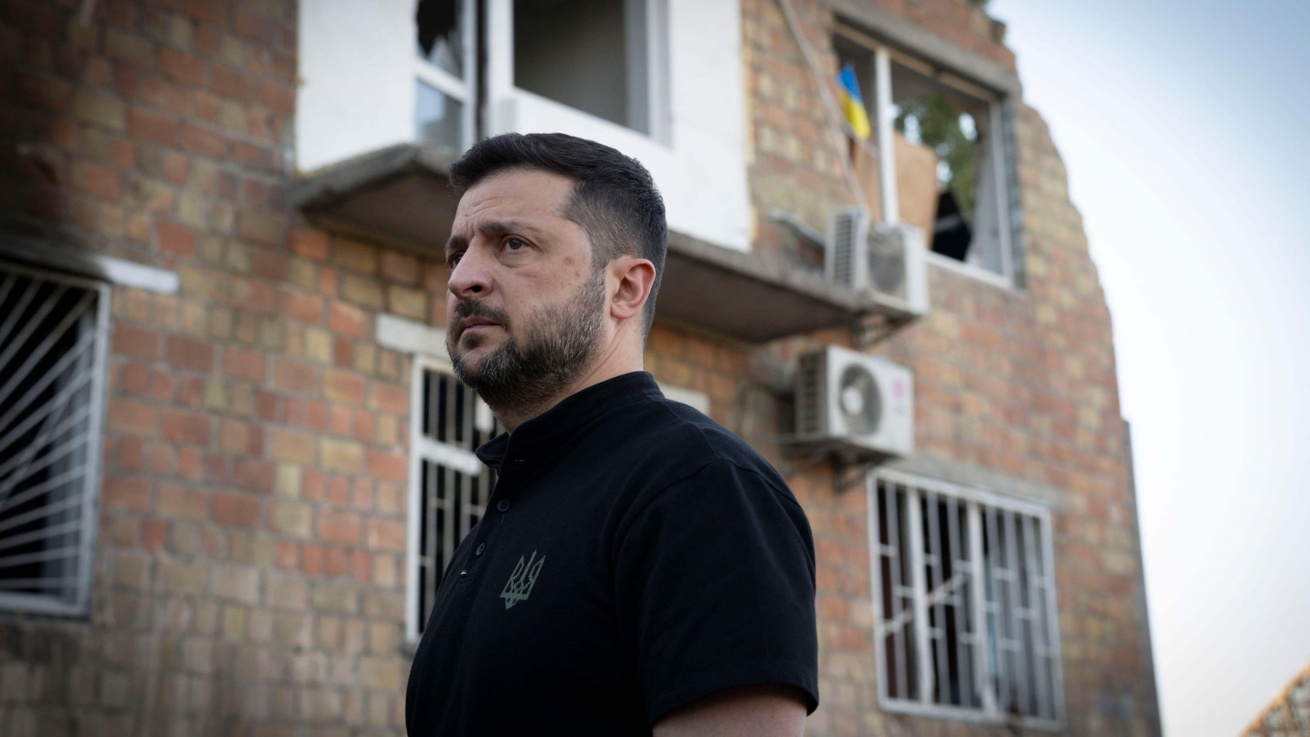
“I hereby decree: to permit the holding of a parade in the city of Moscow (Russian Federation) on May 9, 2026.”
-Ukrainian President Volodymyr Zelenskyy.
Putin’s Parade Proceeds:
After weeks of consternation in Moscow, Russia held its annual Victory Day celebrations on the ninth of May without direct interference by Ukrainian forces, after the United States arranged a temporary and limited ceasefire to cover the event. Despite the parade’s nominal success, it was a reminder of Moscow’s growing vulnerability against Ukrainian long-range drones.
The US-brokered ceasefire included a commitment by Ukraine to avoid drone or other attacks against the city of Moscow for a span of three days, in exchange for a prisoner swap that will return 1,000 prisoners of war from each side. Ukrainian drones are known to be able to hit Moscow, including in a strike just days before the parade, prompting air defenses to be repositioned to Moscow from elsewhere across Russia.
But although Ukraine held to the terms of the ceasefire once it was agreed, Volodymyr Zelenskyy and his government took full advantage of the opportunity to troll Russian leadership. Prior to the event, Zelenskyy issued a decreethat would “allow” Russia to hold the parade as planned, with no deployment of Ukrainian weaponry against Moscow’s Red Square.
Petty as it may have been, Zelenskyy’s decree underscored Ukraine’s larger message surrounding the event: that despite Moscow’s bravado and its easily falsified claims of battlefield success, Russia must seek Ukrainian assurances before doing routine business in its own capital city. Russia’s Victory Day celebrations traditionally feature displays of Moscow’s best heavy weaponry and delegations of high-profile foreign dignitaries; both were absent from the event this year.
Vladimir Putin’s own appearance at the parade drew headlines, after he seemed visibly nervous and exhausted during the event. Putin’s haggard expression was far from his usual, and came after recent reports suggested that he has become more secluded and fearful of a coup attempt or even assassination.
While Russia’s Victory Day troubles were largely symbolic, they come at a moment of increased pain for Moscow on the battlefields of Ukraine. Between Ukraine’s long-range strike success against economic and military-industrial targets, its mid-range campaign against Russian staging areas and supply lines, and its ability to stonewall and even recapture Russian territory, Russia’s anticipated spring and summer offensive appears to have lost any momentum it initially captured.
Image Credit: Image by Ukraine Presidency isdedicated to the public domain.
This Week on WarFronts:
Last week, WarFronts featured a conversation between Simon and the UK’s retired Major General Dr. Andrew Sharpe, Director of the Centre for Historical Analysis and Conflict Research (CHACR). Their wide-ranging discussion focuses on NATO readiness, shifting geo-strategic priorities, and the sky-high risk of war on the European continent.
Over the last several days, the NATO nations of Europe prepared for a change that will make any upcoming war substantially more difficult to win: a partial withdrawal of US troops from the continent, ordered by US President Donald Trump. While Trump has yet to order the complete withdrawal of US troops, and is unlikely to do so because of the strategic utility of European bases, Washington’s diminishing support for the alliance has accelerated calls in some corners for Europe to create a new defense bloc.
Islamic State-Linked Rebels Kill Dozens in Congo:
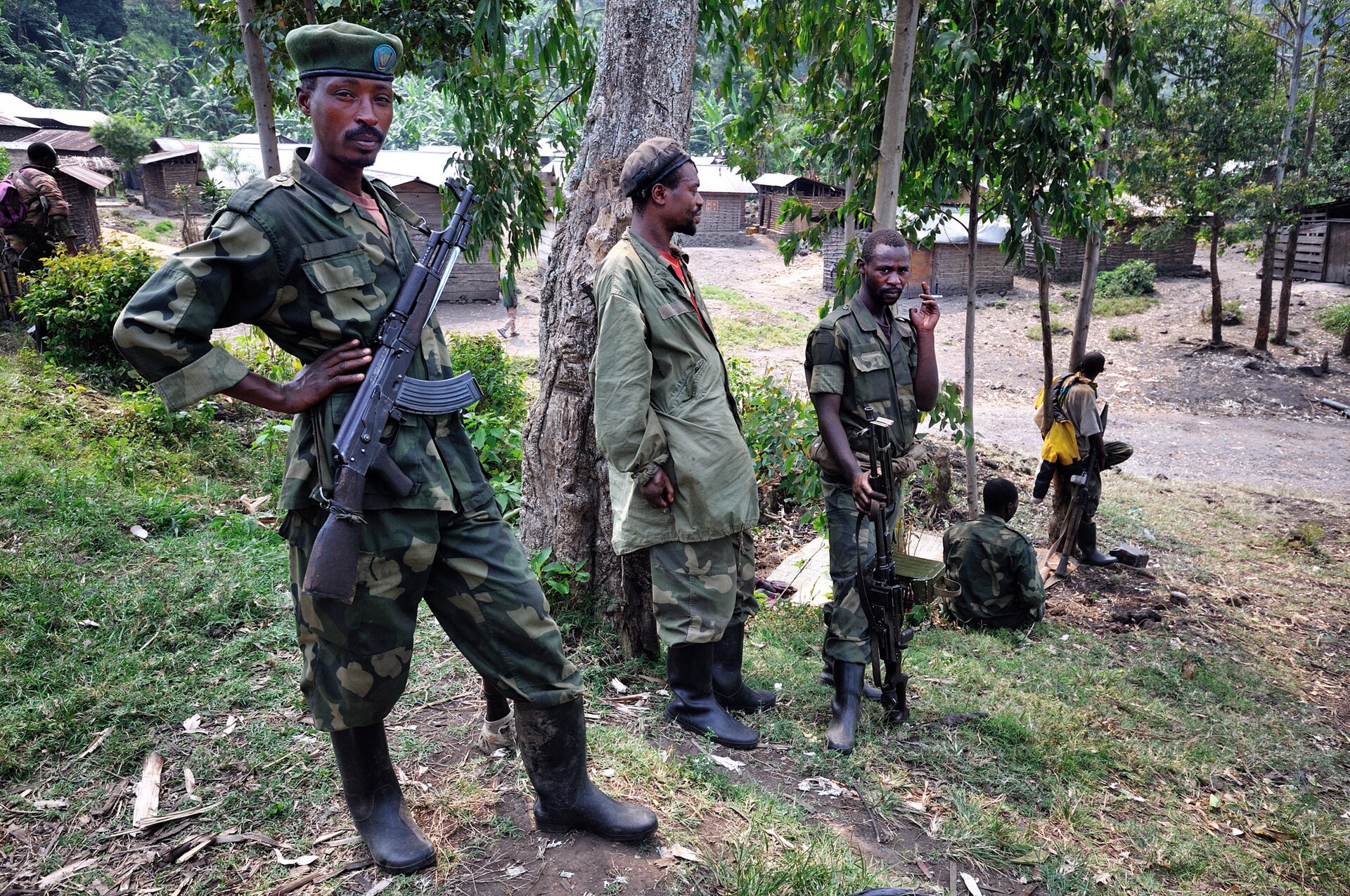
The Democratic Republic of the Congo’s ongoing security crisis centers on a conflict in the Congolese east, where Kinshasa’s forces and a patchwork of allied militias fight a Rwanda-backed landholding insurgency, the M23 rebel movement. But the war and the resulting destabilization of the eastern Congo have allowed a second movement, the Islamic State-linked Allied Democratic Forces (ADF), to carry out massacres of civilians with growing regularity.
First founded as an Islamist resistance organization in Uganda, the ADF has operated on Congolese soil for many years, exploiting the eastern Congo’s chronic instability to enjoy relative freedom of movement and operation. While smaller ADF cells dot the region, the group is primarily organized into several roving bands that move unpredictably throughout the region, primarily in the Ituri and North Kivu provinces.
One ADF subgroup has been on the move in Ituri Province for several weeks, in a densely forested area where the group is regularly implicated in abuses against the civilian population. On the sixth and seventh of May, that subgroup killed at least thirty-six people across a town and four smaller villages.
As it moves across the landscape, the ADF works to impose its Islamic State-adjacent interpretations of fundamentalist Islamic law, while engaging in extortion, kidnapping, and other criminal operations to sustain itself. The ADF regularly loots and pillages the areas it attacks, and relies heavily on the use of bladed weapons, especially machetes, as an instrument of fear and aggression against Congolese and Ugandan civilians.
The group was acknowledged in a recent report by Amnesty International, which accused it of crimes against humanity. Said Amnesty International’s Secretary-General: “Civilians in the eastern DRC have suffered at the hands of ADF fighters. They have been in a dehumanizing campaign of abuse”. Read the full report here.
Nor is the ADF the only armed group operating on the periphery of the eastern Congo’s main conflict. Over the weekend, a militia collective known by the acronym CODECO carried out an ethnically motivated raid of several villages in Ituri Province. The raid targeted members of the Congo’s Hema ethnic group, the historic rivals of CODECO’s ethnic Lendu. The death toll from the attack stands at sixty-nine, as of the time of writing, and is expected to rise.
All the while, the M23 conflict continues. This week, the group withdrew from several key positions in South Kivu province due to political pressure from the United States, according to a spokesman from the Congolese military. While M23 still holds the provincial capital city of Bukavu, the group surrendered control from an important town on the road to Uvira, where M23 previously engaged in a token withdrawal but continued to exert local control after an earlier round of US engagement.
Although M23’s limited withdrawal is likely to placate Washington for now, the group’s wider Rwanda-backed insurgency shows no sign of giving up. As long as the Congo’s primary conflict persists, inflamed by regional rivalries, it will continue to foster an environment where organizations like CODECO and the ADF can thrive—while perpetrating regular atrocities against the civilian population.
Image Credit: “M23 fighters” by Al Jazeera English is licensed under
What We're Reading:
This week, US President Donald Trump and Chinese paramount leader Xi Jinping will meet for a major summit in Beijing, in the first visit by a US leader to China in nine years. Among other topics, the summit is expected to focus on issues including the Iran conflict, Taiwanese de-facto independence, and trade disputes.
Ahead of the summit, this Foreign Affairs brief by Kurt Campbell provides an in-depth look at the stakes of Trump and Xi’s meeting, described by Campbell as a “modern standoff with the unmistakable overtones of single combat”. The brief places the summit in its much larger geopolitical context, as Xi and Trump wrestle over a contentious, but mutually dependent bilateral relationship.
Our WarFronts/HomeFronts Team is proud to announce the launch of Fronts.co, our brand-new subscriber service.
Around the World:
The Wall Street Journal confirmed that the United Arab Emirates have carried out multiple secret airstrikes against Iran over the last several weeks, including one against a refinery on Iran’s Lavan Island. The Emirati strikes were rumored around the time that the US and Iran initially agreed to a ceasefire in early April, and have continued intermittently, with no resistance from the United States.
Nigeria’s military denied civilian casualties in drone strikes against four villages in the Shiroro district of northern Niger State, after Nigerian media alleged mass casualties among the local civilian population. Niger State is home to both jihadist insurgencies and local organized bandit groups, the latter of whom were purportedly gathering and planning attacks prior to the government airstrike. Nigeria claims that at least seventy bandits were killed in the weekend’s strikes. Also in Nigeria, a hit a crowded market in northwest Zamfara State on Sunday. Amnesty International indicated that at least one hundred civilians were killed, many of whom were women and girls; the Nigerian government did not immediately acknowledge the claim.
A militant attack in northwest Pakistan left at least fifteen police officers dead, after fighters detonated a car bomb and followed in an ambush-style clearing attack by multiple gunmen. Local authorities claimed that the attackers also leveraged drones, although the intelligence-gathering, explosive, or other nature of those drones has not yet been specified. A group called Ittehad-ul-Mujahideen claimed responsibility for the attack; they are believed to be an Afghanistan-based splinter group of the Pakistani Taliban. One day later, a detonated in a bazaar in a nearby district; the Pakistani Taliban noted the attack, but did not take responsibility. At least nine people were killed.
In Mali, the al-Qaeda-linked JNIM insurgency carried out against several villages, after a local village militia broke a prearranged agreement with the jihadists and encouraged other village militias to do the same. Per regional expert Brant Philip: “JNIM heard about this "betrayal" and stormed the villages killing everything that moved, videos were published by the jihadists showing piled up bodies of dead men.”
Mexico’s Los Ardillos cartel has forced roughly one thousand families to relocate from their mountain community in the state of Guerrero, after several days of continuous attacks on local residents. Only one person is known to have been injured, but the coordinated campaign has reportedly leveraged drones and indiscriminate bombings of property.
Rival gangs in the Haitian capital city of Port-au-Prince have engaged in heavy fighting over the neighborhood of Cite Soleil since the weekend, forcing the displacement of thousands of locals. Hundreds of Cite Soleil residents took refuge in a Medecins Sans Frontieres facility, where a security guard was hit by a stray bullet; local sources report constant, ongoing fighting.
Heavy fighting west of the Libyan capital city of Tripoli forced the closure of the nation’s largest operational oil refinery, at the port of Zawiya, as employees were evacuated from the refinery complex. The death toll from local fighting is not currently known, although “heavy weapons projectiles” landed within the Zawiya complex. The fighting then spread to residential areas, in what authorities called an operation against local “criminal hideouts”.
Latvia’s Minister of Defense, Andris Spruds, submitted his resignation on Sunday after two Ukrainian drones impacted oil storage facilities on Latvian soil. The drones were flying through Russia, but had strayed too close to the Latvian border; the nation’s Prime Minister demanded Spruds’ resignation and claimed that anti-drone defense systems were not deployed quickly enough. Drone impacts and falling debris in the Baltic states are a growing side effect of Ukraine’s long-range strike campaign against Russian Baltic export terminals; Ukraine’s Foreign Minister accused Russia of diverting the drones via electronic-warfare measures.
Ukrainian President Zelenskyy’s former Chief of Staff, Andriy Yermak, was formally accused in a sweeping corruption investigation on Monday, according to Ukraine’s top anti-corruption agencies. Yermak’s resignation in November 2025 marked a turning point for Kyiv, where longstanding corruption concerns had boiled over into a destabilizing political crisis. Several other Zelenskyy allies have been implicated in the scandal.
Former Polish Minister of Justice Zbigniew Ziobro traveled from Hungary to the United States to avoid prosecution in Poland, after Ziobro’s asylum was expected to end with the inauguration of new Hungarian Prime Minister Peter Magyar. Ziobro’s case is likely to be replicated by other Orban-friendly European asylum-seekers, who relied on Hungary’s protection to escape prosecution abroad. Ziobro’s passport and his deputy’s had been stripped from them prior to travel, and their means of escape is not currently clear. In Poland, Ziobro was charged with leading an organized criminal enterprise.
Syrian interim leader Ahmed al-Sharaa removed his brother Maher from the post of Secretary-General to the Presidency this week, putting to rest a political scandal that saw al-Sharaa accused of nepotistic treatment. While al-Sharaa’s brother was not embroiled in any particularly notable political scandal, his appointment as Secretary-General—and as interim Minister of Health before that—had raised parallels to Syria’s Assad regime.
Costa Rica inaugurated President Laura Fernandez on Friday, in a ceremony where Fernandez pledged to unleash the nation’s law enforcement against transnational criminal groups that are expanding their presence on Costa Rican soil. Over the last several weeks, Fernandez has promised a “heavy-handed war against organized crime”; Fernandez is the political successor of outgoing president Rodrigo Chaves, who presided over a growing murder rate, and will transition to a role as finance minister.
Philippine Vice President Sara Duterte was impeached by an overwhelming margin by her nation’s Senate, on charges of misusing public funds, accumulating unexplained wealth, and making death threats against the nation’s president and his wife. Duterte is expected to be a top contender for the nation’s presidency in 2028, but may be prohibited from running, removed from office, and banned from politics, if convicted in a Senate trial.
Danish Minister of Defense Troels Lund Poulsen will explore the formation of a center-right ruling government at the request of the King of Denmark, following the breakdown of Prime Minister Mette Frederiksen’s ruling coalition. As Defense Minister, Lund Poulsen oversaw Denmark’s response to American threats to annex the territory of Greenland.