
WarFronts Weekly 5.5.2026.
🟨 WarFronts Weekly | Putin Fears Coup, Assassination in Moscow & More
Evan Moloney • May 5, 2026
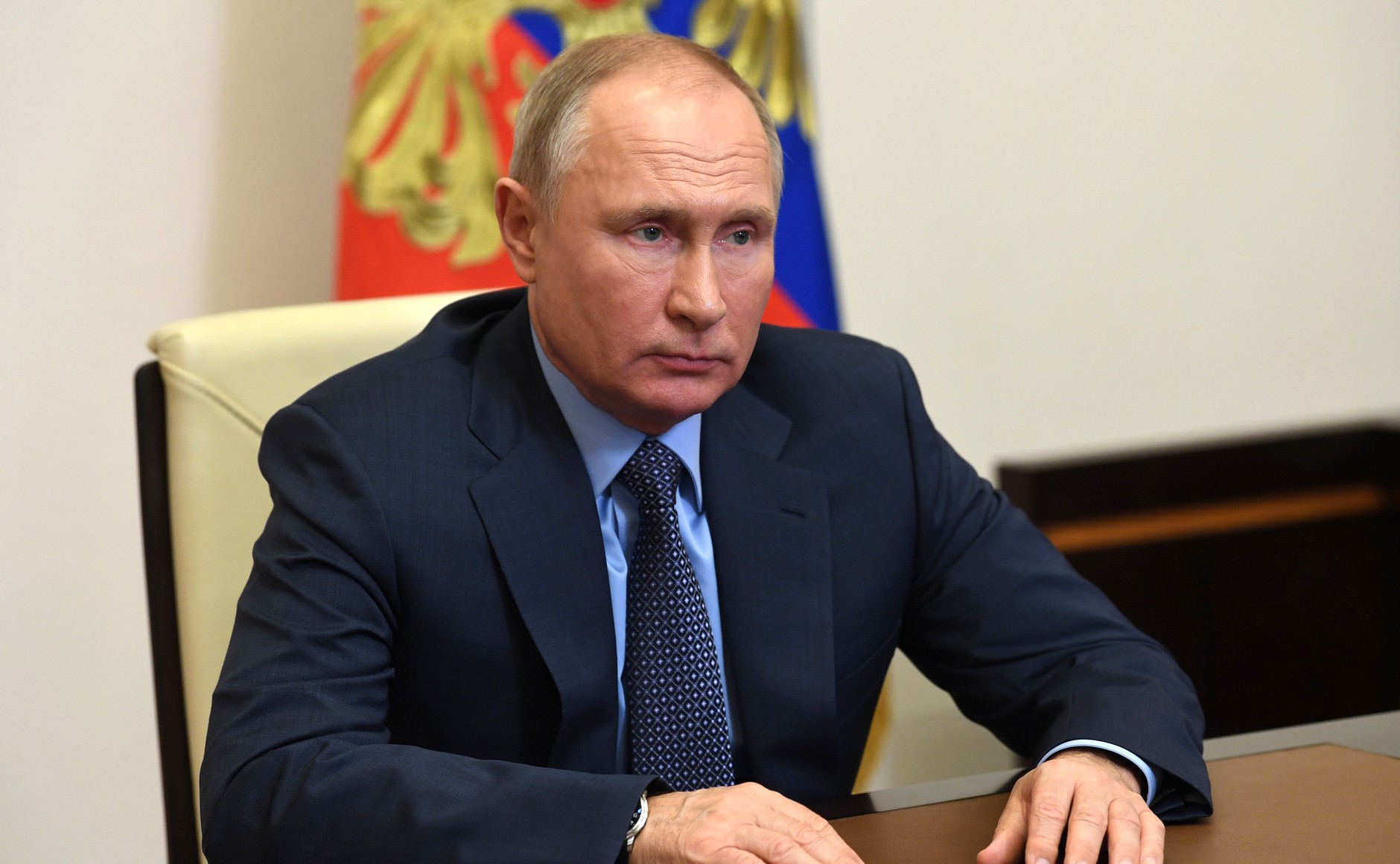
“A sure sign that Putin is worried about his falling approval ratings: he’s publicly kissing children again.”
-Independent Russian analyst Farida Rustamova, speaking to the Financial Times.
Putin Fears Coup, Assassination in Moscow:
The walls are closing in around Russian President Vladimir Putin, , just days ahead of what’s expected to be a in Russia on May 9. Long known for his paranoia, Putin has purportedly reached a new extreme of personal seclusion, fearing threats from within and abroad.
According to the Financial Times, Putin’s bodyguards, the Federal Protective Service, have substantially increased his security over the last several months, in the culmination of a process that began during the COVID-19 pandemic. Putin spends an increasing proportion of his time in underground bunkers, hosts guests only infrequently, and avoids his residences in Moscow and in the Russian northwest.
Per the report, Putin’s staff have been banned from using public transit, and are no longer allowed to use mobile phones in his presence, while they have had to accept surveillance systems in their own homes. While military officials are granted daily or near-daily audience with Putin, non-war-related officials meet with him only rarely.
Unnamed insiders suggest that Putin’s concerns are motivated by both external threats, and internal ones. From abroad, Putin has taken note of daring Ukrainian strikes like , and the United States’ brazen capture of Nicolas Maduro in Caracas. Internally, Putin fears the prospect of a or even an assassination attempt, as corroborated by Russian outlet Important Stories.
If accurate, then Putin’s concerns likely intensified even further , when a Ukrainian drone hit a residential high-rise building in Moscow. The strike caused no fatalities, but it marked a hit after three straight evenings of Ukrainian drone flights, primarily targeting St. Petersburg.
To protect Russia’s Victory Day celebrations, Moscow declared a unilateral ceasefire to cover May 8 and 9, which Ukraine has not accepted—instead, proposing its own unilateral ceasefire on May 5-6. Neither side is expected to respect the other’s ceasefire, or even their own. Russian officials have announced that mobile internet coverage in Moscow will be restricted for several days.
Even if Victory Day passes without a direct Ukrainian attack on Moscow, where air defenses are no longer capable of keeping up with incoming drones, Putin’s problems won’t be over anytime soon. Russian citizens are in their discontent with the regime, at a time when Russian forces are expected to scale up conscription efforts in key Russian cities—where, until now, Putin has worked to reduce or eliminate wartime pressures for the population.
Image Credit: “Vladimir Putin 19-01-2021” by kremlin.ru is licensed underCC BY 4.0.
This Week on WarFronts:
Last week, WarFronts covered attacks across the nation of Mali (here and here) perpetrated by a pair of informal, unlikely allies: the al-Qaeda-linked jihadist insurgency JNIM, and the ethnic-Tuareg separatist Azawad Liberation Front. In a coordinated series of ambushes and local offensives, anti-regime factions pushed Mali’s troops out of several key urban centers, and made substantial territorial gains.
Just as important, however, is the Russia angle (covered here): hundreds of paramilitary personnel from Moscow’s Africa Corps, who proved unable or unwilling to stop the offensive as it happened. Days ago, Russian forces withdrew from yet another key base, ceding the Tessalit area to Tuareg forces. With Tessalit gone, JNIM and Tuareg forces are poised to march on the ancient city of Timbuktu—both a symbolic target for Mali’s ruling military regime, and a strategic one.
Strait of Hormuz Heats Up Again:
Days after US President Donald Trump declared that hostilities against Iran had been “” at the signing of a temporary ceasefire, the Middle East is approaching a to open conflict.
The trouble began over the weekend, when the United States announced “”, an effort that Trump claimed would guide ships through the Strait of Hormuz and deter Iranian attacks. Hundreds of ships have been stranded in the Persian Gulf since the start of joint US-Israeli operations against Iran on February 28. The US claimed that two US-flagged ships transited the strait safely on Monday; Tehran maintains that no such crossing took place.
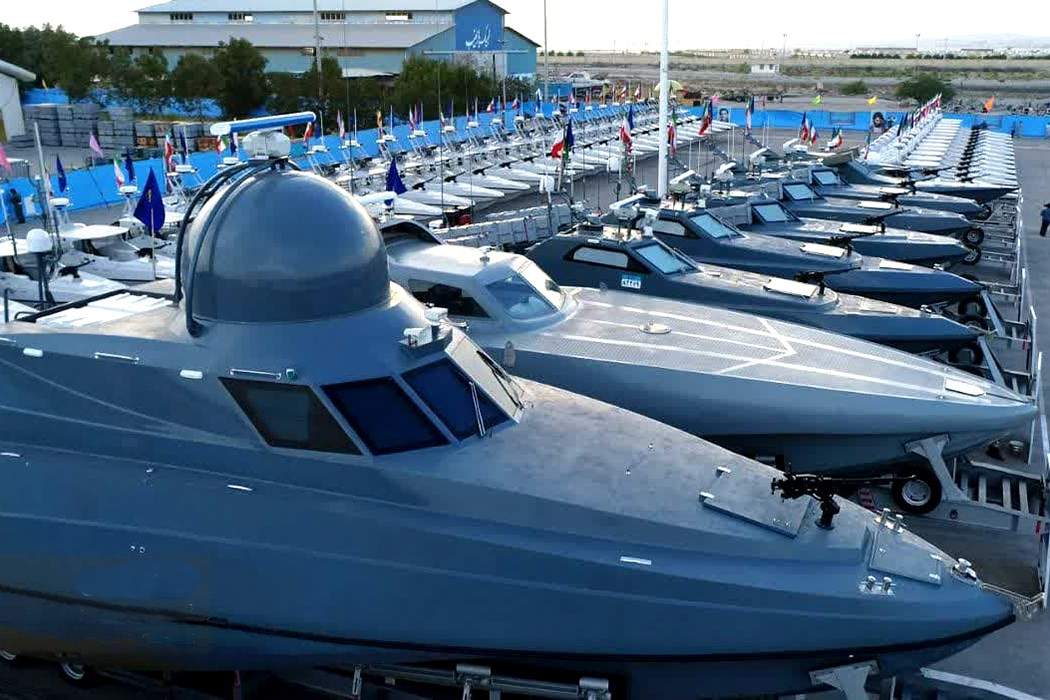
Iran, however, appeared to retaliate against the entire premise of Project Freedom as the day went on. On Monday, a South Korean-operated ship in the strait , in what Trump claimed was an Iranian attack. Also Monday, US attack helicopters six manned Iranian military speedboats, as warships shot down cruise missiles and drones targeting other vessels.
Nor did Iran constrain itself to attacks solely against ships in the Strait of Hormuz. Instead, Iranian missiles and drones scored at least one serious hit against the United Arab Emirates’ port of , the only Emirati oil export terminal located outside the Persian Gulf.
In itself, Monday’s exchange of fire between Iran and the US. While either side may choose to return to open hostilities in the days ahead, neither is obligated to take such a measure, on the basis of Monday’s events. In a Tuesday update, US Secretary of Defense Pete Hegseth and Chairman of the Joint Chiefs of Staff Dan Caine stated in a press conference that the ceasefire has not concluded, and Iran’s recent acts do not qualify as “major combat operations”.
That distinction, however, would appear to leave Iran leeway to continue attacksat this scale. By Tuesday evening, local time, Emirati officials were acknowledging Iranian missile and drone attacks, with the sounds of missile interceptions echoing across the Emirati landscape.
Image Credit: “Commissioning ceremony of IRGC naval vessels in March 2023” by Hossein Ghanbari is licensed underCC BY 4.0.
What We're Reading:
As the war in the Middle East heats up again, Iran’s preference to target the United Arab Emirates seems to be motivated by several factors at once: the UAE’s growing closeness to Israel, its immense wealth and relative secular rule, and its intentionally curated reputation as a safe, stable oasis in a restless region. But just as important, are the UAE’s efforts to control perceptions of the damage that Iran has actually created—with tight media regulations, strict censorship, and an influencer campaign all working to insulate the UAE from reputational harm.
examines the issue in detail, cataloguing several instances in which Emirati authorities sought to reframe or outright deny Iranian damage to the Emirates and their interests. The war, and Abu Dhabi’s response, are a critical stress-test of the glitzy, high-tech approach that several Gulf states are relying on, to chart a course into decades of reducing global demand for fossil fuels.
Our WarFronts/HomeFronts Team is proud to announce the launch of Fronts.co, our brand-new subscriber service.
Around the World:
A drone attack by Sudan’s Rapid Support Forces paramilitary left at least five dead on the outskirts of Khartoum, in the first reported strike after months of relative quiet in the capital. In the aftermath, Sudan’s military regime accused Ethiopia and the United Arab Emirates of coordinating the strike. Khartoum was captured by the regime in 2025; Saturday’s strike targeted a vehicle moving from Khartoum to its sister city Omdurman.
Russian forces have reached the outskirts of the city of Kostiantynivka, in Ukraine’s eastern Donetsk Oblast, setting up a major confrontation later this year. Kostiantynivka is one of the cities that comprises Ukraine’s key fortress belt, and is well-defended, with Ukrainian forces expected to force a drawn-out and highly costly urban battle. Small areas of the city are marked as no-man’s-land, according to Ukrainian battlefield mapping tracker DeepState, while Russia has captured territory within one kilometer of the city limits.
Ukraine struck the Russian port of Tuapse this weekend, for the fourth time in sixteen days of an ongoing pressure campaign against Russian export capacity. The strikes on Tuapse have destroyed much of the port and prompted intense frustration among Russian civilians. Also this weekend, Ukraine scored its latest hit against the Baltic Sea oil-export hub of Primorsk, and hit two Russian oil tankers near the Black Sea port of Novorossiysk. The governor of Russia’s Leningrad Region that Ukraine tried to strike one of Russia’s largest refineries, in the town of Kirishi, while a Russian strike killed five people at Ukrainian Naftogaz facilities in Kharkiv and Poltava.
Somali federal forces took control of the farming village of Ugunji, seizing an area that had been converted into a key financial hub for the nation’s jihadist al-Shabaab insurgency. Ugunji was the site of important al-Shabaab-run Islamic courts, as well as financial exchanges and local brokers that facilitated the flow of illicit finance.
Malian leaders accused military officers of collaborating with JNIM and Azawad forces during the nation’s recent wave of anti-regime attacks, in what would be the latest in a long series of military attempts to seize power by force. Mali has been run by military elements since 2020; according to Bamako, the nation’s latest coup plotters were a combination of serving and recently dismissed officers, collaborating with exiled politicians. According to local security sources, JNIM has begun to set up checkpoints surrounding Bamako.
Also in Mali, junta chief Assimi Goita assumed the post of Defense Minister in addition to his other duties, after his prior Defense Minister was killed in the recent attacks. While the f0rmer minister, Sadio Camara, was a close ally of Russia and the paramilitary Africa Corps, Goita personally favors greater reliance on Turkey and its own mercenary attaches, indicating a possible pivot toward Ankara in the near future.
Finally in Mali news, relatives of former minister and regime critic Mountaga Tall reported that Tall was abducted from his home on Saturday night by armed, hooded men, who reportedly mistreated his family members in the process. Tall’s relatives and other associates claim that Mali’s armed forces were behind the abduction.
An unknown Syrian armed group killed a Shi’a cleric near Damascus on Friday, by throwing a grenade into his car. The cleric, Farhan al-Mansour, was a prominent preacher at a local shrine where the granddaughter of the Prophet Muhammad is thought to be entombed; al-Mansour’s death may escalate simmering sectarian tensions in the area.
The United States will close its military-run Civil-Military Coordination Center in Israel—meant to oversee implementation of Donald Trump’s Gaza peace plan. The center’s responsibilities will be transitioned to a US-led international security mission, intended to oversee a coming military deployment and exercise greater legal authority.
The coast guard of Yemen’s internationally recognized government indicated that an oil tanker had been hijacked off Yemen’s Shabwa province, in the latest suspected hijacking by resurgent Somali pirates. The vessel appeared to turn toward the Gulf of Aden and the Somali coastline; the crew’s status is unknown at this time.
The United States announcedthat it will withdraw five thousand troops from German territory, making good on a threat to draw down its presence there after German Chancellor Friedrich Merz claimed that Iran had “humiliated” the United States in the Middle East. The US stations approximately 35,000 active-duty personnel in Germany.
Mexico’s governor of Sinaloa State, Ruben Rocha, relinquished his post on Friday night after several days of intense pressure from the US government. Washington had charged Rocha and other Sinaloa State officials on the basis of their alleged collaboration with the regionally dominant Sinaloa Cartel; Rocha was an important ally of Mexican leader Claudia Sheinbaum.