
WarFronts Weekly 6.16.2026.
🟨 WarFronts Weekly | Haitian Defense Reformer Kidnapped & More
Evan Moloney • June 16, 2026

Haitian Defense Reformer Kidnapped in Port-Au-Prince:
This weekend, Haitian media reported that unidentified armed men had kidnapped James Boyard, a high-ranking defense official, along with his wife and young child on Thursday. While Boyard is the highest-ranking Haitian official to be abducted in the last several years, his case is emblematic of the degree of control that Haiti’s gangs now enjoy across the capital city of Port-au-Prince.
Boyard was kidnapped from the neighborhood of Bourdon, a part of the capital generally thought to be safe, relative to the 70% of Port-au-Prince estimated to be under gang control. Boyard’s whereabouts remain unknown, and Haitian authorities have not yet indicated whether a ransom has been requested, although the New York Times reported that a ransom request has arrived.
Rather than a simple moneymaking exercise, Boyard’s kidnapping is likely to be political and strategic in nature. A political scientist by education, Boyard serves as the cabinet director of the Haitian Defense Ministry, while holding a dual post as Inspector-General of the Haitian national police. Boyard is a prominent reformer, elevated to his post in hopes that he could rebuild and strengthen the Haitian Armed Forces and civilian police.
His abduction appeared to be well-planned, possibly with the knowledge of at least one member of his inner circle or security detail. While Boyard’s level of security protection at the time of his abduction is unknown, it is unusual for a figure of Boyard’s importance to travel without personal security. A gang called Ti Bwa, led by Christ-Roi Chery, is believed to be responsible.
Boyard’s case is the latest in a series of recent kidnappings in safe areas of the capital, typically thought to be perpetrated by men loyal to the gang coalition Viv Ansanm. Public officials have come under direct threat of abduction, seemingly in an attempt to threaten them and dissuade them from investigating gang territories. Kidnappers have recently begun to wear police uniforms and carry out traffic stops.
If ransomed or released alive, Boyard will still set a dangerous new precedent in Haiti, as a tool to demonstrate the gangs’ dominance across most of the capital city. If Boyard remains in captivity, however, or he is killed by Haiti’s gangs, then his death would likely be received by both Haiti and its international partners as a grim signal of the gangs’ intent across the coming months.
Image Credit: "Sunset Port-au-Prince" by MichelleWalz is licensed underCC BY 2.0.
This Week on WarFronts:
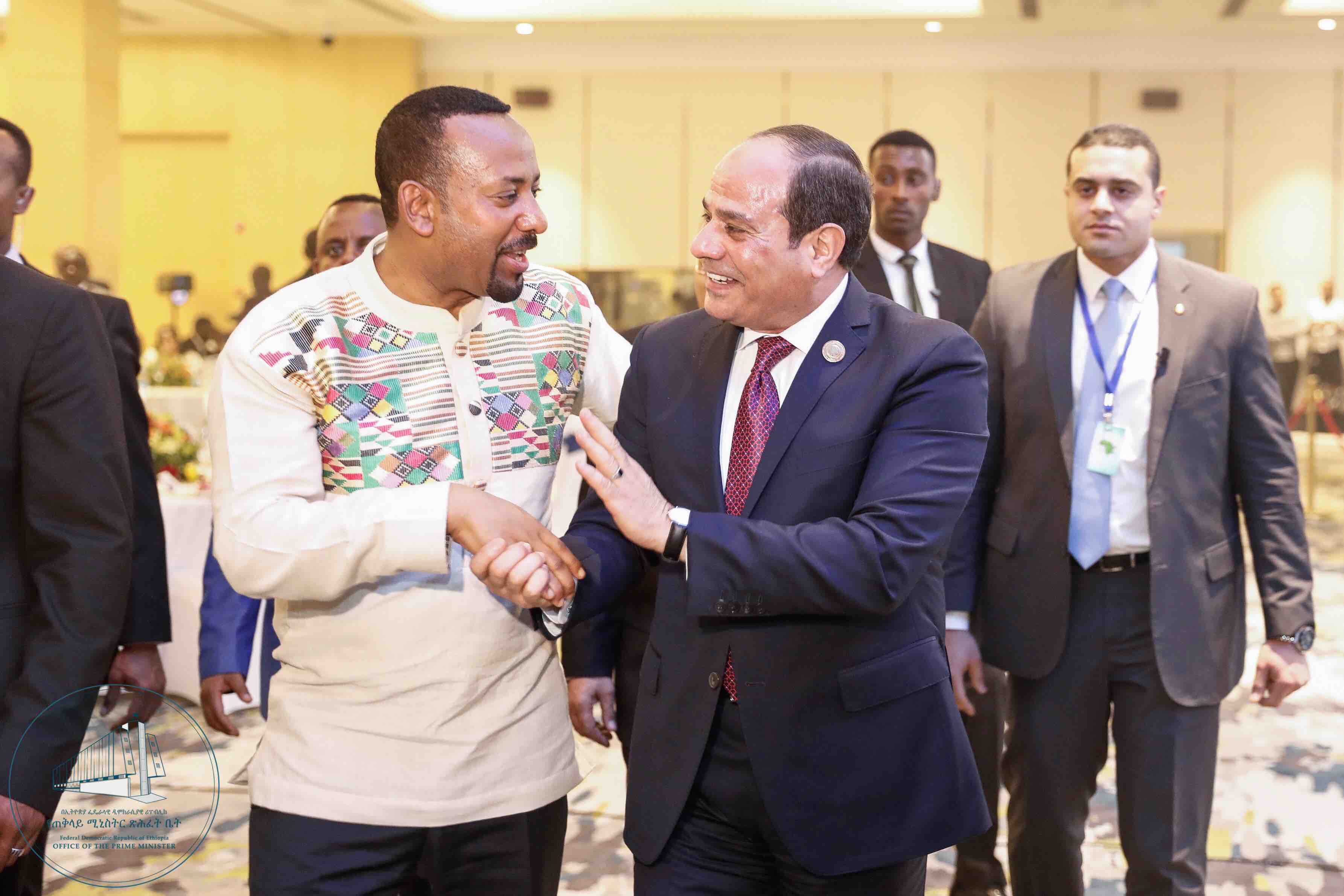
From Ethiopia’s Tigray region to the front lines in Sudan, and from political crisis in Somalia to a growing alliance between Egypt and Eritrea, the African Horn is on the verge of all-out chaos.
This week, Fronts hosted Liam Karr, Africa Team Lead for the American Enterprise Institute’s Critical Threats Project, to explain the Egypt-Ethiopia Cold War that drives conflict across the rest of the region. As Karr explains, Cairo and Addis Ababa are unlikely to enter a direct, open conflict in the near term, but their rivalry is expected to lead to confrontations across many dimensions of proxy conflict, including in open war on other nations’ soil.
Anti-Corruption Protests Growing in Albania:

Over the last two weeks, the nation of Albania has been paralyzed by a protest movement calling itself the Flamingo Revolution. Made up of mostly young demonstrators and activists, the Flamingo Revolution has morphed into a protest of cronyism, corruption, environmental destruction, and more, crossing partisan lines in a show of society-wide discontent.
The movement is a direct reaction to a luxury tourism project intended for a protected area on the Adriatic coastline, worth roughly $4.6 billion. The project is closely linked to the business ventures of Ivanka Trump, daughter of US President Donald Trump, and her husband, Jared Kushner; if approved, the pair will convert a large private island into a futuristic luxury resort—although details are sparse.
The backlash from the Albanian public has framed the development as a danger to nearly 250 species of birds, including flamingoes, from which the protest movement draws its name. In addition to what they claim will be an environmental disaster, however, the movement has also claimed that the development threatens Albanian heritage, and represents a direct attempt by the Albanian government to gain the favor of Washington’s Trump administration.
Albania has been governed continuously by Prime Minister Edi Rama since 2013; in 2025, Rama sailed to re-election in a fourth consecutive term. With a parliamentary majority, Rama wields the power to enact constitutional reforms without approval from the opposition. Under Rama, Albania is among Europe’s poorest nations, known for corruption, mismanagement, and the enduring presence of organized criminal interests.
As such, the Flamingo Revolution has rapidly evolved into a much broader expression of discontent with Albania’s leadership. Protesters from across the nation’s political spectrum have issued calls for Rama to resign, and seized upon the Trump-linked development as a classic example of the nation’s worst political habits: a lack of transparency and accountability, ostracism of the national opposition, and over a decade of false or unfulfilled promises.
As of now, the Trump-Kushner development remains on track, as the White House denies any conflict of interest. The protests have remained largely peaceful, and have succeeded in forcing other foreign investors and developers to take a stance on the issue, with most indicating a willingness to defer to the Albanian public. Rama remains in power, but Albania’s anti-corruption prosecutor has launched a probe into the deal, focused on the transfer of land rights and potential links to drug trafficking and money laundering.
Image Credit: “Live from Tirana as people protest against […]” by Kanal13 is licensed underCC BY 4.0.
What We're Reading:
While the Russian military remains focused almost singularly on its operations in Ukraine, Russian influence and disinformation campaigns continue across the globe, including in Moldova. There, after the pro-EU ruling party retained its mandate from voters last September, Russia has only intensified its operations in the information space.
This explanation via Small Wars Journal details the hybrid threats facing Moldova today, including efforts that span social media, elections, the financial sector, and various other facets of Moldovan life. The report discusses Moldova’s recently expanded efforts to counteract Russia, and charts a path for Moldova toward a deeper relationship with European partners, despite Russian interference in the country.
Our WarFronts/HomeFronts Team is proud to announce the launch of Fronts.co, our brand-new subscriber service.
Around the World:
The Sudanese paramilitary Rapid Support Forces are massing troops and heavy fighting equipment near the city of El-Obeid, raising alarms that an RSF attempt to capture the city may be imminent. El-Obeid has been continually besieged by RSF forces for years, although a breakthrough by the Sudanese Armed Forces in early 2025 allowed the city to become a military operations hub for the SAF despite nearby RSF pressure. A battle for El-Obeid is expected to be highly costly, and may be accompanied by parallel attacks in several other areas, to force the SAF to disperse its fighting units.
The United States and Iran agreed on a memorandum of understanding to put an end to the war in the Middle East, with a formal signing ceremony expected to take place on Friday. According to US officials, the agreement will lead to a gradual reopening of the Strait of Hormuz, while negotiations over Iran’s nuclear program and other issues will be deferred to subsequent talks. Israel is not a direct signatory to the agreement, and is continuing its operations in Lebanon, where Iran has shown a previous willingness to carry out kinetic action in solidarity with its proxy ally Hezbollah; as such, the outstanding Lebanon conflict presents an enduring point of friction on the deal’s implementation.
Russia carried out a long-range strike on the 1,000-year-old Pechersk Lavra monastery in Kyiv on Monday, hours before the start of a G7 meeting in France. Russia denied having struck the monastery, and insisted that it had instead targeted military facilities; Russia alleges that an American-made Patriot air-defense interceptor was responsible for the damage at the historic site. At least eleven people were killed across Ukraine, by Russia’s larger wave of strikes.
Suspected bandit attackers in Nigeria’s northwestern Zamfara State killed at least seventeen farmers and wounded at least seventeen others, in an attack on field workers in the town of Goron Namaye. The local government chairman had appealed to the Zamfara State administration to help dismantle a bandit hideout in a nearby forest after nearly forty people were kidnapped; the farmers were massacred after state authorities declined to intervene.
The United States in Venezuela this week, killing Hector “Niño” Guerrero, the leader of the transnational Tren de Aragua gang. The US designated Tren de Aragua a terrorist organization, and has justified its airstrike campaign across Caribbean and Pacific waters as an effort to constrain narco-trafficking by Tren de Aragua and other organizations.
A Mexican mayor in southern Oaxaca State was shot and killed in an ambush this weekend, making him the second Oaxaca mayor to be gunned down in the span of a month. Jose Angel Bravo Martinez, mayor of San Miguel Amatitlan, was a member of the Mexican opposition in an area known for a substantial cartel presence.
Congolese protesters in the capital city of Kinshasa clashed with police during protests against constitutional changes that are expected to clear the way for President Felix Tshisekedi to pursue a third term in office. The opposition demonstration was organized by a coalition that has gained considerable power in the DRC, despite Tshisekedi’s autocratic maneuvers over the course of his second term.
Opposition leader and former autocrat Viktor Orban was re-elected as the head of Hungary’s Fidesz Party, just two months after Orban’s seismic defeat at the hands of ruling Hungarian PM Peter Magyar. Orban will not be allowed to seek the premiership in the future, however, after the Hungarian parliament passed a new eight-year lifelong limit to prime-ministerial terms on Monday.
Romanian President Nicusor Dan made his latest attempt to end Bucharest’s simmering political crisis this week, when he designated liberal party member Adrian Vestea as premier after his prior candidate, independent Eugen Tomac, withdrew. Romania has struggled to form a minority government, at a time when the nation’s access to EU funds has been in doubt, and its extended political turmoil has been a boon to the rising right.
Taiwan launched a new government website on Sunday to solicit intelligence tips and leaks from Chinese nationals, based on what Taipei described as a growing number of people who are fed up with Beijing. The site is the latest demonstration of open resistance to Beijing by Taiwan’s ruling government, during an unusually confrontational tenure.
The United States Pentagon added several major non-state-owned Chinese companies to its list of corporations with links to the Chinese military, barring them from eligibility for US defense contracts. Among other companies, the Pentagon identified electric-vehicle firm BYD and tech companies Alibaba and Baidu as allies of the People’s Liberation Army.
Ukraine will request an additional $20 billion in funding from its NATO allies, according to Ukrainian defense sources, at a meeting this Thursday between Ukraine and over fifty countries associated with the Ukraine Defense Contract Group. Per that source, Ukraine will frame its request in terms of Kyiv’s broadly successful mid-range drone campaign and recent battlefield successes, encouraging Ukraine’s allies to help preserve and expand operational momentum.