
WarFronts Weekly 6.30.2026.
🟨 WarFronts Weekly | Pakistan Bombs Afghanistan After Terror Attack & More
Evan Moloney • June 30, 2026
“The decisions of the regime are not made based on emotions, but rather serious measures are taken at the right time.”
-Afghan Taliban spokesman Hayatullah Mohajer Farahi, reacting to Pakistani strikes against Afghanistan.
Pakistan Bombs Afghanistan After Terror Attack:
On Saturday, a militant attack on the Pakistani city of Karachi left three paramilitary troops dead and four others wounded, prompting fierce retaliation from Islamabad against the nation that it claims was ultimately responsible: Afghanistan. After a night of combined ground and air operations, Afghan officials now claim that dozens of civilians have been killed, raising the threat of a larger violent exchange.
The attack that set off the exchange, targeted a provincial headquarters of the paramilitary Pakistani Rangers in Karachi, Sindh Province. There, a militant drove a car bomb into the headquarters building, while other attackers exchanged fire with Rangers at the scene. Three militants were killed in the skirmish.
A group called Jamaat-ul-Ahrar claimed credit for the bombing, months after it claimed a suicide attack outside a Pakistani court in Islamabad last November. A splinter faction that broke off from the Pakistani Taliban insurgency in 2022, Jamaat-ul-Ahrar’s current relationship with the Pakistani Taliban is poorly understood, but it is viewed, in Islamabad, as a proxy for the larger insurgent faction.
As such, Pakistan’s reprisal attacks operated on the premise that the breakaway group was operating on behalf of the larger Pakistani Taliban—which, Islamabad alleges, relies on the protection of the ruling Taliban government in Afghanistan to operate freely on Afghan soil. That chain of culpability led Pakistan to respond with direct operations along the Afghanistan-Pakistan border, rather than focusing its attention on Karachi.
On Sunday, Pakistan carried out a ground operation in the border region, followed by targeted airstrikes against what it described as militant targets and hideouts. According to the Pakistani government, twenty-nine insurgent fighters were killed over the course of the operation.
The Afghan government, however, gave a very different account of Pakistan’s actions. According to Kabul, the Pakistani attack led to the deaths of at least thirty-six civilians, with over 160 others wounded. One of those strikes, per the Afghan Taliban, targeted a villagewhere residents had gathered to rescue wounded civilians after another strike had already taken place.
Each nation summoned the other’s diplomats to protest their respective actions, and Kabul emphasized that Pakistan has blamed Afghanistan for security incidents without providing “credible evidence”. The Afghan Taliban’s publications minister, Hayatullah Mohajer Farahi, vowed that “This will definitely be in due time.”
The exchange is the latest chapter in an on-again, off-again border war that has defined Pakistan-Afghanistan relations in 2026. While the region had previously seemed to be slowly winding down tensions, with help from Beijing, the new round of fighting appears likely to lead to another round of open hostilities.
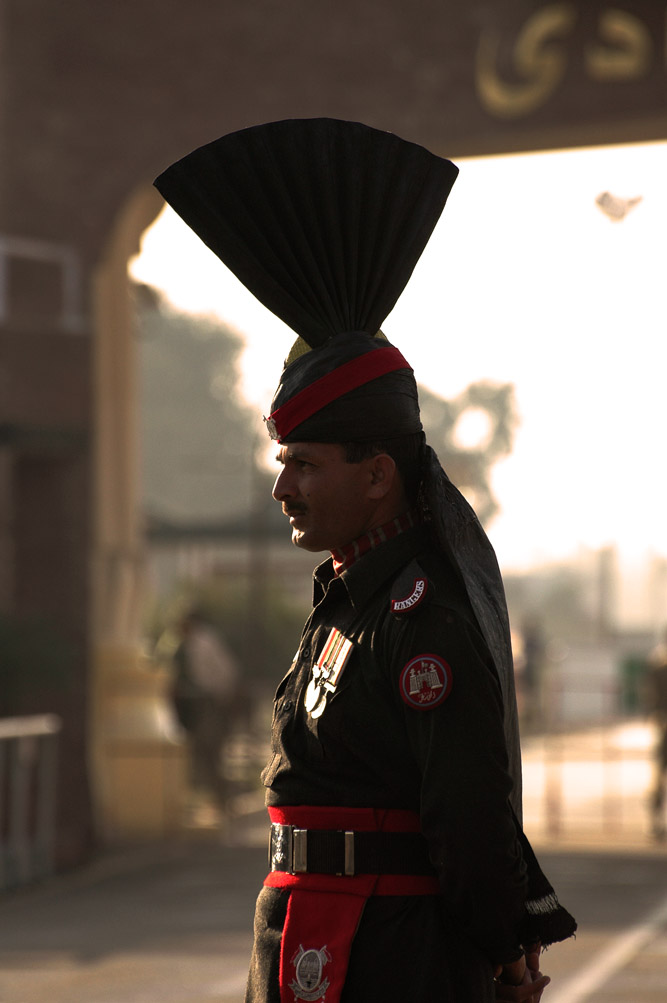
Image Credit: “Pakistani Ranger” by Koshy Koshy is licensed underCC BY 2.0.
This Week on Fronts.co:
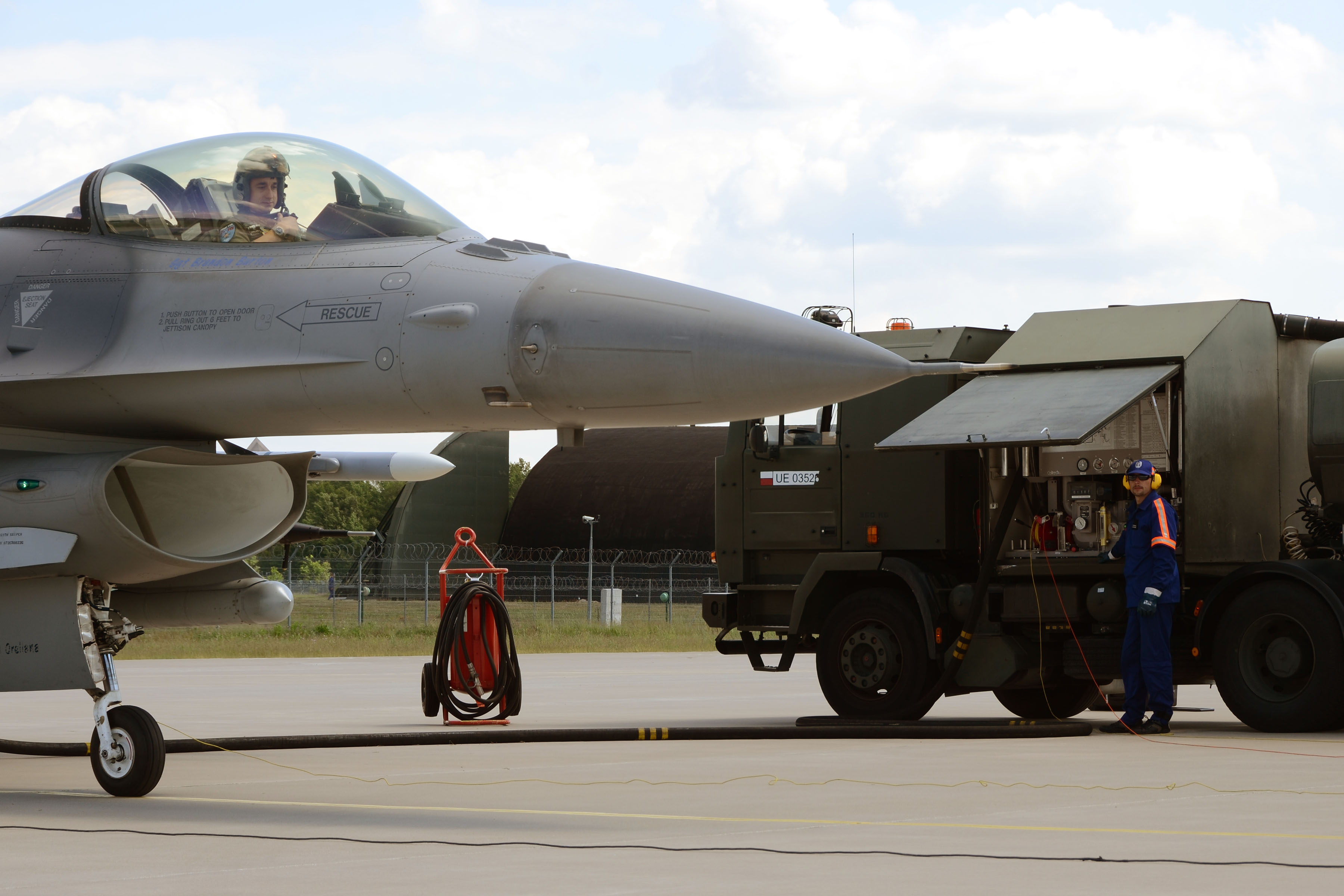
Across Europe, the continental push for remilitarization is largely focused on sweeping overhauls and big-ticket purchases: new frigates and stealth fighters, significant expansions of European ground armies, and the construction of new defensive bases and strategic infrastructure. Just as important, however, is Europe’s energy challenge, at a moment when ongoing wars in Ukraine and the Middle East have made clear that the continent cannot afford to depend on external energy sources.
On Fronts, expert Tiago Machado explains Europe’s push toward sustainable biofuels—not aimed at addressing climate change, but “either improving operational efficiency or enhancing resilience”. Starting with fighter aircraft, Europe plans to carry out a partial transition to mixed-in biofuels wherever possible in the coming years, despite the added costs of the vital transition.
Aleksandar Vucic Steps Down:
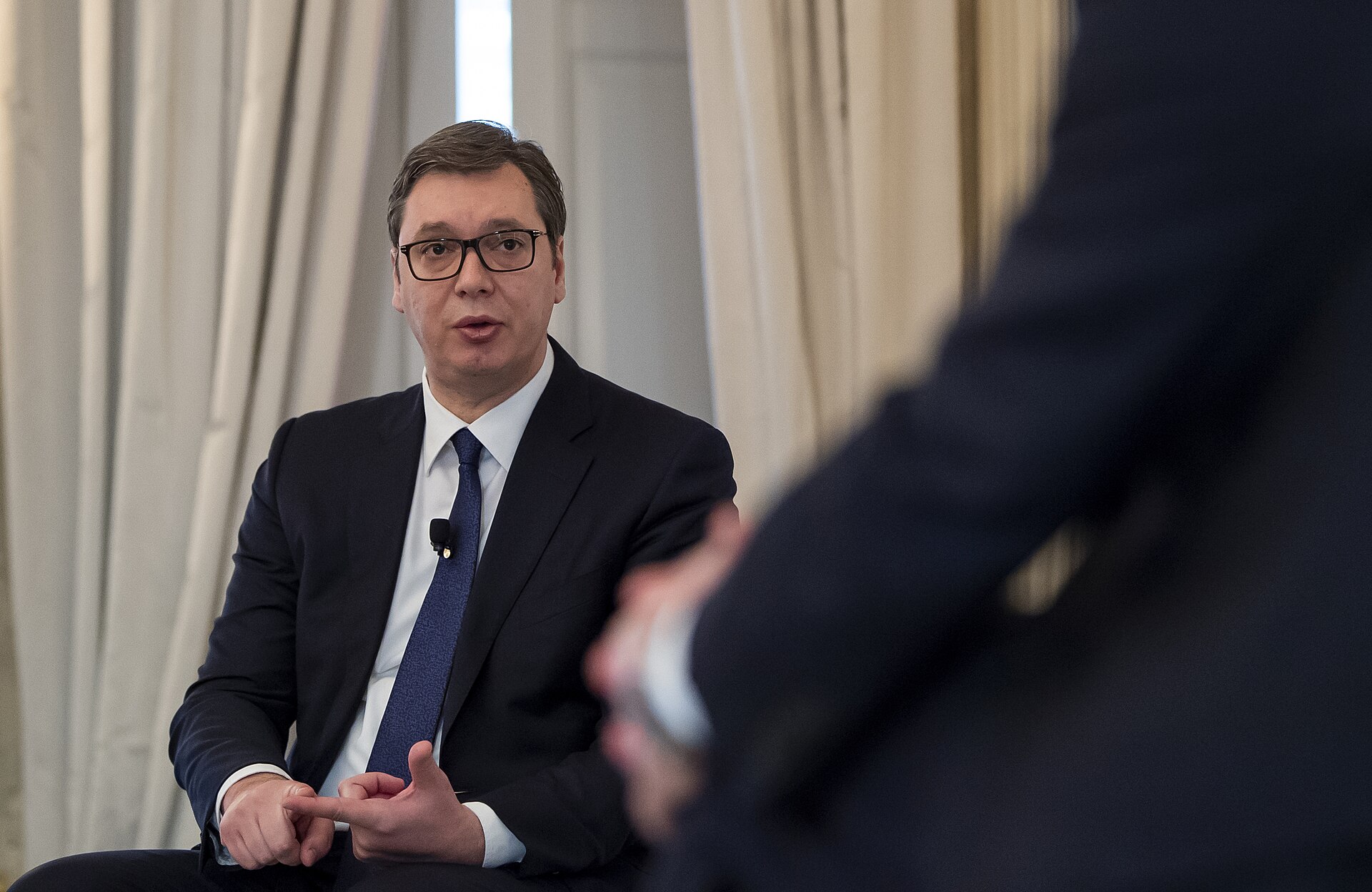
On Saturday, Serbian President Aleksandar Vucic made a surprise announcement: “I will be president for only a couple of weeks, and then I will ”. But even after a year and a half of seemingly interminable student protests against his government, Vucic’s critics are skeptical that he actually intends to abdicate power, and fear that he will instead seek a new position as Serbia’s premier.
Since 2024, Vucic has been under immense pressure from a student-led, nationwide protest movement, following the partial collapse of a railway station in a fatal tragedy blamed on elite corruption. While Vucic and his allies have attempted to quell the protests through civil restrictions and pro-government counter-protests, the movement has been able to keep and slowly build upon its strength.
Vucic is term-limited, and was scheduled to finish his second and final term in 2027, when Serbian voters will elect both a new president, and a new prime minister. While Vucic has accumulated political power as president, and is, in practice, the chief executive in charge of Serbia, the nation’s president is formally less powerful than the prime minister—a problem Vucic has addressed by ensuring that staunch loyalists hold the PM’s seat.
For this reason, outside analysts and student protest leaders suspect that Vucic intends to transition to the premiership, instead of leaving politics entirely. As one protester told Reuters during a demonstration after Vucic’s announcement: “I cannot imagine that he will step down and leave power to someone else”.
Vucic will be able to install a hand-picked ally as Serbia’s next president, and is not currently bound to an election date, as the 2027 electoral calendar has not yet been announced. Vucic’s political party and its allies hold coalition power in the Serbian National Assembly, and are likely to wield the power of state institutions in a future election, to ensure that they retain a majority.
While the position of Prime Minister would grant Vucic greater official powers, it would also provide a much easier path to continued political relevance. Vucic is a polarizing figure in Serbia, loathed by the nation’s protesters and their supporters, and while, in more politically favorable times, he may have attempted to secure an unconstitutional third term, he likely assesses that it would be too costly to try and hold the presidency at this time. As premier, Vucic will only need to win an election in a single, friendly district.
Whether Vucic leaves politics, or transitions to the premier’s role, his departure from the presidency is likely to impact Serbia’s bid to join the European Union. Under Vucic, the Serbian government has cultivated close ties with Russia and China, used force against peaceful protesters, and wielded its power in increasingly autocratic ways.
To join the EU, Serbia must address corruption, organized crime, and rule-of-law concerns, while holding free and fair elections and establishing diplomatic relations with independent Kosovo. A political transition may give Serbia a new opportunity to meet those expectations, or at least, provide a grace period for Serbian leaders to advance its bid while Vucic does not hold public office.
Image Credit: “Aleksandar Vucic MSC 2019” by Guelland/MSC is licensed underCC BY 3.0 DE.
What We're Reading:
Russia’s invasion of Ukraine has placed extreme pressure on the country’s ruling elite, who have reportedly become disillusioned with Vladimir Putin’s leadership as economic turmoil deepens, and Ukrainian long-range drones degrade the nation’s defenses.
Yet, as this paper by former Russian economist Alexandra Prokopenko explains, the Russian elite has experienced a stunning reduction of their own political power over the last several years. Where key Russian oligarchs, intellectuals, and other figures may once have been a meaningful counterweight to the Kremlin, Prokopenko details their ongoing decline, into “a community of managers” presiding over a national decline they can no longer prevent.
Our WarFronts/HomeFronts Team is proud to announce the launch of Fronts.co, our brand-new subscriber service.
Around the World:
The United States and Iran traded fire again over the weekend, prompted by multiple Iranian attacks on civilian shipping vessels. During the exchange, the United States carried out successive rounds of airstrikes on Iranian soil, and US President Donald Trump threatened that the Islamic Republic of Iran would be destroyed if the nation fails to honor the Memorandum of Understanding that formally ended the Iran War. Iran retaliated with long-range drone and missile attacks at US bases in Bahrain and Kuwait. Both nations ultimately agreed to end hostilities again and renew talks, which will resume today at a previously scheduled meeting in Qatar.
Ukraine struck a major Russian refinery in the Krasnodar region, near the occupied isthmus of Crimea, and sparked a massive fire that appeared to burn for more than a day. The refinery processes roughly 100,000 barrels of oil per day, primarily for domestic use, but now appears to have been disabled. If true, then the refinery’s destruction will deepen fuel shortages across Russia, and remove a vital source of relief for Russian forces in Crimea.
Sudan’s Rapid Support Forces battled back and forth against the Joint Force, a former rebel coalition aligned with the nation’s military regime, over the towns of Abu Qumra and Um Baru in North Darfur. The Joint Force managed to capture the towns several days ago, during a complex flanking advance, but the RSF was able to recapture Abu Qumra by Monday morning. The two towns are anchor points in a thin stretch of territory between RSF-occupied lands and the Chadian border, where government-aligned units are working to maintain control. Also this weekend, the Sudanese Armed Forces recaptured the villages of Sirkum and Mugaja in the southern Blue Nile region, after a joint offensive between the RSF and another anti-regime faction had led to the fall of the key Sirkum garrison last week.
At least fifteen people were killed in an attack on a farming community in northwestern Nigeria’s Zamfara State, in the latest armed assault against a local village. While no group claimed responsibility for the massacre, the violence is believed to be the work of armed gangs from the nation’s semi-nomadic herding community, who target sedentary village populations for a variety of economic, subsistence, and religious reasons. The attack took place just days after another, similar massacre left seventeen farmers dead, elsewhere in Zamfara State.
An in Monaco injured three people on Tuesday, including its likely target: a Ukrainian-born oligarch named Vadym Yermolaiev. Sanctioned by Ukraine in 2023, Yermolaiev has been accused of maintaining business links to occupied Crimea; Yermolaiev’s wife and son were the other people injured. The attacker used a parcel bomb, and fled across the border to France, where Paris has vowed an investigation.
Several dozen Iraqi officials and lawmakers were arrested in a sweeping crackdown over the weekend, mostly arrested in Baghdad’s high-security Green Zone. The arrests included twelve current legislators and a high-ranking official from the nation’s Oil Ministry. While the arrests initially set off fears of an internal coup d’etat within the government, Baghdad has since framed its action as an anti-corruption purge; regardless, the action appeared to target key supporters of recent Prime Minister Mohammed Shia al-Sudani, who has played an important, polarizing role in Iraq’s ongoing political crisis.
Russia’s former Minister of Defense, Sergei Ivanov, died at age seventy-three on Friday, with no cause of death or other details revealed by the Kremlin. Ivanov was a very close ally of Russian President Vladimir Putin, and had worked with Putin since the 1970s, in their time as KGB officers in the city of St. Petersburg, then known as Leningrad. Ivanov oversaw Russia’s second war in Chechnya, and was initially thought to be Putin’s chosen successor in 2008, before Dmitry Medvedev was ultimately selected.
The Kremlin responded on Friday to a viral videocirculating on Russian and international social media, in which a military veteran accuses Russian commanders in Ukraine of the torture and murder of troops who do not carry out “suicidal orders”. Government spokesman Dmitry Peskov indicated that the video will be investigated; in the video, the speaker threatens to instigate a military coup against the Putin government unless he is granted a direct, live-on-television meeting with Putin himself.
The Chinese government stripped eight high-ranking officials of their posts in the National People’s Congress this week, including six military legislators, a former financial regulator, and Ma Xingrui, a leading scientist who was placed under investigation in April. Five other members of the legislative body were removed, and another resigned. The targeted military lawmakers included the former head of the Chinese military’s development and testing division, the former political commissar of the Western Theater Command, and the former political commissar of the nation’s air force.
Manuel Adorni, chief of the cabinet of Argentinian President Javier Milei, resigned on Saturday in response to a quickly escalating corruption scandal. Adorni was a key Milei ally, and was the president’s primary intermediary with the Argentine public on the government’s austerity measures. According to federal prosecutors, Adorni appeared to engage in self-enrichment and unexplained, excessive spending beyond his means; Adorni ultimately admitted to buying US dollars from the Argentinian black market, and dodging tax regulators.