
WarFronts Weekly 7.14.2026.
🟨 WarFronts Weekly | Houthis Enter Middle East Conflict as Iran, US Return to War.
Evan Moloney • July 14, 2026
“We’re knocking out all of their offensive capability and we’re controlling the straits. We’re putting the blockade back.”
Author’s Note:
WarFronts Weekly readers, please excuse the unexpected lack of a regular Friday Blitz installment last week. For reasons we cannot yet disclose, this humble WarFronts Weekly author has been engaged in Fronts business abroad, and may have overestimated the time available to write a newsletter on schedule.
To compensate, we’ve stacked this extra-length newsletter with all the news that would otherwise have been included in the Blitz, along with our regular Tuesday segments.
Houthis Enter Middle East Conflict as Iran, US Return to War:
On Monday, US President Donald Trump formally notified Congress that Washington has resumed hostilities with Iran, retroactive to 7 July. According to the White House, the notification opens a new sixty-day window for Trump to use the US military in the Middle East at will, without congressional approval—likely signaling the end to peace talks, for the near future.
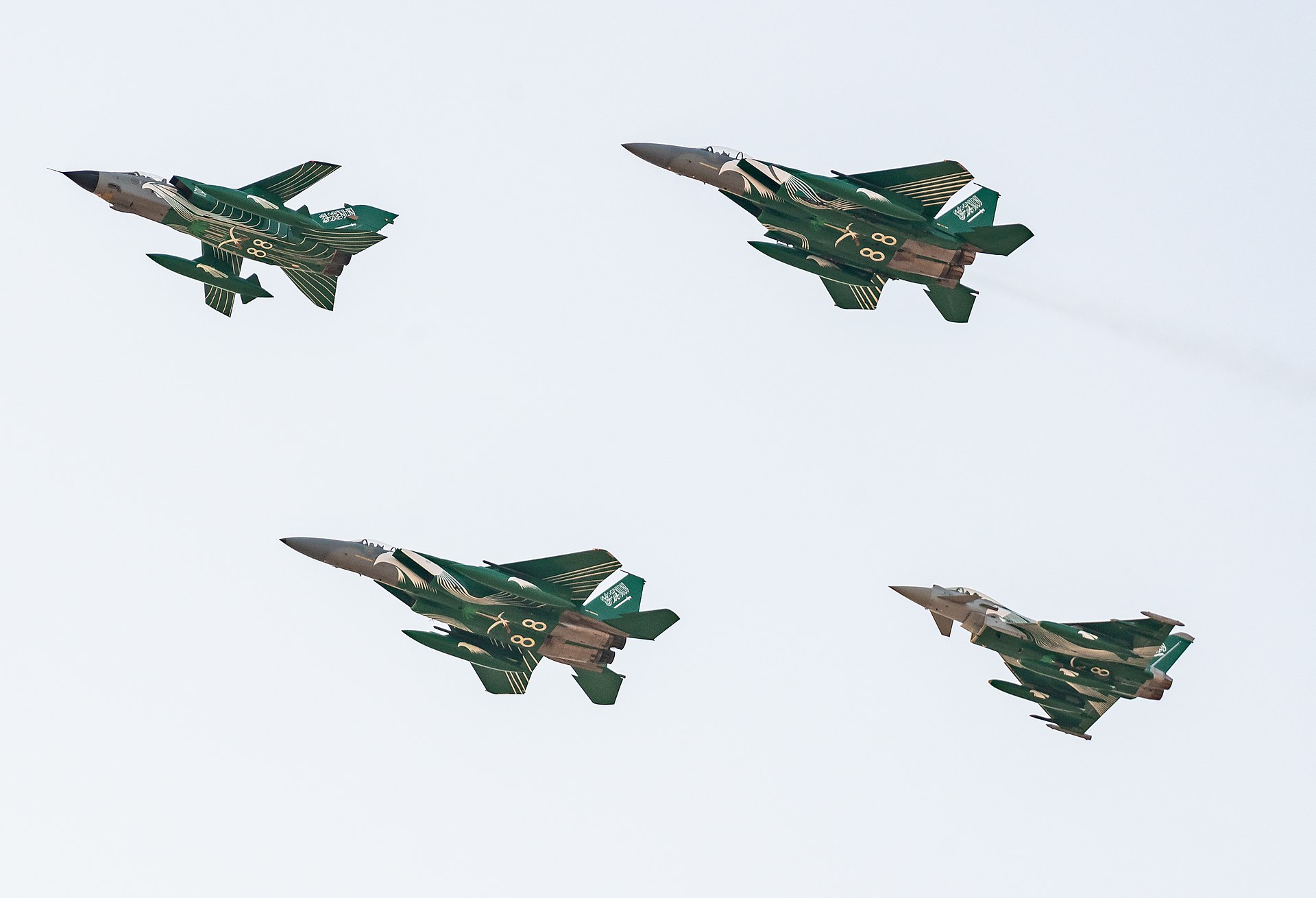
Just as important, however, are developments further west, where Yemen’s Houthi rebels launched their first strikes in several years against Saudi Arabia. On Monday, the Houthis targeted Abha International Airport in the country’s southwest, hours after they accused Saudi Arabia of bombing Sana’a International Airport to prevent the landing of a plane that carried the Houthi delegation to the funeral of Iran’s former Supreme Leader.
The tit-for-tat was reportedly instigated by Saudi Arabia with American approval, according to Axios, which cited two US officials who claimed that Trump endorsed direct military action against the Houthis. Saudi Arabia had bombed Sana’a ten days prior to the most recent exchange, when a Revolutionary Guard-affiliated Iranian airliner arrived in Sana’a to pick up the same delegation in question.
Monday’s escalation is highly geopolitically significant, given the Houthis’ proximity to the Bab al-Mandeb Strait, the southern entrance to the Red Sea and a key chokepoint for international trade. Also on Monday, the Houthis warned that airlines should not fly through Saudi airspace until aircraft can travel freely from Sana’a.
Months ago, the Houthis surprised most of the world, when the group chose to largely avoid engaging in the Iran-centric war across the Middle East. More recently, however, the group has showed a clear intent to escalate: a regional mobilization drive, tribal clashes with forces loyal to the Saudi-backed Yemeni administration, and direct threats against Israel in Somaliland.
In Iran, meanwhile, Monday night and Tuesday morning marked the third consecutive day of US airstrikes, after the United Arab Emirates reported that Iran struck two Emirati oil tankers as they attempted to transit the Strait of Hormuz. Over the last several days, Jordan, Bahrain, Oman, Qatar, and Kuwait have registered direct attacks from Iranian soil, while American retaliatory strikes have hit targets in Bandar Abbas, Kish and Qeshm Islands, Bushehr, and elsewhere.
Image Credit: “RSAF (Royal Saudi Air Force) jets in special livery […]” by Alan Hunter is licensed under CC BY 2.0.
This Week on WarFronts:
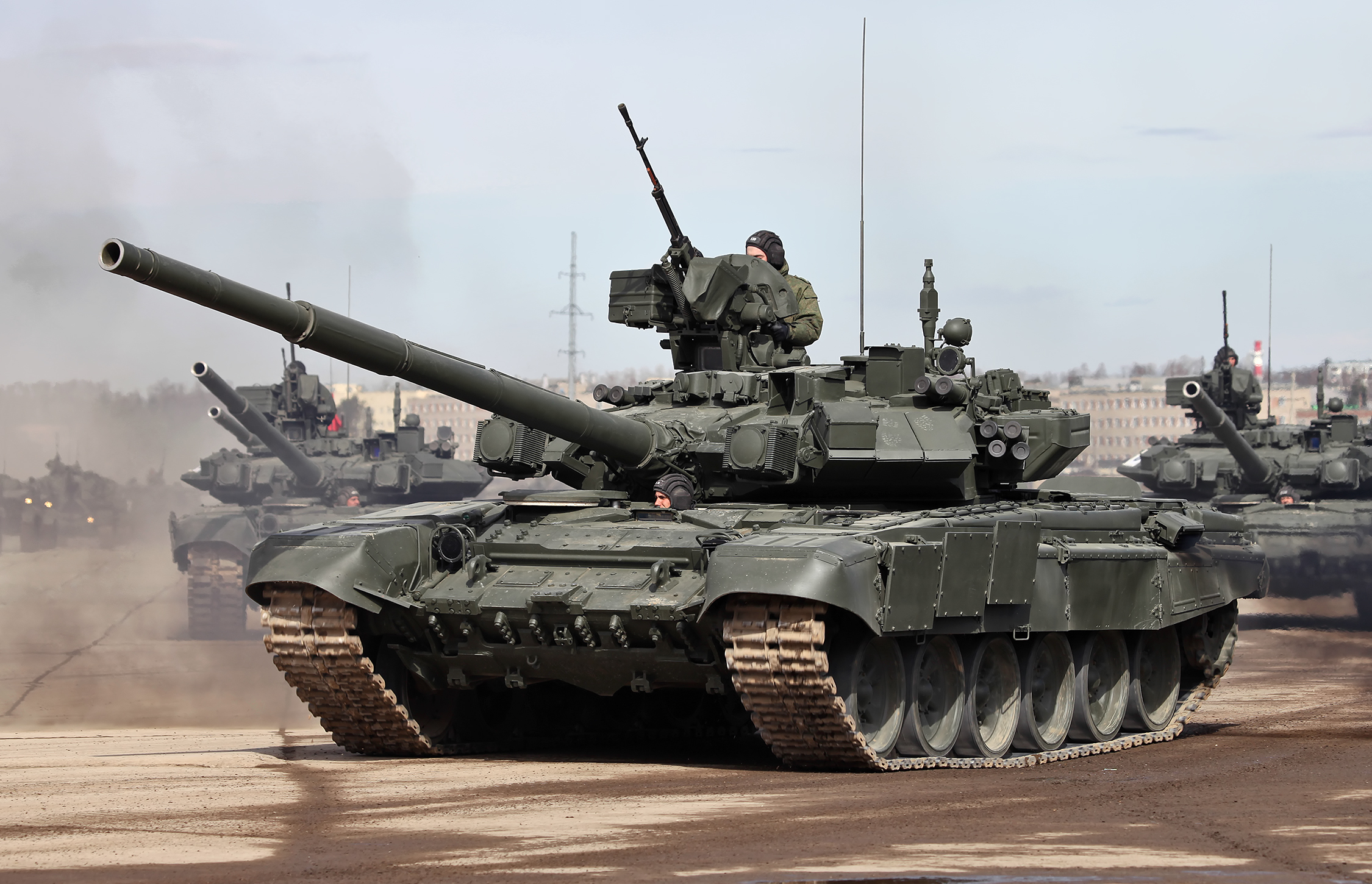
European leaders and intelligence agencies are in agreement: Russia will challenge the NATO alliance, and test its resolve, by 2029—with limited attacks in Poland, Latvia, or elsewhere, expected as soon as this summer. But with Russia’s military so badly degraded by the war in Ukraine, outside observers often ask—quite fairly—whether Moscow is even capable of dedicating the troops and fighting equipment required for such a risky initiative.
This week, Russia expert and open-source intelligence analyst Jakub Janovsky issued a warning on Moscow’s military readiness after the Ukraine conflict ends—arguing that although Russia will need to make difficult decisions in rebuilding lost capabilities, the nation is likely to refill stockpiles and commit to its use of high-attritional warfighting tactics.
Ukraine, European Allies Seek Lower-Cost Patriot Alternative:
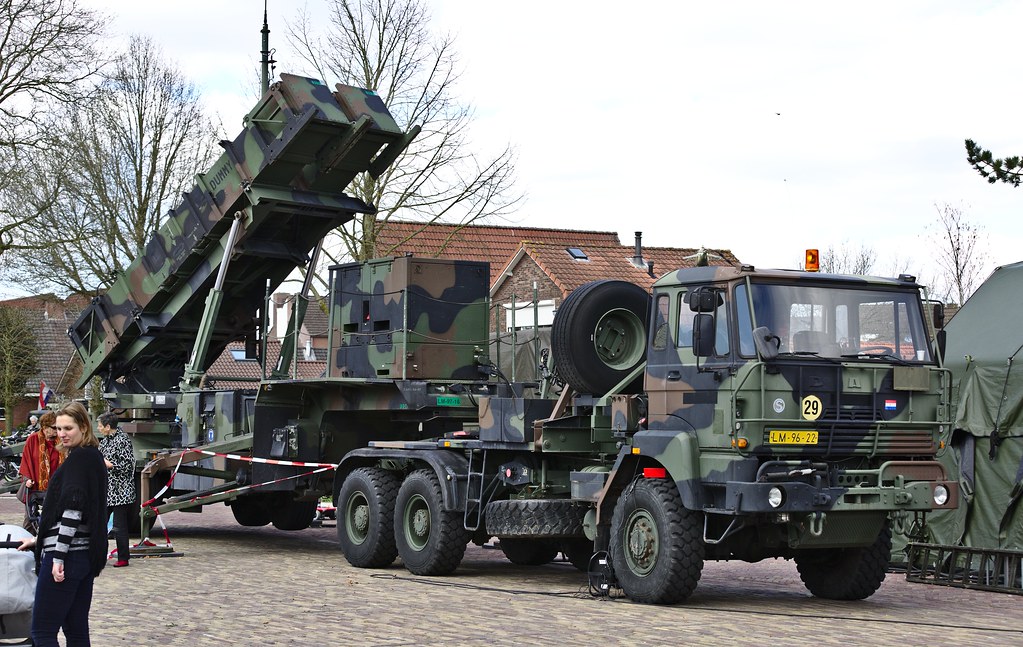
Across the last several weeks, Ukraine’s shortage of Patriot air-defense interceptors has become an urgent problem, as reserves run low enough that Ukraine has been unable to stop ballistic-missile strikes against its own capital city. Although Kyiv has gained a measure of reprieve recently, with interceptor shipments likely in the near future, the nation is doubling down on a parallel effort to replace the Patriot system with a cheaper, non-US alternative.
For Ukraine, the Patriot air-defense system is uniquely important, as it provides the ability to intercept high-arcing ballistic missiles that non-specialized systems cannot address. Ukraine possesses a limited number of the systems, however, and a recent US-Ukraine deal to manufacture Patriot interceptors on Ukrainian soil is practically irrelevant to the current conflict, as Ukraine will require years to set up facilities, train staff, and build at scale.
Ukraine’s alternative is a lower-cost system called the Integrated Anti-Ballistic Missile Coalition, a joint effort with nine other European nations—including relative European powers in Germany, France, Britain, and Italy, as well as Sweden, a consistent defense innovator. While the system is not intended to replace the Patriot in the very near future, it will provide a supplemental alternative in the near term, and is likely to become an export product.
The new European system will address the high costs of Patriot interceptor use—over $4 million for a single shot, even before the recent shortages caused by the Middle East conflict. It will also address the enduring power of US export controls, at a time when more and more European nations are chafing under Washington’s influence.
As the Western world’s premier military supplier, the United States is able to leverage its arms-exporter status as a geo-strategic tool. As penalty for perceived noncompliance, interference, or even—from Washington’s perspective—insubordination from its allies, Washington can withhold or amend deliveries, decline to provide training and technical support, or cut off the flow of replacement parts and software updates that allow its equipment to function.
Recently, European leaders have been reminded of Washington’s willingness to change its delivery schedules on orders that have already been promised. Deliveries of Patriot interceptors, Tomahawk cruise missiles, and HIMARS mobile rocket launchers have all been delayed or cancelled, due to the rate of US stockpile expenditure in the Middle East.
In the short term, the Ukrainian-European alternative will struggle to fill the gap, but Ukraine’s ambitious procurement timeline suggests that relief may be coming soon. Based around Ukraine’s ongoing Freyja project, the initiative will pour foreign cash and technology into Freyja, as well as substantial production capacity. According to Kyiv, the first systems could be operational in twelve months or less.
Image Credit: "Patriot" by dvanzuijlekom is licensed under CC BY-SA 2.0.
What We're Reading:
While the NATO alliance works to re-arm and expand its warfighting capabilities against Russia, the bloc is facing another deadly adversary: extreme heat. After a crushing heatwave in Europe, and high temperatures across North America, the alliance’s ability to work through extreme climate events is in question.
In this Foreign Policy analysis, Erin Sikorsky, Director of the Center for Climate and Security at the Council on Strategic Risks, explains the complex impact of heat events across the alliance. With those events becoming more likely, not less, Sikorsky outlines the key steps that NATO members can take, to create a more heat-resilient defensive apparatus.
Our WarFronts/HomeFronts Team is proud to announce the launch of Fronts.co, our brand-new subscriber service.
Around the World:
After several days of continuous strikes, Ukraine forced Russia to suspend all shipping in the Sea of Azov, where over ninety vessels have been attacked since the start of the month. Ukraine’s strikes have targeted tankers, ferries, and shadow-fleet vessels, in an area that was once protected by Crimean air defenses, but has since been left exposed by Ukraine’s campaign against the peninsula. Notably, Russia has declined to draw upon ships from the remaining Black Sea Fleet, where several warships remain positioned at Novorossiysk.
After several days under siege in the Malian city of Anefis, a combined force of Malian troops and Russian paramilitary Africa Corps fighters was relieved when a military convoy broke through Tuareg-separatist lines. According to Mali’s military regime, the convoy was assisted by close air support; Mali and the Tuareg separatist movement have provided sharply divergent counts of the dead, but both sides are believed to have suffered dozens of casualties at a minimum. With Anefis under Malian government control for now, Bamako has prevented a full consolidation of Tuareg control over the country’s northeast.
The Sudanese Army recaptured the city of Kurmuk in the nation’s southern Blue Nile State last Wednesday, months after it was captured in a shock offensive by the paramilitary Rapid Support Forces launched via Ethiopian soil. The military indicated that it had inflicted serious losses on the RSF during its assault, although the death toll from the battle is not yet known.
A suspected band of semi-nomadic herders killed at least eighteen people in the northern Nigerian state of Benue, in what was likely an act of retaliation for the killing of a herding association chairman several weeks ago. Local authorities reported a lower death toll of eight people killed, in an ambush that targeted a funeral.
Russian forces struck an unauthorized ammunition warehouse on the outskirts of Kyiv last week, according to Volodymyr Zelenskyy, in a massive explosion that killed ten people and damaged hundreds of homes. Per Zelenskyy, the targeted depot was built by Ukraine’s largest defense conglomerate, the state-owned Ukroboronprom, and will be subject to a criminal investigation after the fact.
A coordinated Ukrainian air-to-air ambush resulted in the shoot-down of a prized Su-35 fighter jet, in a joint effort between a Patriot missile team and three Ukrainian fighter aircraft. The jet was the ninth of its type to be shot down since the start of the Ukraine war, and the first within the last year. Also across the last two weeks, Ukraine has carried out several strikes on Crimea’s Saky airfield, where at least seven aircraft—including Su-30s and Su-24s—are believed to have been destroyed.
Anastasiia Berezovska, the Ukrainian woman accused of carrying out the bombing attack that severely injured Ukrainian oligarch Vadym Yermolaiev on the twenty-ninth of June, was found dead in Kyiv with gunshot wounds to the head. A Ukrainian intelligence officer and his accomplice, an ex-police officer, were detained in connection with the killing, and the intelligence officer has confessed to killing Berezovska without any instruction to do so, and without informing his superiors. A search of the other suspect’s home revealed a basement room that resembled a torture chamber. The two are believed to have been connected with Berezovska’s bombing mission in Monaco.
A cargo ship in the Gulf of Aden was attacked by four suspected Somali pirates on Sunday, with the pirates engaging in boarding action and firing a rocket-propelled grenade at the vessel’s safe room. Despite the attack, the vessel’s twenty-man crew was unharmed, and the pirates fled in advance of the arrival of an Indian Navy ship.
Russia carried out a live-fire military exercise on Lake Peipus, a water body divided between Russia and Estonia, without providing notification to the Estonian government. According to Tallinn, the 9 July exercises saw Russian forces firing upon moving targets on the water, in what may be the first live drills of the lake’s history.
On Friday, Cuba’s electrical grid collapsed for the second time within a week, in the latest indicator of the crippling impact of a US-imposed oil blockade on the island nation. The latest blackout prompted unusual public protests, albeit at limited scale. Power was partially restored by Monday, although more limited blackouts continue.
Ukrainian President Volodymyr Zelenskyy announced on Sunday that he would replace the nation’s prime minister, Yulia Svyrydenko, in a surprise pivot that will see Svyrydenko reassigned as ambassador to the United States. The move reflects a shift in strategy by Zelenskyy, who has sought to capitalize on growing support for Ukraine from the Trump administration, although Svyrydenko’s departure also introduces political uncertainty at a sensitive moment for Kyiv. Serhii Koretskyi, head of Ukrainian state-owned energy conglomerate Naftogaz, will rise to the premiership.
Salvadoran President Nayib Bukele has been formally nominated to a third term by his ruling Nuevas Ideas Party, ahead of the nation’s presidential contest in 2027. Bukele’s nomination was a foregone conclusion, at a time when Bukele enjoys high official approval ratings and has dismantled constitutional protections against indefinite rule.
Ousted Bangladeshi leader Sheikh Hasina is considering a return to the country, according to statements by Hasina to Reuters this weekend. Hasina faces a death sentence in Bangladesh, but has stated that she will voluntarily present herself to the nation’s courts, in a test of her remaining political power. Bangladesh’s minister for foreign affairs confirmed that Hasina will be imprisoned upon her return, with a legal process to follow.
Zimbabwean President Emmerson Mnangagwa extended his own term by two years on Tuesday, signing legislation that will also allow the president to be elected by parliament rather than the popular vote. Mnangagwa, age eighty-three, is likely to attempt to remain in power past the conclusion of his newly extended term.
Hungarian legislators voted to pass a constitutional amendment removing President Tamas Sulyok, an ally of ousted former autocrat Viktor Orban, from office. Sulyok had refused to step down after prior demands from Hungary’s new ruling party, and can choose not to sign the amendment, but he is likely to be impeached if he remains noncompliant.
Incoming Colombian president-elect Abelardo de la Espriella selected his defense minister, retired Major General Jorge Eduardo Mora, to implement the sweeping crackdowns that De la Espriella has promised. Mora spent years in charge of the Colombian Army’s Special Forces Division, and has experience leading support operations for Colombia’s reservists.
Guinea-Bissau ordered prominent opposition leader Domingos Simoes Pereira back to prison last week, in a decision by the nation’s military court. Pereira, a former prime minister, has emerged as a persistent adversary to Guinea-Bissau’s military government, which came to power in a 2025 coup; he is accused of playing a role in a counter-coup months afterward.
Albanian businessman Artur Shehu is suspected of having faked the deeds to land where Trump son-in-law Jared Kushner intends to build a multi-billion-dollar resort property, which has stoked controversy and intense protests across the country. Shehu, based in Miami, already faces money-laundering charges, but has not been subject to US legal action.
South Korea began to enforce an anti-fake-news law this Tuesday, under which Seoul will be able to impose heavy damages against outlets that are found to spread false information. Civil rights groups and journalistic organizations have opposed the new law, which does not clearly define prohibited information, and fails to establish robust protections and safeguards for the media to shield against government abuse.
Indonesian President Prabowo Subianto is under fire from the nation’s human rights commission, which has called on Jakarta to end military basic training in a program designed to establish tens of thousands of village cooperatives. The program is one of several controversial initiatives that has sought to increase the military’s involvement in civilian affairs, but five participants have died during basic training thus far, after ten days of training.
Also in Indonesia, the nation’s head prosecutor of special crimes was forced to resign this week, after the seizure of gold bars and over $20 million in cash from several locations, including his residence. The prosecutor, Febrie Adriansyah, had overseen important corruption probes and graft investigations, including into controversial elements of Indonesia’s Prabowo government.
Five NATO members will spend 3.5% of their GDP on core defense in 2026, meeting the alliance’s 2035 spending targets nearly a decade early: Poland, Greece, and the three Baltic states, Estonia, Latvia, and Lithuania. Also at this week’s summit in Ankara, Canadian Prime Minister Mark Carney announced that nine nations have committed to membership in a new global defense bank to support allied rearmament: Ukraine, Greece, Belgium, Turkey, Latvia, Lithuania, Romania, and Albania, in addition to Canada.
Also at the NATO summit, the alliance announced plans to purchase ten copies of the Saab GlobalEye airborne early warning and control (AEW&C) system to replace the E-3 Sentry, and build a fleet of A400M tactical airlifters. NATO will collectively acquire five MQ-4C Triton maritime patrol drones and an Airbus A330-MRTT, bringing its MRTT refueler fleet to ten aircraft. The United Kingdom and the Netherlands agreed to procure new amphibious transport ships in a deal valued at $3.2 billion, and Denmark will purchase two copies of the P-8A Poseidon maritime patrol aircraft.
French President Emmanuel Macron announced a deal that will allow Ukraine to build French-made SCALP cruise missiles, Aster air-defense interceptors, and AASM precision-guided air-to-ground bombs, in a major deal for Ukraine’s post-war defense industry. France will also deliver sixteen copies of its Rafale fighter jet, to be operational by or before 2029.
Peace and Progress:
Gaza’s Hamas organization announced that it will dissolve its civilian government, handing state authority to a Palestinian technocratic organization called the National Committee for the Administration of Gaza (NCAG). The NCAG is a United Nations-backed group that was established as part of the US-mediated Israel-Hamas ceasefire; the new government will keep technical and professional staff in their posts, at least in the early months, and will assume duties including health and education services, water infrastructure restoration, and community policing. On Monday, the European Union announced that it will pledge approximately $1 billion, or 900 million euros, in aid commitments to support Gaza’s reconstruction. Total reconstruction is expected to cost over $70 billion, with up to seven years required to clear rubble from the territory.
Syria’s new parliament met for the first time this Sunday in Damascus, marking a key milestone in the nation’s transition through post-Assad rule. While the parliament’s power is limited, and one-third of its members were appointed directly by transitional leader Ahmed al-Sharaa, the body remains essential to Syria’s post-war governance.