
WarFronts Weekly 7.21.2026
WarFronts Weekly 7.21.2026
Evan Moloney • July 21, 2026
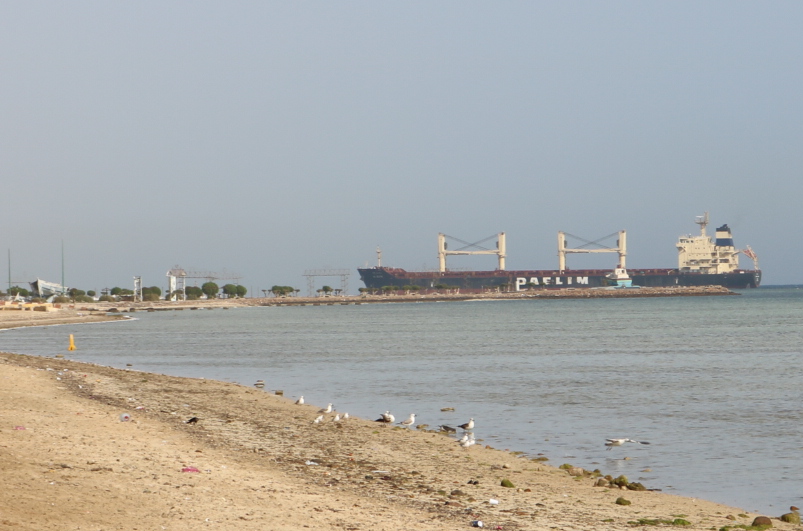
“The Yemeni Armed Forces declare a maritime embargo against the criminal Saudi enemy, based on the equation of ‘an eye for an eye’, effective immediately.”
Houthis Declare Embargo on Saudi Arabia:
On Monday, Yemen’s Houthi rebel organization announced that it will impose a maritime embargo on Saudi Arabia, in an act of direct retaliation for a Saudi decision to institute what the Houthis describe as a blockade against Yemen. While global concerns over Houthi military activity have been rising for weeks, the embargo is the clearest sign that the Sana’a rebel government intends to take a more direct role in this latest round of Middle Eastern hostilities.
The Houthi announcement came after the group exchanged strikes with Saudi Arabia last week, first with a Saudi airstrike against the Sana’a International Airport—where a Houthi delegation was returning from the funeral of Iranian leader Ali Khamenei—and then with a direct Houthi retaliation against Saudi Arabia’s Abha International Airport.
With the return of their delegation, the Houthis had hoped to change the status quo in Yemeni airspace, where Saudi Arabia and its allies in Yemen’s internationally recognized government control flights in and out of Sana’a. Riyadh’s airspace control, along with international sanctions and other measures, form the ‘blockade’ that Houthi forces describe.
As of the time of writing, the Houthis have not yet engaged in any new kinetic action against Saudi Arabia, and Houthi leaders have not specified the action that they intend to take. Based on both the organization’s prior actions, however, and the specific points of vulnerability that Saudi Arabia faces during the wider Middle East conflict, the Houthis would seem to have several dangerous tools at their disposal.
Most famously, the Houthis were responsible for a prolonged campaign against Red Sea shipping in 2024 and 2025, and have continued attacks against maritime trade vessels in recent weeks. The organization could restart kinetic strikes against cargo ships, or blockade the Bab al-Mandeb Strait, the southern entrance to the Red Sea—where roughly thirty percent of global container traffic must pass.
More recently, however, the group has also sought to mobilize new recruits and increase the size and power of its ground forces—opening the possibility of a wider engagement against the Saudi-backed Yemeni government. The rival factions have recently returned to relatively low-grade skirmishes, as a result of growing tribal tensions in multiple regions.
Perhaps most damaging of all, would be direct attacks against Saudi oil and port infrastructure. In 2019, the Houthis demonstrated their ability to strike Saudi refineries at range. More dangerous, however, would be strikes against Riyadh’s East-West Pipeline, which spans the width of the nation, and was struck by Houthi forces in April. Alternately, the Houthis could attack the Red Sea oil-export terminal of Yanbu. Both Yanbu and the pipeline allow Saudi Arabia to export even while the Strait of Hormuz remains closed.
Image Credit: “Yanbu Beach” by Abdullah Imran is licensed under CC BY-SA 4.0.
This Week on Fronts:

This week, open-source intelligence analyst Phil Cowin penned an analysis for Fronts: “Understanding Ukraine’s Isolation Campaign in Crimea”. The article details Ukraine’s comprehensive efforts to dismantle supply chains to the peninsula, and argues that Ukraine is primarily focused on turning Crimea into a logistical burden to undermine Russia’s broader supply-side operations.
In the days since the article was published, Ukraine has continued its Crimea campaign, as well as its strikes against the Sea of Azov, located between Crimea and mainland Russia. Russian retributive strikes, however, are escalating across the Black Sea, and especially near Odesa—where, on Sunday, Moscow hit a Guinea-Bissau-flagged grain carrier called the Golden Leo. Ten crew members were killed. On Monday, the Russian-installed governor of Ukraine’s partially occupied Zaporizhzhia Oblast claimed that the Russian military had regained control over the R-280 highway, the primary land supply route to Crimea through occupied Ukraine. The claim is highly dubious, given Ukraine’s ability to consistently disrupt highway shipping with its mid-range strike drones.
Pakistan, Kuwait Exploring Security Pact:
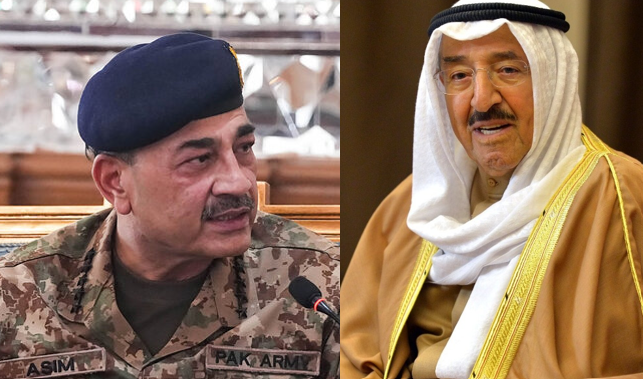
While Saudi Arabia turns its focus toward Yemen, Riyadh’s military allies in Islamabad are working toward a deal with another Gulf state: Kuwait. According to a Reuters report published on Friday, Pakistan hopes to establish a defense pact with Kuwait, at a time of rising Pakistani involvement in Middle Eastern affairs.
Per several sources interviewed by Reuters, the Pakistan-Kuwait talks are in their early stages, and are focused on exchanging Pakistani defensive assistance for Kuwaiti energy-resource deliveries and investment opportunities. A deal would significantly expand the two nations’ existing arrangement, which facilitates training and joint exercises; a revised agreement would more closely resemble the defensive agreement between Islamabad and Riyadh, signed in 2025.
One Pakistani source specified that the deal will not include the deployment of any Pakistani forces to Kuwait, in a notable divergence from the Saudi-Pakistani agreement. That pact has led to the deployment of “thousands of Pakistani troops on the ground” along with fighter jets, according to another Pakistani source.
An agreement with Kuwait would increase Pakistan’s diplomatic and security liability in the Middle East, at a time when open conflict has forced Pakistan to act upon its Saudi pact sooner than Islamabad had anticipated. Any new deal would also be complicated further by Pakistan’s continued desire to mediate an end to the Middle East conflict—while assisting not one, but two of the Gulf states that Iran has targeted relentlessly across the last several months.
Pakistan, however, appears willing to take the risk—and not just on Kuwait’s behalf. After the recent Houthi attack against a Saudi international airport, Pakistan reaffirmed its willingness to treat attacks against Saudi Arabia as attacks against Pakistan itself. Whether Kuwait would be afforded the same treatment, is unknown; the deal may fall short of a true defense pact, if Reuters’ sources are accurate in their description of the arrangement.
Image Credit: "Asim Munir met Mohammad Baqir Qalibaf 20 (Mehr, 2026)" [left] by Hamed Malekpour is licensed under CC BY 4.0. "Russian meeting with Emir of Kuwait Sabah Al-Ahmad Al-Jaber Al-Sabah (cropped)" [right] by Presidential Executive Office of Russia is licensed under CC BY 4.0. Composite by WarFronts Weekly.
What We're Reading:
In its efforts to modernize and upgrade its armed forces, the British government has chosen a new approach to naval operations, ending plans to procure a future destroyer, and instead opting to invest into unmanned surface vessels that will pair with crewed ships.
In this analysis by The War Zone, expert Thomas Newdick explains the thinking behind Britain’s radical new approach under its new Defense Investment Plan—not just on the water, but across every dimension of modern warfare.
Our WarFronts/HomeFronts Team is proud to announce the launch of Fronts.co, our brand-new subscriber service.
Around the World:
US aerial operations against Iran continued over the weekend, after the United States publicly acknowledged the deaths of three of its troops: two who perished during an Iranian attack on an airbase in Jordan, and a third who was killed during the controlled detonation of a crashed Iranian attack drone. Sunday night’s strikes were particularly wide-ranging, with explosions reported all across the Iranian west, and in coastal areas near the Gulf of Oman. Iran has continued retaliatory strikes, including against maritime trade vessels and US assets in Gulf and Middle Eastern nations, while a Pakistani attempt to re-establish a ceasefire has mostly failed to gain momentum. According to Israeli officials, Jerusalem expects to receive more US refueling aircraft in the near future, implying a longer-term return to hostilities at scale.
A combined force of al-Qaeda-linked JNIM jihadist insurgents and Tuareg ethnic separatists ambushed a military convoy in northern Mali, killing over fifty Malian soldiers and taking at least two dozen others hostage. The convoy was traveling out of the town of Anefis, where Malian and Russian forces held out against a several-day siege; according to local sources, Russian Africa Corps paramilitaries were at the head of the convoy, but escaped the attack.
Ukraine carried out a devastating series of strikes against key logistics and distribution centers for Wildberries, Russia’s equivalent of the retailer Amazon, which Ukraine said had provided “sanctioned components for drone production and navigation equipment”. Beyond its military value, the destruction is likely to inflame discontent across the Russian population, especially in Moscow, where the destroyed facilities provided a majority of the city’s Wildberries delivery support and inventory.
A Sunni cleric in Iran’s southeastern Sistan-Balochistan Province was killed by unknown gunmen in a Monday attack, likely perpetrated by ethnic-Baloch militants. While Sistan-Balochistan does not face an armed separatist crisis on the level of neighboring Pakistani Balochistan, the area is still known for longstanding ethnic and class tensions, and its porous border allows for the easy transfer of weapons between the two countries.
A Chinese naval destroyer conducted live-fire exercises within Japan’s Exclusive Economic Zone (EEZ) on Sunday, in Beijing’s latest act of maritime provocation against one of its neighbors. According to the Japanese military, the destroyer was accompanied by Russian vessels that did not fire their weapons. The incident took place in a part of Japan’s EEZ that China disputes.
Nicaraguan co-President Daniel Ortega announced that his nation will no longer hold elections, cementing the indefinite rule of Ortega and his wife, co-President Rosario Murillo. Ortega and Murillo were set to face elections in 2027, which will mark twenty continuous years of the Ortega family in control of Nicaragua.
Germany upgraded its security stance to represent a “high threat level” indicating a constant risk of attacks against the nation, according to German Interior Minister Alexander Dobrindt. According to Dobrindt, “plans for attacks against our country are clearly discernible”, as a combination of state-sponsored hybrid action and terror attacks.
After several days of political pressure, Orban-appointed Hungarian President Tamas Sulyok signed a constitutional amendment that will end his term. With Sulyok’s ouster, new Hungarian premier Peter Magyar and his government have eliminated a major barrier to comprehensive political reform.
Lockheed Martin introduced a cheaper Patriot interceptor missile, the PAC-3 Adapted Capability Effector (ACE), in an effort to address the growing cost gap between cheap long-range strike drones and missiles, and exorbitantly expensive interceptors. The PAC-3 ACE will be compatible with existing Patriot models, and will cut interceptor costs by more than half.