
WarFronts Weekly 8.11.2026.
🟨 WarFronts Weekly | Making Sense of the Houthi Campaign & More
Evan Moloney • August 11, 2026
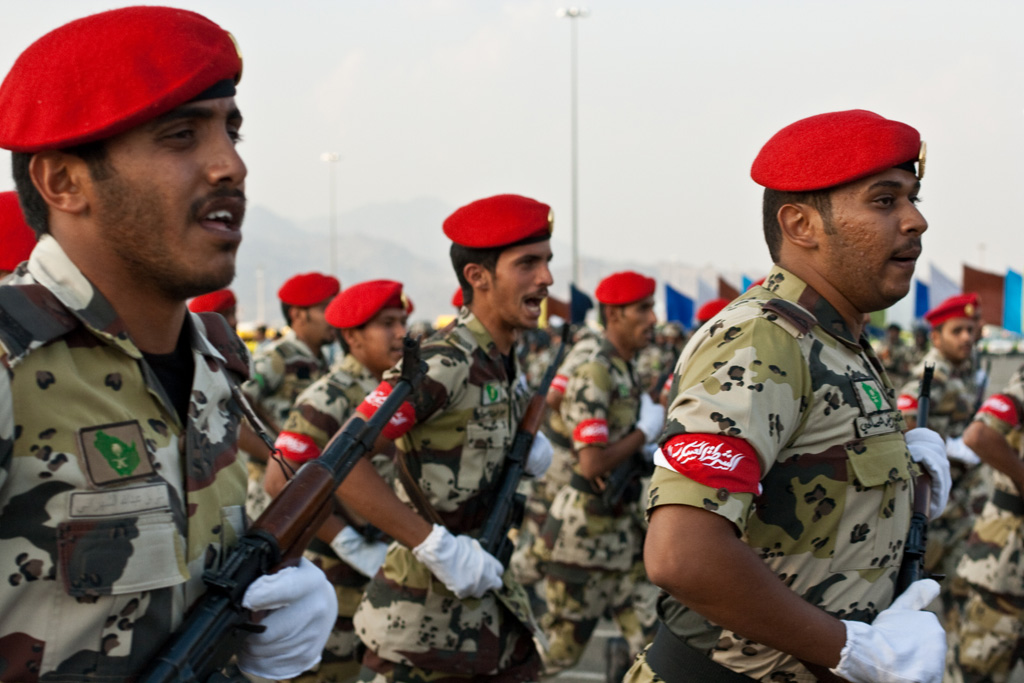
“Each party is hungry for revenge. As a civilian, I feel it would take a miracle to stop this war now.”
-Yemeni resident Abdul Rahman Saleh, speaking to Al Jazeera.
Making Sense of the Houthi Campaign:
Weeks ago, Yemen’s Houthi rebels announced their entry to the ongoing conflict in the Middle East, in a move that most global analysts believed would result in the shutdown of the Bab al-Mandeb Strait, the southern exit to the Red Sea. Today, however, the Bab al-Mandeb remains open, as the Houthis take their campaign in an unexpected direction.
The ongoing Houthi offensive appears to be nearly exclusively targeting two adversaries: the group’s northern neighbor Saudi Arabia, and the rival Saudi-backed government that controls non-Houthi Yemen. While the group could leverage international trade by shutting down the strait, raising global awareness and pressuring Saudi Arabia and the Yemeni government to meet Houthi demands, their leadership seems to have opted against it.
Against Saudi Arabia, the Houthis spent the weekend launching attacks against energy infrastructure, including in a Sunday attack on Saudi Aramco’s Jazan oil refinery—responsible for the processing of 400,000 barrels of crude oil each day. The attack came two days after Riyadh announced a mutual defense pact with Turkey and Pakistan, signaling that the pact has not deterred the Houthis from their preferred course of action.
In Yemen, meanwhile, the Houthis have been far more active. Over the weekend, the group attacked the Red Sea port city of Mocha, where the Yemeni military announced that seven people—both soldiers and civilians—were killed. The Houthis also struck a military camp in Mar’ib Governorate, killing at least two, days after Yemeni military sources revealed to the Times of Israel that the Houthis’ strikes last Thursday had killed at least fifty-eight Yemeni troops.
Nor are the Houthis only engaged in large, imprecise attacks against large targets. During their strikes on Mocha, the group targeted the residence of the governor of Hodeidah Governorate with a ballistic missile, although the target survived. In Mogadishu, meanwhile—the capital city of Somalia—a Yemeni national was murdered in what appeared to be a contract killing by al-Shabaab, carried out on the Houthis’ behalf.
When viewed in context to the wider Middle East war, the Houthis’ targeting preferences are somewhat unusual; the group is an Iranian proxy ally, and could greatly increase Iran’s negotiating leverage by shutting down the southern exit to the Red Sea, one of the world’s most important shipping lanes. Instead, the group appears to be taking advantage of the regional chaos to pursue its own priorities: the capture of all of Yemen, and international legitimacy as the nation’s leaders.
By closing down the Bab al-Mandeb Strait, the Houthis would risk signaling ongoing subservience to Iran. By attacking international trade ships or lashing out at other targets, they would risk signaling a lack of discipline, a wider malevolence toward the region, or an intent to act as a self-serving rogue state,if their sovereignty claim were to be recognized.
By keeping their campaign focused, and peripheral to the wider Middle East conflict, the Houthis may hope to meaningfully shift Yemen’s internal status quo, and set the conditions to engage with a post-war Middle East on new terms.
Image Credit: “Saudi security forces on parade” by Al Jazeera English is licensed underCC BY-SA 2.0.
This Week on Fronts:

Berlin’s first major terror attack of 2026 came on the 25 th of July, when a young man with known links to jihadist organizations, a known criminal history, and a spot on a German intelligence watch-list succeeded in ramming a van into a crowd at a gay-pride event. The attack represented a stunning, avoidable failure for German intelligence, and the latest damaging scandal for the government in Berlin.
In this article for Fronts, security expert Paweł Wójcik explains the legal loopholes that the Islamic State exploits, in Germany and elsewhere, to create a sense of plausible deniability around their lone operatives in advance of planned attacks. As Wójcik explains, “Signs of Islamic State involvement in these attacks are so significant that it can seem as if the group’s denials are simply a game it is playing with jihadi researchers and law enforcement.”
Region Reacts to the MECCA Security Pact:
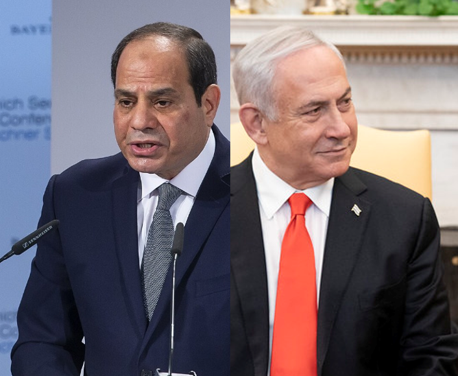
Last week, Turkey, Saudi Arabia, and Pakistan made headlines with the announcement of the MECCA Joint Defense Agreement, a collective security pact that stipulates that an attack on any member state will be regarded as an attack on all. But while most of the world ponders the implications of a NATO-style alliance in the Middle East, two nations’ reactions are worth watching closely: Israel and Egypt.
While the MECCA pact was, in the short term, a clear reaction to Iranian aggression across the Middle East and particularly the Persian Gulf region, Iran is not an adversary that these three participating nations are particularly focused on. Iranian leaders, in fact, were comfortable downplaying the new announcement this week, suggesting that the pact is instead a reaction to growing regional instability and the shortcomings of the United Statesas a security guarantor.
In fact, the Riyadh-Ankara-Islamabad alliance is the culmination of a process that our WarFronts team has been tracking since well before the start of the current Middle East war. The pact is the result of a growing regional rivalry between the three participating nations, plus Egypt, Qatar, and other countries, against Israel, the United Arab Emirates, Ethiopia, and other members of their own growing coterie.
Israel’s reaction to the deal, then, is especially important—and in Jerusalem, policymakers largely did not interpret the pact as a statement against Tehran. Per Haaretz, the pact “holds significant economic-political importance andwon’t likely yield military action against Iran”, according to Israeli sources. Israel’s Diaspora Affairs Minister called the deal “avery dangerous and troubling development” that “requires us to deepen our alliances with Greece and Cyprus, the United Arab Emirates, and Somaliland”.
The deal comes at a time when Israel is already looking to reduce its dependence on Washington, and prepare for a new era of Middle Eastern relations. Quoting Newsweek: “An emerging "quartet" comprising the leading Sunni Muslim powers of Saudi Arabia, Turkey, Egypt and Pakistan is […] viewed withdeep suspicionby Israeli officials.”
Given Egypt’s inclusion in that ‘quartet’, however, it’s all the more surprising that Egypt did not join the pact, as many global analysts expected. According to the Middle East Eye, however, Egypt has long held reservations about joining forces with Turkey in particular, due to pressure from neighboring Israel, and Cairo’s expectation that an Israel-Turkey rivalry will come to dominate the Middle East in the near future.
Per Turkish sources, Ankara had formally proposed to Egypt that it join the security pact, but chose to move forward in a trilateral arrangement after Egypt declined. As Turkish Foreign Minister Hakan Fidan explained: “I believe that, in the next stage, Egypt will also be part of the alliance.We are already acting as if we are members of the alliance; that is the nature of our relations with all these countries.”
According to the same report, Cairo is also struggling to choose between Saudi Arabia and the United Arab Emirates, neighboring petrostates that have found themselves on opposite sides of the growing divide. Egypt considers the UAE an ally, and its unwillingness to abandon Abu Dhabi has reportedly led to skepticism in Riyadh over Egypt’s true loyalties.
Image Credit: "President Trump Meets with Israeli Prime Minister Benjamin Netanyahu" by The White House is marked withPublic Domain Mark 1.0. “Abdel Fatah al-Sisi während der Münchener Sicherheitskonferenz 2019” by Hildenbrand / MSC is licensed underCC BY 3.0 DE. Composite by Fronts.
What We're Reading:
Across the world, few nations have gained such a reputation for international repression and surveillance as China. From Europe and North America to Africa and South Asia, Chinese expatriates are rarely able to truly escape the reach of China’s state monitors—and sometimes, they face dire consequences for their actions abroad, without ever returning to Chinese soil.
This recent New York Times article details an unconfirmed, but suspected incident of Chinese international repression, when a Uyghur man was abducted from his home outside Los Angeles by two Chinese nationals. Stuffed into the trunk of a car, the man was then on his way to an uncertain fate when the vehicle was pulled over by law enforcement; during the traffic stop, the man was shot dead by his captors with police present. While the two kidnappers’ ties to Chinese intelligence are unclear, and one of the kidnappers was embroiled in a business dispute with the target, the case is eerily reminiscent of state-repression operations abroad—whether perpetrated by China, or by other nations.
Our WarFronts/HomeFronts Team is proud to announce the launch of Fronts.co, our brand-new subscriber service.
Around the World:
A Ukrainian long-range drone attack killed at least thirteen people, including a child, and wounded thirty-nine others in a strike on the city of Nizhnekamsk. The strike reached approximately 800 kilometers east of Moscow, and struck an oil refinery in the region of Tatarstan, although Russia alleged that residential areas were impacted. Ukraine and Russia traded deadly strikes over the weekend, including in a Russian strike on an apartment block in Kharkiv and heavy bombardment of the Ukrainian seaport of Odesa. Today, Ukraine claimed strikes against Russia’s massive Orsk refinery in the region of Orenburg, while Russia said it hit an important Ukrainian steelworks. Also this week, Ukrainian President Volodymyr Zelenskyy raised the alarm on an anticipated transfer of 30,000-50,000 North Korean troops to Russia, to assist Moscow in its war effort while North Korean troops gain valuable experience.
The Colombian Army accused two dissident rebel groups of carrying out a bombing attack on Saturday in the nation’s southwest, one day after the inauguration of new president Abelardo de la Espriella. The attack targeted a tolling booth on the Pan-American Highway and left two security guards with minor injuries; the explosive device was a relatively small package delivered by a person on a motorcycle. Since De la Espriella took office, Colombia has carried out a military operation that killed six members of a dissident rebel group called Frente 28, including suspected commander Hernando Forero Mosquera, and another operation that killed two members of the Gulf Clan cartel.
An Islamic State-affiliated Congolese militant group killed at least thirteen people in the city of Banana Ecole, near the Ugandan border, in a bloody rampage on Saturday morning. According to local authorities, the death toll is expected to rise sharply in the coming days, as residents return to their village after fleeing into the bush. The attack is the latest to strike the same part of the Congo that has been ravaged by an ongoing Ebola virus outbreak, in which roving armed groups are a suspected vector for disease transmission.
A car bomb in eastern Libya killed Fowzi Mansouri, the head of military intelligence for warlord and breakaway government leader Khalifa Haftar, outside his home in the city of Benghazi on Monday. On the same day, a drone struck a gasoline tank in western Libya, less than fifty kilometers outside of Tripoli, setting off a massive blaze in part of the Zawiya oil refinery. No group has claimed responsibility for either strike.
Iran claimed that a Strait of Hormuz governance deal with Oman is close to being agreed, but that any deal and reopening of the strait is contingent on American agreement to a slate of other demands issued by Iran last week. The deal with Oman would establish entry and exit corridors under each nation’s control, with Iranian control of the entry corridor leveraged to extract transit fees. On Monday, the adviser to Iranian Parliament Speaker Mohammed Ghalibaf stated that Iran will not engage in any future negotiations with US President Donald Trump, and will instead wait until the end of Trump’s term in January 2029 to negotiate with his successor.
Nearly two years after his ouster as Syria’s longtime dictator, Bashar al-Assad has been sentenced in absentia to death by a Syrian court, marking the first-ever conviction of Assad in his home nation. Alongside his brother Maher, Assad was found guilty of “premeditated and intentional murder of more than one person and of children, torture, arbitrary arrest and crimes against humanity.” Assad is not expected to face justice, and will remain safe in Russia for the foreseeable future.
The editor of the Addis Standard, one of Ethiopia’s few remaining independent news outlets and arguably the nation’s most globally prominent publication, was abducted from his home this weekend and interrogated by state authorities. The outlet’s editor, Yonas Kedir, has since been released; the Addis Standard’s offices were raided while he was in custody, and subsequently evicted from the premises, where the organization has operated for sixteen years.
The final round of regional elections in Pakistan-administered Kashmir was postponed to a to-be-determined date, after dozens died in protests amidst wider election-related security concerns. The vote has faced allegations of vote-rigging, after the ruling, Islamabad-friendly Pakistan Muslim League won a large majority of regional parliamentary seats despite obvious public discontent. Several key parties and political groups have been banned or chosen to boycott the election.
After eighteen months of negotiations, Russia and Syria have reached an agreement on Moscow’s airbase at Hmeimim and its naval base at Tartous. Per the new agreement, the Syrian state will take over commercial facilities in both locations, and slowly integrate them into Syria’s civil administration. Military facilities will be transitioned to joint training facilities within three months. The agreement will likely allow Russia to keep significant military assets at the base, although a Russian plan to build a commercial logistics hub in Tartous now appears highly unlikely to go ahead.