
WarFronts Weekly: 8.18.2026.
🟨 WarFronts Weekly | Haftar Flexes in US Hostage Release Deal & More
Evan Moloney • August 18, 2026

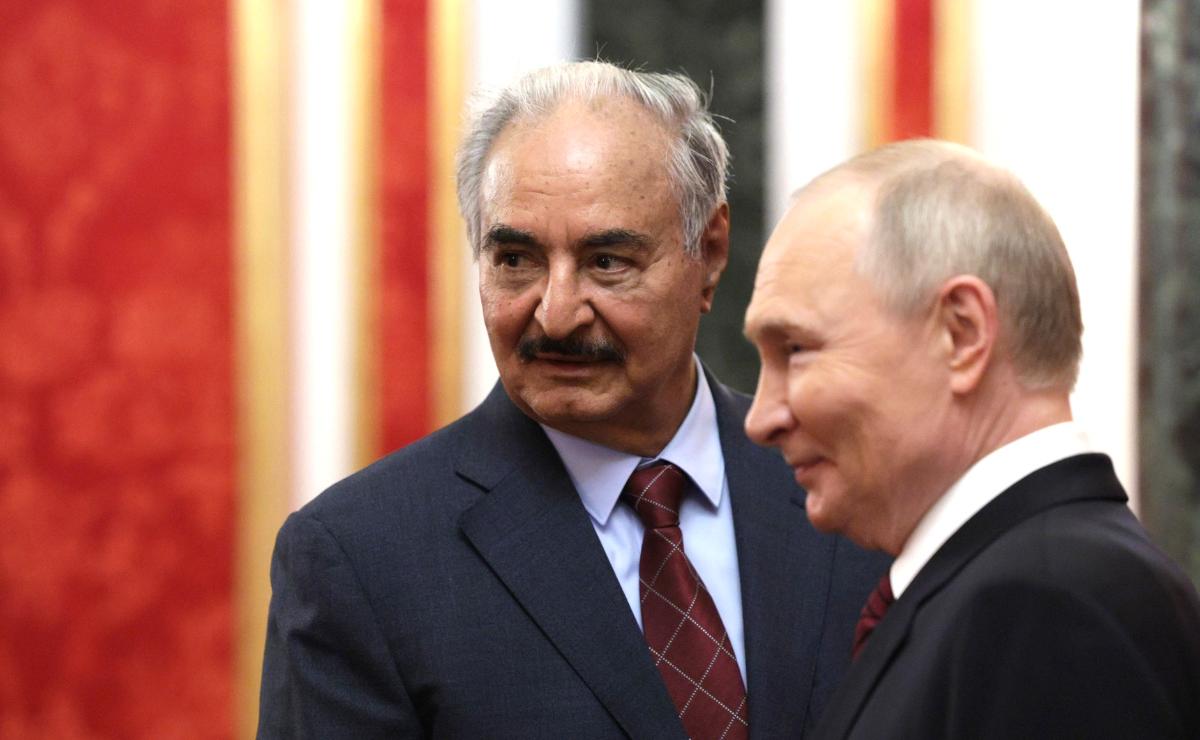
“I want to express my gratefulness, my thank you to General Saddam Haftar and the Libyan army and special forces and everybody who was involved in securing my release…”
-American missionary Kevin Rideout, after his release from Islamic State captivity in Mali.
Haftar Flexes in US Hostage Release Deal:
After nearly a year spent in Islamic State captivity in the Sahel, an American Christian missionary named Kevin Rideout was released late last week, and transported safely back to the United States. In the US, Rideout’s return has been heralded mostly as a key step in returning a larger group of US citizens who have been taken hostage across the globe. In Africa, however, the return was more relevant because of the apparent involvement of Libyan warlord Khalifa Haftar in securing Rideout’s release.
According to a Reuters report published hours after Rideout’s release, Haftar and his forces were critical in bringing the American home. Details on the process remain hazy; most of Reuters’ sources agreed that Rideout was released in a deal, with two indicating that an ethnic-Arab businessman from Mali, Cherif Ould Tahar, was instrumental in leveraging his contacts with Sahel smuggling groups and armed militant factions.
One source indicated that once Tahar made contact with the Islamic State, a ransom was paid, securing Rideout’s transfer to the custody of Haftar’s forces. Three other sources indicated that Rideout was returned via a negotiated deal, although they did not specify any payment of a ransom, or a lack thereof.
A final source, however, told a different version of events. That source, a senior figure in Haftar’s Libyan National Army (LNA), indicated that an LNA commando unit carried out a cross-border raid into Mali in order to find and liberate Rideout. Once he was found, that source told Reuters, Rideout was flown to Benghazi, under LNA control.
Either way, Rideout’s return has been a top US priority since his capture, with Washington ending sanctions against Malian officials in exchange for the ability to fly over Mali and try to find Rideout using US aerial capability. The White House did not acknowledge Haftar’s role in Rideout’s return, and the State Department declined to comment to Reuters. Rideout, however, personally expressed his gratitude to Haftar’s son Saddam, the Chief of Staff of the LNA, for securing his release, in a video published on Monday.
Rideout served as a missionary pilot in Niger, alongside the evangelical group Serving in Mission, until he was kidnapped by a trio of unidentified men in the capital city of Niamey. While Rideout’s movements in captivity have not yet been publicized, he was likely transferred to Mali through the same porous Sahel borders that the Islamic State, the al-Qaeda-linked JNIM insurgency, and other Sahelian insurgent and criminal factions rely on.
"President Vladimir Putin Meeting with Supreme Commander of the Libyan National Army Khalifa Haftar 01" by Kremlin.ru is licensed underCC BY 4.0.
This Week on Fronts:

“Over the past five years, Starlink from SpaceX has changed from a niche service that very few people even knew existed to a critical enabler for many national armies - with the war in Ukraine being a prime example of its military utility.”
In his latest contribution via Fronts, open-source intelligence expert Jakub Janovsky explains the global sprint to develop alternatives to SpaceX, both to build strategically critical systems under nations’ own sovereign control, and to reduce dependence on a mercurial figure in Elon Musk. From Washington to Beijing, and from Brussels to Moscow, world powers are learning the hard way that building Starlink, or a sovereign analogue, is more difficult than it may outwardly appear.
Election Crackdowns in Zambia:
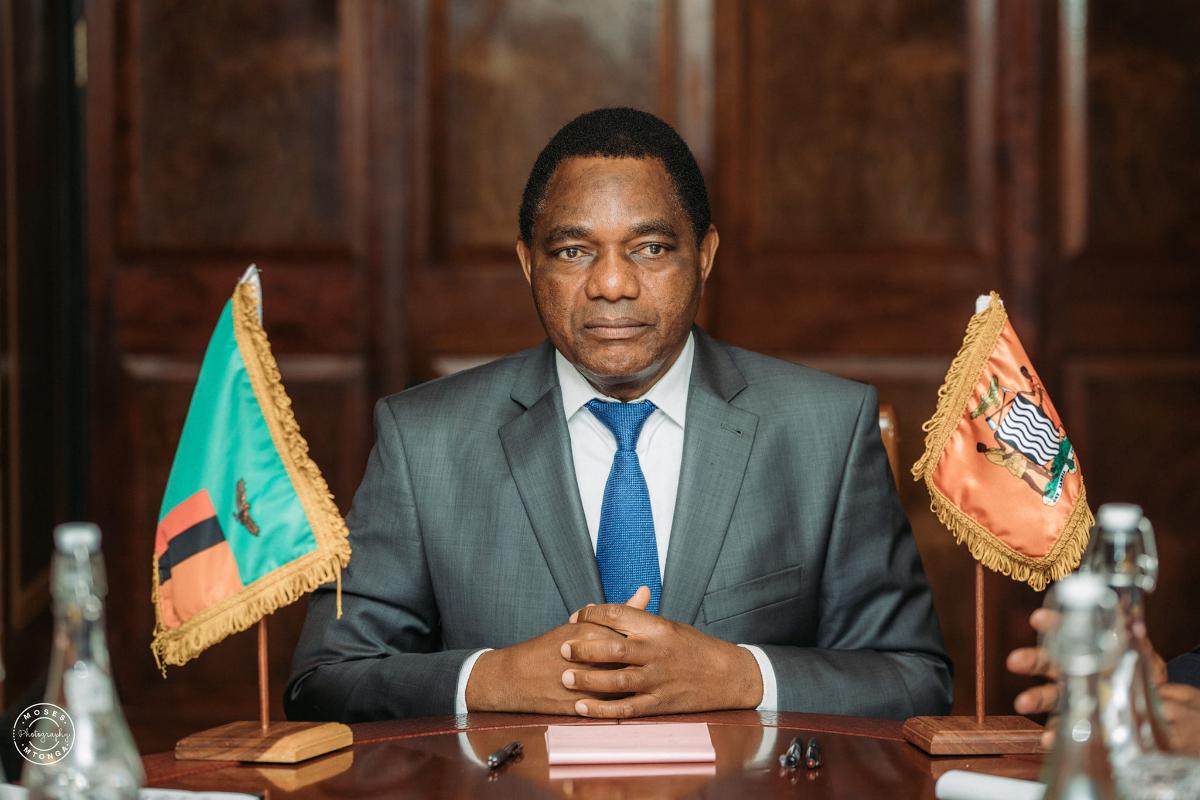
Across Europe, the United States, and the rest of the developed world, Zambia is often heralded as a democratic success story, where the members of a multi-party political system have successfully navigated transfers of power for decades. This week, however, Zambia witnessed a very different sort of election, when the nation’s security forces carried out a crackdown against the Zambian opposition.
The state’s actions were quite transparently in support of Zambia’s incumbent president, Hakainde Hichilema, who sought a second term in Thursday’s nationwide vote. A former opposition politician who was, himself, detained for months on politically motivated charges of treason in 2017, Hichilema’s tenure has mostly been significant for its debt restructuring, and its decision to welcome foreign investment in resource-extraction arrangements.
Prior to the election, Hichilema was understood to be likely to secure a second term, but he faced legitimate political opposition from a slate of other candidates, particularly the long-time National Assemblyman Brian Mundubile. Though Mundubile is not a universally adored figure in Zambia, and was expected to come in second, he is a political successor to Edgar Lungu, the ex-president who was responsible for the 2017 treason charge against Hichilema.
According to international observers, Thursday’s vote was marred by serious acts of electoral repression. Observers from the European Union and the Southern African Development Community witnessed violence against polling station staff, abductions of voters, and acts of intimidation, while Zambian citizens alleged the theft of ballot papers. The issues caused vote counting to be temporarily suspended, although it later continued. In one township, a 57-year-old polling agent was killed; nine people were arrested.
By Tuesday morning, Hichilema had been announced as the official winner of the election, coming away with roughly sixty percent of all votes. Mundubile came in a distant second, as expected, with thirty-eight percent of the vote. Internationally, coverage of the election mostly focused on Mundubile’s stronger-than-predicted showing, and the relevance of cost-of-living concerns for Zambian voters.
Featured less prominently, however, were reports of an election-night raid by Zambian security forces against the offices of Brian Mundubile, in the capital city of Lusaka. According to the nation’s government, eleven people, including multiple senior opposition figures, were arrested in the raid, and weapons were seizedin the process.
Per Lusaka, the targeted figures were involved in a purported opposition plot to foment an insurrection: “military plans involving foreign nationals and illegal military training camps”. The Secretary to the Zambian Cabinet alleged that shots were fired at law enforcement. The raid was carried out with the support of armored vehicles; opposition figures claimed that several people were injured.
In comments to the global press, opposition candidate Mundubile alleged that government forces had made an attempt on his life, and that he was not protected at his home by any armed militia. He accused Tanzania of sending personnel to help rig the vote, a charge that Tanzania denies. Mundubile was interrogated, but has not yet been taken into state custody; the daughter of his predecessor Edgar Lungu was among those being held in detention.
"Hakainde Hichilema" by is licensed underCC BY-SA 4.0.
What We're Reading:
This week, China marked the passing of former premier Zhu Rongji, who died last Wednesday at age ninety-seven. A transformative leader who opened China to the global economy, Zhu was a key figure behind Beijing’s evolution from a former Soviet satellite to the dominant economic and geopolitical power in the Indo-Pacific.
This New York Times analysis discusses the other side of Zhu Rongji, as he is remembered by the Chinese people. A leader known “for his blunt words and pugnacious outbursts”, Zhu represented a more genuine form of Chinese politics, in sharp contrast to the manicured political precision of the Xi Jinping era.
Our WarFronts/HomeFronts Team is proud to announce the launch of Fronts.co, our brand-new subscriber service.
Around the World:
Ukraine launched one of its largest-ever drone waves against Russia on Tuesday morning, deploying roughly 620 drones in an attack focused on Moscow and the surrounding area. Moscow’s mayor indicated that only 180 of the drones were downed by the Moscow region’s air defenses; the regional governor indicated that a Wildberries e-commerce warehouse and other facilities were hit. Crimea was also targeted in the latest barrage. Russia, meanwhile, killed ten people in a northeastern Ukrainian village on Tuesday morning in a missile strike that hit a busy intersection. The village strike came just one day after Russian missiles destroyed port infrastructure in Odesa and nearby Izmail, where Russia said it struck a key terminal, supply depots stocked with Western gear, and depots for Ukraine’s sea drones. In a Saturday strike, Ukraine claimed to have hit a space launch center working in support of Russia’s new satellite-based internet network, an alternative to Starlink.
Somali federal troops clashed with opposition units in the city of Baidoa, where Mogadishu stated that at least thirty opposition fighters were killed before being pushed out. Baidoa is both the epicenter of a severe humanitarian crisis, hosting hundreds of thousands of internally displaced Somalis, and a key flashpoint in Somalia’s ongoing political crisis, where ex-regional leader Abdiaziz Laftagareen left his post after attempting to sever the link between Mogadishu and his regional government.
Roughly fifty Afghan children were wounded in a grenade attack outside a school in the capital city of Kabul, according to Afghan Taliban authorities on Monday night. The attack took place in a part of Kabul mostly inhabited by the ethnic Hazara minority, a predominantly Shi’a group that has been a frequent target of violence by the Islamic State and other extremist groups. The grenade attack took place in the same neighborhood where, in May 2021, a trio of school bombings killed dozens of Hazara, mostly young girls.
The Yemeni port city of Mocha announced a pause in all operations on Saturday, after more than twenty-five missile strikes by Yemen’s Houthi rebel group over the last several weeks. According to the port director, seven people have been killed in the strikes thus far, and the Houthis have inflicted damages of roughly $16 million USD; the strikes are part of a larger Houthi campaign against Saudi Arabia and the Saudi-backed, internationally recognized Yemeni government. The Houthis attacked what it alleged was a Saudi military vessel, and four escort craft, off the coast of Mocha on Monday. On Tuesday, the group claimed to have hit Saudi Arabia’s Aramco refinery in the city of Jizan with several drones.
An Israeli settler siege in the West Bank town of Qusra continued this week, as Israel Defense Forces troops attempt to force the end of an armed encirclement of several Palestinian homes. Three families within the homes have been trapped for over a week, in an ordeal that Palestinian and global activists have accused the IDF of allowing to continue, rather than dismantling the settler siege, as the military may be able to do.
Also in IDF news, Israeli airstrikes killed eleven people in southern Lebanon on Saturday morning, according to Lebanese state news. The wave of strikes was among the deadliest in Lebanon since the nation agreed to a US-mediated peace accord with Israel; Jerusalem indicated that the costliest strike, in which seven were killed, targeted Hezbollah infrastructure in response to a threat to its forces.
In Syria, meanwhile, Israel carried out no fewer than eight airstrikes against the Abu al-Duhur military airbase in the nation’s northwest, not far from the border with Turkey. No fatalities were recorded at the airfield, and Israel declined to provide an explanation. The strikes were Israel’s first in northern Syria since 2025, and may have targeted unknown Turkish-linked assets; the airbase has been used for training since the 2024 fall of the Assad regime.
Iranian jet-powered stealth attack drones targeted the officesof Iraqi Kurdistan’s regional prime minister, Masrour Barzani, and the residence of Barzani’s intelligence chief, in an overnight attack in the early hours of Monday morning. Nobody was hurt in the attacks, which were the latest in over 1,000 drone and missile strikes on Iraqi Kurdish territory since the February 28 start of the Iran conflict.
US President Donald Trump ordered the American military to cut back on joint exercises with South Korea, citing his “very good relationship” with North Korean despot Kim Jong-un. Trump framed routine US-South Korea exercises, including the upcoming Ulchi Freedom Shield drill, as “totally inappropriate and hostile”, given North Korea’s relative lack of escalatory action during Trump’s term.