
WarFronts Weekly: 8.4.2026.
WarFronts Weekly: 8.4.2026.
Evan Moloney • August 4, 2026
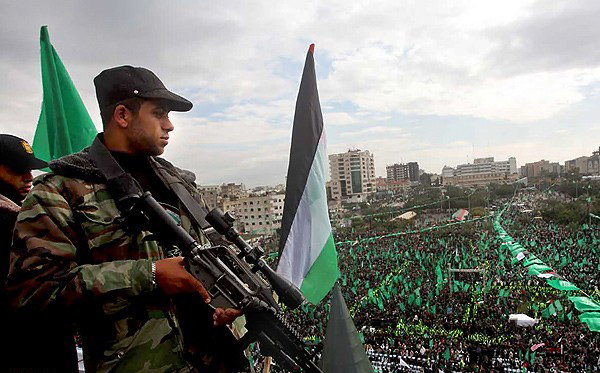
“They can talk about withdrawal and disarmament. I don’t care about any of it as long as there is no food or medicine.”
-Gaza resident Abdel Moneim Aboul-Roos, speaking to the Associated Press.
Hamas Disarmament Deal Brings Skepticism in Israel:
Nearly three years after the attacks of October 7, 2023, the Iran-backed Hamas organization appears to be on the brink of disarmament in Gaza. Despite the apparent optimism of US President Donald Trump, however, the disarmament deal already seems to be at risk of collapse, mostly due to Israel’s rejection of the deal’s terms and its continued occupation of the Gaza Strip.
The deal was announced on Friday via Trump, who claimed that Hamas had agreed to terms with Trump’s Board of Peace to give up their weapons. According to Trump, the deal would include a slow withdrawal of Israeli troops from the Gaza Strip, and an end to Israeli military operations, in exchange for Hamas disarmament. Confiscated weapons would be stored, rather than being destroyed outright.
Very quickly, however, Israeli leadership made clear that Jerusalem is unlikely to accept the deal as written. The spokesperson for Israeli Prime Minister Benjamin Netanyahu indicated that Israel had shared “serious security concerns” with the US surrounding the deal: “Our assessment is that if we redeploy before Hamas is truly disarmed, it will , rebuild its terrorist infrastructure, once again threaten Israeli communities, and ”.
Israeli far-right leader Itamar Ben-Gvir, the nation’s current National Security Minister, claimed that the deal was “tantamount to agreeing to Hamas organizing for the next massacre”. Speaking anonymously to Reuters, another Israeli official indicated that Israel had already formally rejected the peace proposal.
Nor did Israel constrain itself to a rhetorical rejection of the terms. After a Palestinian representative stated on Saturday that US Special Envoy Jared Kushner had told him that Israel had agreed to halt its strikes against Gaza on Sunday, Israel instead unleashed a wave of airstrikes that killed at least nineteen people. On that day, Israel’s Minister of Energy stated that he was “very skeptical” about the prospect of a deal.
According to Middle East experts, Netanyahu likely sees a continuation of the Gaza war as beingin his interest, in advance of what’s expected to be a highly contentious election this October. A continued war against Hamas, as well as a perception of lingering threats from Iran, Hezbollah, and elsewhere, is expected to rally skeptical Israelis around Netanyahu despite ongoing corruption concerns and war fatigue.
Per those experts, Netanyahu is unlikely to accept the Board of Peace proposal before October. As Palestinian researcher Imad Abu Rahma explained to The New Arab: “It is unlikely Prime Minister Benjamin Netanyahu will carry out any withdrawal - - or allow a technocratic committee into Gaza before the vote”. Or, as Egyptian analyst Mohamed Ibrahim told The Media Line:“There is a of the matter of storing the weapons”.
Image Credit: “25 th anniversary of Hamas celebrated in Gaza” by Hadi Mohammad is licensed underCC BY 4.0.
This Week on Fronts:
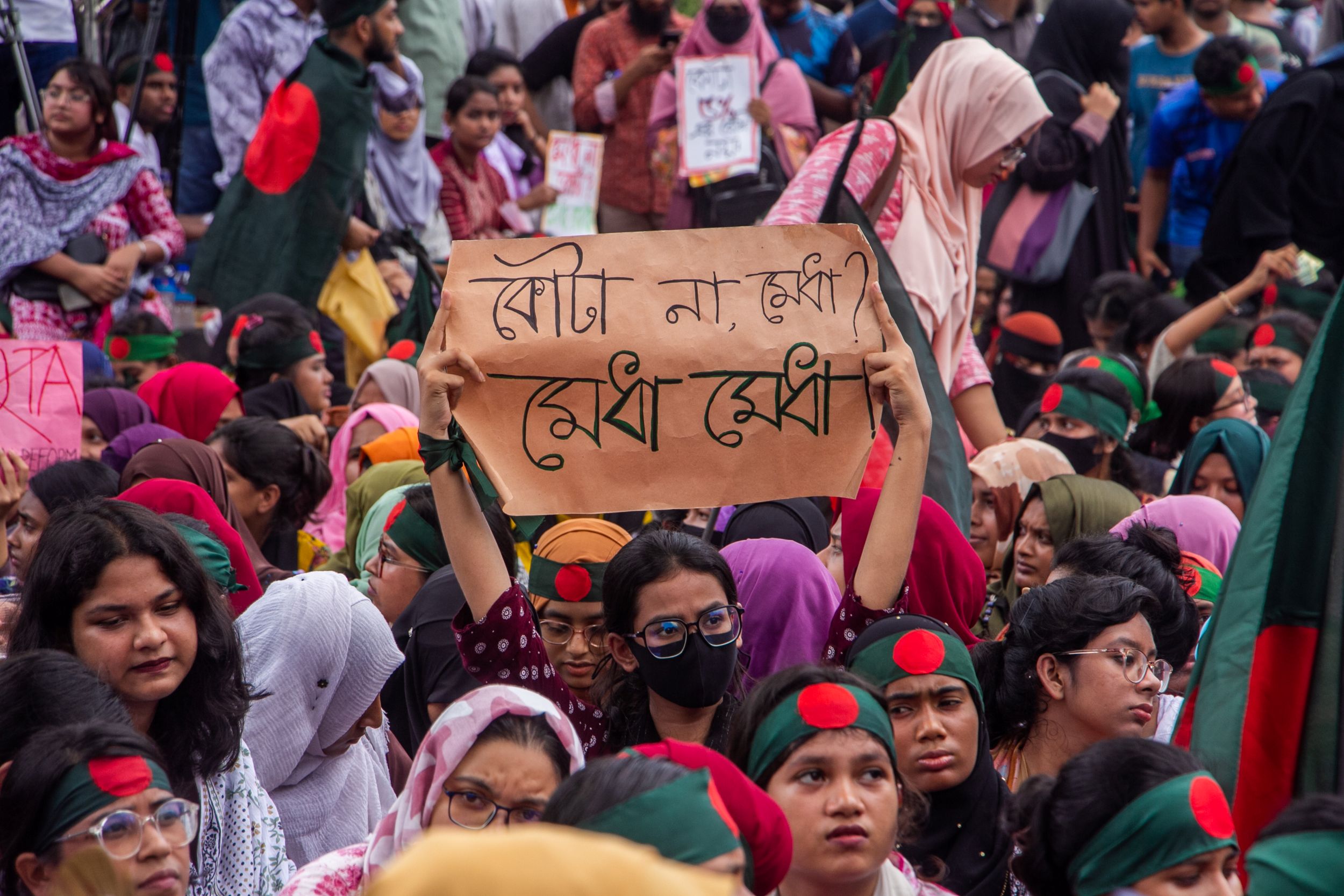
Over the last two years and more, global Gen-Z protests have resulted in the ouster of several autocrats and corrupt leaders, even as other Gen-Z movements have failed (Kenya, Indonesia), been co-opted (Madagascar), or remain inconclusive (Serbia, India, others).
In this recent Fronts article, expert Henrik Hannes Herkel takes a close look at the global trend, analyzing Gen-Z protesters’ difficulties in securing lasting change, and identifying key tactics that outside observers can leverage without repeating the failures of the Arab Spring. As Herkel explains: “for a generation that the boomers deem politically apathetic and easily controlled, they’ve made a hell of a racket.”
Insurgent Attacks Rock Pakistan:
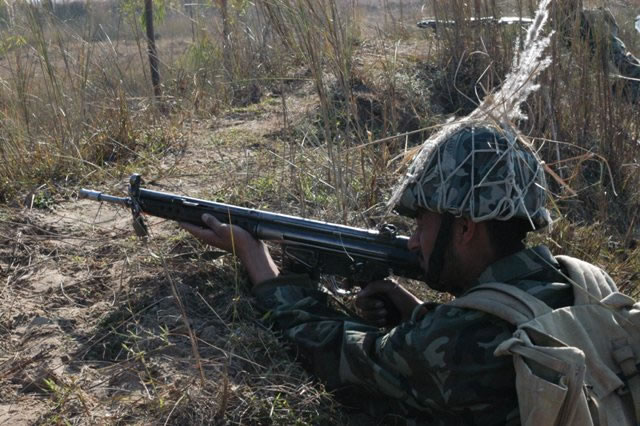
Pakistan’s ongoing, multidimensional security crisis continued to worsen over the last several weeks, with multiple attacks against security forces in the north, deadly clashes in Kashmir, and a mining accident in the southwest that’s likely to inflame long-running local anti-government sentiment.
The latest wave of attacks in the north, where the Pakistani Taliban insurgency is highly active, began overnight on the evening of 23 July. That night, in an area near the Afghan border, a Pakistani Taliban attack killed twelve soldiers, two policemen, and an official for Pakistan’s forestry service. The assault saw a group of attackers use a vehicle bomb before skirmishing with security forces; four suicide bombers and eight other attackers were killed.
Days later, in the evening on 29 July, a group of Pakistani Taliban attackers killed at least ten police officers in an attack by explosives-equipped quadcopters and militants on the ground. The provincial security chief stated that fifteen insurgents were killed in the attack, which also took place near the Afghan border. Pakistan accuses the Afghan Taliban government of enabling and supporting Pakistani Taliban activities.
Then on Monday, 2 August, a suspected Pakistani Taliban suicide bombing killed at least seventeen people outside another police station—this time in the district of Swat. Another thirty-four people were wounded in the blast, and the death toll is expected to rise. Already, ten civilians are among the dead, along with seven police officers.
In Pakistan-administered Kashmir, meanwhile, the leaders of a banned civil organization claimed that more than thirty people had been killed in clashes with security forces by 29 July. Pakistani Kashmir has now held two out of an anticipated three rounds of district and regional elections, with the final round to be held on 10 August; the vote is highly contentious, and has brought on clashes between protesters, security forces, and alleged India-backed militants, according to Pakistani authorities.
Finally, the southwestern region of Balochistan was rocked by a tragic mining accident at a coal facility, where at least thirty-four miners were killed in a methane-gas explosion at a depth of over 1,200 meters belowground. The blast occurred in an area near the regional capital city of Quetta.
According to Pakistani officials, there is no risk of foul play in the incident. The miners, however, were mostly ethnic Balochs—part of the same impoverished local majority represented, if only partially willingly, by the separatist Baloch Liberation Army (BLA) and other ethnic insurgent groups.
The explosion and resulting deaths are likely to feed into the BLA’s narrative against the Pakistani state. The BLA accuses Islamabad of allowing the exploitation of Balochistan’s abundant natural resources for the benefit of outsiders, while ethnic Balochs are ignored, pushed into poverty, and exposed to collateral damage as they provide cheap labor in support of foreign ventures.
Image Credit: “A soldier on the Pakistan Army performing an exercise” by Pakistan Armed Forces is licensed underCC BY-SA 3.0.
What We're Reading:
Over the last several months, our Fronts team has covered the role of foreign mercenaries, especially Colombian ex-soldiers, in the Sudanese Civil War—including in this WarFronts episode, released in early June. In their role as military advisors, Colombian troops engage in front-line combat, pass on their skills in asymmetric warfare, and are known to regularly train child soldiers.
This week, the Associated Press released a report documenting the experiences of several Sudanese child soldiers, including two who explicitly confirmed that they had been trained by Colombian mercenaries. The report emphasizes the link between Colombian fighters and the United Arab Emirates, which routinely denies allegations that it uses Colombian troops to aid its preferred faction in the conflict, the paramilitary Rapid Support Forces.
Our WarFronts/HomeFronts Team is proud to announce the launch of Fronts.co, our brand-new subscriber service.
Around the World:
After several days of back-and-forth between US President Donald Trump and Iran’s leadership, in which Trump claimed that Iran was attempting to negotiate toward a peace, new strikes against maritime trade ships indicate that Iran is likely disinterested in peace discussions. Trump has framed the current round of purported negotiations as a “last chance” for Tehran before a new wave of strikes, echoing a threat that has brought Washington only limited results, to this point in the conflict. According to a Reuters exclusive this morning, the United States has used “virtually all” of its long-range precision missiles at this point in the conflict, including ATACMS and PrSM missile models. Near the Bab al-Mandeb strait, meanwhile, several Saudi supertankers appear to be avoiding waters near Houthi rebel-controlled Yemeni territory, after Houthi strikes against Saudi-linked vessels. Houthi leaders claimed this weekend that they do not intend to institute a blockade and charge fees for passage through the strait.
Fighting broke out in Ethiopia’s northern Tigray region this week, with hundreds of Ethiopian Tigrayans fleeing the country into neighboring Sudan. While many key details around the fighting remain unknown, Ethiopian and Tigrayan forces are known to have clashed in heavy fighting that involved drone attacks, heavy artillery, and the use of manned aircraft. The fighting comes after months of warnings, including via Fronts and WarFronts, that Ethiopia is at risk of descending back into open warfare—less than five years after the conclusion of the Tigray War, widely regarded as the deadliest war of the 21 st century so far. This latest round of fighting appeared to conclude by Sunday, and has not yet restarted.
In Ukraine, several days of Russian strikes have resulted in the cumulative deaths of dozens of civilians, as Moscow works to take advantage of Ukraine’s worsening shortages of air-defense interceptors. On 31 July, a Russian ballistic missile destroyed a US-owned drone factory in Kyiv, in the first instance of a direct attack on an American drone manufacturer on Ukrainian soil. In the Black Sea, two Turkish-owned civilian ships were struck, with one crew member killed and several wounded, prompting a call for caution from Ankara addressing both Moscow and Kyiv. In Poland, meanwhile, Prime Minister Donald Tusk indicated that a Russian missile appeared to be the cause of a large crater found near the city of Lublin, in the latest and most serious instance of the war’s spillover into Poland thus far.
On the Russian home front, a woman carrying a homemade bomb killed at least three people near a restaurant in central Moscow on Saturday, with the death toll likely to rise. Russian security services called the bombing a terror attack, although state media presenters suggested that the woman may not have known about the explosive device she carried. Also on the Russian side, a soldier based in Crimea attacked other Russian troops this week—killing one and wounding another—before killing three civilians on the peninsula. The soldier’s motives are currently unknown.
The Sudanese Armed Forces killed at least thirty-five people in the Darfur region, when a drone carried out a strike against a civil court in North Darfur State. The court, in territory controlled by the paramilitary Rapid Support Forces, was a civilian facility, per the independent group Emergency Lawyers. Both sides of Sudan’s civil war have regularly used drones to carry out mass-casualty attacks.
A suspected Islamic State – West Africa Province attack in Niger left at least seventeen soldiers killed and several others injured last Friday, in the latest indicator that ISWAP is expanding its presence in the country. On the same day, also in Niger, the Islamic State – Sahel killed at least twenty-one soldiers in an attack in the nation’s southwest, in what may have been a coordinated effort between the two Islamic State franchises.
Twelve people were killed in Nigeria and many women and children were abducted, in the latest suspected bandit attack to befall the northwestern Sokoto State. The bandits, thought to hail from Nigeria’s semi-nomadic Fulani ethnic minority, will likely attempt to ransom the hostages; they also stole numerous livestock.
A Swiss geologist and a local miner were kidnapped by unidentified men and then killed in the Central African Republic last Thursday, in a village approximately fifty-five kilometers north of the capital city of Bangui. The Swiss geologist worked on behalf of an Emirati mineral-extraction company, likely making him a target of anti-government rebels who have worked to oppose the Central African government, its ex-Wagner Group Russian paramilitary backers, and its Emirati sponsors.
The Spanish exclave of Ceuta is reeling after approximately 60,000 migrants rushed into Spanish territory by land and sea last week, overwhelming border security in an event that left over eighty people dead. As of the time of writing, the vast majority of migrants have returned to Moroccan soil, at least temporarily, after learning that they would not find a stable route from Ceuta to the rest of the European Union. The event, however, has sparked immense migration concerns from across Europe, North America, and elsewhere, with twenty-two EU leaders calling for an emergency summit on the issue.
Cuba’s power grid collapsed again on Monday, in the latest indicator of worsening damage to the island due to the United States’ ongoing blockade. The latest blackout took place while power was being restored following an earlier shutdown, this one on Sunday, underscoring the worsening damage to Cuba’s power grid as the crisis evolves. Days ago, Cuba advanced a plan to open up new parts of its state-run economy for private industry, in an attempt to appease Washington and encourage its leaders to call off the blockade.
Myanmar ex-leader Aung San Suu Kyi met with a Red Cross representative on Monday, confirming that she is alive after years of no contact with her family, legal representation, or medical professionals outside Myanmar’s opaque detention system. Suu Kyi, age 81, was unable to meet with a doctor during the visit, but appeared to be in relatively good health.
Rustem Umerov, Ukraine’s former lead peace negotiator, will serve as Kyiv’s new Head of Foreign Intelligence, in the latest development in Kyiv’s ongoing leadership shuffle. Umerov will remain in charge of peace talks while serving as spy chief, according to Ukrainian President Volodymyr Zelenskyy. The move is unlikely to end public backlash against Zelenskyy after the ouster of former Defense Minister Mykhailo Fedorov, who has yet to be reinstated.
Outgoing Colombian leader Gustavo Petro continued to insist this week that his successor, Abelardo de la Espriella, benefited from nationwide electoral fraud in the June vote that elevated him to the presidency. Colombian electoral authorities and de la Espriella’s opponent, Ivan Cepeda, have directly rejected Petro’s claims, as have a range of international observers. Petro is slated to leave office this Friday. Also this week, Colombia’s largest remaining rebel group, the ELN, was accused of perpetrating a against a police base near the Venezuelan border, where a police dog was killed and eleven officers were injured.
A United Nations draft report finds that two Boeing 727s have aided in the transport of mercenaries, weapons, drones, and other war equipment to Sudan’s paramilitary Rapid Support Forces, with the UN’s findings expected to be published in September. The aircraft, and at least one other Boeing, are operated by a longtime US contractor and ex-Green Beret named Steven Shaulis; the aforementioned third aircraft was destroyed in May 2025.
Denmark began its new extended conscription this Monday, with the start of training for approximately 1,600 Danish recruits who will serve for a period of eleven months, instead of the four-month stretch that Denmark has preferred for years. According to changes made in 2024, Denmark will now conscript both women and men, with 7,500 conscripts serving in the Danish military each year by 2033.