
WarFronts Weekly 9.15.2026.
🟨 WarFronts Weekly | Philippines’ Historic Elections Marred by Violence & More
Fronts Staff • September 15, 2026

“Elections in this part of the Philippines have been marred by violence for as long as I can remember. This is a region where guns are rampant and clan wars are fairly common.”
-Al Jazeera reporter Barnaby Lo, on this week’s elections in Mindanao.
Philippines’ Historic Elections Marred by Violence:
Monday was an important day in the Bangsamoro Autonomous Region in Muslim Mindanao (BARMM), of the Philippines, where state authorities oversaw the region’s first vote since a 2014 peace deal that ended a decades-long conflict. But the security of Bangsamoro was thrown into doubt on Sunday, when three people were killed and fifteen were wounded in a shooting at a polling station.
The BARMM region (formerly known as ARMM) was the site of the five-decade-long Moro insurgency from 1968 to 2019, in which multiple armed groups from across the majority-Muslim region fought Manila over the right to self-determination. The conflict killed over 120,000 people in total, and displaced approximately two million. Although a comprehensive peace deal brought BARMM’s main armed groups to heel in 2014, the Islamic State and other extremist groups have continued the fighting, culminating in the 2017 Siege of Marawi.
Despite persistent, low-grade extremist violence, BARMM has remained relatively stable since the signing of the 2014 deal. Since then, forty thousand fighters from the region’s largest insurgent group have laid down their arms, and reassimilated with the rest of Mindanao. This week’s elections, however, mark the end of a transitional government that has kept order in BARMM since 2019.
The lead-up to the electionhas inflamed divisions across the region, both within the former rebel movement, and across the wider population. The 2019-2026 transitional government featured a high proportion of ex-rebel leaders, but after several years in power, their faction has split into rival political alliances.
Past confrontations between the two groups have turned violent, including in an August incident in which a convoy was attacked while carrying the leader of one of the factions, although he survived unharmed. The buildup to the election has also been tainted by fears of vote-buying, electoral fraud, and civil violence, with each side issuing calls for their supporters to fight, if their rivals try to manipulate the outcome.
Those tensions boiled over in Sunday’s shooting, where three people were killed and another fifteen wounded after firearms were drawn during a polling-station argument. The election had not yet begun, as of the time of the shooting, and the nation’s Commission on Elections quickly placed Cotabato City—the site of the shooting—under its direct control.
On Monday, and also in Cotabato City, a man was injured while carrying a homemade bomb that he was believed to have constructed; nobody else was hurt. Elsewhere, a person was killed following an argument at another polling station, and two vehicles belonging to a politician were damaged by supporters of a rival political party. Vote-tampering was reported in several locations, and in the town of Maluso, thirty-six of sixty-eight voting precincts received pre-shaded ballots. Results from the election have yet to be released.
Image Credit: “ORG, Cotabato City bird eye view” by PeterParker22 is licensed underCC BY-SA 4.0.
This Week on Fronts:
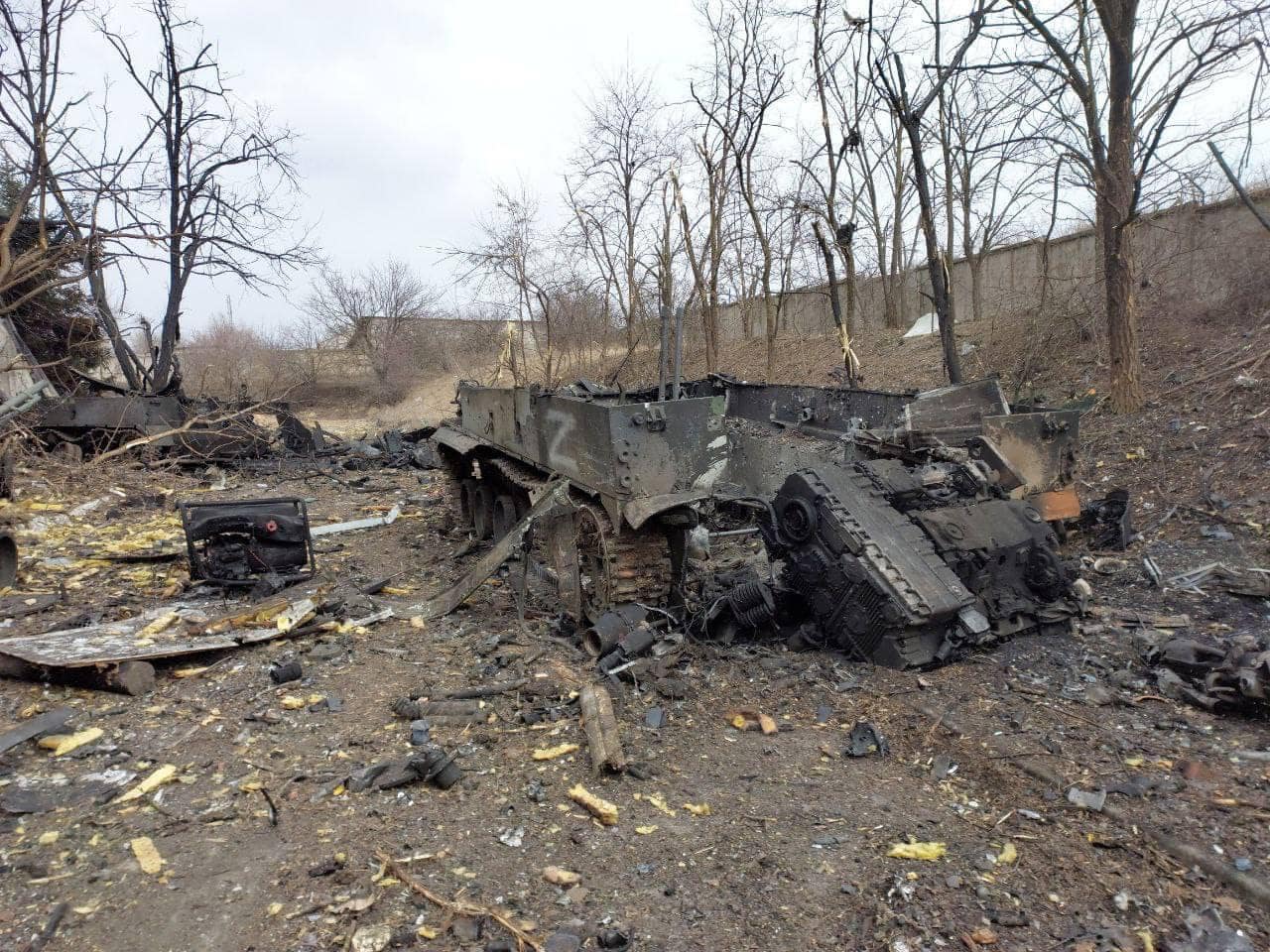
After more than four and a half years of war in Ukraine, a growing chorus of military experts and outside observers has declared that the main battle tank is now obsolete, along with other heavy-armored combat vehicles that present valuable, slow-moving targets for front-line drone attacks.
But on Fronts this week, open-source intelligence analyst Jakub Janovsky argues that any effort to dismiss the tank on grounds of obsolescence “shows a ”. Janovsky presents an alternative case on modern tank warfare: one where major changes will be critically important, but the basic idea of a high-cost, high-armor fighting vehicle remains sound.
Houthis Continue Saudi Strikes, Prepare New Advance:
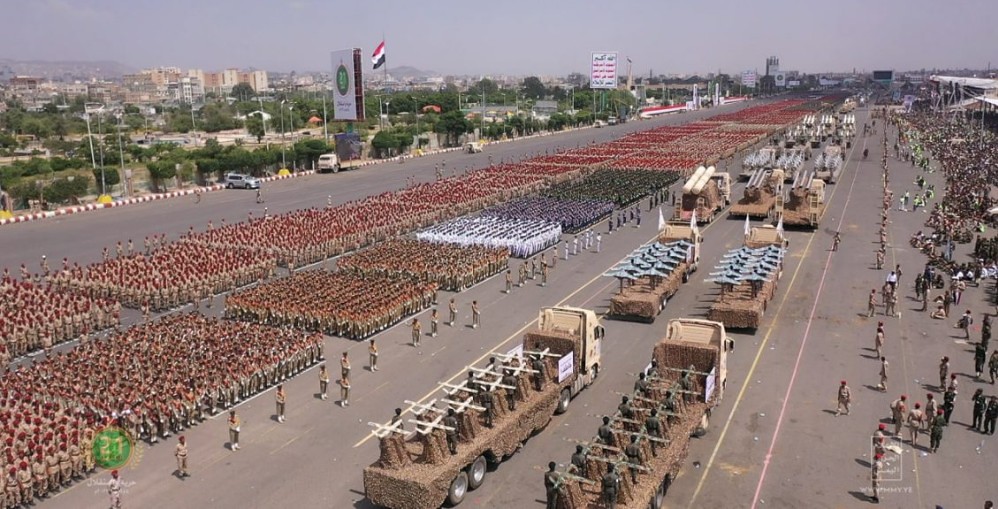
Yemen’s Houthi rebels are reaping the rewards of a lightning offensive last week, in which their forces managed to capture the vast majority of Yemen’s western coast, and gain the de-facto ability to blockade the Bab al-Mandeb Strait. Since their offensive, the Houthis’ long-range strikes and their ground offensives have only continued, even as growing evidence suggests that some of their gains may be reversed.
The Houthis’ latest push appears to target the province of Mar’ib, an oil-rich area roughly 120 kilometers east of the capital city, Sana’a, that has long served as a stronghold for the Yemeni internationally recognized government. The Houthis have contested control over areas north of the provincial capital, Mar’ib city, but have faced stiff resistance, in contrast to the mass retreat of Saudi-backed forces that essentially ceded the western coastline.
Simultaneously, the Houthis are tightening their siege of the city of Ta’iz, where government-aligned forces have been entrenched along a frozen front line for years. Like in Mar’ib, Yemeni fighters are making a serious defense of Ta’iz, and their forces have benefited from both the use of rockets and drone bombers under their own control, and Saudi air support, flying in from the north.
But the Houthis have responded to Saudi Arabia’s airstrikes by continuing their own retaliatory campaign, launching day after day of long-range drone and missile barrages. On Monday, the Houthis fired dozens of projectiles at Riyadh’s military airbase of Khamis Mushait, targeting runways, hangars, and more. On Tuesday, Houthi strikes prompted air-raid sirens over Mecca for the first time since the start of this round of Houthi hostilities, as missiles and drones rained down across Khamis Mushait and two other cities.
Despite its predicament, and despite global investor fears that have spiked international Brent crude oil benchmark futures to nearly $108 per barrel, Saudi Arabia has not been able to secure the direct support of its allies. After signing a mutual defense pact with Saudi Arabia in 2025, recently expanded to include Turkey, Pakistan has dismissed the idea of responding to the Houthi threat. The US, similarly, has declined to take part in counter-Houthi actions.
In a rare bright spot for Saudi-aligned forces, the Houthis may have been at least partially pushed back from the Bab al-Mandeb Strait, after open-source analysts noted a lack of new geolocations of Houthi forces near the strait. While Houthi forces are thought to still control Yemen’s outlying Red Sea islands, a limited reconquest of the southwestern coastline would help to blunt the Houthis’ momentum.
"" bydietrich19is licensed underCC BY-SA 2.0.
What We're Reading:
For decades, Washington has managed to maintain relations with Beijing, and simultaneously signal its likely willingness to defend Taiwan, through a deliberate policy of strategic ambiguity. But, as explained by this Foreign Policy analysis by James Crabtree, Washington now appears to have abandoned strategic ambiguity entirely.
Whether that decision reflects a new strategic approach by Pentagon planners, or the need to keep up with, and create policy around the whims of a single chief executive, the result is the same. A future defense of Taiwan, in the face of a full-scale Chinese ‘reunification’ invasion, is now in jeopardy, and a coming meeting between Donald Trump and Xi Jinping may only make Taiwan’s situation more dire.
Our WarFronts/HomeFronts Team is proud to announce the launch of Fronts.co, our brand-new subscriber service.
Around the World:
Finland has formally joined France’s effort to extend its nuclear deterrent over Europe, according to French President Emmanuel Macron and Finnish President Alexander Stubb. The two leaders did not provide details on the nature of their governments’ cooperation, nor a timeline to extend French nuclear coverage. The agreement, however, brings obvious strategic value, as French warheads—and France’s unusually aggressive nuclear-use doctrine—will now cover the nation that shares NATO’s single longest land border with Russia.
An attack in Papua New Guinea’s autonomous Bougainville region caused unspecified damage at a key mining camp called Panguna, once among the world’s largest open-pit copper mines. Closed for almost three decades due to concerns over insurgent conflict, Panguna is now being prepared to reopen, but a Sunday attack saw unidentified attackers destroy equipment and assault facility personnel. Two people were shot in the attack, according to the Chairman of the Panguna Landowners Interim Council.
The Netherlands reported a deliberate sabotage of railway infrastructure across the country on Tuesday, hours before the ceremonial opening of the nation’s parliament. According to a spokesperson for the national rail operator, ProRail, law enforcement identified over twenty instances of pipes being attached to railways to cause malfunctions, prompting a shutdown of rail operations across the country’s central and northern regions. While Russian hybrid-warfare sabotage has been recorded across Europe, including in similar incidents, authorities have not ruled out other potential culprits, including labor unionists and farmer organizations that have each launched recent protests.
Syria erupted in nationwide protests this week after Damascus raised state-subsidized diesel prices by forty percent, sparking outrage from Syrians already concerned about the nation’s persistent post-war economic crisis. While nobody has been reported killed in the protests thus far, they are the largest peaceful display of popular discontent in Syria since the Arab Spring, and a key test for the nation’s transitional government under interim president Ahmed al-Sharaa.
Niger’s military junta appointed a new chief of the armed forces, Brigadier General Mamane Sani Kiaou, weeks after a mutiny by front-line troops narrowly failed to overthrow the government in a coup d’etat. The reshuffle ousted the man who had previously overseen those troops, Major General Mousa Salaou Barmou, and is believed to be an attempt to further concentrate authority for the junta’s leaders, rather than to clear the way for much-needed reforms in jihadist-hit areas.