
WarFronts Weekly: 9.22.2026.
🟨 WarFronts Weekly | US, Greenland, Denmark to Sign Base Deal & More
Fronts Staff • September 22, 2026

“The United States will FOREVER have the complete ability to do what is necessary in Greenland in order to secure and defend the security of Greenland, and the United States of America.”
-US President Donald Trump.
WarFronts Weekly
22.09.2026
US, Greenland, Denmark to Sign Base Deal:
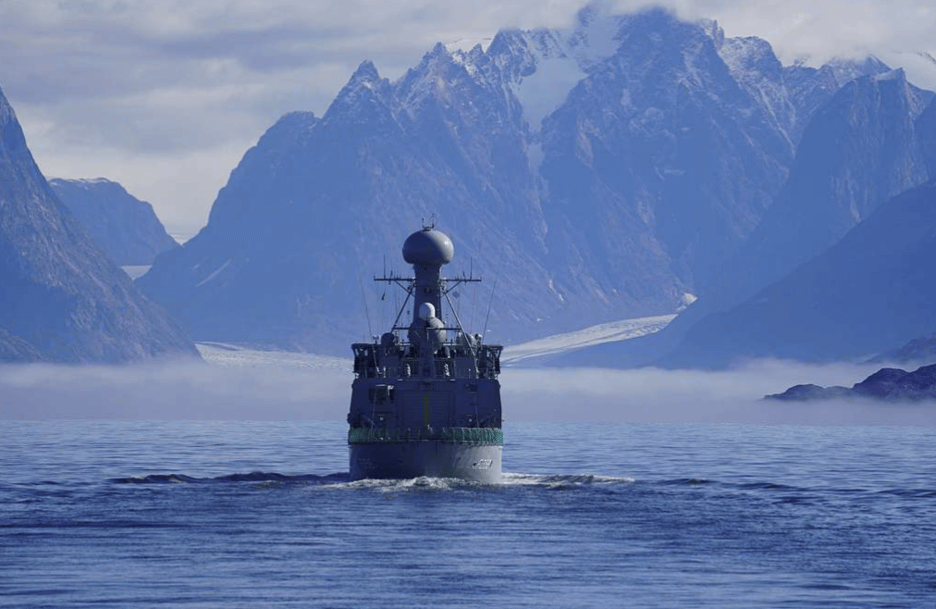
After months of high tensions over the autonomous Danish island territory of Greenland, the United States, Denmark, and Greenland will sign an agreement to resolve Washington and Copenhagen’s competing demands. The deal recognizes Denmark’s sovereignty over Greenland, pending internal Greenlandic discussions over the prospect of independence, while the US will assume “permanent control” over Greenlandic security.
The agreement comes after US President Donald Trump engaged Europe in a showdown over Greenland earlier this year, in which Danish and allied European troops were reportedly ready to engage an invading American force if necessary. Although Trump ultimately backed down from the confrontation, the entire affair drove a wedge between the US and its rattled European allies.
The security concerns that Trump had cited before and during the confrontation, over Denmark and NATO’s insufficient efforts to secure Greenland and the surrounding waters, were addressed in this week’s deal. After framing Greenland as an essential priority for the US, to thwart Russian or Chinese attempts to seize the territory, Trump claimed on Truth Social that “From now on, no U.S. adversary can EVER have a base in Greenland, have a military presence in Greenland, or make sensitive investments in Greenland, without our express written approval”.
The agreement was hailed as a much-needed win for Danish Prime Minister Mette Frederiksen, who emphasized that the deal will respect Greenland’s right to self-determination. Under the agreement as written, the US will assume continual security responsibility for Greenland, including after a potential vote for Greenlandic independence.
On Monday evening, Reuters reported that the US intends to re-establish a Cold War-era base in Greenland’s south, formerly known as Bluie West One before its 1950s closure. The US will also set up a base at a site called Mestersvig, currently used as an outpost for Denmark’s special-forces sled dog unit.
The deal will supersede the Greenland Defense Agreement between the US and Denmark, signed in 1951 and modified in 2004, which already granted the US immense latitude in its Greenland operations. While the new deal introduces explicit prohibitions on Russian and Chinese bases, and clears red tape for the US to operate unilaterally, it may or may not be worth the damage done to the US-Europe relationship in 2026.
Image Credit: “The HDMS Triton (F358), a Royal Danish navy vessel,” by Defense Visual Information Distribution Service is marked withCC0 1.0.

Introducing DefenseFronts:
The team behind WarFronts, HomeFronts, and Fronts.co is proud to announce the launch of DefenseFronts on YouTube.
On DefenseFronts, our team takes a close look at the global defense industry, focusing on the tech, the tactics, and the cutting-edge innovations that shape modern battlefields. From changing alliances to future flashpoints, we know that today's global military-industrial complex is a window into tomorrow's geopolitics. With Simon at the helm, and a growing team of experts and Fronts-universe veterans working behind the scenes, we know you'll love DefenseFronts, so check it out.
This Week on Fronts:
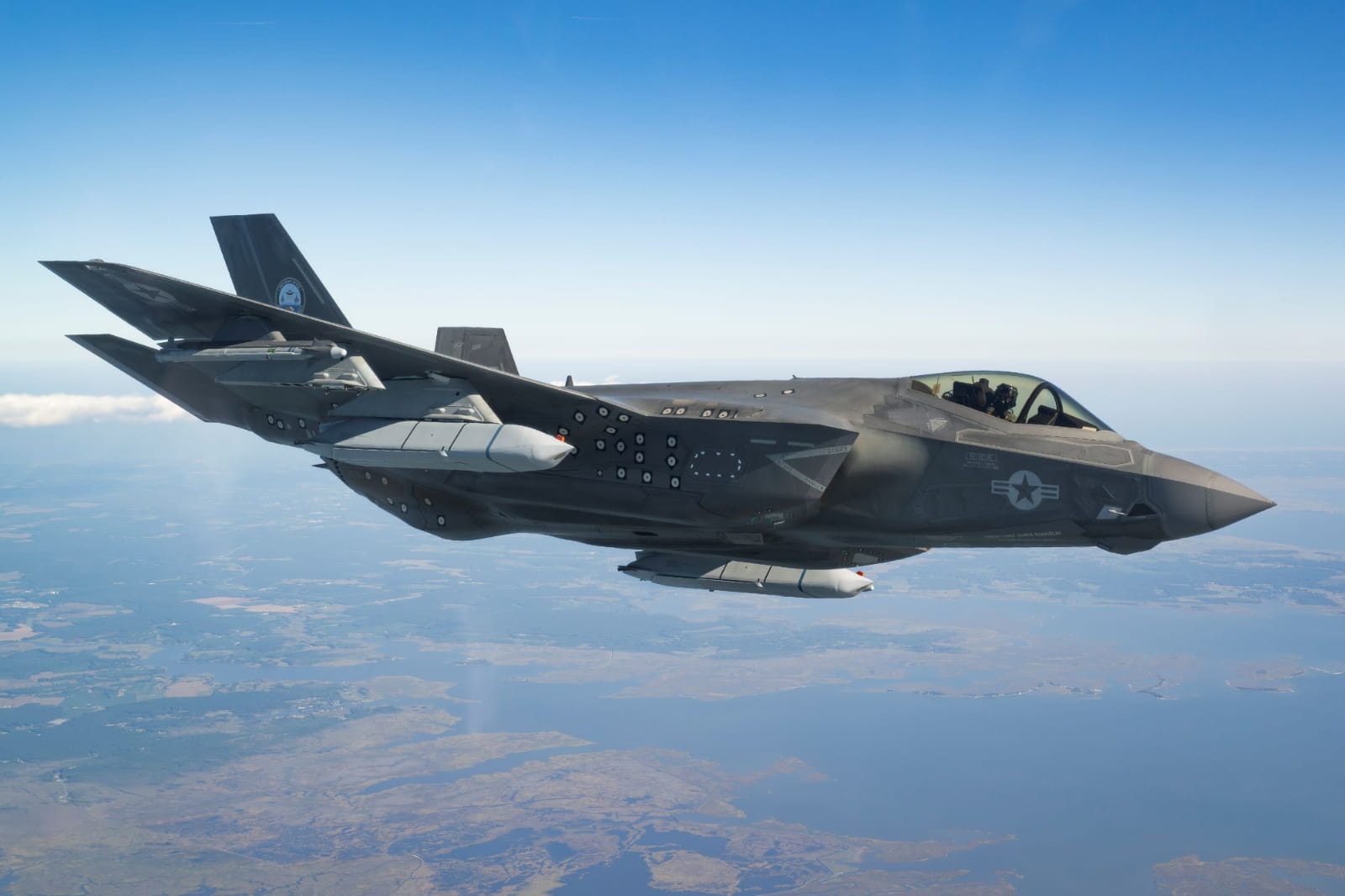
Ever since it first entered service in the mid-2010s, the Lockheed Martin F-35 Lightning II has been the world’s premier export-ready stealth fighter. Rather than develop alternatives, European capitals have been more than happy to place F-35 orders for themselves. Among other nations, the F-35 now flies with Britain, Germany, Italy, Poland, Finland, Greece, and the Netherlands, as the only fifth-generation fighter jet in European service.
In his debut analysis for Fronts, Finnish geopolitical analyst and newly minted PhD Joni Askola explains Europe’s growing frustration with the jet, as a tool of American dominance over European militaries. Askola describes the serious problems that prevented Europe from choosing other alternatives, then turns to the future to discuss Europe’s troubled search for a sixth-generation successor.
Sudanese Armed Forces Open Major Offensive:
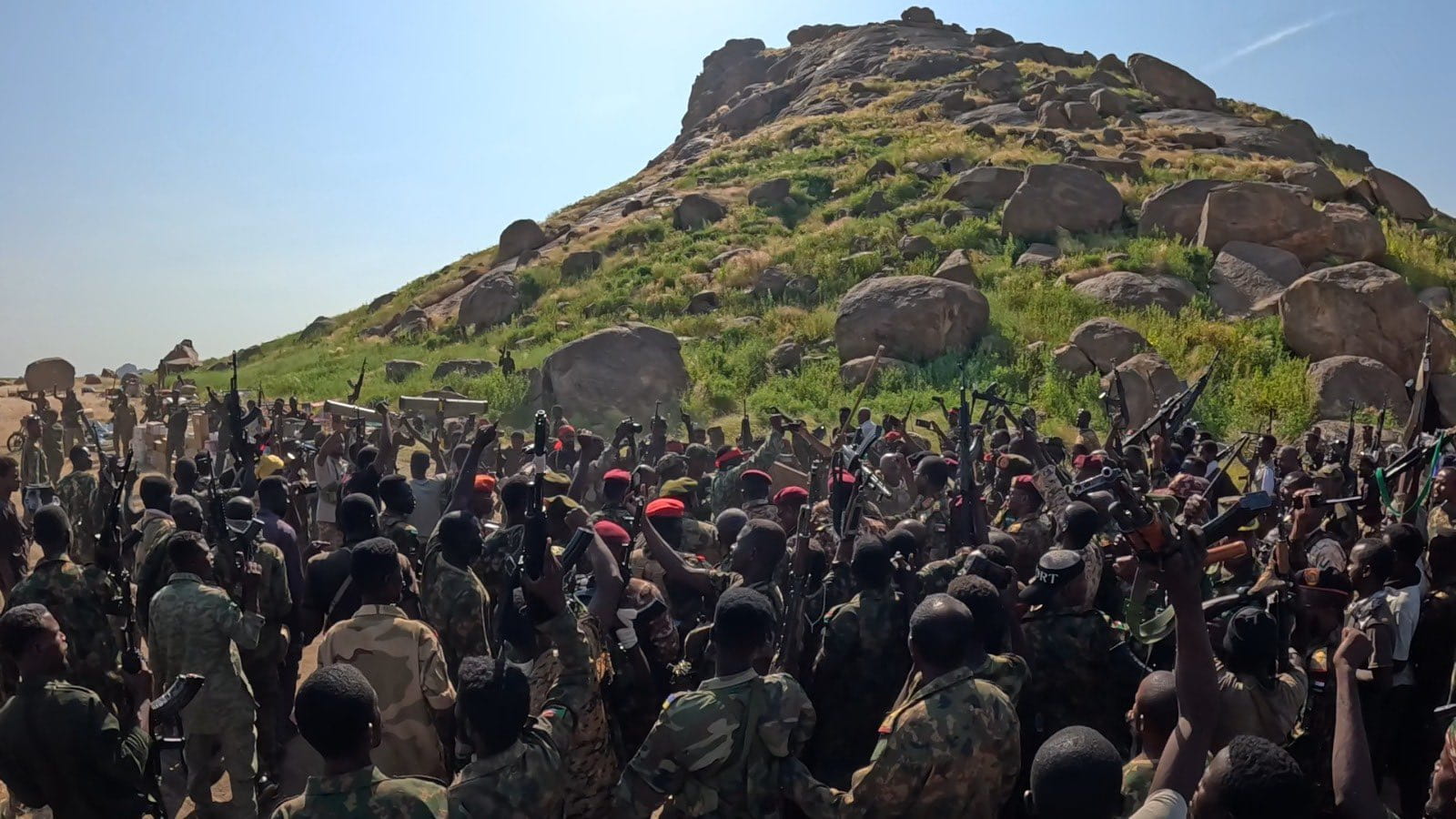
The Sudanese Armed Forces (SAF), and their allies across various Sudanese militias, have launched a new major offensive against the paramilitary Rapid Support Forces (RSF). If successful, Sudanese forces will be able to establish a wide buffer zone around the city of El-Obeid, where the RSF was unsuccessful in setting the conditions for a widely anticipated massacre, similar to its 2025 assault on El-Fasher.
The new offensive targets RSF positions in villages west of El-Obeid, as well as positions west of other towns that the SAF recently captured, including Bara and Jabrat al-Sheikh. As such, the SAF appears to seek to consolidate its control over those population centers, pushing the front lines of the Sudan war further away from the capital in the process.
While the SAF’s offensive does not appear to target any especially large population centers, it will set the conditions for future operations against the town of Kazgil, and other strategic points that help the RSF maintain position across a long, stretching battlefield. Local observers noted that the SAF’s new push appears to be well-coordinated, sending troops and militia fighters to contest control over numerous RSF positions near-simultaneously.
The advance has forced thousands of civilians to flee, particularly from the embattled town of Hamrat al-Sheikh, while RSF troops in several locations have opted to pull back, rather than try and defend vulnerable positions. The RSF’s predicament has been made worse, as progressive retreats leave supply lines vulnerable or broken. In Hamrat al-Sheikh, however, a Sudanese rights monitor reports that the RSF has deployed large numbers of vehicles and fighters, in preparation for an apparent attempt to draw the SAF into urban combat.
In the town of Umm Badr, meanwhile, an RSF convoy reportedly launched an attack against an artisanal gold mine, looting the site and beating workers before driving local civilians away from the area. At least five people were killed, and dozens wounded. Another withdrawing RSF unit, in the city of al-Mazrub, reportedly looted and destroyed a local market in an effort to gather supplies.
With the SAF drawing closer to those embattled towns, the RSF appears to be preparing for a large battle. The SAF has continued to soften the zone using frequent drone strikes, but the RSF is intent on forcing at least a limited confrontation, in areas where it likely believes that it can take advantage of favorable terrain and impose costs on SAF-allied forces.
Image Credit: "Sudanese armed forces soldiers in Jebal moya" by Unknown author is marked withCC0 1.0.
What We're Reading:
During Donald Trump’s second presidential administration, the European nations of NATO have witnessed a sharp drawdown of US military support, as Washington pressures European capitals to spend more on defense, and threatens to withdraw large troop complements. All the while, however, Washington has continued to rely on its bases and base-access deals in Europe, both to project power globally, and to further its murky war objectives in Iran.
This Reuters investigation takes a close look at the results of Trump’s campaign against European NATO, as well as the continent’s handling of America’s complex needs and demands. Drawing on interviews with over fifty current and former US and European officials, the report’s six authors break down the current status of the trans-Atlantic relationship.

Join the Fronts Community:
Love our work on WarFronts, HomeFronts, and DefenseFronts?
Fronts.cois our team's independent media outlet, where we join forces with global conflict analysts and subject-matter experts, to dive deeper on geopolitics than we ever could on YouTube.
Also on Fronts, we host our premium subscriber service, where we offer exclusive video episodes and ad-free access to our entire YouTube back catalogue.
Frontsvisitors enjoy free access to our regular podcast series, Due South and the Middle East Roundtable,no account required, plus a free selection of written articles and this very e-mail newsletter, WarFronts Weekly.
A subscription to Frontscosts just $5 USD each month, or $50 USD each year. With your support, our team can maintain our independence, and create new, free offerings like HomeFronts and DefenseFronts, for all of our fans around the world.
Around the World:
Yemen’s Houthi rebels continued their push to take over the country this week, with a new assault on strategic highland areas around the besieged city of Ta’iz and in the neighboring province of Lahij. The highlands, known as the Kahboub Mountains, grant an overlook of the Red Sea coastline; by taking the territory, the Houthis will be able to cut off Yemeni government forces from accessing or monitoring the Red Sea coast. According to the New York Times, the US considered launching strikes against Houthi positions on Sunday, following renewed appeals from Saudi Crown Prince Mohammed bin Salman. In the end, however, Washington declined to strike at the last moment, amidst apprehension from top White House aides and advisors. Also this weekend, the Houthis claimed credit for a Saturday missile and drone attack against the Saudi capital of Riyadh, as well as a Saudi Aramco facility in the port city of Yanbu.
Pakistan launched its latest round of airstrikes against Afghanistan on Monday, hitting what Islamabad claimed were suspected militant hideouts. According to Pakistani officials, twenty-eight militants were killed in the attacks, after Pakistan had warned that it would launch reprisal attacks into Afghanistan following two attacks on Pakistani security forces. The United Nations Mission in Afghanistan confirmed the deaths of at least three civilians along with four injured, in the nation’s Kunar province.
A Syrian Army munitions depot was destroyed in a series of explosions on Monday morning, in the fourth such explosion across Syria this month. Authorities offered no immediate explanation for the latest blast, which shook the town of al-Eis in Aleppo Province. Syria’s Defense Ministry has placed each of the explosions under investigation, and while Damascus has not yet officially indicated that it suspects foul play, the string of incidents raises concerns over sabotage attacks by Syria’s adversaries—possibly including either the Islamic State, or the nation of Israel.
Russian President Vladimir Putin’s United Russia party won a record 355 seats in the State Duma, according to official results, after a tightly controlled vote that was neither free nor fair. Across three days of elections, in which anti-war politicians were mostly banned, Russians participated in a relatively peaceful vote and granted United Russia nearly 58% of the official vote total. Elsewhere in Russia, Chechen leader Ramzan Kadyrov was re-elected to his post, with official results near 100% support. Russia is expected to use the results to reaffirm its mandate and public support for its Ukraine invasion, ahead of a widely feared round of mass mobilization this autumn.
South Sudanese President Salva Kiir signed into law a series of new amendments to his nation’s election law, in a Monday-night order that removed numerous protections against an authoritarian power grab. South Sudan’s first-ever elections are scheduled for mid-December; under his new order, Kiir shrank the nation’s two legislative houses substantially, and removed legal provisions that made the election contingent on South Sudan completing a national census and finalizing a permanent constitution. The order also allows Kiir to wield full executive power until a newly elected successor assumes office, but indicates that Kiir’s Vice Presidents will leave office up to three months before election day.
German Chancellor Friedrich Merz faces a dire situation after his party’s latest regional election defeat, where, in the northeastern state of Mecklenburg-Western Pomerania, Merz’s Christian Democrats failed to meet the minimum threshold to enter the regional parliament. The far-right Alternative for Germany party (AfD) won a plurality of votes, although it did not approach a majority, while in a separate set of elections in Berlin, the far-left Die Linke party also got the better of the Christian Democrats. As of the time of writing, Merz does not face a clear leadership challenge.