
WarFronts Weekly 9.8.2026.
🟨 WarFronts Weekly | Germany Deals With Continued Hybrid Attacks & More
Evan Moloney • September 8, 2026
“It's only a source of joy for Putin. After all, he is restoring this Iron Curtain between Russia and all the other countries. And now he's getting help from the other side as well.”
Germany Deals with Continued Hybrid Attacks:
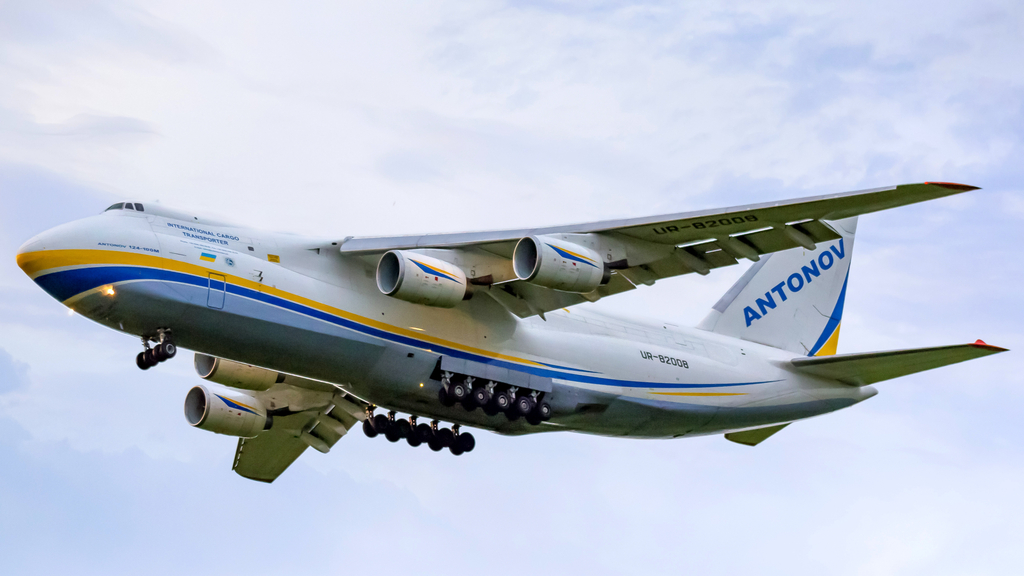
Last week, Germany made global headlines when it formally accused Russia of orchestrating an attempted drone attack in the city of Leipzig, where two explosive drones failed to damage a massive Ukrainian An-124 cargo plane at the city’s airport. But instead of forcing compliance or compromise from Russia’s leaders, Germany’s accusation has been answered with a new series of hybrid attacks across the country, even as Russia engages in tit-for-tat diplomatic retaliation.
On Monday, German prosecutors in the eastern state of Saxony stated that police had identified a total of twenty-one explosive devices across the state over the last few weeks—including nine new, homemade explosives that were discovered over the prior weekend. The newest explosives had been planted near high-voltage power lines close to a German substation.
While German authorities have not yet acknowledged that any of the devices exploded, the German outlet Der Spiegel reported on a fire at a transformer substation in Berlin on Monday, which was blamed on a technical issue. In the western city of Wesel, meanwhile, the outlet Bild reported that a security fence around another substation had been cut.
Those latest suspected hybrid attacks came after a busy week for German authorities, including a suspected arson attack against a Munich defense firm last Thursday. In that incident, police arrested a pair of individuals who allegedly threw incendiary devices toward a construction area at a firm called Rohde & Schwarz, which produces drone-detecting radar systems and other defense products.
Also on Saturday, Germany acknowledged that a ransomware group had published a substantial trove of roughly 5.8 terabytes of stolen data, taken from the Berlin state government. The hacker group, known as Rhysida, auctioned the data at a starting price of thirty bitcoin, roughly equivalent to $2.3 million USD, with the packet having since been leaked after the German government refused to pay. In total, the dump includes 1.44 million documents.
Berlin has announced new security measures to cope with the Russian-linked hybrid threat, including with a Sunday announcement that Germany will build a comprehensive air-defense protective shield to prevent incidents like the one in Leipzig. Global analysts, however, are critical of Germany’s relatively weak punitive measures against Russia, arguing that relatively minor diplomatic retaliation, and costly efforts to secure German territory, will simply ensure that Berlin is bogged down by an emboldened Moscow.
Image Credit: “Ur-82008 – Antonov An-124-100M Ruslan – Antonov Design Bureau – VGHS” by Md Shaifuzzaman Ayon is licensed under CC BY-SA 4.0.
This Week on Fronts:
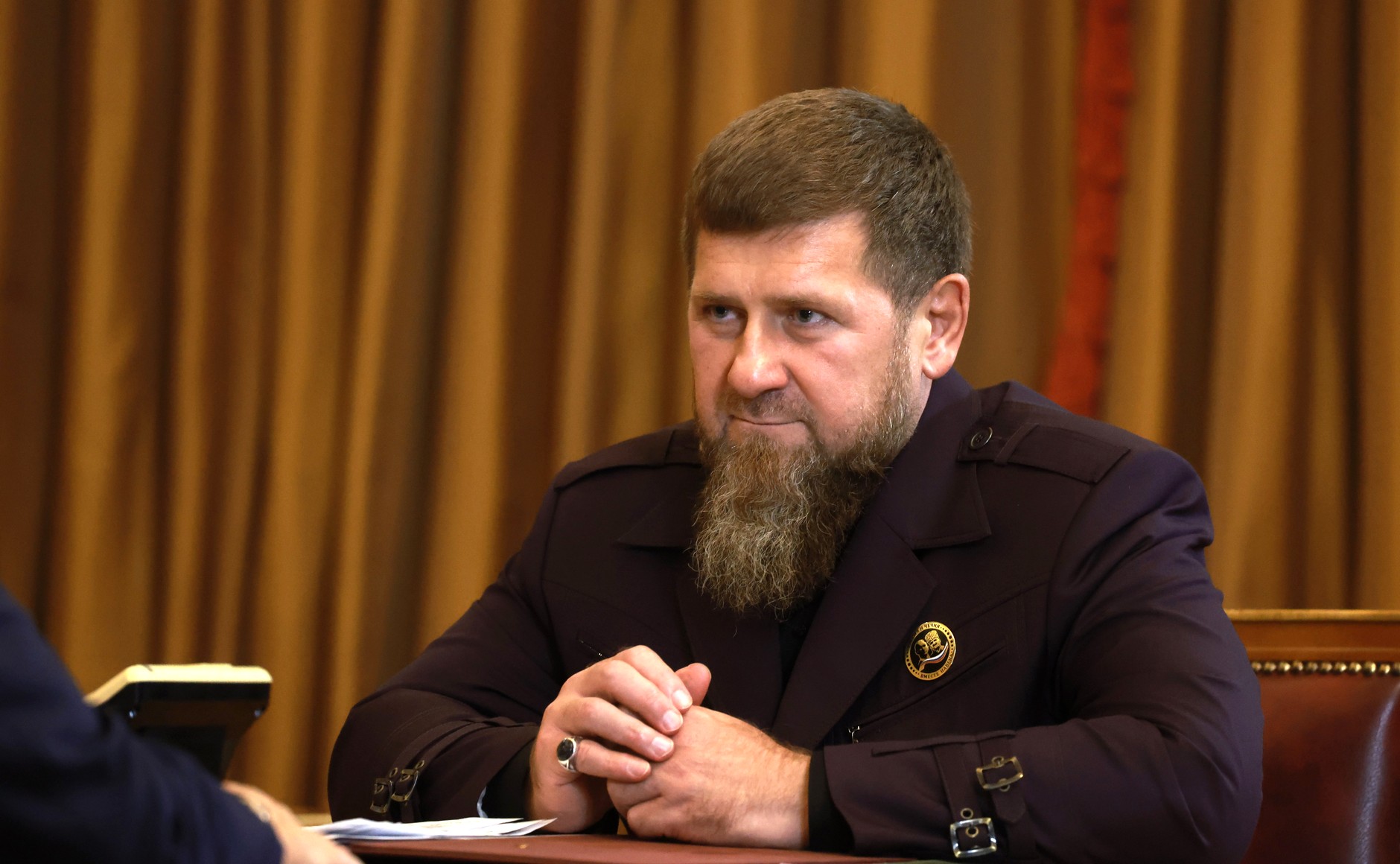
As Russia’s invasion of Ukraine continues to churn ever-so-slowly through the eastern Donbas region, a new wave of reporting suggests mounting internal pressure on Vladimir Putin. While the Russian homeland, as ever, remains relatively stable and secure, its poorer, minority-majority, and historically ostracized regions are at risk of rising instability—especially as Moscow looks toward a new round of forced conscription.
In this article for Fronts, Caucasus expert Neil Hauer explains the particularly high risk of unrest in the North Caucasus region, including Chechnya, Dagestan, Ingushetia, and other nearby Russian republics. As Hauer explains, the Ukraine war is increasing pressure on those regional governments, contributing to a “state of restive quiet” in which new public unrest cannot be ruled out.
South Korea Weighs Deployment to Strait of Hormuz:
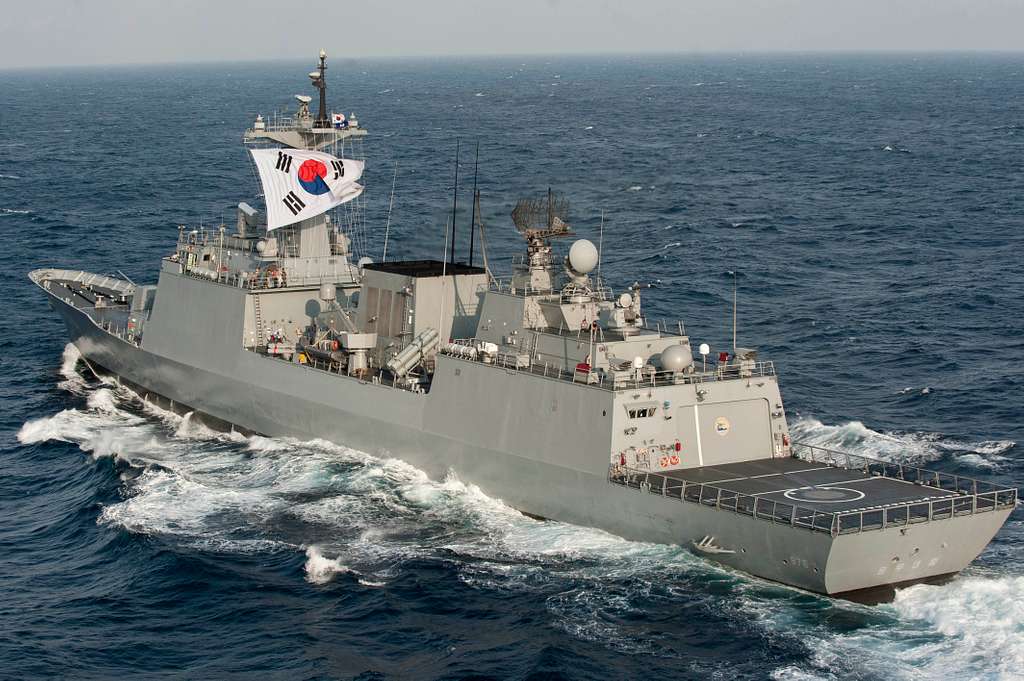
The South Korean government came under fire this week, both from the nation of Iran and from some of its own citizens, after several national outlets reported on Thursday that Seoul had decided to deploy its navy for a freedom-of-navigation mission to the Strait of Hormuz. In response, the office of the South Korean presidency said only that Seoul was reviewing its options to support freedom of navigation in the strait.
As a major non-NATO US ally, South Korea has faced substantial pressure from the United States to participate in strait-clearing operations—although Seoul, like Tokyo and US-allied European capitals, has thus-far refused to participate. Also like South Korea, the UK, France, and other nations have weighed participation in a strait security mission in the coming months, but only after Iran-US hostilities have concluded.
According to the recent reports from South Korean media, however, Seoul is now considering deploying naval assets before the year’s end, potentially seeking parliamentary approval as early as this month. The reports suggest that South Korea would deploy maritime patrol aircraft, a logistics support vessel, and/or a minesweeping unit, in a contribution to a multinational security force.
In response to the reports, an unnamed South Korean official told Reuters that “nothing has been decided” on the issue, and that any deployment could only commence after South Korean budgetary and national-security concerns were addressed. South Korean President Lee Jae-myung, however, may discuss the issue in a meeting with French President Emmanuel Macron in Paris, which takes place today.
According to sources interviewed by Reuters, including an international security professor and a former special forces commander, a South Korean deployment to the Strait of Hormuz would be in line with South Korean interests. Seoul has suffered substantial economic consequences due to the war in Iran, and has arguably failed to protect its own interests, by avoiding more proactive engagement with the US over its war effort. Sixty-one percent of South Korean crude oil imports pass through the Strait of Hormuz in a normal year.
Iran, however, responded forcefully to the South Korean reports, with Tehran-aligned academic Mohammad Marandi warning, on the pan-Arab outlet Al-Mayadeen, that “if the South Koreans participate in this war against Iran, Iran will see it as the enemy”. Marandi vowed retaliation against South Korean assets across the Persian Gulf region, while downplaying the practical impact of a South Korean deployment. Iran’s Foreign Ministry confirmed, in a post on X, that South Korean participation in military operations would bring “severe consequences”, despite Iran’s “friendly relations” with South Korea.
Most recently, the Korea Herald reported on Monday that Seoul “appears to be recalibrating plans” for a deployment, in response to a combination of domestic and international backlash, and the recent hostile exchanges between the US and Iran. In public remarks on Monday, South Korea’s Defense Ministry spokesperson emphasized that “no specific measures have been decided at this point”.
As the Korea Herald explained, Seoul’s decision seemed to be predicated on an expectation that the strait was slowly stabilizing, and that a return to all-out hostilities was unlikely. Under the current circumstances, however, South Korea’s internal debate seems to have been put on ice, despite continued pressure from the United States.
Image Credit: “The Republic of Korea Navy Chungmugong Yi Sun-sin class” by Defense Visual Information Distribution Service is dedicated to the public domain.
What We're Reading:
This week marks twenty-five years since the 9/11 attacks in the United States, the critical inflection point that kicked off the global War on Terror, and began a cascade of geopolitical consequences that continues, to this day. Although experts at the time had warned of the risk of extremist escalation against the United States, 9/11 is remembered as a massive failure within the American and international intelligence community.
In this analysis by counterterrorism experts Colin P. Clarke and Clara Broekaert, Foreign Policy asks an uncomfortable question of today’s global intelligence community: “25 Years After 9/11, What Are We Failing to Imagine Now?”
Our WarFronts/HomeFronts Team is proud to announce the launch of Fronts.co, our brand-new subscriber service.
Around the World:
Yemen’s Houthi rebels attempted to expand their territory across the last week, in an offensive against the long-besieged city of Taiz, but have instead been the target of a multi-front counteroffensive by Yemeni government forces, allied militias, and Saudi backers. Across the last several days, Yemen-aligned forces have reported substantial progress in several directions, although their ultimate objective—to retake Yemen’s capital city—does not appear to be immediately achievable. On Tuesday, a Houthi retaliatory strike injured at least seventy-three civilians across four regions of southern Saudi Arabia; Riyadh has vowed a large-scale response of its own.
The United States and Iran traded fire against oil tankers on Saturday, with the United States striking three tankers owned by the Iranian government—including one just outside Iran’s Kharg Island export terminal—and Iran attacking three that purportedly attempted unauthorized crossings through the Strait of Hormuz. The exchange came after the United States alleged that Iran attempted to strike two US ships with ballistic missiles—allegedly including at least one purpose-built ship-killer missile. On Sunday, Iran claimed to have struck an unmanned US vessel as it tried to enter the strait, although the US dismissed the claim as a fabrication.
A series of raids in Pakistan last week left at least forty-eight militants dead, according to Pakistan’s military, across the country’s southern Balochistan province. The remote Balochistan region is home to a large-scale separatist movement, led by the Baloch Liberation Army, which claims to represent the interests of the region’s largely impoverished Baloch majority. Pakistan accused India of sponsoring the militants it targeted, and claimed to have secured a weapons cache.
At least three Colombian soldiers were killed by drone-dropped explosives and rebel fighters in an attack on a military compound, the Colombian Army reported on Saturday. The attack targeted a base near the Venezuelan border in the northeast, where rebel groups and organized crime syndicates rely on the porous cross-border region to support trafficking operations. Colombia’s most powerful rebel group, the ex-FARC dissident organization ELN, was blamed for the attack.
Two Palestinians were killed and an Israeli settler was stabbed across a violent day on Monday, as confrontations continued across the West Bank. In one instance, settlers and Israeli troops reportedly opened fire on a group of Palestinians from opposite directions after the Palestinian group attempted to confront armed settlers, according to local residents. On Sunday, Israeli Prime Minister Benjamin Netanyahu signed an order to dismantle and remove select, unauthorized settlers’ outposts, a rare decision from Netanyahu’s administration.
Peru declared a new state of emergency across five high-security prisons this week, clearing the way for the nation’s military and police to take over the prisons and restore order. The decision, ordered by recently inaugurated Peruvian President Keiko Fujimori, will extend for a span of sixty days and grant the military control of the airspace and electromagnetic spectrum near each prison. Lima framed the decision as a response to citizens’ concerns, in a country where prisons are known to be a hub for continued organized criminal activity.
Serbian President Aleksandar Vucic appears poised to transition into the role of Prime Minister within the next two months, after he called a snap parliamentary election in late October. Vucic faces term limits in his current position, but is expected to maintain control over Serbia if he can execute his pivot to parliament successfully—which he is widely expected to do. The elections are expected to be highly contentious, in a nation where student-led protesters have kept up anti-corruption demonstrations for years.
Germany’s far-right AfD party won a decisive victory in a closely watched state-level election in the eastern state of Saxony-Anhalt, although in Germany’s complex multi-party system, the group fell barely short of the absolute majority required to govern by itself. While Saxony-Anhalt is generally amenable to right-wing populist movements, in a way that much of Germany is not, the vote is regarded as a dire warning by Germany’s ruling government—headed by the historically unpopular Friedrich Merz—as well as its European allies.